Where the Decanter Fits in a Hospital Wastewater Treatment Train
A decanter centrifuge for hospital wastewater design is normally specified for the sludge-dewatering stage, not as a substitute for biological treatment or final disinfection. After screening, equalization, biological treatment, and solids removal, sludge is conditioned and fed into a high-speed bowl: solids move outward and are conveyed by a differential-speed scroll, while clarified liquid exits as centrate. The final design must address hospital-specific hazards, odors and aerosols, centrate quality, polymer dosing, corrosion, containment, and downstream treatment. Equipment sizing should be based on project-specific flow, solids, settleability, operating schedule, and disposal requirements.
The hospital wastewater treatment train should be developed as an integrated sequence:
- Incoming hospital wastewater
- Coarse screening
- Equalization
- Biological treatment
- Solids separation or sludge collection
- Sludge conditioning and flocculation
- Decanter centrifuge
- Dewatered cake handling and centrate treatment or return
The decanter is a solids–liquid separation device. It does not substitute for biological treatment, and it does not establish compliance of the final effluent discharge route. Its duty must be defined after upstream treatment has established what solids reach the sludge stream and before downstream treatment is selected.
Screen protection is part of that boundary. A rotary mechanical bar screen for hospital wastewater pretreatment can remove suspended solids, rags, plastics, and fibrous debris before they reach pumps, valves, biological processes, or the centrifuge feed system.
Hospital wastewater also requires a project-specific risk assessment. A 2021 Frontiers in Environmental Science study examined antibiotic-resistance-gene occurrence and diversity at two wastewater-treatment plants with different hospital-wastewater inflow levels. That finding supports treatment-train and monitoring decisions; it does not establish that mechanical dewatering removes antibiotic-resistance genes.
Before finalizing centrifuge duty, the designer must select the centrate route: return to equalization, upstream biological treatment, dedicated treatment, or disposal. Each route changes the hydraulic and solids balance and may impose additional monitoring requirements.
Hospital Wastewater Properties That Change the Centrifuge Design
Representative sludge characterization, not average wastewater flow, establishes the centrifuge duty. Request flow, suspended solids, COD, oil and grease, pH, settleable solids, particle-size distribution, and variability across typical and peak-loading periods.
Hospital wastewater can vary with clinical cleaning cycles and discharges from laboratories or imaging areas, while resilient fibers, wipes, and plastics can damage pumps or obstruct feed passages. Upstream screening therefore affects both equipment protection and the reliability of the measured duty. The GX rotary mechanical bar screen is designed for continuous fine screening and removal of this material before the downstream treatment train.
Free oil and grease may require a dissolved-air flotation pretreatment stage and an appropriate conditioning strategy. Raw hospital wastewater should not be assumed to be suitable centrifuge feed.
Infectious-material and cross-contamination controls remain engineering requirements: segregated drainage, covered equipment, sanitary interfaces, washdown provisions, and a site-specific biosafety review. Mechanical centrifugation must not be credited as sterilization.
| Design input | Why it matters | Required decision or evidence |
|---|---|---|
| Flow and solids variability | Controls feed load, equalization, pumping, and machine duty | Measured data across normal and peak periods |
| Particle-size distribution | Identifies screening needs and achievable separation conditions | Representative solids analysis and supplier performance test |
| Oil and grease | Can impair separation and conditioning performance | Determine whether DAF or another pretreatment stage is required |
| pH and temperature | Influence polymer behavior, materials, and downstream treatment | Project-specific measurements and compatibility review |
| Infectious-material risk | Controls containment, maintenance, and cross-contamination exposure | Site-specific biosafety and hygiene review |
| Centrate destination | Changes hydraulic, solids, and monitoring requirements | Decide return, dedicated treatment, or disposal before equipment selection |
The antibiotic-resistance concern must be addressed across the overall treatment train and monitoring strategy. Mechanical dewatering alone provides no basis for claiming pathogen removal, antibiotic-resistance-gene removal, or compliant final discharge.
Design the Pretreatment, Feed, and Centrate Circuit
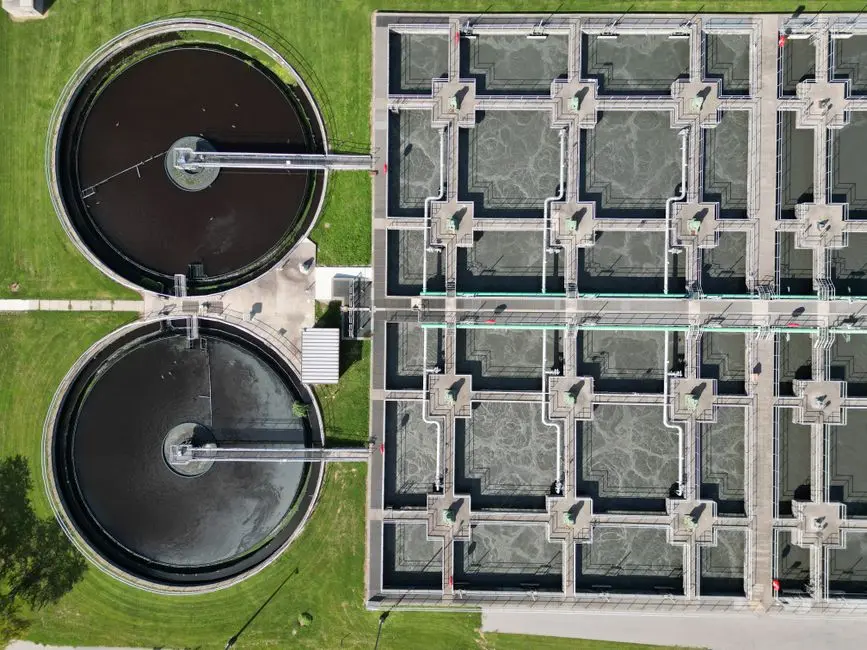
The centrifuge feed circuit must handle peak hydraulic and solids loads rather than only nominal plant flow. Equalization, feed pumping, conditioning, and centrifuge controls should operate as one coordinated system.
Obtain written feed limits from the centrifuge supplier. As a vendor-specific reference point, the Huada LW system describes a positive-displacement sludge pump for material with 0.2%–5% solids and a cutter for solids at or below 5%, according to the Huada LW Sludge Dewatering product information accessed for this guide. Those values must not be transferred to another centrifuge without supplier confirmation.
The feed-pump specification should establish solids tolerance, maximum particle size, viscosity limits, and protection against gas or grit entering the bowl. Where hospital waste contains resilient debris, determine whether additional cutting or grit removal is necessary.
Design sludge conditioning as a variable-flow system rather than applying a fixed chemical dose. An automatic sludge-conditioning chemical dosing system can provide PLC-controlled injection of coagulants, flocculants, pH adjusters, and specialty chemicals. Commercial wastewater decanters also offer automatic flocculant dosing. The polymer type, preparation concentration, dose, and relationship to feed flow require commissioning with representative sludge.
Route centrate only after evaluating its hydraulic loading and soluble solids, temperature, pH, and the permitted discharge route. Return to equalization or upstream biological treatment is not automatic: it can recycle soluble constituents and alter downstream organic loading.
Include odor and aerosol containment in the design review. Flottweg’s C-series documentation states that its closed design prevents the escape of dirt and odors and shields the environment against sewage-sludge aerosols. The hospital design should specify the required enclosure, ventilation, washdown, and workplace controls rather than treating odor control as an accessory.
Select the Decanter Using Process and Operating Parameters
Decanter centrifuge sizing begins with a complete feed basis: design flow, peak flow, feed-solids range, sludge capture rate, operating hours, feed variability, allowable centrate solids, and target cake dry-solids consistency.
Bowl geometry is a supplier-specific design item. The Huada LW series states an effective bowl length-to-diameter ratio of at least 4 and says this extends clarification and dewatering time. The same product information states that its bowl is designed to clarify particles at or above 5 μm. Treat the particle-size statement as a proposed capability to verify with representative hospital sludge, not a universal performance claim.
Controls must vary bowl speed and differential speed independently. Flottweg states that its Simp Drive regulates both speeds as a function of scroll torque and compensates for fluctuating feed. Require operating-state monitoring, alarms, interlocks, start/stop sequencing, feed-rate adjustment, fault response, and communication with the hospital plant control system. The Huada LW PLC description provides a useful functional checklist for automatic or manual operation, monitoring, alarms, interlocking, constant-torque feed adjustment, and blocking-related differential-speed changes.
For wastewater service, request stainless-steel wetted components, wear protection around inlet and outlet openings, and local replacement of wearing parts. Flottweg identifies fast rotor-and-scroll removal, on-site wear-part replacement, and protection at the openings as maintenance features.
Request an energy assessment rather than accepting a general efficiency claim. Flottweg states that its Recuvane system can reduce drive-energy consumption by 10%–30%, depending on pond depth and product composition. Ask whether the hospital duty qualifies and request the calculation basis.
| Selection item | Minimum information to request | Evidence for acceptance |
|---|---|---|
| Feed and loading | Average and peak flow, solids range, operating hours, variability | Representative-sludge calculation and performance test |
| Separation geometry | Bowl dimensions, clarification path, particle-size basis | Supplier design calculation and test protocol |
| Controls | Bowl-speed and differential-speed control, alarms, interlocks, plant interface | Functional description and witnessed commissioning |
| Materials and wear | Wetted materials, inlet and outlet protection, replaceable wear parts | Material certificates and maintenance schedule |
| Maintenance | Rotor-and-scroll removal method, local service support, spare parts | Documented removal procedure and service commitment |
| Energy | Drive load, recovery option, operating profile | Duty-specific calculation or measured baseline |
Choose Between a Decanter and a Sludge Filter Press
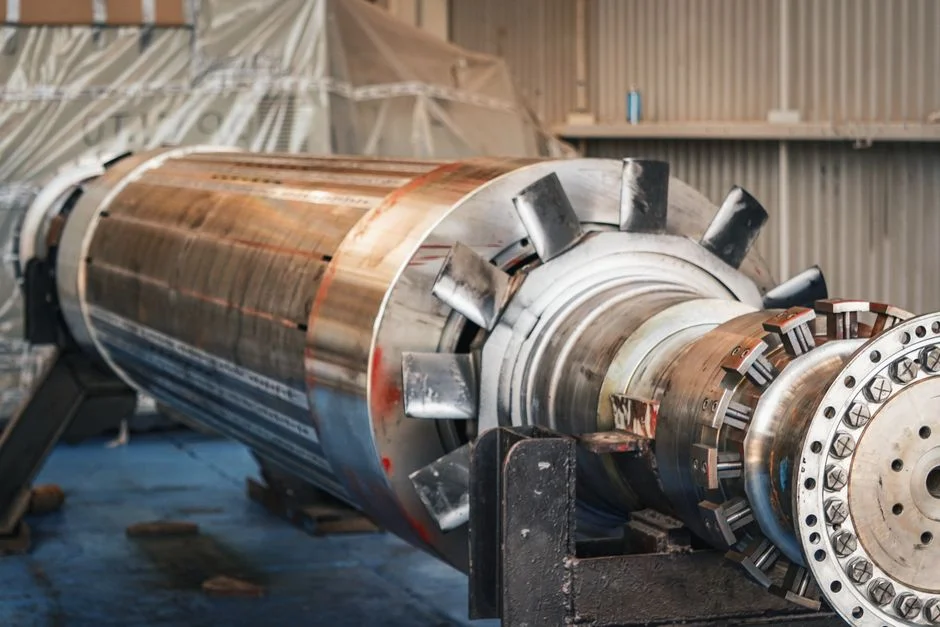
A decanter offers continuous, closed operation, while a filter press separates sludge in batch cycles. The appropriate choice depends on feed variability, staffing, maintenance access, cake handling, and the operating envelope—not on a universal performance claim.
The plate and frame sludge filter press alternative is listed with filtration areas from 1 m² to 500 m² and manual, hydraulic, or fully automatic PLC-controlled operation. These are configuration options, not proof of suitability for a particular hospital duty.
| Decision factor | Decanter centrifuge | Plate and frame filter press |
|---|---|---|
| Operating mode | Continuous operation with coordinated feed and conditioning | Batch operation with plate filling, pressing, release, and cleaning cycles |
| Peak-load response | Requires feed equalization and operating headroom | Can match cycles to intermittent sludge production, subject to batch-cycle duration |
| Labor and automation | Higher automatic-control potential; routine operator attention still required | Manual, hydraulic, or PLC operation must be compared against staffing |
| Maintenance | Scroll, bowl, wear parts, drive, and feed-system maintenance | Plate, cloth, frame, hydraulic, and washing-system maintenance |
| Polymer demand | Must be optimized for feed rate and torque control | Must be evaluated across each press cycle and feed condition |
| Cake handling | Requires enclosed discharge and conveyance | Requires cake discharge, removal, and container handling |
| Capital cost | Vendor quotation required | Vendor quotation required |
Do not generalize the Flottweg customer example in which dry solids increased from 23% to 25% and sludge volume, transport, and disposal costs fell by approximately 8%. Those results apply only to the described case, not every hospital installation.
Where sludge generation is intermittent, the feed is highly variable, or maintenance access is constrained, evaluate a hybrid arrangement rather than forcing a single technology. Final selection requires a pilot or supplier performance test using representative hospital sludge because the supplied research establishes no universal centrifuge performance for hospital wastewater.
Integrate Controls, Maintenance, and Downstream Treatment
Commissioning should test the complete sequence, not only motor rotation. Develop PLC logic covering permissive-to-start checks, feed ramp-up, bowl-speed operation, torque-based differential control, polymer dosing, high-torque alarms, blocked-feed response, controlled stop, and washdown.
Flottweg’s automation capabilities provide a useful benchmark: automatic bowl- and differential-speed regulation, optional automatic flocculant dosing, remote monitoring, remote service, and integration into the complete wastewater-plant control system. The project should then determine how those functions connect to hospital staffing, alarms, access control, and maintenance response.
Create a preventive-maintenance plan covering the scroll, bowl, wear protection, bearings, gearbox, feed system, and sensors. Flottweg emphasizes quick rotor-and-scroll disassembly and replaceable wear parts as features that can reduce downtime. Set inspection intervals from operating time, torque history, vibration condition, and site-specific wear rather than a generic calendar interval alone.
Plan cake discharge and enclosed transport. The Huada LW sludge system includes an airtight shaftless screw conveyor intended to move dewatered cake while maintaining environmental cleanliness.
Confirm the final-effluent route after centrate treatment. For smaller facilities, the compact hospital wastewater filtration and ozone-disinfection system is a compact, automated multi-stage filtration and ozone-disinfection option. The HydropureWater verified product catalog lists a footprint as small as 0.5 m² and identifies clinics, dental offices, veterinary hospitals, and small medical facilities as intended applications. Its suitability remains dependent on the hospital’s flows, wastewater characteristics, and regulatory route.
Treat sewer authorization, pretreatment requirements, air-emission controls, biosafety, and waste-disposal approvals as project-specific compliance checks. A centrifuge does not, by itself, establish discharge compliance.
Build the Supplier RFQ and Performance Test
A comparable RFQ must give every bidder the same hospital-specific duty. Include design flow, peak flow, feed-solids range, particle-size distribution, sludge temperature and pH, operating hours, required dry solids, centrate limit, odor requirement, utilities, and installation envelope.
Require each bidder to define the test protocol, sampling point, test duration, feed preparation, polymer type and dose, bypass conditions, and remedy for failure. Representative hospital sludge is essential because results obtained with another wastewater or sludge matrix do not establish hospital performance.
Request wetted-material certificates, abrasion-protection details, spare-parts pricing, removal-and-installation time, controls architecture, electrical requirements, and local service support. These documents determine whether the machine can be maintained within the hospital’s operational constraints.
Ask for an energy and polymer baseline as well as a guaranteed cake dry-solids result. A higher cake dry-solids value may reduce cake volume and transport demand, but polymer use, drive energy, cake handling, and disposal must remain part of the comparison.
Flottweg’s example links an approximately 8% sludge-volume reduction with an approximately 8% reduction in transport and disposal costs for the reported change from 23% to 25% dry solids. Use that relationship only as a case-specific example; request project-specific calculations for the hospital.
The commercial evaluation should compare capital cost, installation, utilities, chemicals, labor, maintenance, downtime, cake transport, and final disposal. No supplied source provides a universal quotation for a hospital decanter centrifuge, so the buyer should request itemized vendor pricing against the completed design basis.
Frequently Asked Questions
How should a hospital wastewater decanter be sized?
Size it from measured peak flow, solids loading, particle-size distribution, sludge condition, operating schedule, and required cake and centrate performance. Average wastewater flow alone is insufficient. Ask the supplier to show the sizing calculation and verify the selected duty through a pilot or performance test using representative hospital sludge.
How much does a decanter centrifuge for hospital wastewater design cost?
The supplied research provides no universal hospital price. Request an itemized quotation covering the centrifuge, feed pump, cutting or grinding equipment, chemical dosing, equalization interfaces, controls integration, installation, utilities, commissioning, wear-parts package, maintenance, and performance-test terms. Also request separate estimates for annual polymer, energy, cake transport, and disposal costs.
What should be checked when selecting a centrifuge supplier?
Check representative-sludge testing, a clear performance guarantee, wetted-material certificates, wear-protection details, controls functionality, spare-parts pricing, removal-and-installation time, and local service capability. Require the remedy for failed performance to be stated in the purchase agreement rather than relying on a general equipment specification.
Does mechanical dewatering make hospital wastewater compliant?
No. Mechanical dewatering separates conditioned solids from liquid; it does not complete biological treatment, final disinfection, or discharge compliance. Evaluate the full treatment train, centrate route, odor and aerosol controls, final-effluent route, and site-specific sewer, pretreatment, biosafety, air-emission, and waste-disposal approvals.
Where does a centrifuge fit in hospital sludge dewatering?
The hospital wastewater centrifuge generally handles conditioned sludge after upstream screening, biological treatment, and solids separation. Aggressive cutting or grit removal may be needed where hospital waste contains resilient debris, while equalization, variable-flow polymer dosing, centrate routing, and enclosed cake handling must be designed around the machine.
What maintenance should be planned for a decanter centrifuge?
Plan scheduled inspection of the scroll, bowl, wear protection, bearings, gearbox, feed system, and sensors, together with torque, vibration, and polymer-performance monitoring. Confirm access for rotor-and-scroll removal and local wear-part replacement. Flottweg identifies fast rotor-and-scroll disassembly and on-site wear-part replacement as features that can reduce downtime.