Why Pharmaceutical Plants Need Remote Monitoring Beyond Standard SCADA
A purpose-built remote monitoring system for a pharmaceutical wastewater plant is a validated SCADA-plus-IIoT stack that continuously measures COD, BOD, TOC, pH, conductivity, dissolved oxygen, and residual API concentrations, transmits data over Ethernet or 4G/5G cellular using MODBUS TCP or MQTT, and stores 21 CFR Part 11-compliant audit trails for at least five years. A properly engineered system reduces unsampled compliance events by 95% and supports ISA-18.2 alarm rationalization across 40–120 monitored tags per effluent train.
FDA Form 483 observations citing "inadequate effluent monitoring" have appeared in roughly 30% of pharma consent decrees issued between 2024 and 2026, and a single missed grab-sample window has triggered multi-million-dollar remediation programs. Continuous online monitoring directly answers the cited deficiency by replacing intermittent composite samples with timestamped, attributable records.
Pharma wastewater is not generic industrial effluent. API residues measured at the headworks routinely fall between 0.1 µg/L and 500 µg/L — a band that disappears between two consecutive 8-hour shifts of manual sampling. Antibiotic residue analytics from 520 reservoir samples across 80 sites confirm the global prevalence of these trace compounds (Liu et al., Exposure and Health, 2025-09), reinforcing why continuous surrogate measurement (TOC and UV-Vis) plus periodic LC-MS confirmation is now standard practice.
Operator exposure to API-contaminated streams is also a USP <800> and EMA GMP Annex 1 concern. Remote monitoring removes staff from sample pits, headworks launders, and equalization-tank walkways, replacing manual composite pulls with a sealed analyzer loop. Three layers must be clearly delineated: the DCS controls the biological process, the SCADA supervises it, and the IIoT/cloud tier handles analytics and remote dashboards — each with documented data ownership. For the full architectural breakdown, see the pharma-specific SCADA architecture reference.
Core KPIs and Sensor Mapping for API Wastewater Streams
A defensible monitoring list starts with the parameters the EPA expects to see in a Discharge Monitoring Report and ends with the surrogates QA needs to prove batch-to-batch effluent quality. The table below maps each analyte to a sensor technology, a measurement range suited to pharma effluent, and alarm setpoints anchored to EPA 40 CFR 433 daily-maximum and monthly-average limits for the pharmaceutical subcategory.
| Parameter | Sensor / Analyzer | Typical Range | 40 CFR 433 Limit | Alarm Setpoint (Daily Max) |
|---|---|---|---|---|
| COD | Online UV-Vis or TOC surrogate | 0–10,000 mg/L | 252 mg/L daily max | 200 mg/L (80% of limit) |
| BOD₅ | Respirometric | 0–5,000 mg/L | 71 mg/L monthly avg | 57 mg/L |
| TOC | Combustion NDIR | 0–5,000 mg/L | — (reg. surrogate) | 80 mg/L (internal) |
| pH | Glass electrode, refillable | 0–14 | 6.0–9.0 SU | <6.0 or >9.0 SU |
| Conductivity | Toroidal (no electrode fouling) | 0–2,000 mS/cm | — (process flag) | +15% baseline shift |
| Dissolved Oxygen | Optical luminescent | 0–20 mg/L | — (process control) | <1.5 mg/L in aerobic zone |
| TSS | Optical IR scatter | 0–10,000 mg/L | 60 mg/L monthly avg | 48 mg/L |
| Residual Solvent | PID or FID, ATEX/IECEx Zone 1 | 0–500 ppm acetone eq. | — (safety) | 25% LEL |
| Residual API (optional) | Online LC-MS autosampler | 0.1–500 µg/L | Site-specific PDE | 50% of PDE |
Residual solvent analyzers installed at the headworks or solvent-bearing equalization tank must carry ATEX/IECEx Zone 1 certification when the stream contains methanol, acetone, ethanol, or DCM above 10% v/v — a condition common in API plants. Online LC-MS for high-value oncology or hormone actives is no longer exotic; vendors such as Endress+Hauser, Suez, and Shimadzu now offer skid-mounted units with 30-minute cycle times. Signal wiring is typically MODBUS RTU for older analyzers, MODBUS TCP or HART IP for newer skids, and 4–20 mA + HART for any hardwired loop powering an integrated MBR membrane bioreactor for pharmaceutical effluent polishing.
System Architecture: SCADA, IIoT, or Hybrid
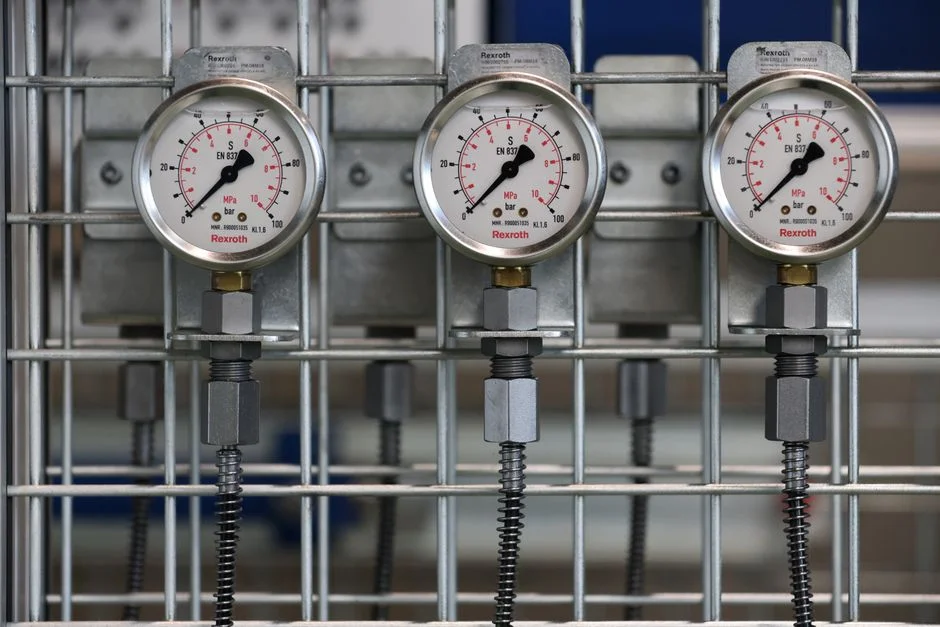
The architecture decision is driven by three variables: the validation burden your QA team will accept, the cloud-readiness of corporate IT, and the number of sites you intend to roll out. Greenfield API plants are converging on OPC UA over IEEE 1588-time-stamped Ethernet per 2026 ISA-95 guidance, while brownfield retrofits typically retain MODBUS TCP at the PLC and bolt an MQTT Sparkplug B edge gateway on top for IIoT publishing.
| Option | Best Fit | Validation Burden | Time to First Data | Risk Profile |
|---|---|---|---|---|
| 1. SCADA on plant server + cellular telemetry | Single-site, 20–60 tags, IT-averse QA | Lowest (one system) | 10–14 weeks | Data loss if cell link drops without buffering |
| 2. Cloud-native IIoT with edge gateway | Multi-site enterprise, 200+ tags, data-science team in place | Highest (cloud + edge) | 14–18 weeks | Vendor lock-in; corporate-IT firewall delays |
| 3. Hybrid — SCADA as source of truth, IIoT for analytics | Multi-product site with EHS dashboards | Moderate (clear data ownership) | 12–16 weeks | Two systems to validate, but cleaner audit trail |
OPC UA is the protocol of choice for greenfield pharma because it bundles authentication, encryption, and structured tag addressing in a single transport. For brownfield retrofits, keep the existing MODBUS TCP register map and publish a Sparkplug B payload to the broker — this preserves the validated PLC code while opening the data to IIoT analytics. Cybersecurity must meet IEC 62443-3-3 SL-2 at minimum; if corporate IT refuses to walk the validation review, air-gap the historian behind a diode and replicate the IIoT payload out via unidirectional gateway. Cellular failover is no longer optional: even small formulation plants now ship with Ethernet-plus-4G/5G cellular as the standard remote site architecture. For a deeper comparison of process optimization software stacks, see the process optimization software comparison guide.
Alarm Management and Compliance Documentation
An unfiltered pharma wastewater SCADA will generate 300–1,000 raw alarms per shift before rationalization — a flood that drives operators to silence, which in turn masks excursion events and is itself a 483 observation. Applying the ISA-18.2 lifecycle (philosophy, identification, rationalization, detailed design, implementation, operation, MOC, audit, KPI reporting) compresses that volume to a defensible 6–10 actionable alarms per operator per shift.
Rationalization starts with an alarm-philosophy document that defines priority levels (typically three: Life/Safety, Environmental Compliance, Operational), acknowledgment rules, and shelving windows. Each candidate alarm is then classified by consequence, time-to-react, and minimum operator response time, with a documented target of 1 alarm per 10 minutes steady-state and 5 per 10 minutes during upset. The full lifecycle templates and rationalization worksheets are in the ISA-18.2 alarm rationalization lifecycle guide.
21 CFR Part 11 and EU GMP Annex 11 compliance is non-negotiable. The SCADA historian must enforce electronic signatures on configuration changes, maintain a tamper-evident audit trail, synchronize time via NTP or IEEE 1588 PTP to within 1 second, support role-based access with unique credentials, and retain e-records for a minimum of 5 years (most pharma QA teams extend this to 10). Procuring a vendor that ships pre-validated IQ/OQ/PQ and FAT/SAT protocols typically saves 6–10 weeks of internal documentation effort — a meaningful margin on a 12-week project.
CAPEX, OPEX, and 90-Day Implementation Roadmap
The defensible 2026 CAPEX band for a pharma-grade remote monitoring retrofit runs from $80,000 for a small formulation plant with 20–40 tags, to $650,000 for a multi-site enterprise roll-out including full 21 CFR Part 11 validation. OPEX settles at 8–12% of CAPEX annually, dominated by cellular data plans, cloud hosting, software licensing, and the annual alarm-rationalization audit plus recertification.
| Plant Profile | Tag Count | CAPEX Band (2026) | Annual OPEX | Lead Time |
|---|---|---|---|---|
| Small formulation | 20–40 | $80K–$180K | $8K–$22K | 10–12 weeks |
| Mid-size API | 60–120 | $200K–$450K | $20K–$50K | 12–16 weeks |
| Multi-site enterprise | 200+ across sites | $500K–$650K | $50K–$75K | 16–24 weeks |
A 90-day roadmap is the shortest defensible schedule QA will approve. Weeks 1–4: URS drafting, P&ID review, and site survey — output is a finalized I/O list and approved basis-of-design. Weeks 5–8: procurement, panel build at the integrator's shop, and client FAT preparation. Weeks 9–12: FAT at the panel shop, shipment, on-site install, IQ/OQ execution, SAT, and go-live with the first batch of e-records handed to QA. Vendor selection should weight four criteria equally: documented pharma reference installs, a written 21 CFR Part 11 conformance statement, ATEX/IECEx certification scope matched to your solvent streams, and a lifecycle support agreement covering alarm-rationalization re-audits. The coagulation and disinfection loops pair naturally with the SCADA platform through PLC-controlled chemical dosing skids and on-site chlorine dioxide generation tied into the SCADA platform, closing the control loop from online analyzers to actuated dosing without operator intervention.
Frequently Asked Questions
What does 21 CFR Part 11 require for pharmaceutical wastewater monitoring data?
Electronic records must carry a tamper-evident audit trail, unique user credentials, role-based access, electronic signatures on configuration changes, and a minimum 5-year retention period; timestamps must be synchronized to within 1 second via NTP or IEEE 1588 PTP (per 21 CFR Part 11 §11.10).
How many alarms should a single operator handle per shift in a pharma wastewater plant?
ISA-18.2 targets 6–10 actionable alarms per operator per shift steady-state, with no more than 5 alarms per 10 minutes during upset — typically down from 300–1,000 raw alarms pre-rationalization.
What COD and BOD limits apply to pharmaceutical effluent under U.S. federal rules?
EPA 40 CFR 433 sets a COD daily maximum of 252 mg/L and a BOD₅ monthly average of 71 mg/L for the pharmaceutical manufacturing point source category (per 40 CFR 433.16).
When does an effluent analyzer require ATEX or IECEx Zone 1 certification?
When the analyzer sits in or above a stream carrying more than 10% v/v of a flammable solvent (methanol, acetone, ethanol, DCM), the enclosure and any energized component must carry ATEX/IECEx Zone 1 certification per IEC 60079-10-1.
What is a defensible 2026 CAPEX band for a mid-size API plant retrofit?
A mid-size API plant with 60–120 monitored tags typically falls between $200,000 and $450,000 including hardware, panel integration, validation documents, and one year of support (HydropureWater field data, 2026).