Identify the Rules That Control the Sewer Discharge
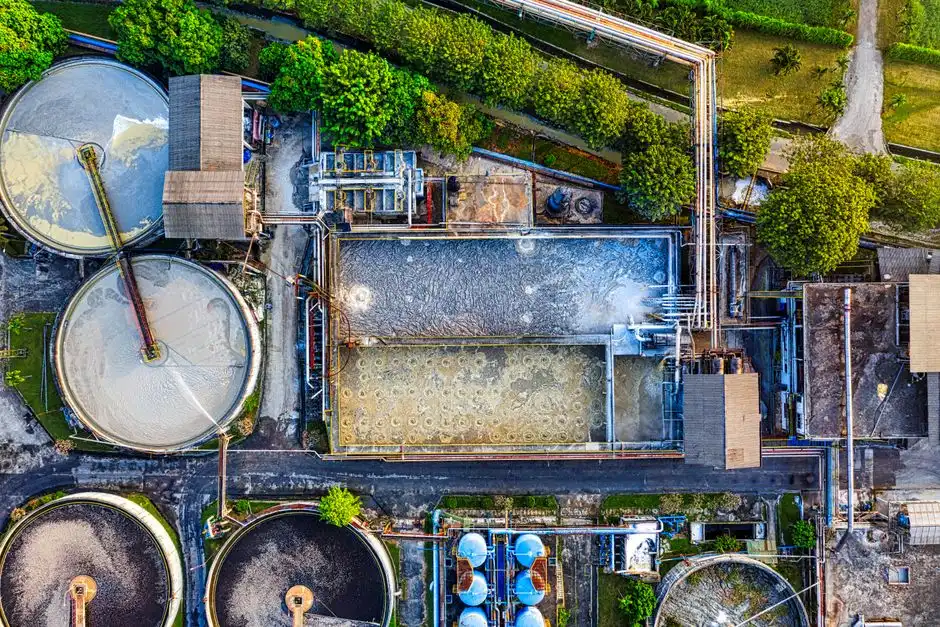
Mining and metals plants near Hoolcomb meet pretreatment limits by treating wastewater to the more stringent of the applicable categorical standard and the receiving POTW’s approved local limits before discharge at the sewer connection. EPA identifies the governing framework as Clean Water Act §307(b), 40 CFR Part 403, and any applicable categorical rule under 40 CFR Part 437 or Part 433. A practical train typically uses equalization, automatic pH and chemical dosing, precipitation and flocculation, DAF or lamella clarification, filtration, continuous monitoring, and controlled sludge dewatering. No universal “Hoolcomb limit” should be assumed: obtain the current sewer-use ordinance, permit, and categorical subcategory before final sizing.
An indirect discharge to a POTW is governed by Clean Water Act §307(b) and 40 CFR Part 403; direct discharges to surface waters use the NPDES framework under §402. EPA’s Pretreatment Standards and Requirements—Local Limits states that POTWs impose local limits at the industrial user’s end-of-pipe discharge, meaning the point of connection to the POTW collection system. This is a different compliance boundary from an outfall to a receiving stream.
Categorical standards establish federal requirements for the applicable industrial category. Local limits are site-specific and address the POTW, its sludge, and receiving waters. EPA’s Local Limits Development Guidance (2021) describes the five-part maximum allowable headworks loading approach: determine pollutants of concern, collect and analyze data, calculate MAHLs, designate and implement local limits, and address collection-system concerns. The guidance is advisory; the operative regulation, permit, sewer-use ordinance, or issued control mechanism controls if there is a conflict.
Determine the actual operation before selecting equipment. Ore mining and dressing may fall under 40 CFR Part 437, while plating, pickling, or anodizing may trigger 40 CFR Part 433. Request the current sewer-use ordinance, industrial-user permit or equivalent control mechanism, local limits, monitoring requirements, prohibited-discharge rules, sampling-point definition, and enforcement history from the control authority. More detail on adjacent workflows appears in the mining and metals sewer-limit compliance guide and the fabricated-metals pretreatment compliance workflow.
| Evidence layer | What it establishes | Buyer action |
|---|---|---|
| Applicable categorical rule | Federal requirements for the classified operation | Confirm operation and subcategory |
| POTW local limits | Site-specific numerical or narrative discharge conditions | Obtain current ordinance and control mechanism |
| Equipment guarantee | Vendor’s proposed performance at stated influent conditions | Require a measured design and solids balance |
Build a Verified Design Basis from Wastewater Data
A defensible pretreatment design requires representative source data, not a generic concentration table. EPA’s 2021 Local Limits Development Guidance requires the POTW to determine pollutants of concern, collect and analyze data, calculate MAHLs, designate and implement local limits, and address collection-system concerns. The industrial user should obtain the POTW’s developed limits rather than independently treat a summary of generic values as binding.
Separate acid mine drainage, spent process solutions, leach-pad runoff, equipment wash, vehicle wash, truck-wash, and metal-finishing streams. Characterize average flow, peak flow, batch-dump cycles, diurnal pH swings, dissolved and total metal fractions, and arsenic oxidation state where applicable. The sampling program should cover pH, TSS, oil and grease, copper, zinc, lead, nickel, cadmium, arsenic, sulfate, TDS, and any PFAS or other parameters required by the control authority.
Values such as pH 6.0–10.0, TSS at or below 250–500 mg/L, total arsenic at or below 0.5 mg/L, iron and manganese at or below 5–10 mg/L each, and oil and grease at or below 100 mg/L are not confirmed Hoolcomb requirements. They are items to ask the receiving POTW about when defining the sewer-use envelope. Likewise, the scope and subcategory limits under 40 CFR 437.40–437.47 must be confirmed against the facility’s actual process. If metal finishing applies, 40 CFR 433.15 provides copper limits of 3.38 mg/L daily maximum and 2.07 mg/L monthly average, and total chromium limits of 2.77 mg/L daily maximum and 1.71 mg/L monthly average, as identified in HydropureWater’s mining and metals pretreatment guidance (2026).
| Design-basis field | Required information | Acceptance question |
|---|---|---|
| Flow | Daily average, peak, batch, and storm conditions | Does the proposal handle every documented discharge condition? |
| Pollutants | Measured concentrations and required averaging periods | Are all limits tied to the current POTW documents? |
| Treatment chemistry | Dissolved versus total metals and arsenic oxidation state | Does the selected process address the measured species? |
| Solids | Clarifier sludge, DAF float, and backwash generation | Is the dewatering train included in the balance? |
For a broader review of chemistry and equipment implications, see the high-TDS wastewater engineering guide.
Equalize and Condition the Wastewater
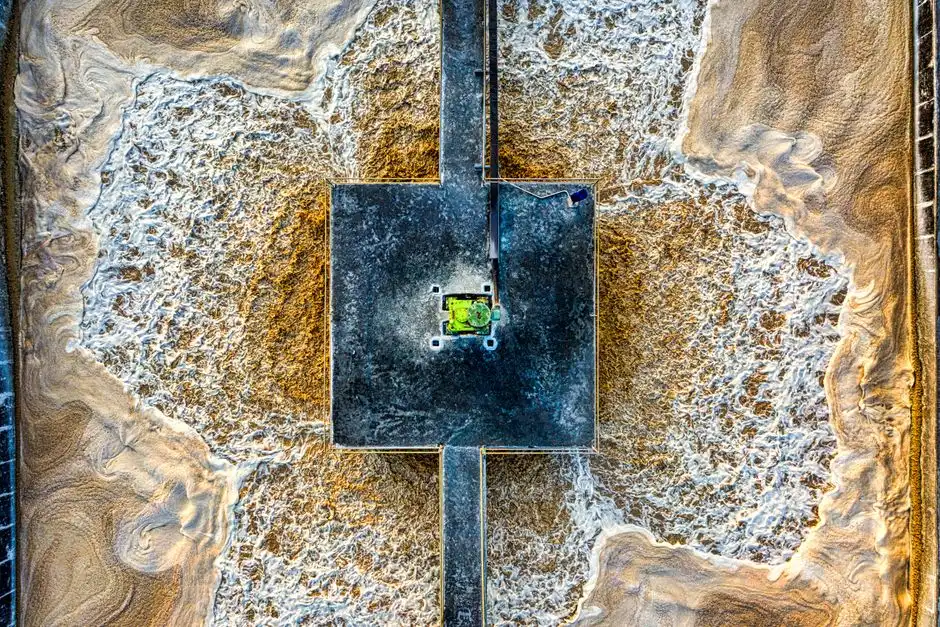
Equalization must buffer batch discharges before they reach chemical dosing or solids separation. HydropureWater’s mining and metals pretreatment guidance (2026) recommends 8–24 hours of average daily flow for shift changes, dump-leach cycles, and mill clean-outs. The final basin volume still requires a hydraulic and mass-balance calculation using measured average flow, peak discharge, batch duration, and permitted diversion capacity; the recommendation is not a substitute for those inputs.
Use automatic pH and reagent control rather than depending only on manual operator adjustments. A PLC-controlled pH and chemical dosing skid can use an in-line pH probe and staged reagent addition. Jar testing should determine the pH setpoint, dose range, mixing condition, and polymer requirement for the actual water chemistry.
Lime and caustic are common reagents for pH adjustment and metals hydroxide precipitation. Reagent selection must account for chemical demand, sludge production, salinity, handling, and downstream disposal. HydropureWater’s 2026 pretreatment guidance reports 85–95% total-metals removal for properly controlled hydroxide precipitation using NaOH or lime. That is an operating-system performance range, not a guaranteed result for an untested Hoolcomb wastewater.
Sulfide treatment should be reserved for a verified residual target that hydroxide precipitation cannot meet without excessive chemical use. The same 2026 source compares sulfide residuals of 0.01–0.05 mg/L for copper, zinc, cadmium, and nickel with hydroxide residuals of 0.5–2.0 mg/L, while reporting 2–4 times higher reagent cost and a need for sealed reactors and hydrogen sulfide control. Add coagulation and flocculation only after testing demonstrates that the selected coagulant destabilizes the solids and the resulting floc settles or floats adequately.
The process sequence is therefore: segregate streams; equalize flow and chemical demand; adjust pH; precipitate metals; condition the solids; and verify residual concentrations before selecting the clarification method.
Remove Solids with the Right Clarification Technology
DAF and lamella clarification are not interchangeable because they remove different contaminants. HydropureWater’s 2026 comparison reports DAF hydraulic loading of 5–25 m³/m²·h, TSS removal of 90–98%, oil and grease removal of 85–95%, and standard capacities from 4–300 m³/h. These figures apply to the comparison’s stated mining and metal-finishing service conditions and must be checked against the selected unit and feed chemistry.
Choose DAF when the wastewater contains oil, grease, hydrocarbons, or fine colloidal solids. An industrial DAF system for metals wastewater is more suitable than lamella for those characteristics. The comparison states that lamella is less effective for free oil and colloidal fines.
Choose lamella clarification when the dominant waste is metal-hydroxide sludge, higher flow must be handled, and the available footprint is constrained. The 2026 comparison reports lamella surface loading of 20–40 m/h and approximately one-third the footprint of a conventional clarifier. Those are selection-stage values, not guarantees for the final operating envelope.
| Decision factor | DAF | Lamella clarification |
|---|---|---|
| Primary fit | Oil, grease, hydrocarbons, fine colloids | Metal-hydroxide sludge |
| Reported hydraulic or surface loading | 5–25 m³/m²·h | 20–40 m/h |
| Reported removal | 90–98% TSS; 85–95% oil and grease | Heavy metal-hydroxide floc handling |
| Footprint | Requires evaluation for the selected duty | Approximately one-third of a conventional clarifier in the cited comparison |
| Main design check | Oil content, solids character, peak flow | Floc settleability, sludge blanket, footprint |
Specify parallel DAF trains or parallel clarifiers when peak flow, redundancy, maintenance continuity, or turndown cannot be met by one unit. Require the vendor’s solids balance to include clarifier sludge, DAF float, and filter backwash waste. All streams must reach a controlled dewatering system. Final selection should follow measured wastewater characteristics and confirmed POTW limits, not a generic removal claim. The industrial DAF selection and cost framework provides a useful comparison structure.
Polish the Effluent and Manage the Residual Sludge
Filtration should be selected around the failure modes of the upstream clarifier. HydropureWater’s 2026 comparison reports multi-media filtration at 1–2 m/h and residual TSS below 10 mg/L. The appropriate rate depends on hydraulic surges, filter configuration, backwash capacity, and the actual suspended-solids distribution; the cited result should not be treated as a plant guarantee.
UF is a polishing barrier when fine suspended solids, colloids, or turbidity remain problematic. The supplied UF comparison identifies performance below 1 NTU turbidity and below 5 mg/L TSS. It also describes a 0.03 µm PVDF configuration accepting feed turbidity up to 300 ppm and using automatic backwash and air scour. Verify those conditions against the selected membrane module and actual wastewater before including them in a purchase specification.
Arsenic requires an explicit process gate. If As(III) is present, require engineered oxidation followed by iron-arsenate co-precipitation before membrane separation. Hydroxide precipitation alone should not be assumed to capture As(III) adequately. The relevant equipment may include an ultrafiltration polishing system and a multi-media solids-removal filter, selected according to the measured solids and arsenic treatment path.
Route clarifier sludge, DAF float, and filter backwash to a plate-and-frame filter press. Return filtrate to the process only after checking its chemistry, pollutant concentrations, and effect on equalization and treatment capacity. Before selecting a disposal route, confirm the waste’s regulatory classification, accepted destination, transporter requirements, and any constituent-specific restrictions for landfill, smelter, or other disposal.
Monitor, Document, and Respond Before an Excursion
The end-of-pipe compliance plan should detect process failures before they become permit exceedances. Install continuous pH and flow measurement at the compliance point, with automatic diversion, alarm escalation, and a permitted stormwater or segregated-waste route where available. The monitoring plan must follow the POTW’s required sampling frequency, averaging period, analytical method, and chain-of-custody procedures; a federal surface-water monitoring schedule does not automatically govern sewer discharge.
Trend hydraulic loading, chemical dose, pH, turbidity, TSS, and metal concentrations. These records help operators identify a failed stage before a composite sample reaches the sewer. Establish defined responses for excessive pH, clarifier carryover, high filtration differential pressure, chemical interruption, and a potential monthly-average exceedance.
HydropureWater’s mining and metals guidance (2026) cites civil penalties under Clean Water Act §309 of up to $25,000 per day per violation. Treat this as risk context, not a prediction of enforcement in a Hoolcomb case. The proper engineering response is to reduce the probability and duration of an exceedance through equalization, automatic controls, redundant equipment, diversion capability, and tested operating procedures.
Maintain the current industrial-user permit or equivalent control mechanism, sewer-use ordinance, local limits, sampling records, calibration records, chemical logs, sludge analyses, training records, and corrective-action reports in one compliance file. The metals wastewater monitoring and process-control reference provides a useful adjacent review.
Use a Decision Framework to Compare Equipment Proposals
Equipment proposals should be compared against the same verified design basis. Require each bidder to identify assumed daily average flow, peak flow, equalization duration, influent pollutants, categorical subcategory, POTW local limits, and end-of-pipe sampling point. A proposal that omits any of these inputs is not a complete basis for comparison.
Request a stage-by-stage mass balance showing duty flow, hydraulic loading, chemical consumption, solids production, controls, redundancy, power, maintenance, and sludge dewatering. Compare DAF and lamella bids using measured stream composition, footprint, footprint-driven capital cost, chemical use, sludge dryness, maintenance, and turndown. Headline flow capacity does not resolve these differences.
| Bid review | Required supplier evidence | Decision consequence |
|---|---|---|
| Capacity | Average and peak-flow calculations, including batch and storm cases | Rejects sizing based only on average flow |
| Compliance | Guarantee tied to confirmed categorical and local limits | Separates regulatory requirements from vendor claims |
| Clarification | DAF or lamella duty basis, loading, footprint, and sludge balance | Supports like-for-like process comparison |
| UF | Feed turbidity, cleaning, element replacement, and downtime response | Prices polishing and failure risk |
| Controls | Control narrative, alarms, diversion, and operator interface | Defines excursion response |
| Acceptance | Test method, averaging period, and commissioning protocol | Creates an enforceable acceptance basis |
Price the 0.03 µm PVDF UF option as a polishing and risk-control decision, not an automatic requirement. The supplier should state feed-turbidity limits, cleaning strategy, replacement elements, and the consequences of membrane downtime. Use the cited $25,000-per-day penalty exposure as a scenario input for risk comparison, not as justification for equipment the measured wastewater does not require.
Make final acceptance criteria the applicable categorical requirement and confirmed POTW local limit, whichever is more stringent, with test methods and averaging periods written into the purchase specification. Use the mining and metals sewer-limit compliance guide to standardize pre-proposal requirements.
Frequently Asked Questions
What pretreatment limits apply to mining and metals plants near Hoolcomb?
There is no universal Hoolcomb-area mining limit. Confirm the receiving POTW’s current sewer-use ordinance, industrial-user permit or equivalent control mechanism, monitoring requirements, and applicable categorical subcategory. Sewer discharge is governed through Clean Water Act §307(b) and 40 CFR Part 403, and the controlling compliance point is the industrial user’s end-of-pipe connection.
How should pretreatment equipment be sized?
Begin with measured average and peak flows, batch-discharge cycles, storm or runoff conditions, pollutant concentrations, and required averaging periods—not the categorical concentration limit alone. Then verify the solids and chemical mass balances and size equalization, clarification, filtration, and dewatering against those inputs.
Should a plant use hydroxide precipitation, sulfide treatment, DAF, lamella, or UF?
Hydroxide precipitation is generally the first-stage choice for many metals streams, but sulfide treatment or another polishing process should be justified by the verified residual-metal target and operating complexity. DAF and lamella are bulk-solids separation options with different strengths: DAF is better suited to oil and colloidal material, while lamella suits metal-hydroxide sludge. UF polishes residual solids and colloids; it does not replace clarification.
What should a buyer request before accepting a supplier’s price?
Request the design basis, compliance guarantees, control narrative, solids balance, maintenance plan, commissioning protocol, and the conditions supporting quoted treatment performance. For pricing, give each bidder the measured flow and pollutant profile, confirmed local limits, equalization requirement, and disposal assumptions so quotations can be compared on the same scope. No defensible price can be established without those inputs and a site-specific proposal.
Related Equipment
- industrial DAF system for metals wastewater — specifications, capacity range, and technical data