Which Treatment Fits New Albany Fabricated Metals Wastewater?
For fabricated metals wastewater in New Albany, favor an MBR when limited footprint, low suspended-solids effluent, or water reuse justify added membrane, fouling-control, and maintenance complexity. Conventional activated sludge may require less initial mechanical complexity and is often simpler to operate, but it generally needs more space for biological treatment and secondary clarification. MBR combines biological treatment with membrane filtration, a configuration widely used for municipal and industrial wastewater treatment. The final choice should follow site-specific characterization, discharge-limit review, and pilot testing—not a generic equipment comparison.
Fabricated metals plants may combine machining fluids, cutting oils, suspended metal-bearing solids, cleaning chemicals, and variable sanitary and process flows. Those streams should not be treated as one uniform wastewater without sampling. The decision rule is conditional: use MBR where footprint, effluent consistency, retrofit constraints, or reuse have measurable value; use conventional activated sludge where installation simplicity and operator familiarity dominate and adequate land is available.
The technical basis is the 2021 Elsevier review, Membrane bioreactor for wastewater treatment: A review, which describes MBR as the integration of biological treatment with membrane filtration and identifies its application in municipal and industrial wastewater treatment. Equipment catalog claims must remain separate from project guarantees. For example, the integrated submerged-PVDF MBR system specifies filtration below 1 μm and a footprint 60% smaller than conventional systems; those are catalog-specific claims that require validation against the proposed New Albany application, not universal performance guarantees.
Map the Wastewater Before Choosing a Bioreactor
Wastewater characterization—not a bioreactor name—determines whether either biological process is technically viable. Request an hourly flow profile and campaign-based samples covering machining, washing, rinsing, painting-adjacent, and floor-wash operations, because a single composite sample can hide the variations that drive fouling and biological upset.
- Build a representative flow and sampling record for every significant discharge.
- Characterize oil and grease, suspended solids, pH, metals, COD, BOD, toxicity, salinity, and cleaning chemistry.
- Identify whether those constituents inhibit, shock, or continuously burden biological treatment.
- Define the required effluent or reuse specification before selecting equipment.
Industrial wastewater pretreatment can determine whether the downstream biology remains stable. A DAF pretreatment for metalworking wastewater is relevant where testing identifies suspended solids, free or emulsified oil and grease, or colloidal material. DAF is not automatically required, and its performance must be demonstrated against the actual waste stream rather than inferred from a generic contaminant list.
The normal process map is equalization and characterization, followed by pH or chemical conditioning where necessary, oil and solids removal, biological treatment, solids separation, and disinfection or reuse treatment as required. The characterization request in this industrial trade-waste treatment discussion is useful as a reminder that flow and composition must be connected to unit-process performance.
| Design input | What the buyer must obtain | Why it affects treatment selection |
|---|---|---|
| Flow | Hourly, daily, campaign, and peak discharge record | Sets biological loading, equalization, membrane area, and peak-handling requirements |
| Organic load | COD and BOD across operating campaigns | Indicates biological treatability and oxygen demand |
| Oil and solids | Oil and grease, suspended solids, and settleable solids | Defines pretreatment needs and membrane-fouling exposure |
| Inhibitors | pH, metals, toxicity, salinity, and cleaning chemicals | May constrain biological treatment or require source control |
| Performance basis | Permit, sewer-authority, or reuse specification | Provides the required output against which bids can be compared |
The supplied research contains no universal acceptance ranges for metals, inhibitory chemicals, or highly variable industrial waste. Require each bidder to state its treatment envelope, pretreatment dependence, and performance guarantees.
MBR and Activated Sludge Perform the Same Core Job Differently
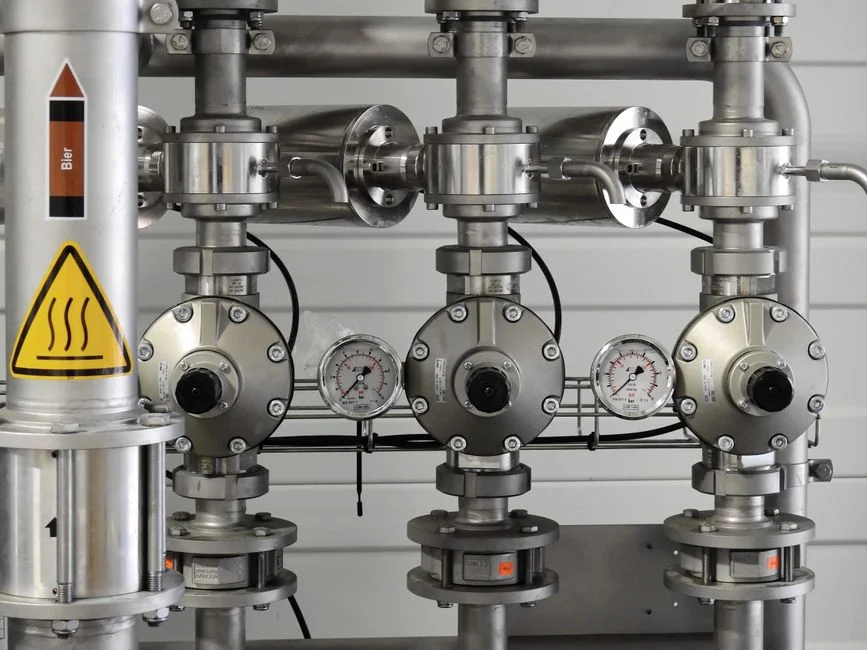
Conventional activated sludge separates biological treatment from solids separation: microorganisms reduce biodegradable organics in an aerated reactor, and biomass is then separated in a secondary clarifier. MBR integrates membrane filtration with the biological process, so membrane separation replaces the clarifier function within the treatment train.
The 2021 Elsevier review identifies organic and inorganic matter removal as core benefits of MBR treatment and describes MBR use across municipal and industrial wastewater. Membrane separation can also produce a more compact installation and tightly controlled solids separation. Those benefits come with membrane fouling, aeration, cleaning, controls, and replacement requirements.
The process distinction matters because the MBR is not simply a smaller secondary clarifier. The membrane retains solids in the reactor and permits a higher concentration of biomass under controlled conditions, while the membrane itself becomes a process element that can foul, require cleaning, or constrain hydraulic operation. Conventional activated sludge retains its clarifier and associated solids inventory, giving the operator a different hydraulic and maintenance profile.
The 2016 Frontiers in Environmental Science review on combining electrochemical processes with MBRs describes internal and external configurations that combine biodegradation, electrochemical treatment, and membrane filtration. Its reported effluent-quality and fouling-control potential must not be transferred directly to a New Albany plant. Any electrochemical enhancement would require application-specific validation, an added treatment objective, and an assessment of added power and controls.
A more detailed MBR versus MBBR industrial comparison can help distinguish membrane separation from other attached-growth processes, but the final choice still depends on solids loading, hydraulic variability, and the available treatment envelope.
Compare Effluent Quality, Footprint and Operating Burden
MBR and conventional activated sludge can both remove biodegradable organics, but they differ in solids separation, footprint, fouling exposure, and the operating controls required to sustain effluent quality. The comparison below identifies procurement criteria; it does not convert catalog claims into guarantees for a New Albany site.
| Criterion | MBR | Conventional activated sludge | Buyer check |
|---|---|---|---|
| Process configuration | Integrated biological treatment and membrane filtration | Biological treatment followed by secondary clarification | Require process drawings, hydraulic profiles, and treatment envelopes |
| Solids separation | Membrane separation | Gravity clarification | Compare required solids concentration, overflow conditions, and clarification performance |
| Footprint | Can reduce the installed treatment footprint when clarifier capacity is avoided | Requires biological volume and secondary-clarifier area | Use the site layout and actual tank volumes, not a headline percentage |
| Effluent consistency | Controlled membrane separation can support consistent suspended-solids performance | Clarifier performance depends on hydraulic loading and sludge condition | Compare guaranteed effluent against the actual permit or reuse specification |
| Reuse potential | May support reuse where its guaranteed effluent meets the intended specification | May require additional solids removal or polishing | Define reuse end use and required quality before pricing |
| Fouling | Membrane fouling is a central operating risk | Clarifier carryover and sludge separation are central risks | Require cleaning intervals, recovery method, response time, and spares |
| Operator attention | Requires membrane-system control, cleaning, and replacement planning | Generally emphasizes aeration, wasting, and clarifier operation | Compare staffing and alarm response with actual shift coverage |
| Energy demand | Includes membrane aeration or pumping as applicable | Includes biological aeration and solids-handling pumps | Compare site-specific demand rather than catalog comparisons |
| Sludge handling | Produces concentrated solids requiring a disposal or reuse route | Produces waste activated sludge requiring the same route | Price dewatering, transport, and final disposition |
| Retrofit suitability | Can be attractive where clarifier space is constrained | May be practical where an activated-sludge train already exists | Evaluate existing tanks, utilities, controls, and construction conflicts |
The HydropureWater catalog specifies filtration below 1 μm for its integrated MBR and states that the system has a 60% smaller footprint than conventional systems. These are product specifications with the catalog’s stated comparison scope. The sub-micron figure does not establish dissolved-metals removal, regulatory compliance, or suitability for every reuse application.
The 2021 Elsevier review identifies membrane fouling as the main obstacle to broader MBR adoption and discusses fouling-mitigation methods. Pretreatment performance, cleaning chemistry, cleaning recovery, spare-parts availability, and replacement strategy therefore belong in the technical and commercial comparison—not as footnotes.
No supplied source provides a guaranteed New Albany installation price, energy consumption, or lifecycle-cost value for either technology. Ask bidders to normalize energy and operating demand by verified flow and required effluent quality. An MBR membrane bioreactor module should be evaluated as part of a complete treatment train, not as a stand-alone capacity claim.
Size the MBR from Verified Project Inputs
Membrane area and production capacity are meaningful only after the waste profile, pretreatment duty, target effluent, and hydraulic variability are established. At minimum, request design flow, peak flow, wastewater characterization, pretreatment performance, target effluent, available footprint, power availability, operating shifts, and reuse demand.
The DF Series catalog provides the following configuration data:
| DF Series catalog parameter | Stated scope |
|---|---|
| Membrane pore size | 0.1 μm |
| Membrane area configurations | 80–225 m² |
| Production capacity | 32–135 m³/day |
| Energy comparison | 10–20× lower energy consumption than external cross-flow systems |
The energy statement compares the DF Series with external cross-flow systems; it is not a comparison with every conventional activated-sludge installation and does not include site-specific aeration, pumping, pretreatment, or solids-handling loads. Use it to frame a question, not to complete a lifecycle-cost calculation.
Submerged and external membrane configurations should be compared against the same project inputs. Request guaranteed flux, cleaning frequency, cleaning recovery, membrane life, replacement strategy, installation requirements, and the operating envelope on which the guarantee depends. If production activity changes the waste composition substantially, or inhibitory compounds remain uncertain, run a pilot or a side-by-side performance test.
Pilot results should be tied to the same acceptance questions used in procurement: can the process meet the effluent specification, how quickly does fouling develop, what recovery method works, how much chemical and labor are required, and what happens during a cleaning event or temporary shutdown? A successful pilot should also expose the waste variability that a short laboratory test may miss.
Compare Lifecycle Cost Without Inflating MBR Savings
A lower equipment price or smaller footprint does not establish the lower lifecycle cost. The 2021 Elsevier review’s discussion of fouling reinforces why cleaning, recovery, and replacement must be priced with the reactor rather than treated as future maintenance.
Request comparable proposals that include:
- Equipment, installation, equalization, pretreatment, biological reactor, membranes, aeration, pumping, controls, and commissioning.
- Chemical cleaning, membrane replacement, critical spares, sludge handling, utilities, labor, monitoring, and operator training.
- Performance guarantees, accepted test methods, alarm response, cleaning frequency, downtime assumptions, and warranty exclusions.
Normalize each proposal by verified flow, required effluent quality, redundancy, and the guaranteed performance envelope. Identify the value of avoided land or construction footprint, more consistent solids separation, reduced clarification equipment, and reuse potential—but attach a site-specific assumption to each value. If the plant does not have land scarcity, reuse demand, or a solids-sensitive discharge route, those benefits may not justify the additional MBR operating burden.
Do not publish a per-m³ cost without current vendor quotations and site inputs. The 2026 MBR wastewater cost per m³ guide provides a framework, while membrane and replacement assumptions should be checked against the relevant RO and UF membrane product information without treating catalog pricing as a project quotation.
Include downtime exposure in the evaluation. A bidder should state expected cleaning intervals, recovery method, response time, membrane availability, critical-spares lead time, and what performance remains available during a module or pump failure. That information matters more than a generic energy-saving percentage.
Choose MBR or CAS with a Site Decision Framework
The selection should proceed through five gates, with a failed gate returning the project to characterization or pretreatment rather than forcing a technology choice.
- Characterize and establish biological compatibility. Confirm representative flows, loads, contaminants, variability, and inhibitory chemistry. If the waste cannot support the intended biological process under stable conditions, neither MBR nor conventional activated sludge is the solution.
- Verify the receiving and reuse requirements. Obtain the New Albany permit, sewer-authority requirements, or reuse specification. The supplied research contains no numeric New Albany discharge limits, so the relevant authority must provide them.
- Test the site constraints. Decide whether footprint, retrofit interference, solids-sensitive effluent, or reuse value outweigh the operating simplicity of conventional activated sludge.
- Require an integrated treatment plan. Each bid should include pretreatment, a pilot where warranted, fouling control, membrane warranty, controls, commissioning, and a sludge-handling route.
- Award on performance and lifecycle cost. Compare guaranteed output, operating resources, downtime exposure, and total cost on the same verified basis rather than headline capacity or a generic footprint percentage.
This framework adapts the decision logic in comparisons for MBR versus activated sludge for metals wastewater and an industrial MBR versus activated-sludge comparison, but fabricated metals wastewater requires its own plant data. Mining and semiconductor examples cannot supply missing information about machining fluids, cleaning chemicals, floor wash, or production variability.
The conditional verdict remains straightforward: choose MBR for constrained, reuse-oriented, or solids-sensitive installations where the bidder can guarantee the required effluent and control fouling. Choose conventional activated sludge for simpler treatment where space is available, operator familiarity matters, and biological treatment plus secondary clarification can meet the required output.
Frequently Asked Questions
What does an MBR cost for a New Albany fabricated-metals plant?
There is no defensible universal price from the supplied research. Request itemized bids for equipment, installation, equalization, pretreatment, membranes, aeration, pumping, controls, cleaning chemicals, replacement, sludge handling, utilities, labor, and commissioning. Normalize the bids by verified flow and required effluent quality, then use the 2026 MBR wastewater cost per m³ guide as a costing framework rather than a substitute for a quotation.
How should an MBR system be sized for metalworking wastewater?
Size it from design and peak flow, the campaign-based wastewater profile, pretreatment results, target effluent, footprint, power, staffing, and reuse demand. The DF Series catalog covers 0.1 μm membranes, 80–225 m² configurations, and 32–135 m³/day production capacity; those figures define catalog configurations, not a guaranteed New Albany duty. Require the vendor to map the selected configuration to the verified design basis.
When is DAF pretreatment relevant to fabricated metals wastewater?
DAF is relevant when testing identifies suspended solids, oil and grease, or colloidal material that needs removal before biological treatment and membrane separation. It does not remove every inhibitor or dissolved contaminant. Require a waste-specific jar or pilot test and define the required outlet quality from the DAF unit before accepting it as pretreatment.
How should a wastewater-treatment supplier be selected?
Require guarantees for effluent quality, membrane life, cleaning intervals, recovery after cleaning, critical spares, controls, installation, commissioning, and lifecycle support. Also request the treatment envelope, downstream sludge route, operator-training scope, and response time for membrane or pump failures. Product specifications such as sub-micron filtration do not replace supplier performance guarantees.
Does filtration below 1 μm prove regulatory compliance?
No. A filtration specification describes an equipment parameter, not compliance with a New Albany discharge permit or a reuse requirement. Obtain the applicable permit or sewer-authority limits, then require the vendor to demonstrate the complete treatment train against those requirements using the agreed test method.