
Start with the permit and wastewater fingerprint
Semiconductor plants near Tianjin must meet pretreatment limits by identifying the applicable local sewer and discharge permit, characterizing arsenic, fluoride, COD, solids, and silica, then selecting treatment from that profile. The Tianjin GaAs wastewater pilot used two-stage coagulation plus ion exchange and achieved arsenic removal above 99.998%; its biochemical sequence achieved 95.7% COD removal. Fluoride precipitation requires controlled pH: HydropureWater’s 2026 guide cites 8.5–9.5 for calcium precipitation. Although China GB 8978-2024 is cited as setting 10 mg/L fluoride and 0.1 mg/L arsenic, the plant permit and receiving-sewer requirements govern acceptance.
Begin with the current direct-discharge permit, any pretreatment agreement with the receiving sewer, sewer operating conditions, required monitoring frequency, and whether the project must achieve reuse rather than merely compliant discharge. HydropureWater’s 2026 semiconductor wastewater standards guide cites China GB 8978-2024 reference limits of 10 mg/L fluoride and 0.1 mg/L arsenic. Those values are design references, not a complete site-specific compliance determination: the current permit and sewer controls may impose different limits, sampling conditions, or operating obligations.
Build the wastewater fingerprint from current plant data. Sample GaAs etching and cleaning, wafer processing, CMP slurries, photoresist stripping, and general drains for flow, pH, arsenic, fluoride, COD, TSS, silica, and relevant metals. Record production conditions and batch identities because dilute and concentrated streams can change the treatment duty substantially. HydropureWater’s 2026 guide distinguishes GaN, SiC, GaAs, and silicon wastewater chemistries, so a generic silicon-fab profile should not be assumed.
Preserve segregation and batch traceability. Route arsenic-bearing, fluoride-bearing, high-organic, and high-solids streams separately until testing confirms that combining them will not impair precipitation, biological treatment, membrane performance, or sludge handling. An PLC-controlled chemical dosing system can control reagent feed, but its feed basis is only credible if operators can measure the relevant stream composition and verify dosage against laboratory results.
| Information to obtain | Why it controls the decision | Design record |
|---|---|---|
| Current discharge permit and sewer agreement | Establishes governing limits, monitoring, and discharge conditions. | Permit revision, sampling points, reporting frequency |
| Source wastewater characterization | Determines contaminant-specific barriers and sizing basis. | Flow, pH, arsenic, fluoride, COD, TSS, silica, metals |
| Batch and segregation map | Prevents dilute and concentrated streams from being averaged together. | Source, destination, production condition, retained sample |
| Disposal and reuse objectives | Separates sewer-compliant treatment from near-zero-discharge reuse. | Effluent destination, reuse specification, solids route |
Match each waste stream to its pretreatment barrier
The Tianjin pilot demonstrates a contaminant-specific sequence: two-stage coagulation plus ion-exchange resin removed more than 99.998% of arsenic before biochemical treatment. That performance belongs to the reported pilot application and cannot be transferred to another fab without representative testing.
Fluoride requires a different barrier. HydropureWater’s 2026 guide describes calcium precipitation at pH 8.5–9.5 with 30–60 minutes of reaction residence time. Verify the actual plant pH against reagent dosing and mixing performance because the same source reports a Suzhou GaN case at pH 7.5–8.0 and 12 mg/L fluoride against the cited 10 mg/L China GB 8978-2024 limit. This is documented failure mode, not a universal operating condition.
High suspended solids and colloids need solids separation before membrane treatment. Oberlin Filter reports one semiconductor application reducing solids from above 500 ppm to below 1 ppm and clarity from above 1,000 NTU to below 1 NTU. A DAF or lamella clarification stage should therefore be evaluated where filtration load, membrane fouling, or sludge capture requires it.
Organics should be routed according to their effect on the biological stage. The Tianjin GaAs pilot used ozone oxidation, hydrolytic acidification, and biological contact oxidation, reporting 95.7% COD removal. Do not use RO or UF as a substitute for upstream arsenic, fluoride, colloid, or scale-former removal. Membranes polish the stream; they do not remove the need for appropriate pretreatment.
| Waste stream or contaminant | Primary barrier | Verification |
|---|---|---|
| Arsenic-bearing GaAs wastewater | Two-stage coagulation and ion exchange, using the Tianjin pilot as reference | Arsenic across treatment stages and final effluent |
| Fluoride-rich etching wastewater | Calcium precipitation with controlled alkalinity and sufficient reaction residence time | pH, fluoride, precipitation solids and filtrate quality |
| High TSS or colloidal material | DAF, lamella clarification or other solids separation before membranes | TSS, turbidity, solids capture and sludge removal |
| High-organic stream | Source-separated biological treatment where the organic load requires it | COD, toxicity, alkalinity, nutrients and biological stability |
Equipment evaluation should align each barrier with the stream it receives. Relevant options include a DAF machine, an automatic chemical dosing system, a high-efficiency sedimentation tank, and a UF water treatment system.
Build a treatment train that can be verified
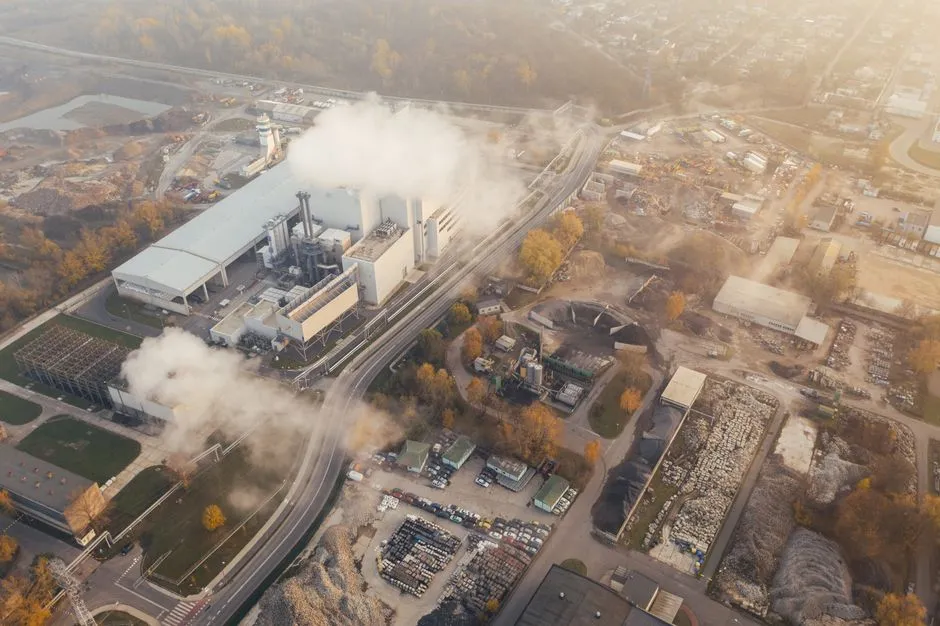
A defensible treatment train progresses from equalization and segregation through contaminant-specific dosing and solids separation, then biological treatment where required, membrane polishing, and optional evaporation and crystallization. Every stage needs an influent, intermediate, and effluent measurement point so operators can identify which barrier is failing.
HydropureWater’s 2026 guide describes an MBR application with more than 99.9% TSS removal and COD below 50 mg/L. For RO polishing, the same guide reports 75–90% recovery, 15–25 bar operating pressure, and permeate below 10 mg/L TDS. These are reported design values, not universal performance guarantees. An integrated MBR wastewater treatment system can provide biological treatment and solids separation, while an RO water purification system addresses dissolved solids where reuse quality justifies the added operating burden.
Where full recovery is required, the 2026 guide describes RO concentrate feeding evaporation and crystallization. That option materially changes the compliance and cost basis because it introduces energy demand and a managed concentrate or salt stream. It should be compared with permitted discharge rather than treated as an automatic requirement.
Automatic dosing is necessary but not sufficient. Configure pH and coagulant interlocks, establish calibration procedures, confirm feed rates with grab samples, and define alarm responses. Uncontrolled pH can invalidate both fluoride precipitation and arsenic co-precipitation. Retain records connecting reagent consumption to generated solids, and route calcium-fluoride- or arsenic-bearing solids through the appropriate authorized disposal channel. A DF MBR membrane module should be specified with cleaning access and verification criteria rather than treated as a passive vessel.
| Process stage | Function | Acceptance evidence |
|---|---|---|
| Equalization and segregation | Stabilizes flow and preserves source-specific treatment duties. | Flow records, batch traceability, level and pump interlocks |
| Chemical dosing and precipitation | Removes fluoride and supports arsenic co-precipitation. | pH, reagent calibration, residence-time verification, contaminant results |
| Solids separation | Removes precipitated solids and reduces downstream fouling. | TSS, turbidity, sludge yield and filtrate return |
| MBR or UF | Provides biological treatment or a solids-retention barrier as applicable. | TSS, COD, flux, cleaning records and differential pressure |
| RO and optional evaporation | Polishes dissolved solids or enables near-zero-discharge reuse. | Recovery, pressure, permeate TDS, energy use and concentrate route |
Diagnose the failures that cause discharge exceedances
For elevated fluoride, check pH first. HydropureWater’s cited Suzhou GaN case reports pH 7.5–8.0 and fluoride at 12 mg/L against the 10 mg/L China GB 8978-2024 limit, while its recommended calcium precipitation range is pH 8.5–9.5. The documented implication is straightforward: confirm that the intended alkaline condition exists throughout the reaction period and that mixing and reagent distribution are effective.
For arsenic breakthrough, investigate phosphate or high-organic interference, chemical dosage, mixing, pH, and sludge separation. Adding RO capacity without correcting the failed upstream barrier moves the problem rather than resolving it. A plate-and-frame filter press may improve solids dewatering, but it cannot compensate for an ineffective arsenic-removal chemistry.
For declining membrane flux, inspect colloidal silica, suspended solids, scaling, pretreatment performance, cleaning history, and cross-flow conditions before increasing pressure. Higher pressure can accelerate fouling or concentrate contaminants while concealing the original pretreatment failure.
For unstable COD performance, confirm stream segregation, alkalinity, nutrients, toxicity, and whether variable bypasses are bypassing the biological stage. The Tianjin pilot’s ultrafiltration, two-stage RO, and triple-effect evaporation and crystallization constitute a reported process sequence; they still require site-specific pilot or acceptance testing before another fab assumes equivalent performance.
| Symptom | Check first | Corrective action |
|---|---|---|
| Elevated fluoride | Reaction pH, dosing rate, mixing and residence time | Restore controlled calcium precipitation and repeat paired pH-fluoride testing |
| Arsenic breakthrough | Phosphate, organics, dosage, pH and solids separation | Optimize upstream arsenic capture before adding membrane capacity |
| Declining membrane flux | Colloidal silica, TSS, scaling and cleaning history | Correct pretreatment or scaling mechanism before increasing pressure |
| Unstable COD | Segregation, bypasses, alkalinity, nutrients and toxicity | Restore biological operating conditions and verify stage flow |
Choose between pretreatment for discharge and advanced reuse
The procurement decision starts with the destination: permitted sewer discharge or reuse. Request quotations only after defining required flow, contaminant peaks, reuse-water quality, solids disposal, available footprint, utility costs, and expansion plans. A discharge-compliant train may include precipitation, solids separation and membrane polishing without full evaporation and crystallization; near-zero-discharge reuse adds concentrate-management and recovery requirements.
HydropureWater’s 2026 commercial guide estimates that a 50 m³/h ZLD system for third-generation semiconductor wastewater requires $2.5–$4.0 million in capital expenditure and $0.85–$1.20/m³ in operating expenditure, with annual savings of $150,000–$300,000 from reuse and reduced discharge fees. The same guide identifies flows above 30 m³/h and fluoride above 1,000 mg/L as screening conditions where ZLD may be most cost-effective, while smaller facilities with lower contaminant profiles may favor partial treatment where offsite disposal is compliant. These are cited screening criteria, not universal cutoffs.
The Tianjin GaAs pilot reports approximately 36.11 yuan/m³ for near-zero-discharge treatment. That figure is case-specific and should not be compared directly with the commercial ZLD estimate until the treatment boundary, energy prices, product mix, capital recovery and disposal scope are reconciled. Require bidders to separate equipment, installation, chemical inventory, sludge handling, membranes, evaporation duty, monitoring, commissioning and long-term operation.
| Decision basis | Partial treatment for permitted discharge | Advanced reuse or ZLD |
|---|---|---|
| Primary objective | Meet the current permit and sewer agreement | Produce reusable water or near-zero liquid discharge |
| Concentrate handling | Permitted discharge or authorized offsite disposal, as applicable | RO concentrate must proceed to evaporation or another approved route |
| Cited commercial screening data | Smaller or lower-contaminant facilities may favor partial treatment under the 2026 guide | A 50 m³/h system is estimated at $2.5–$4.0M CAPEX and $0.85–$1.20/m³ OPEX |
| Local case evidence | Not represented by the Tianjin near-zero-discharge pilot | Tianjin pilot cost was approximately 36.11 yuan/m³, subject to scope reconciliation |
The IC wastewater process design and ZLD blueprint can support commercial scoping, but its boundaries must be reconciled with the Tianjin site. Likewise, the semiconductor fab ZLD water sustainability playbook is useful for reuse planning, not as evidence that a Tianjin site has the same permit or economics.
Verify compliance before accepting the treatment plant
Acceptance should demonstrate performance under representative wastewater conditions, not only clean water or average flow. Use calibrated pH, flow, arsenic, fluoride, COD, TSS, conductivity or TDS, and relevant-metal measurements at pretreatment, intermediate stages, and final discharge. The sample plan should capture batch peaks and normal production variation.
Demonstrate automatic dosing interlocks, chemical-feed calibration, solids handling, membrane-cleaning access, alarm response, and stable operation under variable influent loads. Maintain a mass balance connecting each stage to reagent consumption, sludge generation, concentrate routes, and final effluent results.
The Tianjin pilot’s reported 99.998% arsenic removal and 95.7% COD removal provide useful benchmark context, but acceptance depends on the current permit, sewer agreement, actual site wastewater, and contractual guarantees. For spare membranes and replacement media, require traceable specifications and compatible interfaces from the RO and UF membrane elements and treatment valves and filter media suppliers.
| Acceptance item | Minimum evidence |
|---|---|
| Representative performance | Tests covering normal, peak and representative batch wastewater |
| Control system | Calibration records, interlocks, alarms and documented response |
| Contaminant removal | Paired stage-by-stage results for arsenic, fluoride, COD, TSS and relevant metals |
| Solids and concentrate | Measured generation, handling records and authorized disposal route |
| Mass balance | Reagent input, solids output, concentrate route and effluent reconciliation |
Frequently Asked Questions
What pretreatment limits apply to a semiconductor plant near Tianjin?
Check the current plant discharge permit, local sewer pretreatment agreement, receiving-sewer conditions, monitoring frequency, and any reuse requirement. HydropureWater’s 2026 guide cites China GB 8978-2024 reference values of 10 mg/L fluoride and 0.1 mg/L arsenic, but the site-specific permit and sewer controls govern the final design and acceptance.
Is a Tianjin GaAs wastewater treatment system required to use ZLD?
No blanket requirement follows from the Tianjin pilot alone. Its near-zero-discharge sequence included evaporation and crystallization, but the need for ZLD depends on the permit, reuse plan, flow, contaminant profile, concentrate route, and available disposal options. A permitted discharge train and a full-reuse train have different process boundaries and costs.
How much does semiconductor wastewater pretreatment cost?
Request a site-specific quotation because scope and power prices materially affect cost. HydropureWater’s 2026 guide estimates $2.5–$4.0 million CAPEX and $0.85–$1.20/m³ OPEX for a 50 m³/h third-generation semiconductor ZLD system. The Tianjin GaAs pilot reports approximately 36.11 yuan/m³, but that figure requires reconciliation of treatment boundary, energy assumptions, product mix, and disposal scope.
Which equipment should a supplier quote for fluoride and arsenic removal?
Ask each supplier to price chemical dosing and pH control, arsenic coagulation or precipitation, calcium precipitation for fluoride, solids separation, MBR or UF, and optional RO only where the characterization and reuse route justify it. Require stream-specific performance guarantees, dosing ranges, interlocks, solids outputs, and acceptance-test conditions rather than a generic package price.
How do operators prevent a pretreatment unit from passing a discharge test?
Use representative sampling, calibrated pH measurement, verified reagent feeds, effective interlocks, documented alarm response, and a complete mass balance. HydropureWater’s cited Suzhou case—an observed 12 mg/L fluoride at pH 7.5–8.0—shows why sampling at the correct stage and confirming the calcium-precipitation pH are essential; it is not a universal fluoride limit.