Why 2026 Is the Inflection Point for New US Fab Water Sustainability
US semiconductor fabs planning new campuses in 2026 are treating water as a permitting and community-licence issue, not just an operating cost. The cancellation of Amazon's $3.6 billion data centre project in Tucson — rejected by the city council over water and electricity concerns, eliminating $250 million in tax revenue, 303,000 temporary construction jobs, and 180 permanent roles — is the warning shot that hyperscale industrial users can now be blocked at the zoning stage (source: UltraFacility interview with Gradiant, 2025). Even though data centres and semiconductor fabs consume water differently, public scrutiny of one affects the other; a CHIPS Act recipient in a water-stressed county will face the same political question.
Singapore illustrates the end-state. The Public Utilities Board (PUB) treats water as a national security issue, monitoring every drop from rainfall to industrial discharge; semiconductors account for roughly 20% of non-domestic water demand in the country, and the regulator pushes fabs toward recycling without mandating it outright (source: UltraFacility, 2025). The US does not yet have a single national water regulator for fabs, but the regional equivalent — water-scarce states and counties writing permit conditions — is functionally closing in on the same outcome.
The practical consequence for specifiers: brownfield fabs improve incrementally because they hold legacy permits; greenfield campuses in 2026 face stricter scrutiny and are more likely to be required to specify zero liquid discharge (ZLD) from the outset. ZLD, defined per the Springer 2024 review as a sustainable approach towards wastewater treatment and resource conservation in which all liquid effluent is recovered, reused, or converted to dry solid, has shifted from an Indian regulatory exception to a US community-licence default in water-stressed regions. For anyone scoping a 2026–2028 US greenfield, the relevant framing is no longer "should we consider ZLD?" but "at what reuse rate, with what ZLD finishing train, and at what capital premium?" Readers working through fab wastewater pretreatment basics in 2026 can start with this 2026 compliance guide for semiconductor and data hall wastewater.
What New US Fab Campuses Are Actually Targeting in 2026
Modern semiconductor fabs now operate inside a defined reuse band: 70–90% water reuse is standard across advanced facilities, and ZLD is the ceiling for sites that are water-stressed, politically exposed, or regulatorily required to eliminate liquid effluent (source: GL Environment, 2025). The number a planner should write into a 2026 greenfield basis-of-design is ≥85% reuse, paired with a ZLD finishing train on the RO reject rather than a simple RO-plus-surface-discharge design.
The technical reason is that as recovery rises, total dissolved solids (TDS) in the RO reject stream climb past discharge thresholds, and a ZLD finishing step becomes the only viable route once that happens (source: UltraFacility, 2025). Treating that reject stream as a brine-to-crystallizer stream, rather than as a wastewater, is the design choice that separates a 2026-spec fab from a 2018-spec one.
Stream segregation is the upstream enabler and is non-negotiable. Semiconductor wastewater contains acid/alkaline, fluoride, heavy metal, chemical-mechanical polishing (CMP), organic, and high-salinity streams, each of which requires different chemistry; mixing them before treatment increases reagent consumption, sludge volume, and downstream membrane and ZLD fouling risk (source: GL Environment, 2025). Specifiers should treat segregation as the first design block, not an operational afterthought — it sets the chemistry envelope for every unit operation downstream, including the choice of industrial RO systems for high-recovery fab water reuse and the UF pretreatment ahead of RO in fab wastewater trains.
ZLD vs MLD vs High-Recovery RO: A New-Campus Decision Framework
ZLD is significantly more expensive than MLD and offers only marginal gains in water recovery — most recovery happens at low TDS, which is cheaper to treat with membranes (source: UltraFacility, 2025). That is the cost logic behind why most fabs do not specify ZLD unless one of three triggers is present: third-party disposal cost is high, a regulator mandates it (as India does for all new semiconductor facilities), or the community-licence argument requires a closed-loop design where water is scarce (source: UltraFacility, 2025).
For a 2026 greenfield US campus, the decision framework can be reduced to four thresholds:
- Local water stress + political visibility → high-pressure for ZLD.
- Regional TDS-based discharge limits already near saturation → ZLD finishing train required to stay compliant at the planned recovery rate.
- Material-recovery revenue potential (Cu, Si, CaF₂, IPA) → ZLD is more attractive because the crystallizer front-end is already paid for.
- None of the above, with adequate municipal discharge capacity → MLD or high-recovery RO is the lower-capital choice.
The flow scheme follows the same logic: membrane-first (UF → RO → high-recovery RO), thermal evaporator only where TDS forces it, and a crystallizer on the brine tail. Thermal evaporators are minimised but not eliminated because they retain an economic advantage at extremely high TDS (source: UltraFacility, 2025). On a new campus, "minimise" is the right word: specifiers should size the thermal block for the worst-case brine and reserve future capacity for a pressure-driven replacement. Facilities are reluctant to adopt technology that is materially more costly than incumbent operations; a new technology must offer more than marginal efficiency gains to be specified (source: UltraFacility, 2025).
| Parameter | High-Recovery RO | MLD (Membrane + Thermal) | ZLD (Membrane + Evap + Crystallizer) |
|---|---|---|---|
| Typical water recovery | 70–85% | 85–95% | 95–99%+ (crystallizer dry solid) |
| Liquid discharge | Brine to surface/evap pond | Concentrate to thermal evap; small liquid residual | None — all liquid recovered or crystallised |
| Relative CAPEX (2026 basis) | Baseline (1×) | ~1.4–1.8× | ~2.0–3.0× |
| Relative OPEX (energy + chemicals) | Lowest | Moderate (thermal energy) | Highest (thermal + crystallizer energy) |
| Best-fit new-campus trigger | Adequate discharge capacity, low political visibility | High reuse, moderate TDS, no liquid-discharge ban | Water-scarce region, ZLD mandate, or material-recovery economics |
| Material-recovery optionality | Limited (brine to disposal) | Partial (concentrate handling) | High (Cu, Si, CaF₂, IPA recoverable from crystallizer feed) |
US Regional and Regulatory Triggers for Specifying ZLD
Water-scarcity regions push hardest: local authorities will not issue permits for large industrial water users without a clear high-recovery or ZLD path (source: UltraFacility, 2025). Arizona, Texas, and parts of Idaho and New Mexico are already in this posture; Ohio and upstate New York are catching up as CHIPS Act-funded projects move through their state environmental review processes.
The Micron Boise case is the canonical US example of how a ZLD design wins permits. On-site reuse of all industrial wastewater reduces the project's draw on city infrastructure and helps the City of Boise meet its phosphorus reduction goals — the same discharge envelope lets the city approve expansion without building additional treatment capacity (source: UltraFacility, 2025). That is the political mechanism: the fab does not just avoid a fight, it actively helps the municipality meet its own regulatory targets.
The 2026 planning implication is straightforward. The most defensible new-campus strategy is to design against the strictest likely regional requirement, not the minimum, because the political cost of a project cancellation on the Tucson scale is now larger than the marginal cost of a ZLD finishing train. The industry is also shifting from compliance-based discharge toward high reuse rates and resource recovery as the default framing (source: GL Environment, 2025), which means a 2026 spec written to a lower bar is already obsolete. Readers working through how US semiconductor plants are meeting 2026 pretreatment limits will see the same direction of travel in the discharge side of the same problem.
| US Region | Primary Permit Trigger | Typical 2026 Spec Outcome |
|---|---|---|
| Arizona (Phoenix, Tucson corridor) | Active management area groundwater restrictions; municipal water-rights scrutiny | ≥85% reuse + ZLD finishing on RO reject; Tier 2 or Tier 3 reuse profile |
| Texas (Travis, Williamson, Collin counties) | Drought-stage restrictions; Chapter 217 design review for new industrial users | High-recovery RO; ZLD case-by-case based on county water-availability model |
| Idaho (Boise metro) | Phosphorus reduction + Boise River flow targets; Micron precedent | ZLD with on-site industrial wastewater reuse, mirroring Micron Boise design |
| Ohio (Columbus, Newark) | NPDES + state antidegradation review; Intel-style campus scale-up | MLD or high-recovery RO default; ZLD required if scope crosses water-stress threshold |
| New York (Clay, Onondaga) | State wetlands + SPDES permits; high public-scrutiny environment | High-recovery RO with material recovery; ZLD reserved for visible-community-impact cases |
2026 Cost and Footprint Reality: ZLD Is No Longer the Same Bet
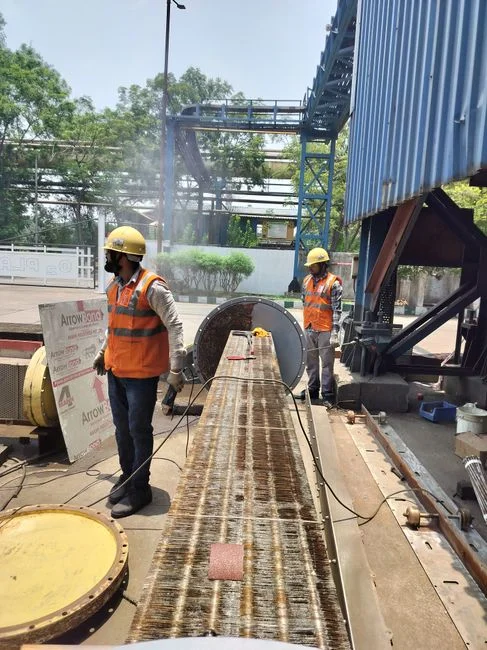
Traditional thermal evaporators and crystallizers are energy-intensive, expensive, and occupy a large footprint within the treatment facility, which is why membrane-based high-recovery systems have displaced them in the low-TDS portion of every modern flow scheme (source: UltraFacility, 2025). The direction of travel in 2026 is clear: push as much recovery as possible through membranes, switch to a thermal evaporator only when TDS forces it, and crystallise the brine tail.
That direction has a 2026–2030 discontinuity. Pressure-driven or electrochemical crystallizers — non-thermal systems in development at vendors including Gradiant — could obsolete thermal crystallizers and reshape flow schemes the way membrane systems reshaped MLD (source: UltraFacility, 2025). If they become practical at fab scale, the energy and footprint penalty of ZLD falls sharply and the CAPEX premium over MLD narrows.
2026 is therefore the last year most new campuses will be designed around thermal crystallizers as the default. Specifiers should ask vendors explicitly about the pressure-driven crystallizer roadmap, design the crystallizer skid for future replacement rather than as a 30-year asset, and budget for replacement RO and UF membrane elements for fab water systems on a 3–5 year cycle, not a 7–10 year cycle. Membrane replacement is the OPEX line that scales with recovery rate, and it is the lever a specifier actually controls.
Material Recovery: The Hidden Revenue Line in a 2026 ZLD Spec
Many of the raw materials that go into chipmaking can be recycled back into the process or repurposed downstream (source: UltraFacility, 2025). The recoverable streams with real 2026 economics are: copper (Cu) and silicon (Si) for reuse in other production facilities; calcium fluoride (CaF₂) captured from fluoride-bearing waste and directed into construction and heavy industry; and isopropyl alcohol (IPA) and other solvents reclaimed for cleaning and process steps (source: UltraFacility, 2025).
This is consistent with the academic framing of ZLD as a sustainable approach towards wastewater treatment and resource conservation (source: Springer, 2024) — the resource-recovery angle is now central, not optional, and a 2026 new-campus design that ignores it will understate both its ESG narrative and its OPEX. For a CHIPS Act fab, where public funding and community-licence arguments both lean on circular-economy claims, the material-recovery line is the difference between ZLD being defended as a cost burden and ZLD being defended as a revenue and resilience line.
On the equipment side, this is where the sludge dewatering for fab wastewater solids and ZLD residues discussion meets the crystallizer discussion. The dewatering step ahead of the crystallizer sets the moisture content of the feed, which sets the crystallizer energy load. A 2026 spec should size the dewatering block to the crystallizer's design feed, not the other way around.
Smart Monitoring and the Non-Negotiable Uptime Calculus
Semiconductor fabs cannot afford downtime, so redundancy and predictive maintenance matter more than headline CAPEX in a ZLD design (source: UltraFacility, 2025). Smart monitoring platforms with physics-based soft sensors — inferring unmeasured parameters like trace contaminants from related measurements such as TDS — are now part of the ZLD spec, not an add-on. If TDS rises, other contaminants are inferred to rise with it, and the recovery setpoint can be modulated to keep fouling risk bounded (source: UltraFacility, 2025).
For a 2026 new campus, the requirement is to specify an integrated monitoring and predictive-maintenance layer from day one. Retrofitting a digital twin and SCADA integration onto an operational ZLD train is materially more expensive and disruptive than designing it in, and it forces a recovery-rate derate during commissioning. A useful framing of what that layer looks like in 2026 is set out in the 2026 digital twin and SCADA integration guide for water utilities.
What a 2026 New-Campus ZLD Spec Should Look Like
A defensible 2026 new-campus ZLD spec can be written as a short checklist the EPC can execute against:
- Segregated stream collection for acid/alkaline, fluoride, heavy metal, CMP, organic, and high-salinity streams before any recombination.
- Membrane-first concentration: UF → RO → high-recovery RO, with PLC-controlled chemical dosing for fab wastewater pretreatment sized to the segregated-stream envelope.
- Minimum-size thermal evaporator on the RO reject — sized for worst-case TDS, not nominal — and a crystallizer designed for future pressure-driven replacement.
- Material-recovery design that captures Cu, Si, CaF₂, and solvents, with dewatering and crystallizer sizing treated as one unit operation.
- Integrated monitoring layer with soft-sensor capability, predictive maintenance, and digital-twin commissioning from day one.
- Stress-test against the strictest regional water-scarcity scenario, not the local minimum, to insure against a Tucson-style rejection.
For background on how variable waste chemistry drives each of these blocks, the 2026 engineering guide to designing fab wastewater treatment systems for variable waste chemistry is the most directly relevant companion read. For long-term cost framing, the 20-year lifecycle cost estimation for UPW systems in 2026 and the 2026 long-term cost data for UPW piping systems in semiconductor fabs set the adjacent cost lines the ZLD spec has to integrate with.
Frequently Asked Questions
What is zero liquid discharge in semiconductor fabs, in one sentence?
ZLD is a sustainable approach towards wastewater treatment and resource conservation in which all liquid effluent is recovered, reused, or converted to dry solid, eliminating liquid discharge from the site (source: Springer, 2024). On a 2026 fab, it pairs a membrane-first recovery train with a thermal or, increasingly, pressure-driven crystallizer on the brine tail.
When should a new US fab campus specify ZLD instead of MLD or high-recovery RO?
ZLD is justified when the site is in a water-scarce region facing community-licence risk, when a regulator mandates it, or when material-recovery economics (Cu, Si, CaF₂, IPA) make the crystallizer front-end self-funding; otherwise MLD or high-recovery RO is the lower-capital choice (source: UltraFacility, 2025). The Micron Boise fab demonstrates the strategic ZLD case: on-site reuse of all industrial wastewater helped the City of Boise meet its phosphorus reduction goals, allowing expansion without new municipal infrastructure.
How much does a ZLD system cost compared with MLD for a greenfield fab?
Order-of-magnitude CAPEX in 2026 runs roughly 1.0× for high-recovery RO, 1.4–1.8× for MLD with a thermal evaporator, and 2.0–3.0× for full ZLD with a crystallizer, with OPEX scaling in the same order because thermal and crystallizer energy dominates (engineering judgment, anchored to UltraFacility 2025 cost logic). Material-recovery revenue and avoided third-party disposal can offset a portion of that premium on a case-by-case basis, but should be modelled explicitly rather than assumed.
Are pressure-driven crystallizers ready to specify for a 2026 fab?
Not yet at full scale — they remain in early development and have only been used in specific applications, with vendors including Gradiant working to make them practical for broader deployment (source: UltraFacility, 2025). The defensible 2026 move is to specify a thermal crystallizer designed for future pressure-driven replacement, not to commit to a non-thermal unit that is not yet a proven deliverable.