
Why Medellín, Why 2026: The Water–AI Collision in the Aburrá Valley
Medellín now hosts 4 of Colombia's 38 data centres, and the national data-centre market is projected to grow from US$442M in 2024 to US$1.16B by 2030 at a 17.6% CAGR (UCL/Idrovo, 2025-10). The same basin that attracts hyperscale build-outs is one of the most water-stressed in the Andes: the Aburrá Valley sits in a drought-prone corridor, and Bogotá's reservoirs fell to 10.5% during the 2023–2024 drought — a direct signal that the country's water governance is lagging the data-centre build cycle. Industrial water in Colombia is priced at just US$0.008/m³, versus US$0.99 in Mexico and US$0.036 in Brazil, a tariff so low that scarcity, not cost, is the binding constraint on permitting.
The political signal arrived in February 2025: the National AI Policy (US$111.5M) explicitly tasks the Ministry of Science, Technology and Innovation (MinCiencias) with designing a 2025–2026 mechanism to accelerate data-centre development on the condition of water-efficient technology deployment. The cautionary mirrors are clear. Google suspended a US$200M Santiago data centre in 2024 after citizen mobilisation and a court reversal of its environmental permit (AP, 2024). In Querétaro, two of seven reservoirs ran dry and overall capacity collapsed to 32.5% in April 2025 while AWS pledged US$5B in the same state (El País, 2025-01). For an engineer scoping a greenfield fab or AI data hall in the Aburrá Valley, those precedents are not background colour — they are the board's first question: "Will Cornare or AMVA even grant us the discharge permit?"
The Wastewater Streams a Medellín Fab or Data Hall Must Segregate
Segregation is where greenfield projects fail or survive. Six primary streams need to be kept physically separate at the point of generation: CMP slurry wastewater, fluoride-bearing etch rinses, RCA cleaning rinses, scrubber blowdown, cooling-tower blowdown (or chilled-water bleed-off for a data hall), and sanitary. CMP alone represents 30–40% of a fab's total wastewater volume and carries silica, ceria, or alumina slurries plus trace Cu and W from interconnect polishing (IDE Technologies, 2026). Etch rinses carry HF, HCl, H₂SO₄ and NH₃, and require precipitation, pH adjustment and fluoride removal before any reverse osmosis step. Cooling-tower blowdown and data-hall chilled-water bleed-off are the largest streams by volume but the cleanest — ideal RO feed after softening and multimedia filtration. RCA rinses add low-level metals and oxidiser residues. Scrubber blowdown carries acid-gas reaction products, typically SO₄²⁻, Cl⁻ and NH₄⁺.
Why not co-mingle? Three reasons. First, variable pH crashes metals and fluoride removal stoichiometry. Second, abrasive CMP solids foul RO membranes within hours if not physically pre-clarified. Third, photoresist developers carry PFAS — co-mingling spreads PFAS into streams that would otherwise never see it, multiplying the membrane surface area that needs PFAS-rated pretreatment. The IDE data brief is explicit: "These streams cannot be mixed unchecked and often require segregated treatment lines" (IDE Technologies, 2026).
| Stream | Typical volume share (fab) | Key contaminants | First-stage treatment | Target before next stage |
|---|---|---|---|---|
| CMP slurry wastewater | 30–40% | SiO₂, CeO₂, Al₂O₃, trace Cu, W | Lamella clarifier + sludge thickening | TSS <50 mg/L; turbidity <10 NTU |
| Fluoride-bearing etch rinse | 10–20% | HF, HCl, H₂SO₄, NH₃, F⁻ up to several hundred mg/L | Ca-based precipitation + lamella | F⁻ <10 mg/L |
| RCA cleaning rinses | 5–10% | H₂O₂, NH₄OH, low-level metals | pH adjust + metals precipitation | Metals below Resolución 631/2015 limits |
| Scrubber blowdown | 5–15% | SO₄²⁻, Cl⁻, NH₄⁺, low pH excursions | pH neutralisation + biological | NH₃-N <40 mg/L |
| Cooling-tower blowdown / data-hall chilled-water bleed | 20–40% | Hardness, silica, scale inhibitors, biocides | Softener + multimedia filter | SDI <5 for RO feed |
| Sanitary | 5–10% | BOD, TSS, pathogens | Conventional or MBR biological | Per municipal discharge contract |
Designing the Treatment Train: From Equalisation to High-Recovery RO
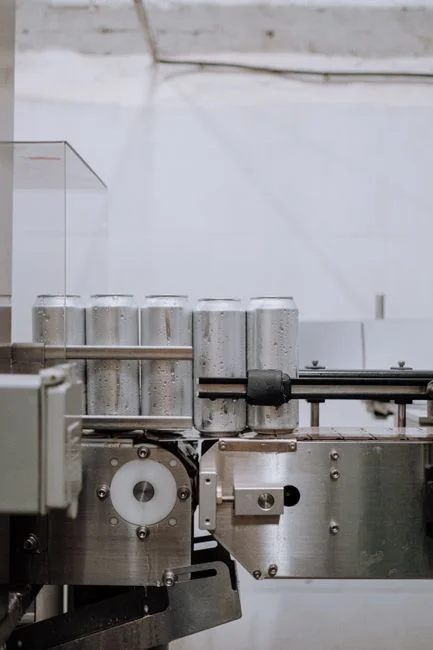
Build the train in the order that protects the most expensive unit operation — the RO — first. Stage 1 is equalisation with PLC-controlled acid/caustic dosing, sized to damp 4–6× diurnal swings. Stage 2 is calcium-based fluoride precipitation: dose CaCl₂ or lime to drive F⁻ below 10 mg/L before any membrane, with a stoichiometric excess of ~1.5× to account for co-precipitation losses with metals and sulphate. Stage 3 is metals removal via hydroxide or sulphide precipitation; a high-efficiency lamella clarifier (20–40 m/h surface loading) thickens the sludge to 2–4% dry solids, which is the difference between manageable hauling and a perpetual dewatering problem. Stage 4 is a submerged PVDF MBR at 0.1 µm nominal pore size, replacing conventional activated sludge and delivering a silt density index (SDI) low enough to feed RO directly without a separate clarifier. An MBR membrane bioreactor for fab organics removal is the standard 2026 scope for handling photoresist residues, solvents, and ammonia in a single vessel.
Stage 5 is the recovery core. A multi-media filter for RO feed protection guards the membranes; a high-recovery industrial RO system takes the MBR permeate plus segregated cooling-tower blowdown to 70–85% recovery in a standard configuration, and 85–90% recovery with pulse-flow or closed-circuit designs. Reference the IDE MAXH2O PFRO deployment: ~4,000 m³/day on silica-limited brine at 54% recovery on the brine stream, yielding 88% overall plant recovery and ~18% improvement over the prior conventional RO (IDE Technologies, project brief). The high-efficiency lamella clarifier for metals and fluoride sludge sits at the front of the train and is the single largest determinant of downstream membrane life. For the broader 85–90% recovery thesis, state-of-the-art fabs using high-recovery RO, advanced filtration and thermal polishing are the benchmark, with ZLD going further still (IDE Technologies, 2026).
| Stage | Unit operation | Influent quality | Effluent / recovery | Reuse destination |
|---|---|---|---|---|
| 1 | Equalisation + pH neutralisation | Variable pH 2–12, 4–6× diurnal flow swings | pH 6.5–7.5, damped flow | To Stage 2/3 |
| 2 | Ca-based fluoride precipitation + lamella | F⁻ up to several hundred mg/L | F⁻ <10 mg/L, TSS <50 mg/L | To Stage 3 or 5 |
| 3 | Metals precipitation (hydroxide / sulphide) + lamella | Cu, Ni, W at tens of mg/L | Metals to Resolución 631/2015 limits | To Stage 4 |
| 4 | Submerged PVDF MBR (0.1 µm) | TOC, NH₃-N, residual organics | TOC <10 mg/L; NH₃-N <5 mg/L; SDI <3 | To Stage 5 |
| 5a | Multi-media filter + conventional RO | MBR permeate + cooling-tower blowdown | 70–85% recovery, permeate <50 µS/cm | Cooling tower make-up, scrubber make-up |
| 5b | Pulse-flow / closed-circuit RO (high-recovery) | RO brine from 5a | 85–90% overall recovery, ~88% with PFRO | UPW feed (after polish) or cooling make-up |
Recovery, Reuse, and the Zero-Liquid-Discharge Question
At 85–90% recovery with high-recovery RO and polishing, a fab is at industry benchmark; ZLD adds evaporators and crystallisers, roughly doubles OPEX, and is only justified when the receiving basin is under declared emergency stress. The pragmatic first loop to close is cooling-tower blowdown at 75–80% recovery — the largest volume, the cleanest chemistry, and the lowest membrane-fouling risk. In Medellín, RO concentrate can typically be discharged to the EPM/Aguas residuales system subject to Resolución 631/2015 limits, which means ZLD is rarely the binding design choice; permit security and the 2025 National AI Policy's water-efficiency mandate are. The trade-off for the engineer to put in front of the board: ZLD OPEX buys you a permit that is otherwise obtainable, and the National AI Policy now expects demonstrable water efficiency rather than just compliance. Reserve ZLD for brine streams where fluoride or heavy-metal residuals would otherwise exceed Resolución 631/2015 even after dilution. For most greenfield scopes in the Aburrá Valley, high-recovery RO plus disciplined segregation hits the 85–90% recovery benchmark and clears the regulatory bar without crystalliser capital.
Compliance and Permitting in the Aburrá Valley, 2026
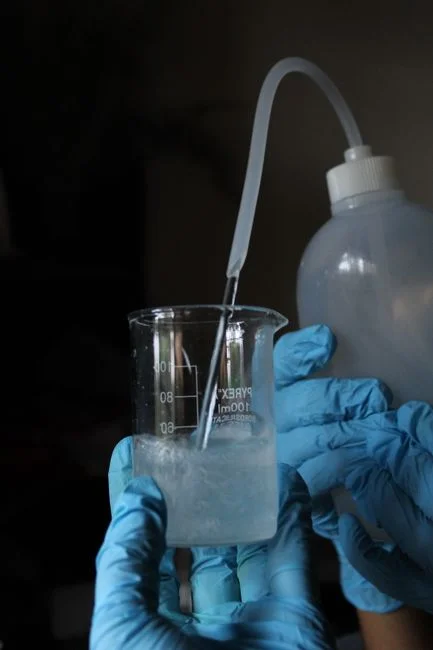
The primary instrument is Ministerio de Ambiente Resolución 631/2015, which sets industrial discharge limits; fab-specific parameters of interest include F⁻, heavy metals (Cu, Ni, Zn, Pb, Cd, Hg), total nitrogen, TOC, and pH. Permits are issued regionally. For a fab sited within Medellín city limits, the lead authority is AMVA (Área Metropolitana del Valle de Aburrá). For sites in the outer municipalities of the Aburrá Valley (Caldas, Sabaneta, Itagüí, Envigado, Bello, Barbosa, Copacabana, Girardota, La Estrella), the lead authority is Cornare. The municipal wastewater utility is EPM Aguas — they set the discharge contract, the pretreatment limits, and the sewer tariff that ultimately governs what your RO concentrate can carry.
ESG alignment is no longer optional. The 2025 National AI Policy requires water-efficient technology deployment and, by 2026, MinCiencias is expected to publish the operational mechanism. Reporting Scope 1 (onsite cooling) and Scope 2 (electricity-related water) is now standard; Scope 3 (supply chain) is the differentiator. Global hyperscalers expect all three. One forward-looking note: Bogotá's District Water Plan has been overdue since 2021 (UCL/Idrovo, 2025-10); a Medellín basin plan update is plausible in 2026. Design the train to anticipate tighter fluoride, TN, and TOC limits — typically by adding 20–30% contingency in equalisation and chemical-dosing capacity, which is cheap at greenfield stage and punitive retroactively. For a parallel jurisdictional comparison that helps frame ESG benchmarks for the board, see the Vancouver semiconductor compliance guide and the Toronto semiconductor and data hall wastewater guide.
Cost Lens: Why Medellín's Cheap Water Is a Trap
At US$0.008/m³ industrial tariff, a pure water-cost ROI on high-recovery RO is weak. The real ROI is avoided permit risk, ESG optics, and supply security. Anchor the board conversation with a cautionary mirror: SK hynix cut water use by 170,000 tonnes per day at Korean chip plants in 2026 — public water-rationing events in a fab's host city are now a recurring operational risk, not a hypothetical. The CAPEX-heavy mid-tier scope for a 2026 greenfield in the Aburrá Valley is lamella clarifier + MBR + high-recovery RO; ZLD roughly doubles OPEX through thermal energy and is hard to defend on a pure financial basis unless the basin is under emergency declaration.
Modular, skid-mounted delivery compresses the greenfield schedule, which matters when the data-centre build cycle is measured in months and the discharge permit timeline is measured in quarters. For a deeper cost-and-recovery comparison, including how hybrid high-salinity systems reach 99.8% recovery in specific brine streams, the wafer fab high-salinity hybrid system design piece is a useful reference. The cleanest framing for a board worried about water permits and ESG optics: at Colombia's tariff, you are not investing in water savings — you are buying a permit to operate, and a story you can put in the next sustainability report.
Frequently Asked Questions
What recovery target should a semiconductor fab or AI data hall in Medellín design for in 2026?
Design for 85–90% overall water recovery using high-recovery reverse osmosis (pulse-flow or closed-circuit) plus MBR polishing, matching the IDE 88% case study at ~4,000 m³/day. Cooling-tower blowdown should be the first closed loop at 75–80% recovery. Full zero liquid discharge is rarely required unless the basin is under declared emergency stress.
Who issues the discharge permit for a fab or hyperscale data hall in the Aburrá Valley?
AMVA issues the permit for sites within Medellín city limits; Cornare issues permits for the outer Aburrá Valley municipalities. Both enforce Ministerio de Ambiente Resolución 631/2015 discharge limits for fluoride, heavy metals, total nitrogen, and TOC, and the EPM Aguas discharge contract governs the sewer tariff and pretreatment limits for RO concentrate.
Why is water reuse a permit issue rather than a cost issue in Colombia?
Colombia's industrial tariff is US$0.008/m³ versus US$0.99 in Mexico, so direct water-cost ROI on reuse is weak. Recovery is now driven by the 2025 National AI Policy (US$111.5M), which tasks MinCiencias with a water-efficiency mechanism by 2026, and by precedents like the Santiago Google permit suspension in 2024 and the Querétaro reservoir collapse to 32.5% in April 2025.