Why UPW Piping Is a 20-Year Decision, Not a Line Item
Ultrapure water (UPW) distribution piping in a leading-edge fab is selected once, welded into a utility building, and then operated continuously for 20 years or more while everything around it moves. A UPW system failure stops production within hours, since the fab cannot stockpile UPW, cannot truck it in, and cannot run without on-site generation (per SemiconductorX, 2025). That operational reality — no inventory buffer, no off-site supply — is what locks the material decision in at build and keeps it locked for two decades.
The financial logic reinforces the operational one. Twenty-year total cost of ownership (TCO) for semiconductor UPW systems is dominated by energy at roughly 40–50% of OPEX, chemicals at 20–30%, membrane and resin replacement at 10–15%, and labor at 5–10% (per HydropureWater ZLD engineering deep dive, 2025). Piping material changes all four lines indirectly: smoother bore reduces pumping energy, lower extractables reduce chemical-cleaning frequency, biofilm-resistant surfaces extend membrane and resin life, and dead-leg-tolerant geometry cuts confined-space labor. The 20-year OPEX envelope is many times the original skid cost, so the piping line item is the least useful number on the quote.
Loop design margin compounds the lock-in. Fab UPW distribution loops are typically sized at 15–30% above current peak rinse demand when a new tool bay is funded, because adding capacity after the utility building is commissioned costs an order of magnitude more (per HydropureWater 2025). That margin is carried into the pipe spec, not retrofitted. At the same time, fabs are pushing toward 90–95% reclaimed-water reuse at full zero liquid discharge (ZLD): Intel Oregon reports more than 80% reuse with a net-positive water commitment, and TSMC Arizona reports roughly 30% lower municipal intake after full reclaim, equivalent to about $12 million per year in avoided water purchase (per TSMC 2023 sustainability report, cited in HydropureWater 2025). The piping must tolerate the worst credible recycled feed over its service life, not the cleanest day-one water.
The UPW Spec Floor That Any Piping System Must Meet
Any UPW distribution-loop material is judged against a tight, quantitative spec that no other water application has to meet. The four headline metrics used in leading-edge fabs are 18.2 MΩ·cm resistivity, total organic carbon (TOC) below 1 ppb, particles below 1 per milliliter at greater than 0.05 µm, and dissolved oxygen (DO) below 1 ppb to prevent native oxide formation on silicon surfaces during UPW contact (per SemiconductorX, 2025). The dissolved-oxygen target is the constraint that pushes hot-UPW loops, which in turn forces the piping choice toward perfluoroalkoxy (PFA) or high-grade polyvinylidene fluoride (PVDF) — both stable at the temperatures a hot-UPW loop requires.
Bacterial biofilm in distribution piping releases particles and organic compounds continuously, so the loop is protected with UV sterilization and ozone treatment throughout (per SemiconductorX, 2025). UPW degrades in piping if it is not continuously recirculated and re-purified, so material choice must support sustained turbulent flow, low surface energy, and biofilm adhesion resistance over 20 years of wet service. The spec floor is not negotiable; the material comparison that follows is a question of how cleanly each candidate holds the floor while the loop is fed increasingly with reclaimed water.
| Parameter | Target | Why it matters for piping selection |
|---|---|---|
| Resistivity | 18.2 MΩ·cm | Any ionic extractable from piping walls is a direct fail. |
| TOC | < 1 ppb | Polymer additives, plasticizers, or surfactants will push TOC up. |
| Particles (>0.05 µm) | < 1/mL | Biofilm sloughing and surface roughening drive the particle count. |
| Dissolved O₂ | < 1 ppb | Forces hot-UPW loop operation; eliminates polymers with poor thermal stability. |
| Surface energy / biofilm adhesion | Low (target not numeric) | Drives smooth-bore fluoropolymer selection and UV/ozone tolerance. |
Georg Fischer UPW Piping: PFA, PVDF, and the 2026 PFAS-Free Alternative
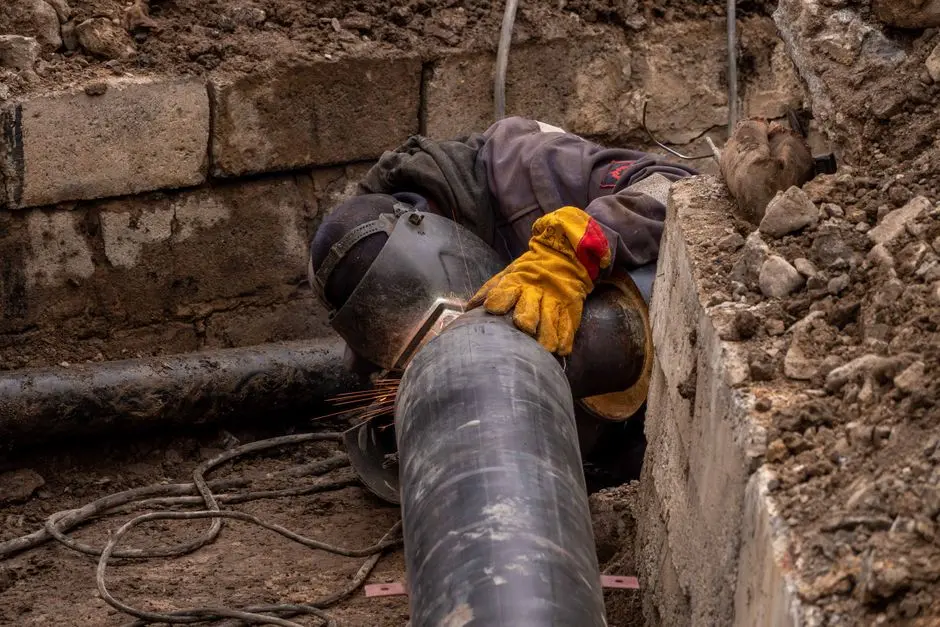
Georg Fischer has anchored semiconductor UPW distribution loops for decades, historically with PFA and PVDF systems, and is also a member of the Semiconductor PFAS Consortium Articles Working Group, giving it a credible voice on PFAS substitution (per SIA, 2023). At UltraFacility 2025 in Austin, Georg Fischer presented a new PFAS-free hot UPW piping system — the result of four years of screening 20 polymers as a PVDF alternative — and the abstract explicitly framed the result as showing "much potential, not only for the regulatory issue, but for dramatically improving yield too" (per UltraFacility 2025 program).
The regulatory tailwind behind the result is hard to overstate. PFAS was the single most popular topic at UltraFacility 2025, accounting for 22 of 117 submitted abstracts, up from a near-zero baseline in 2022 (per UltraFacility 2025). At the same time, the SIA's 2023 PFAS-Containing Articles report still treats fluoropolymers as essential for UPW piping, valves, wet bath tanks, and ductwork because of inertness, purity, wide temperature stability, nonflammability, and long service life (per SIA, 2023). That means the Georg Fischer PFAS-free result is the first credible non-fluorinated design, not a commodity option that can be sourced from any catalogue.
Procurement teams evaluating the new system should ask Georg Fischer for the data that converts the abstract into a spec: continuous hot-loop temperature rating, dead-leg geometry and tolerance under thermal cycling, full extractables profile at operating temperature, weld and rework procedure, and long-term creep data at the loop's design pressure. Until those data points are on the table, the 2026 PFAS-free system should be treated as engineering-evaluate rather than engineering-buy — even as it moves from research milestone to a real procurement alternative over the next 12–24 months.
PFA vs PVDF vs PFAS-Free: Long-Term Cost Data for UPW Distribution
The side-by-side below uses only cost bands, properties, and engineering parameters present in the SIA PFAS-Containing Articles report (2023) and the HydropureWater ZLD cost data and 2026 compliance deep dive, with the PFAS-free row treated as engineering-evaluate until fab-specific data are confirmed. The cost columns are 20-year OPEX lines that the piping material choice moves indirectly through loop hydraulics, cleaning regime, and compliance risk — not upfront skid price.
| Attribute | PFA (historical standard) | PVDF (practical stiff piping) | PFAS-free (Georg Fischer 2026 candidate) |
|---|---|---|---|
| Hot-loop capability | Highest continuous temperature of the three; the historical choice for hot UPW. | Stiff-piping choice for moderate-temperature UPW; the practical baseline per SIA. | Confirm continuous hot-loop rating with vendor; not yet published in field data. |
| Extractables / TOC contribution | Lowest; the cost premium buys the cleanest surface. | Higher than PFA but within UPW spec for most distributions; sensitive to additives. | Engineering-evaluate — request full extractables profile at operating temperature. |
| Dead-leg tolerance | Excellent; fabricates to tight branch geometry. | Good; the practical stiff-piping reference per SIA. | Confirm under thermal cycling; geometry is a design risk in any new polymer. |
| Expected service life | 20+ years; the historical UPW baseline. | 20+ years at moderate temperature; long service life per SIA. | Engineering-evaluate — no published 20-year field data yet. |
| OPEX lines it shifts | Lowest cleaning frequency, lowest biofilm-related resin loading. | Higher cleaning chemical dose than PFA; more sensitive to feed swings. | Could shift both ways depending on extractables data and cleaning regime. |
| Regulatory profile | PFAS-containing; subject to evolving restrictions (SIA 2023). | PFAS-containing; same regulatory exposure as PFA. | Non-fluorinated; avoids incoming PFAS regulation but new compliance risk profile. |
Two hidden TCO variables sit on top of this table. The first is reclaimed-water quality entering the loop — silica, fluoride, and particle loadings that vary with the stability of the upstream reclaim train, and that can drive cleaning frequency independent of the piping material. The second is the cleaning regime itself: confined-space-free tank cleaning can cut outage labor over 20 years, so the OPEX gap between PFA and PVDF is partly a function of which cleaning contractor model the fab is locked into (per HydropureWater 2025). For broader context on how those OPEX lines connect to the reclaim side, see the semiconductor ZLD cost data and 2026 compliance deep dive.
20-Year TCO Model for a UPW Distribution Loop
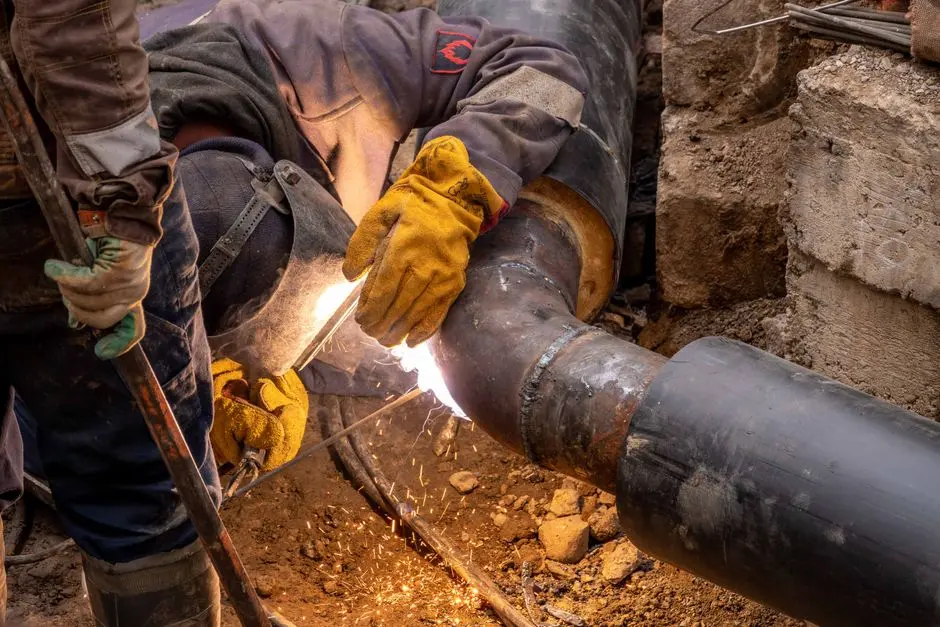
A defensible 20-year TCO model for a UPW distribution loop starts with a hydraulic baseline of 2–4 million gallons of UPW per day, the typical range for a leading-edge fab, and 15–30% loop design margin above current peak rinse demand (per SemiconductorX, 2025; HydropureWater, 2025). The OPEX split — energy 40–50%, chemicals 20–30%, membrane and resin replacement 10–15%, labor 5–10% — is the same split that governs the reclaim train, so the loop-side model and the reclaim-side model are mathematically consistent (per HydropureWater 2025).
| 20-year TCO line | Typical share of OPEX | How piping material moves this line | Reference band |
|---|---|---|---|
| Energy (pumping + hot-loop heat) | 40–50% | Smoother bore and lower friction loss cut kWh/m³; hot-loop temp sets the floor. | FO-NF 0.5–1.0 kWh/m³, MVR 20–30 kWh/m³ (per HydropureWater 2025). |
| Chemicals (cleaning, sanitization) | 20–30% | Lower extractables and biofilm resistance reduce cleaning chemical dose. | Site-specific; not published as a piping line. |
| Membrane and resin replacement | 10–15% | Cleaner loop water extends mixed-bed DI and polishing UF life. | RO/NF 3–5 yr; UF 1–2 yr (per HydropureWater 2025). |
| Labor (operations, outage cleaning) | 5–10% | Confined-space-free layouts and dead-leg tolerance cut outage hours. | 24/7 staffing drives the labor floor (per HydropureWater 2025). |
| Compliance / fines | Variable | Lower extractables reduce risk on PFAS-sensitive reclaim water. | HF exceedance penalties can approach $50,000/day (per HydropureWater 2025). |
The reclaim train's payback anchor does not transfer to the piping. Full reclaim with municipal water at $0.5–2/m³ plus avoided HF fines near $50,000/day typically delivers a 3–5 year payback, and TSMC Arizona's full reclaim case shows about $12 million per year in avoided water purchase at roughly 30% lower municipal intake (per HydropureWater 2025; TSMC 2023 sustainability report). Piping CAPEX sits outside that payback band — it is amortized over the 20-year loop life and is justified by minimizing the sum of energy, cleaning, replacement, and compliance risk, not by minimizing the upfront skid quote. For the polishing stage that sits upstream of the UPW distribution loop, an industrial RO polishing upstream of the UPW loop is the typical anchor.
Reclaimed Water and the UPW Loop: The Hidden Variable
At 90–95% reclaimed-water reuse, the UPW distribution loop no longer sees a stable virgin feed — it sees silica, fluoride, and particle loadings that swing with the stability of the reclaim train (per HydropureWater 2025). The piping material has to tolerate the worst credible recycled feed over 20 years, not the cleanest day-one water. The compliance frame the piping must not undermine is now anchored to the U.S. EPA PFAS National Primary Drinking Water Regulation (NPDWR) published April 26, 2024 — PFOA and PFOS at 4.0 ng/L, PFHxS, PFNA, and HFPO-DA at 10 ng/L — and to 40 CFR Part 469 fluoride limits of 32.0 mg/L daily maximum and 17.4 mg/L as a 30-day average (per HydropureWater 2025; eCFR 40 CFR 469).
The engineering practice is to pair reclaim design — RO, forward-osmosis/nanofiltration (FO-NF), and electrodeionization (EDI) polishing — with the UPW piping spec so the loop is not asked to polish unstable recycle water. As PFAS-free piping becomes a real procurement option, the gating test in 2026 is reclaimed-water compatibility: the system must hold resistivity, TOC, particle, and DO targets when the feed carries the residue of an upstream reclaim train under upset conditions. For the broader reclaim strategy that defines what enters that loop, see the wafer fab wastewater recycling and 95%+ ZLD cost blueprint.
Frequently Asked Questions
When will Georg Fischer's PFAS-free hot UPW piping system be commercially available?
Georg Fischer presented the PFAS-free hot UPW piping system as a technical paper at UltraFacility 2025 in Austin, the result of four years screening 20 polymers (per UltraFacility 2025 program). The presentation establishes research completion, not a commercial launch date; fabs should request fab-specific hot-loop, dead-leg, and extractables data before treating it as a procurement option in 2026.
How does 90–95% reclaimed-water reuse change the UPW piping material decision?
At 90–95% reuse, the UPW loop sees silica, fluoride, and particle loadings that swing with reclaim-train stability, so the piping must tolerate the worst credible recycled feed, not just virgin UPW (per HydropureWater 2025). For a 2–4 MGD fab demand, that exposure is continuous and effectively permanent, which makes reclaimed-water compatibility the gating material test in 2026.
What regulatory frame governs the UPW piping decision in 2026?
The U.S. EPA PFAS NPDWR published April 26, 2024 sets PFOA and PFOS at 4.0 ng/L and PFHxS, PFNA, and HFPO-DA at 10 ng/L; 40 CFR Part 469 sets fluoride at 32.0 mg/L daily max and 17.4 mg/L as a 30-day average (per HydropureWater 2025; eCFR 40 CFR 469). EU Directive 2020/2184, GB 31570-2025 in China, and Taiwan EPA 2023 guidance each add their own pressure on the same pipe wall.
How is the SIA Semiconductor PFAS Consortium positioning fluoropolymers in UPW piping?
The SIA's 2023 PFAS-Containing Articles report treats fluoropolymers as essential for UPW piping, valves, wet bath tanks, and ductwork because of inertness, purity, wide temperature stability, nonflammability, and long service life (per SIA, 2023). That stance makes the Georg Fischer PFAS-free 2025 result the first credible non-fluorinated UPW design, not a drop-in commodity alternative.
Related Equipment
- hollow-fiber UF polishing on the UPW distribution loop — specifications, capacity range, and technical data