Determine Which Rules Govern the Brewton Discharge
Mining and metals plants near Brewton that discharge to a sewer comply through the Clean Water Act §307(b) pretreatment program, 40 CFR Part 403, and the controlling POTW’s sewer-use ordinance. Ore mining and dressing may be covered by 40 CFR Part 437; plating, pickling, or anodizing may also trigger 40 CFR Part 433. A treatment train generally combines equalization, controlled pH adjustment, metals precipitation, solids separation, and any required polishing. Because no supplied source establishes Brewton’s numerical POTW limits, industrial-user permit conditions, sampling points, or approved discharge location, those items must be confirmed before equipment selection.
The discharge pathway determines the governing framework. A direct discharge to surface water is regulated through an NPDES permit under Clean Water Act §402. A discharge to a POTW sewer is regulated through §307(b) and 40 CFR Part 403, with the POTW’s sewer-use ordinance providing local discharge requirements. An operation may need both authorizations if it has separate surface-water outfalls.
Categorical status depends on the regulated industrial process, not merely on whether the site calls itself a mine. EPA identifies the POTW as the control authority when it has an approved pretreatment program; the approval authority acts when it does not. The control authority identifies applicable standards and applies the most stringent requirement when several provisions govern the same discharge (US EPA, Pretreatment Standards and Requirements—Applicability, current webpage accessed 2026).
| Document or determination | Engineering use before design |
|---|---|
| Industrial-user permit and sewer-use ordinance | Establish categorical status, local limits, prohibited discharges, monitoring duties, and enforcement provisions. |
| 40 CFR Part 437 or Part 433 applicability | Determine whether ore mining and dressing or metal-finishing categorical standards apply. |
| Discharge point and sampling plan | Locate the sewer connection, monitoring point, flow-proportional sampling requirements, and reporting chain. |
| Representative local limits | Apply the POTW’s verified numeric limits rather than relying on a federal floor or an unverified secondary summary. |
Request the current permit, ordinance, local-limit tables, prohibited-discharge list, monitoring frequency, averaging periods, analytical methods, sampling location, and enforcement provisions. Also identify whether the discharge is process wastewater, stormwater, runoff, or a combined stream. These distinctions are covered in the regional mining wastewater pretreatment guide and the 2026 mining plant sewer-limit compliance guide.
Do not use representative values as Brewton requirements. The HydropureWater pretreatment article reports representative local sewer limits of 0.3–1.0 mg/L zinc and 0.3–0.5 mg/L copper monthly average, but also instructs users to confirm the controlling POTW ordinance (HydropureWater, How Mining & Metals Plants Meet Pretreatment Limits Before Sewer Discharge, 2026). The defensible local-limit basis must come from the receiving authority’s current documents.
Characterize the Wastewater Before Fixing the Treatment Train
Raw acid mine drainage and spent process solutions can arrive at pH 2–4, with suspended solids ranging from the hundreds to several thousand mg/L; contaminants can include Pb, Cu, Zn, Cd, Ni, As, sulfate, and TDS (HydropureWater, How Mining & Metals Plants Meet Pretreatment Limits Before Sewer Discharge, 2026). Those sector-level values establish why characterization must precede design, but they do not establish the plant’s actual load. Separate streams and operating events before selecting equipment.
Acid mine drainage, storm runoff, process solutions, floor washings, and equipment rinses should not be combined simply because they reach the same collection system. Each may have a different flow pattern, contaminant concentration, regulatory basis, and discharge destination. The 2024 OSMRE acid-mine-drainage cotreatment report also found that raw mine-drainage pH varied from 3.13 to 4.58 across the three sources studied, demonstrating that drainage chemistry can differ materially between locations (OSMRE, Co-treatment of Acid Mine Drainage in Municipal Wastewater Plants for Sustainable Design in Reclamation, 2024-06).
Build an industrial wastewater sampling program that covers normal production, shift changes, dump-leach cycles, mill clean-outs, storm runoff, and any upset or high-concentration release. Use time-paced and event-based sampling, with composite or grab samples selected according to variability and the permit’s monitoring method. Record both flow and chemistry for every event; an unrepresentative concentration can produce an incorrect tank volume or reagent rate.
| Required input | Why it controls design |
|---|---|
| Average flow, peak hourly flow, peak 2-hour flow, batch volume and duration | Defines equalization, treatment capacity, pump controls, and turndown. |
| pH range, alkalinity, temperature | Determines neutralization demand and reaction conditions. |
| Pb, Cu, Zn, Cd, Ni, As and any permit-regulated metals | Sets precipitation targets and residual-metal requirements. |
| TSS, oil and grease, sulfate, TDS, flow variability | Identifies separation, polishing, sludge and high-TDS constraints. |
Run bench-scale jar testing after characterization. Test the actual wastewater across the relevant pH range, determine the reagent dose needed for each regulated metal, and establish whether polymer coagulant aid improves settling or filtration. Do not fix reagent consumption, precipitation pH, solids loading, or filter requirements from vendor literature alone. A regional pretreatment framework is available in the mining and metals wastewater pretreatment reference.
Build a Treatment Train That Can Absorb Batch Discharges
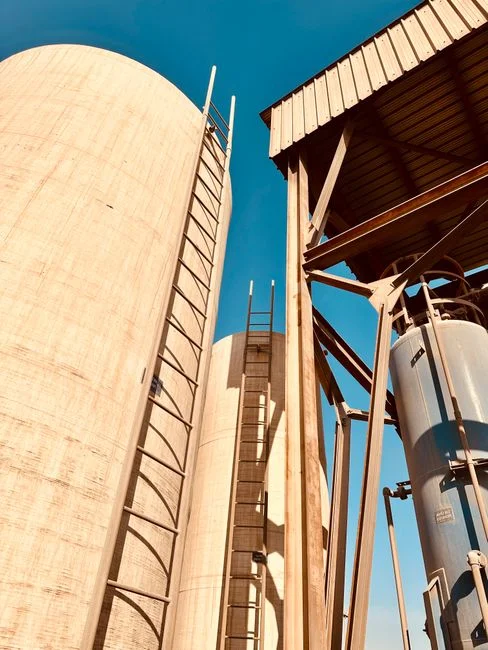
Equalization must precede the treatment process because batch discharges otherwise pass hydraulic and contaminant spikes directly into clarification. HydropureWater recommends an equalization basin sized for 8–24 hours of average daily flow and states that a 4-hour basin can pass upstream spikes into the clarifier (HydropureWater, How Mining & Metals Plants Meet Pretreatment Limits Before Sewer Discharge, 2026). The usable volume must also accommodate the peak 2-hour flow with 20–30% turndown capacity, as specified by the same source.
After equalization, feed pH-adjustment and coagulant systems under PLC control. The HydropureWater source identifies lime and sodium hydroxide as the main precipitation reagents, but also preserves a practical trade-off: lime is cheaper per ton while producing 3–5 times more sludge; sodium hydroxide may be economically preferable for high-TDS streams despite higher reagent cost. The same source gives pH 6.5–9.0 as a design target for the instantaneous sewer range and recommends staged dosing when influent pH changes exceed 2 units.
Use a PLC-controlled automatic chemical dosing system to trim pH and feed coagulant. HydropureWater reports that holding pH within a ±0.2 band can distinguish compliance with a 0.3 mg/L zinc monthly average from a miss (HydropureWater, How Mining & Metals Plants Meet Pretreatment Limits Before Sewer Discharge, 2026). That figure is an example, not a verified Brewton limit.
Hydroxide precipitation should provide the bulk metal removal, with sulfide reserved for polishing when jar tests show it is needed. HydropureWater reports residual metals of 0.01–0.05 mg/L with sulfide treatment versus 0.5–2.0 mg/L with hydroxide treatment, while sulfide reagent cost is 2–4 times higher and requires sealed reactors with scrubbed hydrogen-sulfide vents (HydropureWater, How Mining & Metals Plants Meet Pretreatment Limits Before Sewer Discharge, 2026). Design ventilation, gas detection and chemical storage as part of the process, not as add-ons.
Choose solids separation from the wastewater character. Use an industrial DAF system for mining wastewater where oil, grease or colloidal metals dominate. Use a high-efficiency lamella sedimentation tank where metal-hydroxide sludge and footprint are primary constraints. Add a multimedia filtration system when residual TSS protection is required. HydropureWater reports multimedia filtration below 10 mg/L residual TSS at a filtration rate of 1–2 m/h, with backwash included in the hydraulic design (HydropureWater, How Mining & Metals Plants Meet Pretreatment Limits Before Sewer Discharge, 2026).
| Process step | Design purpose | Key acceptance evidence |
|---|---|---|
| Equalization | Dampen batch flow and metal-load peaks. | Level trend, batch-discharge simulation and turndown response. |
| pH adjustment and precipitation | Convert dissolved metals into separable solids. | Jar-test dose curve, pH trend and dissolved-metal results. |
| DAF or lamella clarification | Remove precipitated solids and floating contaminants. | Hydraulic loading, sludge blanket, TSS and carryover tests. |
| Filtration or disinfection | Provide permit-specific polishing where required. | TSS, turbidity or disinfectant residual under peak flow. |
| Sludge dewatering | Produce a manageable waste stream for regulated disposition. | Cake dry-solids result, filtrate return and disposal route. |
Where the POTW requires disinfection, HydropureWater identifies chlorine dioxide at 1–5 mg/L as a contingency treatment option (2026). Its chlorine dioxide generation system must still be matched to the required residual, contact condition and local permit. Dewater hydroxide sludge with a plate-and-frame filter press; HydropureWater reports 25–35% dry solids for the cake (2026). Include filtrate return, wash-water demand, cake storage and the selected disposal route in the design basis.
Compare the Two Main Solids-Removal Options
DAF and lamella clarification should be compared against the actual pollutant fractions, hydraulic peak and available footprint—not selected from flow alone. HydropureWater identifies DAF as the stronger fit for oil, grease, fine colloids and flows below 200 m³/h, while lamella clarification is suited to metal-bearing hydroxide sludge, flows above 100 m³/h, and constrained sites (HydropureWater, How Mining & Metals Plants Meet Pretreatment Limits Before Sewer Discharge, 2026).
| Selection factor | DAF | Lamella clarification |
|---|---|---|
| Best-fit wastewater | Oil, grease, fine colloids and floatable material | Metal-hydroxide flocs and relatively clean settling solids |
| Hydraulic loading | 5–25 m/h | 20–40 m/h surface loading |
| Reported removal | 90–98% TSS; 85–95% oil and grease | Dense sludge blanket and lower chemical consumption |
| Footprint | Larger equipment footprint than lamella | Approximately one-third the footprint of a conventional clarifier |
| Limitation | No material advantage for this comparison if free oil and colloidal fines dominate | Less effective than DAF for free oil and colloidal fines |
The removal and loading values above are reported by HydropureWater in How Mining & Metals Plants Meet Pretreatment Limits Before Sewer Discharge (2026), not measured Brewton performance. HydropureWater also reports a DAF product range of 4–300 m³/h across 13 models. It identifies packaged skids as common below 10 m³/h and parallel DAF trains or lamella clarification as potentially more economical above 100 m³/h (HydropureWater, 2026). Treat these as selection heuristics until the representative flow and wastewater characterization are complete.
Do not use lamella clarification as a substitute for DAF when the permit result is controlled by free oil or colloidal fines. For a broader technical comparison, see the DAF-versus-clarifier decision guide and the cavitation air-flotation process guide.
Polymer coagulant aid should be selected through jar testing. HydropureWater gives 0.5–3 mg/L as an aid range for improving floc formation and supporting settling and filtration (2026). Confirm compatibility with the selected pH and wastewater chemistry before specifying a dose or calculating polymer consumption.
Verify Compliance Before the Wastewater Reaches the Manhole
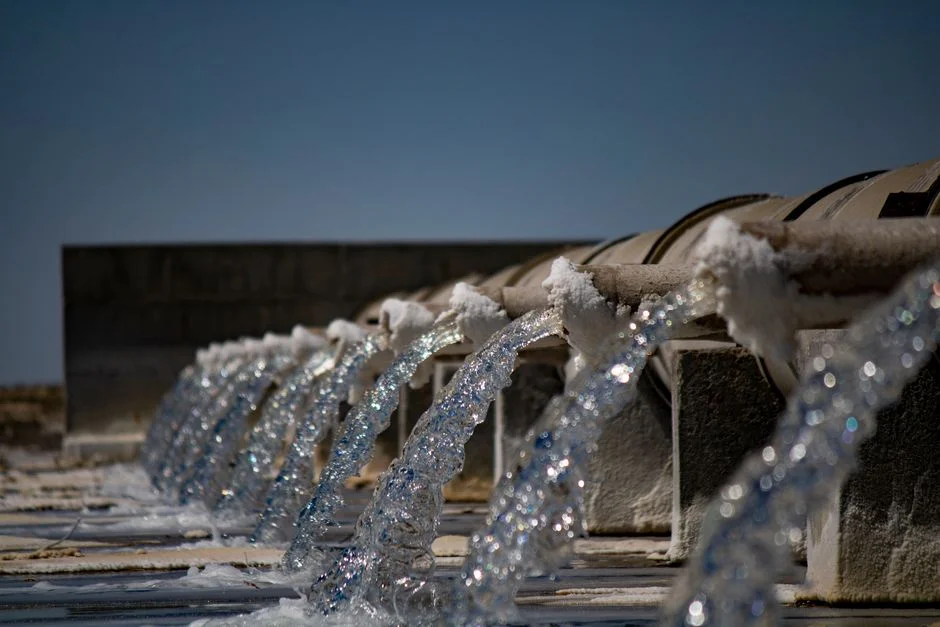
Acceptance testing must demonstrate the installed train at the permit’s actual compliance conditions, not merely confirm that the equipment starts. The US EPA identifies the POTW—or the approval authority where the POTW lacks an approved pretreatment program—as the control authority responsible for identifying applicable standards and applying the most stringent requirements (US EPA, Pretreatment Standards and Requirements—Applicability, current webpage accessed 2026). Industrial-user self-monitoring and POTW enforcement remain distinct responsibilities.
Translate the permit into a commissioning protocol. It should state every regulated parameter, averaging period, monitoring frequency, sample location, analytical method, flow-proportional sampling rule and reporting procedure. The test should include the peak 2-hour flow and 20–30% turndown condition identified by HydropureWater (2026), rather than using only average daily flow.
| Verification activity | Evidence retained |
|---|---|
| Peak-flow and batch-discharge test | Equalization level, treatment flow, pH, chemical dose, TSS and metal results through each stage. |
| Automatic-control challenge | Setpoint response, pump and agitator starts, alarm history and pH deviation record. |
| Sampling-method demonstration | Sample location, timing, flow correlation, preservation, analytical method and chain of custody. |
| Sludge-handling test | Solids production, dewatering result, filtrate return, cake inventory and disposal records. |
Reconcile each chemical dose with flow and metal load. For every sampling event, preserve a linked record of equalization level, reagent consumption, pH, turbidity or TSS, dissolved metals and sludge inventory. That record can reveal whether an excursion came from an upstream batch, inadequate equalization, reagent failure, clarification carryover or filtration failure.
Compliance exposure can be material even when average performance is otherwise satisfactory. HydropureWater reports Clean Water Act §309 civil penalties of up to $25,000 per day per violation (2026). Confirm current applicability and enforcement terms with the control authority rather than treating that figure as a site-specific assessment.
For 2026 planning, HydropureWater identifies lower lead action-level pressure under the LCRR, broader PFAS analytical suites, and 2025 ore-mining BAT revisions as regulatory-watch items (2026). These developments do not automatically establish new sewer-discharge limits. Ask the POTW and EPA whether each item affects the permit, monitoring suite or next renewal. A related process-risk review appears in the comparison of MBR and activated sludge for mining wastewater, while the 2026 dewatering engineering guide addresses polymer use during sludge handling.
Frequently Asked Questions
What treatment option fits a mining plant’s pretreatment budget?
Compare total installed and operating cost rather than reagent price alone. HydropureWater identifies sulfide precipitation as requiring 2–4 times higher reagent cost than hydroxide treatment, while large equalization storage can be capital-intensive; its 2026 source also reports 3–5 times more sludge from lime. Request itemized quotations for equipment, civil work, chemicals, sludge handling, controls, testing and disposal. No supplied research establishes a Brewton equipment price, so use site-specific proposals.
Which treatment equipment should a supplier size for a mining discharge?
Require documented sizing calculations for average flow, peak 2-hour flow, batch events, 8–24 hours of equalization and 20–30% turndown. The supplier should also provide jar-test support, a controls scope, sludge handling, installation details, utilities, commissioning tests and performance guarantees tied to the applicable permit conditions. For process context, see the 2026 mining wastewater treatment guide.
Can average flow be used to select DAF or lamella clarification?
No. Average flow does not capture batch volume, duration, metal loading, oil, grease or colloidal solids. DAF fits streams where floatable or colloidal material controls separation; lamella fits metal-hydroxide sludge where footprint is constrained. Use the complete wastewater profile, then verify the selected unit at the design peak and turndown condition.
What is the main compliance risk before sewer discharge?
The main risk is designing to federal categorical limits while missing the controlling POTW’s local limit or permit condition. Confirm the POTW identity, sewer-use ordinance, industrial-user permit, discharge point, sampling requirements and enforcement terms before purchasing equipment. EPA applies the most stringent applicable requirement, and local requirements must be established from the authority’s current documents rather than assumed from a representative value.