Start with the discharge and reuse decision
Wastewater at a GM assembly plant in Mexico should be handled by segregating paint-shop, metal-finishing, oily-condensate, general-process, and sanitary streams, then matching each stream to source reduction, pretreatment, biological treatment, polishing, reuse, or authorized discharge. GM’s Mexican operations demonstrate the value of reuse: San Luis Potosí achieved zero liquid discharge, while Silao’s system was designed to recycle 85% of wastewater and cut daily groundwater extraction in half. Final design must follow the site’s CONAGUA authorization, NOM-001-SEMARNAT-2021 limits, receiving-water classification, and any tighter basin or dry-season conditions.
Start by assigning each stream a destination: return to manufacturing, support irrigation or cooling, flush toilets, or pass through the authorized final outfall. That decision controls the required polishing. Manufacturing and cooling reuse may require low turbidity, controlled conductivity, and additional membrane treatment; irrigation and toilet flushing require different water-quality and disinfection criteria; a permitted discharge requires the final point to meet the site-specific conditions applicable under NOM-001-SEMARNAT-2021.
GM’s Mexican precedents are useful benchmarks, not universal templates. San Luis Potosí developed a closed treatment system in 2008 and reported zero liquid discharge after reusing treated water in paint and machining processes and irrigation (3BL Media, 2018-03-28). At Silao, a recycling project initiated in 2015 was expected to recycle and reuse up to 85% of wastewater and reduce daily groundwater extraction by half (3BL Media, 2018-03-28). A separate engineering overview from the same date describes Silao’s objective as near-zero liquid discharge.
Before selecting equipment, confirm the receiving-water classification, final outfall, CONAGUA conditions, basin requirements, and any dry-season constraints. For an acquired site, request at least eight quarters of monitoring data and flag parameters within 80% of their limits before committing to the design basis (HydropureWater, 2026).
Map the five wastewater streams before sizing equipment
Five wastewater streams must be characterized separately because their contaminant loads and treatment requirements are not interchangeable (HydropureWater, 2026). A plant average will conceal the paint solvent load, the metal-precipitation demand, the emulsified-oil condition, or the sanitary load and can produce an undersized or chemically incompatible train.
| Stream | Screening profile or design condition | Principal design concern | Evidence source |
|---|---|---|---|
| Paint-shop solvent water | COD 1,000–5,000 mg/L; TSS 200–1,000 mg/L | Solvent, surfactant, resin, and variable paint-line loads | HydropureWater, 2026 |
| Phosphate and metal-finishing rinse | Metals and phosphate require source-specific characterization | Precipitation chemistry and hazardous sludge route | HydropureWater, 2026 |
| Oily condensate and general oily wash | Oily condensate: oil and grease 200–5,000 mg/L | Free oil versus stable emulsion | HydropureWater, 2026 |
| Sanitary sewage | 100–200 m³/day for a 2,000-employee, single-shift plant; BOD 200–400 mg/L; TSS 200–300 mg/L | Independent biological treatment and disinfection | HydropureWater, 2026 |
| Site-wide monitoring | Flow, pH, COD, BOD, TSS, oil and grease, metals, solvent profile, temperature, and diurnal variation | Size for measured peaks and loads, not the plant average | HydropureWater, 2026 |
The screening values are references, not guaranteed design loads. For paint wastewater, line speed, booth design, and whether paint is waterborne or solvent-borne affect the received load (HydropureWater, 2026). For oily condensate, bench testing is necessary because the same oil-and-grease concentration can represent separable free oil or a stable emulsion.
Sanitary sewage should remain an independent design package. The cited 100–200 m³/day flow applies to a 2,000-employee, single-shift assembly plant, not every Mexican assembly facility (HydropureWater, 2026). Each stream needs flow and load measurements, including diurnal data, before finalizing hydraulic capacity, chemical storage, biological retention, membrane loading, or sludge production.
This stream map also determines whether biological treatment is appropriate. In the MBR versus conventional activated-sludge comparison, the important engineering question is not membrane preference in the abstract; it is whether the selected biological process can handle the characterized stream and meet the required reuse or discharge specification.
Treat each stream with its own unit operations
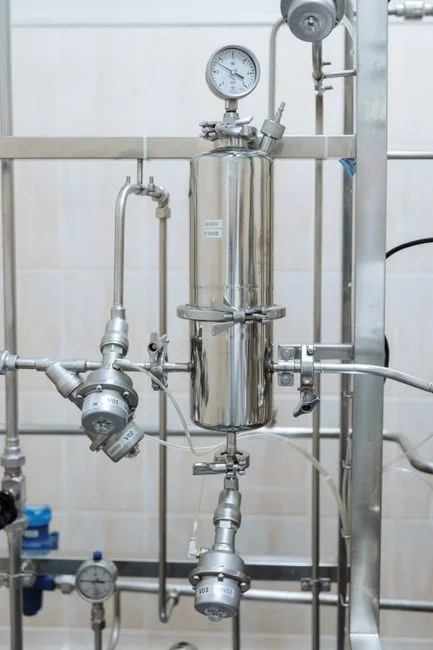
Each source stream requires a unit-operations sequence tied to its contaminants and disposal or reuse outcome, not a single plant-wide treatment recipe (HydropureWater, 2026).
| Stream | Preferred treatment logic | Reuse or sludge outcome |
|---|---|---|
| Paint-shop wastewater | Source reduction first; residual flow through DAF, biological oxidation, and carbon polishing | Recovered paint solids; treated water routed according to its designated reuse or discharge endpoint |
| Phosphate and metal-finishing rinse | Chemical precipitation, lamella clarification, multi-media filtration; ion exchange or RO for closed-loop rinse | Metal-bearing sludge requires an authorized disposal or stabilization route |
| Oily condensate | Coalescing separation for free oil; emulsion breaking plus DAF for stable emulsions; oil-tolerant biological polishing and final filtration | Separated oil may have a recovery route; final solids require treatment and characterization |
| Sanitary sewage | Packaged A/O biological contact oxidation, sedimentation, and disinfection where footprint is constrained | Disinfected sanitary effluent to the authorized destination |
For paint wastewater, upstream solvent and resin recovery has priority. GM reported that Zaragoza changed its upstream paint process and reused 80% of solvent previously sent down the drain (HydropureWater, 2026, citing GM, 2014-10). The residual sequence cited by the source is DAF, biological oxidation, and carbon polishing. A DAF system for oily and paint wastewater can provide front-end solids removal, while an MBR wastewater treatment system can supply biological polishing where the residual organic load and effluent target justify it.
Metal-finishing rinse cannot be handled by biology alone because metals can inactivate biomass (HydropureWater, 2026). Chemical precipitation followed by lamella clarification is the defensible sequence; multi-media filtration provides additional polishing, and ion exchange or RO can support closed-loop rinse reuse. A high-efficiency sedimentation tank supports solids separation after precipitation, but the metals and phosphate must be characterized before chemical dosing is specified.
For oily condensate, the physical condition determines the front end. Coalescing separation addresses free oil; stable emulsions require chemical emulsion breaking followed by DAF. Oil-tolerant biological polishing and final sand or cartridge filtration then address residual contaminants.
Sanitary sewage is separate from industrial treatment and can use a packaged A/O biological contact-oxidation, sedimentation, and disinfection unit where footprint is constrained (HydropureWater, 2026). Sludge routes must be decided with the train. The source associates metal-precipitation sludge with hazardous-waste disposal and biological or phosphate sludge with potential composting. A plate-and-frame filter press can dewater sludge before disposal, stabilization, composting, or another authorized endpoint; the final classification remains a site-specific legal determination.
Design the industrial reuse train
Industrial reuse requires a receiving-process water specification rather than a generic claim that the treated effluent is “near reuse” (HydropureWater, 2026). Manufacturing, cooling, irrigation, and toilet flushing impose different requirements for conductivity, residual disinfectant, scaling constituents, suspended solids, and process contaminants.
Where suspended solids or biological carryover would compromise reverse osmosis, use MBR ahead of RO. The cited design uses submerged PVDF MBR treatment to produce turbidity below 1 NTU, followed by two-pass industrial RO at 70%–85% recovery with permeate conductivity below 50 µS/cm (HydropureWater, 2026). The MBR wastewater treatment system addresses the biological and solids-removal stage; the industrial RO water purification system addresses the recovery stage where the reuse specification requires it.
Disinfection belongs at the final reuse or discharge point. The research identifies chlorine dioxide generators from 50 g/h to 20,000 g/h and ultraviolet treatment as possible final-stage options (HydropureWater, 2026). The selected chlorine dioxide generator must be sized against actual flow, residual demand, storage constraints, and controls requirements rather than copied from a nominal range.
Reject brine cannot be omitted from the balance. For a 1,500 m³/day plant operating at 15%–30% rejection, the estimated reject is 225–450 m³/day; cited Mexican disposal tariffs are $0.40–$0.90 per 1,000 gallons, depending on state and hazardous classification (HydropureWater, 2026). The financial model must therefore identify the receiving route for reject, treatment requirements, haulage assumptions, and whether recovery targets are actually justified.
Near-zero or zero-liquid-discharge operation requires a separate evaluation of evaporation and crystallization after recovery. Adding this equipment can increase the base retrofit envelope by 1.5–2.5 times (HydropureWater, 2026). That is not an incremental pipe connection: it introduces energy, concentrate handling, solids output, redundancy, and a new commissioning envelope.
Build the Mexico compliance and commissioning plan
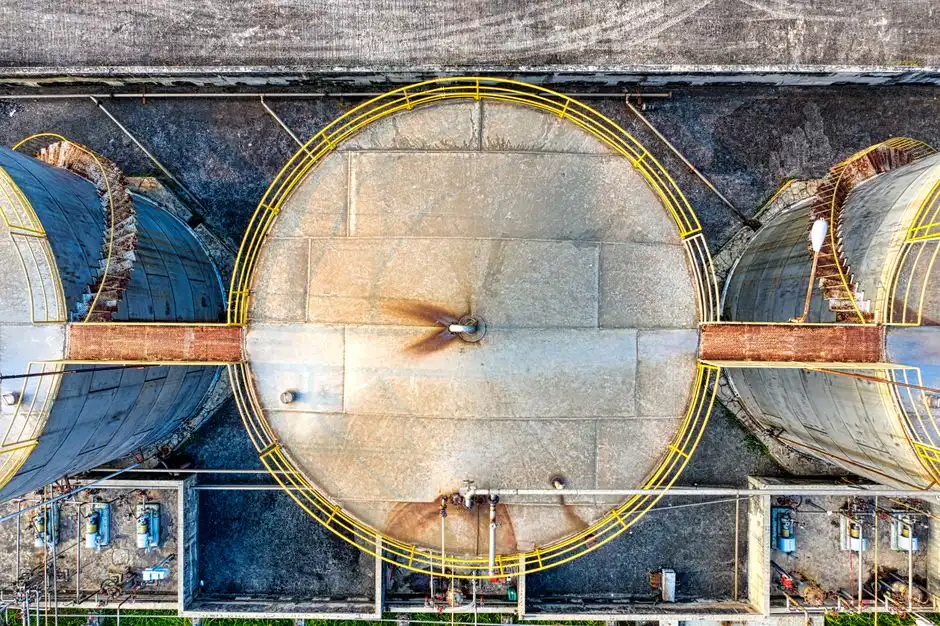
Mexico compliance obligations differ materially between a newly commissioned GM operation and an acquired plant (HydropureWater, 2026).
| Decision point | New commissioned operation | Acquired operating plant |
|---|---|---|
| CONAGUA authorization | Confirm the discharge and groundwater-extraction conditions applicable to the new legal entity and operating scope | File the Formato de Cambio de Titularidad so the Título de Concesión is reissued in the successor operator’s legal name |
| Change-of-operator notice | Confirm which notices apply to the commissioning sequence | Submit the notice under LGEEPA Article 29-bis within 90 days of closing, with operating conditions attached |
| Legacy liabilities | Not applicable unless the project acquires an existing site | Review PROFEPA expedientes, inspection findings, closure orders, unpaid fines, dormant ponds, and CONAGUA derechos |
| Effluent basis | Apply NOM-001-SEMARNAT-2021, receiving-water classification, and applicable basin and dry-season conditions | Test the inherited authorization against current operations and potential operating changes |
| Environmental management | Build the environmental calendar and permit-register controls into commissioning | Plan ISO 14001 conformance within 24 months of acquisition under the cited GM framework |
For an acquisition, the buyer must not assume that authorization follows the asset without action. The cited research states that the CONAGUA title does not automatically reissue as a freestanding right and that the buyer must file the change-of-operator form; it also states that the LGEEPA Article 29-bis notice is due within 90 days of closing (HydropureWater, 2026).
Use NOM-001-SEMARNAT-2021 as the federal floor, then confirm the receiving-water classification and stricter basin or dry-season conditions. The research reports dry-season ceilings 20%–30% tighter in the stressed basins containing San Luis Potosí, Silao, and Ramos Arizpe (HydropureWater, 2026, citing CONAGUA basin bulletins, 2025). For example, the cited Type C surface-water limits include BOD 30 mg/L, COD 120 mg/L, TSS 40 mg/L, FOG 15 mg/L, total nitrogen 25 mg/L, and total phosphorus 10 mg/L; total phosphorus is 5 mg/L for a reservoir or lake use-type.
Keep sanitary and industrial streams segregated as required by NOM-001-ECOL-1996 according to the research (HydropureWater, 2026). Determine whether satellite operations require separate notices under LP-GMX-XXX; the cited general-permit framework applies to satellite operations below 20,000 m³/year per discharge point and requires a Notice of Intent within 30 days of going live.
Commissioning should test the actual installed flow paths, controls, final-outfall sampling point, reuse quality, sludge route, and monitoring records. For an acquired manufacturing unit, build the environmental calendar and the 24-month ISO 14001 conformance plan identified in the cited GM framework (HydropureWater, 2026).
Compare capital, operating cost, and supplier scope
A complete treatment-plant comparison must separate equipment supply from the installed, permitted, and operable system (HydropureWater, 2026).
| Cost or scope item | Buyer check before comparison |
|---|---|
| Capital basis | Confirm that each quote uses the same design flow, contaminant loads, receiving-water requirements, reuse target, sludge route, and site constraints |
| Equipment scope | List process equipment, controls, instrumentation, chemical systems, sludge dewatering, monitoring, installation assumptions, and commissioning tests |
| Excluded project work | Separate civil works, electrical installation, permits, owner’s engineering, chemical systems, sludge removal, commissioning, and long-term operations and maintenance |
| Lifecycle costs | Price sludge dewatering, brine disposal, membrane cleaning, chemical consumption, energy use, residuals, and disposal or recovery revenue |
| Performance commitment | Require guaranteed flow, contaminant loads, receiving-water quality, sludge outputs, utility demand, and acceptance-test criteria |
The research gives an indicative $1.5 million–$6 million envelope for a 1,500 m³/day Mexico retrofit containing DAF, MBR, and RO, but excluding NMP distillation and evaporation (HydropureWater, 2026). This is a screening envelope, not a quotation. A site with different flow or contaminant loads, difficult civil work, stricter basin conditions, or an evaporation requirement cannot be evaluated against it without a corrected design basis.
Require every supplier to state the design flow and loads, receiving-water quality, reuse destination, reject-water route, sludge outputs, chemical consumption, utility demand, controls scope, installation assumptions, and commissioning acceptance tests. The automatic chemical dosing system should be evaluated as part of the process guarantee, while the plate-and-frame filter press should be priced with conditioning, cake handling, and the selected disposal or recovery route.
Compare lifecycle cost rather than acquisition price alone. The design should make energy, sludge transport, membrane cleaning, chemicals, brine, and residual disposal visible. A lower equipment price that creates more sludge, more brine, or a larger downstream polishing duty may not be the lower-cost package.
Frequently Asked Questions
What treatment train does a new GM assembly plant in Mexico normally need?
There is no single assembly-plant treatment train. The five streams must be characterized and matched to source reduction, precipitation, DAF, biological treatment, polishing, disinfection, and the selected reuse or discharge route. Equipment should be sized from measured stream flows, contaminant loads, and diurnal data, not from a plant-wide average.
How much does a GM-style assembly plant wastewater system cost?
The research gives an indicative $1.5 million–$6 million envelope for a 1,500 m³/day Mexico retrofit incorporating DAF, MBR, and RO, without NMP distillation or evaporation (HydropureWater, 2026). Request a site-specific quotation stating flow, contaminant loads, reuse target, receiving-water limits, reject route, sludge route, civil assumptions, and commissioning guarantees. A zero-liquid-discharge requirement can materially change that scope.
Should the plant discharge to a sewer or reuse treated water?
Compare the sewer’s permitted discharge conditions and cost with the receiving process’s reuse specification, including water stress, groundwater availability, and quality constraints. GM reported zero liquid discharge at San Luis Potosí and an 85% recycling objective at Silao (3BL Media, 2018-03-28), but those cases establish precedents rather than automatic decisions.
What wastewater equipment should a supplier quote for an automotive assembly plant?
Require one treatment train per segregated stream, including the sizing basis, pretreatment, biological and polishing steps, reuse or discharge endpoint, reject-water route, sludge treatment, controls, chemical dosing, monitoring, and performance guarantees. Omitting residual handling or civil works from the quote can make the apparent equipment price misleading.
Related Equipment
- DAF system for oily and paint wastewater — specifications, capacity range, and technical data