
What Permits Transfer on Closing of a Mexico Auto Plant
When GM acquires a Mexico plant, it inherits the seller's CONAGUA Título de Concesión for wastewater discharge and groundwater extraction, along with the SEMARNAT discharge authorization. The Título de Concesión is the Mexican analog of the US NPDES/TPDES permit and re-issues only in the new operator's legal name; the prior title does not auto-transfer as a freestanding right. Within 90 days of closing, the buyer must file a change-of-operator notice under LGEEPA Article 29-bis, the Ley General del Equilibrio Ecológico y la Protección al Ambiente, naming the successor operator and re-attaching the operating conditions. PROFEPA, the federal environmental enforcement arm under SEMARNAT, treats any open expediente — inspection findings, Clausura parcial or total orders, or unpaid multas — as a successor liability that travels with the asset, not the seller. A 2024 PROFEPA enforcement sweep at three auto-supplier sites in Guanajuato resulted in combined fines above MXN 28 million (~$1.6M) for COTER-related findings that the acquiring OEM inherited six months after deal close (PROFEPA, 2024).
On top of the federal stack, the buyer's engineering team must confirm the NOM-001-SEMARNAT-2021 effluent-quality standard binding the site, plus any tighter state-level conditions from the local Comisión Estatal de Agua (CEA) or the basin-level COTER, the Coordinación de Ordenamientos Territoriales y Desarrollo Urbano that overlays site-specific discharge and zoning constraints. The 2023 SEMARNAT generic-permit update (LP-GMX-XXX) covers satellite operations — paint shops, R&D pilot lines, training centers — below 20,000 m³/yr per discharge point, provided each files its own Notice of Intent (NOI) within 30 days of going live. The LP-GMX-XXX NOI is a fast path, but it is not automatic; an acquired site running satellites under the prior owner's coverage must re-file under GM's legal entity.
GM Environmental Performance Criteria (EPC) add a binding overlay: new manufacturing operating units must reach ISO 14001 conformance within 24 months of acquisition (S4, §5.1.1), on top of the Mexican federal clock. Any open COTER findings, dormant waste ponds, and unpaid CONAGUA derechos (water-use fees) inherit as successor liabilities. For diligence language, draft reps and warranties that require the seller to disclose every open PROFEPA expediente, every dormant pond soil-sample result, and a 36-month CONAGUA derechos payment history before signing. The 2026 ETP due diligence audit checklist for GM factory acquisitions walks through each of these documents line by line in the 2026 legacy-wastewater audit checklist for GM acquisitions.
Mexico Effluent Limits That Govern an Auto-Assembly Site
NOM-001-SEMARNAT-2021 is the binding federal effluent-quality standard, and its annual-average ceilings for the metal-finishing subcategory are nearly identical to the US 40 CFR 433 metal-finishing ceiling a US-trained engineer already knows: total Ni and total Co at 1.0 mg/L each, total Cr(VI) at 0.1 mg/L, total Pb at 0.5 mg/L, total Cu at 1.0 mg/L, total Zn at 2.0 mg/L, total CN at 1.0 mg/L. Conventional parameters are equally familiar: BOD 30 mg/L, COD 120 mg/L, TSS 40 mg/L, FOG 15 mg/L, total N 25 mg/L, total P 10 mg/L for surface-water discharge to a "Type C" receiving body (río, arroyo, embalse used for downstream water supply or irrigation). The Type B classification — coastal waters, estuaries, and direct ocean discharge — runs a tighter phosphorus ceiling at 5 mg/L and imposes a fecal-coliform limit below 1,000 NMP/100 mL. The receiving-stream classification drives site-specific limits, and the dry-season carve-out in the three stressed basins where GM already operates — San Luis Potosí, Silao, and Ramos Arizpe — can impose 20–30% tighter ceilings on the same parameters (CONAGUA basin bulletins, 2025).
For a US-trained engineer comparing NOM-001 to 40 CFR 433, the limits are not where the deal model breaks. The compliance mechanics are. Mexican authorities accept a measurement point at the final outfall, not at the equalization basin or any in-plant recycle loop; pipe erosion in any open equalization channel becomes a COTER finding the first time PROFEPA walks the line. Paint-shop phosphate limits are tighter than US defaults: total P drops to 5 mg/L for discharges into a reservoir or lake use-type per NOM-001 Table 2, which matters for any acquired site that sends paint-shop wastewater to a public reservoir. Sanitary and industrial streams must stay segregated under NOM-001-ECOL-1996, the 1996 sanitary-effluent standard still in force; mixing them inflates CAPEX the same way the US equalization-channel rule does, because the sanitary load forces the whole train into a different biological design envelope.
| Parameter | NOM-001-SEMARNAT-2021 (annual avg, surface water) | 40 CFR 433 metal-finishing ceiling | Notes |
|---|---|---|---|
| Total Ni | 1.0 mg/L | 1.0 mg/L | Equivalent federal ceilings |
| Total Co | 1.0 mg/L | 1.0 mg/L | Equivalent federal ceilings |
| Total Cr(VI) | 0.1 mg/L | 0.1 mg/L | Equivalent federal ceilings |
| BOD | 30 mg/L | Site-specific | NOM-001 sets the floor |
| COD | 120 mg/L | Site-specific | NOM-001 sets the floor |
| TSS | 40 mg/L | Site-specific | NOM-001 sets the floor |
| FOG | 15 mg/L | Site-specific | Drives DAF sizing |
| Total N | 25 mg/L | Site-specific | Type B waters tighter |
| Total P | 10 mg/L (5 mg/L to reservoir/lake) | Site-specific | Paint-shop limit at 5 mg/L |
| Total CN | 1.0 mg/L | 1.0 mg/L | Equivalent federal ceilings |
For a side-by-side US comparison, the 2026 Texas guide for a like-for-like US comparison covers TCEQ 30 TAC Chapter 307 and 40 CFR 433 with the same parameter table format.
GM EPC and Water-Stress Overlays Specific to Mexico
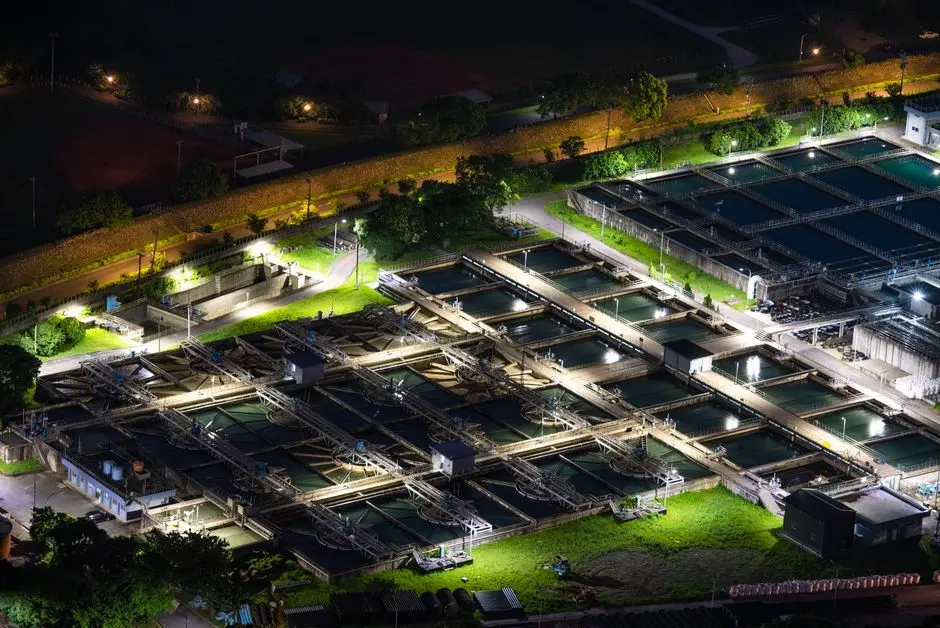
The GM EPC framework is the binding requirement, not the floor, and on a Mexico deal the corporate overlay runs hotter than the federal Mexican ceiling in three places. First, the 24-month ISO 14001 conformance clock: new manufacturing operating units must reach ISO 14001 conformance within 24 months of acquisition (S4, §5.1.1), and all relevant Mexican legal requirements — federal, state, basin, and LP-GMX-XXX — must be identified in the EMS register. Second, the 100% regulated-discharge measurement expectation: GM measures and monitors 100% of regulated discharges from major facilities, with an estimated 0.1% standard-effluent data coverage by quality parameters (S3, Water Security 2022), and that expectation translates into near-continuous flow-paced monitoring on the Mexican side as well. Third, the water-stress overlay: San Luis Potosí, Silao, and Ramos Arizpe sit in >80% water-stressed basins per WRI Aqueduct and GM's own analysis, and GM has already deployed solar ponds plus tertiary reuse to reduce non-renewable groundwater withdrawal (S3). The Ramos Arizpe paint retrofit, completed in April 2022, and the planned increase in reuse by June 2022 set a corporate precedent the buyer cannot legally or reputationally lower after acquisition.
On the compliance-mechanics side, GM EPC S4 §4.1.2 requires an environmental calendar covering periodic sampling, monitoring, reporting, and permit/license renewal dates. The 24-month clock and the calendar work together: the calendar is the day-to-day evidence the EMS auditor pulls, and the 24-month window is the hard stop. Three GM Mexico facilities are exposed to water risk in the Río Bravo/Rio Grande and Río Lema basins (S3, Water Security 2022), and basin-specific tightening in those sub-basins during the dry season (November–May) is now standard practice, not a one-off event. Engineers building a Phase 1 retrofit should assume 20–30% tighter limits in the dry-season design envelope, not the annual-average ceiling, or risk the outfall tripping permit conditions in the first six months of post-close operations.
Reference 7-Stage Treatment Train for a Mexico Auto-Assembly Retrofit
The reference P&ID below is reverse-engineered from CONAGUA Título de Concesión structures, public OEM Impact Report disclosures, and documented best practice at comparable auto and EV sites. Use it to size retrofit CAPEX, not to copy a vendor proposal. The train handles the four influent streams a Mexico auto-assembly site generates: body-in-white (Ni, Co, drawing compounds, lubricant emulsions), paint shop (phosphate, E-coat, detackifier COD), general assembly (low-contamination rinse, cooling-tower blowdown), and the EV/battery overlay (NMP from cathode coating, graphite slurries, electrolyte salt flushes).
Stage 1 — Equalization: 6–12 hour hydraulic buffer sized to peak shift flow, with PLC-controlled pH dosing that brings mixed pH into a 6.5–7.5 envelope. Body shop and paint streams arriving at the equalization basin can swing pH from 2 to 11; the basin has to absorb that or downstream metals precipitation fails. Stage 2 — DAF: a DAF system for FOG and TSS removal in body-shop streams in the 4–300 m³/h skid range delivers 80–95% FOG removal and drops TSS below 100 mg/L downstream. Stage 3 — Coagulation + lamella clarifier: ferric chloride or polyaluminum chloride at pH 9–10 precipitates dissolved Ni, Co, and Li as hydroxides, and a lamella clarifier for nickel, cobalt, and lithium precipitation at 20–40 m/h surface loading handles the solids separation (HydropureWater field data, 2026). Stage 4 — NMP vacuum distillation: a closed-loop distillation column recovers NMP from cathode-coating concentrate for reuse in coating operations. Plants outsourcing cathode production to a Tier-1 cell supplier skip this stage entirely. Stage 5 — MBR: a submerged MBR for the biological stage with PVDF hollow-fiber modules delivers effluent turbidity below 1 NTU at MLSS 8,000–12,000 mg/L, with reactor volume sized to peak flows near 5,000 m³/day at full EV scale. Stage 6 — Two-pass industrial RO: cooling-tower makeup reuse at 70–85% recovery, permeate conductivity below 50 µS/cm, aligned with the reuse-not-discharge norm in the three stressed basins. Stage 7 — Disinfection: a chlorine dioxide generator for final disinfection in the 50 g/h to 20,000 g/h range, or a UV bank, at the final reuse or discharge point.
| Stage | Unit operation | Key spec | Performance target |
|---|---|---|---|
| 1 | Equalization basin | 6–12 h HRT, PLC pH dosing | pH 6.5–7.5 mixed |
| 2 | DAF | 4–300 m³/h skid | 80–95% FOG, TSS <100 mg/L |
| 3 | Coagulation + lamella | pH 9–10, 20–40 m/h surface loading | Ni/Co/Li precipitated as hydroxides |
| 4 | NMP vacuum distillation (closed loop) | Cathode coating lines only | NMP returned to process; COD reduced |
| 5 | MBR (PVDF hollow fiber) | MLSS 8,000–12,000 mg/L | Effluent turbidity <1 NTU |
| 6 | Two-pass RO | 70–85% recovery | Permeate <50 µS/cm |
| 7 | ClO₂ or UV | 50 g/h to 20,000 g/h ClO₂ | Final reuse/discharge compliant |
For guidance on building a new facility at the planning stage rather than retrofitting, see planning-stage guidance for a new industrial wastewater treatment station.
CAPEX, OPEX, and Brine Off-Site for a Mexico Retrofit
The base-train CAPEX for a 1,500 m³/day Mexico retrofit — DAF, MBR, RO, no NMP distillation, no evaporator — fits a $1.5M–$6M envelope, or roughly $1,000–$4,000 per m³/day of design capacity ($4–$16 per gallon). A ZLD-ready configuration with an evaporator/crystallizer adds 1.5x–2.5x to the base-train number, which aligns with GM's 2030 reuse targets and with the basin-level pressure on the three stressed-basin sites. Adding NMP vacuum distillation for in-house cathode coating pushes spend to the upper end or above the range, because it is a separate process column, not a treatment stage. The hidden ongoing cost is brine hauling: at 15–30% reject on a 1,500 m³/day plant, that is 225–450 m³/day of liquid leaving the site, with Mexican disposal tariffs of $0.40–$0.90 per 1,000 gallons depending on state and hazardous classification.
A worked example: 300 m³/day reject at a $0.60/1,000-gal avoided-disposal credit captures roughly $48/day, or about $17,500/year. Not enough to retire an evaporator CAPEX, but enough to make brine minimization a real lever in the financial model. Sludge dewatering belongs as a discrete budget line, not buried in "treatment upgrades." A filter press for metal-rich sludge dewatering is the standard unit operation for Ni/Co/Li hydroxide sludges, and a polymer-based automatic chemical dosing system for sludge conditioning is a one-line add that meaningfully improves cake dryness. Mexican hazardous-waste classification under NOM-052-SEMARNAT-2005 sets the disposal route; an MX-Class I hydroxide sludge cannot go to a non-hazardous landfill, and that line item is what makes the difference between a defensible and a hand-waved brine number.
Days 0–180 Post-Close: A Mexico-Specific Integration Calendar
Days 0–30. File the CONAGUA Título de Concesión change-of-operator form (Formato de Cambio de Titularidad) and notify SEMARNAT of the LGEEPA Art. 29-bis transfer with the operating-condition attachment. Pull every open PROFEPA expediente from the seller — inspection minutes, Clausura orders, multas — and log them in the EMS register. Days 30–60. Verify the NOM-001 monitoring plan currency; identify the receiving-stream use-type (Type B, C, or reservoir/lake); confirm COTER and any prior COTER finding travels with the asset. Pull 8 quarters of CONAGUA-reported monitoring data from the seller's file, and flag any parameter that has been within 80% of its limit — those are the parameters most likely to tip into non-compliance under new operating conditions. Days 60–90. Confirm LP-GMX-XXX NOI coverage for satellite operations (paint shops, R&D pilots) and the basin-level water-stress reporting obligations under the S3 GM Water Security framework. Confirm the environmental calendar (S4 §4.1.2) is built, populated, and assigned an owner.
Days 90–180. Commission the equalization-basin influent channel count as a one-hour visual diagnostic. One channel implies the prior owner never segregated streams, and retrofit CAPEX roughly doubles. Five or more channels mean the prior owner already paid for segregation discipline, and the Phase 1 CAPEX number in the deal model holds. That single observation routinely resets the integration CAPEX estimate by a factor of two or more, and it is information the engineering team can collect on the first site walk after closing (HydropureWater field data, 2026). Days 0–720. Track the GM EPC 24-month ISO 14001 conformance clock, the EMS environmental-calendar build-out, and the 100% regulated-discharge measurement expectation. An annual Self Declaration Audit must be scheduled between 10 and 14 months from the prior cycle, and the first full EMS audit by a non-GM external auditor is required if Major Non-Conformances are found in year one (S4, §5.5.6).
Frequently Asked Questions
What is a CONAGUA Título de Concesión and does it auto-transfer on a Mexico plant acquisition?
The Título de Concesión is the federal grant issued by CONAGUA (Comisión Nacional del Agua) authorizing both wastewater discharge and groundwater extraction at an industrial site. It is the Mexican analog of the US NPDES/TPDES permit. The title does not auto-transfer as a freestanding right on closing. The buyer must file a Formato de Cambio de Titularidad with CONAGUA so the title re-issues in the successor operator's legal name, and the discharge and extraction conditions carry forward unchanged. Open CONAGUA derechos (water-use fees) and any prior non-compliance with title conditions travel with the asset as successor liabilities.
What is the LGEEPA Article 29-bis 90-day change-of-operator rule?
Under Article 29-bis of the Ley General del Equilibrio Ecológico y la Protección al Ambiente (LGEEPA), the buyer must file a change-of-operator notice with SEMARNAT within 90 days of closing an industrial asset that operates under an environmental authorization. The notice names the successor operator, re-attaches the operating conditions, and is the trigger for re-issuing discharge and emissions authorizations. Open PROFEPA expedientes, inspection findings, and unpaid multas do not reset on closing; they transfer as successor liabilities regardless of when the notice is filed.
What are the binding NOM-001-SEMARNAT-2021 effluent numbers for a Mexico auto-assembly site?
The binding annual-average ceilings for the metal-finishing subcategory are: total Ni 1.0 mg/L, total Co 1.0 mg/L, total Cr(VI) 0.1 mg/L, total Pb 0.5 mg/L, total Cu 1.0 mg/L, total Zn 2.0 mg/L, total CN 1.0 mg/L. Conventional parameters for surface-water (Type C) discharge are: BOD 30 mg/L, COD 120 mg/L, TSS 40 mg/L, FOG 15 mg/L, total N 25 mg/L, total P 10 mg/L. The total P limit tightens to 5 mg/L for discharges into a reservoir or lake use-type per NOM-001 Table 2. Receiving-stream classification and dry-season basin-level tightening can run site limits 20–30% tighter than the federal ceiling.
How does the GM EPC 24-month ISO 14001 clock work on a Mexico acquisition?
Under GM EPC S4 §5.1.1, a new manufacturing operating unit — including an acquired Mexico plant — must reach ISO 14001 conformance within 24 months of acquisition. The EMS must include a documented environmental calendar (S4 §4.1.2) covering periodic sampling, monitoring, reporting, and permit/license renewal dates, and all relevant Mexican federal, state, and basin legal requirements must be identified in the EMS register. The 100% regulated-discharge measurement expectation applies to the Mexico site from Day 1, which translates into near-continuous flow-paced monitoring under the CONAGUA Título de Concesión.