Which treatment train fits a Lillian mining site?
For mining and metals wastewater near Lillian, MBR is generally the stronger option when reliable solids separation, a constrained footprint, or water reuse justifies added capital and operating costs. Conventional activated sludge can remain competitive for large dilute flows with inexpensive power and serviceable aeration and clarification assets. Neither technology independently removes every dissolved metal, so dedicated precipitation or other metals treatment is generally required. The final choice should follow the current permit, actual influent characterization, reuse target, pilot results, and a like-for-like lifecycle model.
The decision begins with five Lillian inputs: the current permit, measured influent characteristics, the discharge destination, the intended reuse specification, and the remaining life of existing aeration and clarification assets. MBR becomes more defensible when those inputs make solids separation, footprint, or reuse value critical. CAS remains credible for large dilute flows with no reuse or zero-liquid-discharge driver, inexpensive electricity, and serviceable civil assets.
Technology selection should not be treated as a membrane-versus-clarifier referendum. It is a selection of treatment functions: biological degradation, solids separation, dissolved-metals removal, and any application-specific polishing. A complete comparison can be developed through the MBR wastewater membrane bioreactor cost per m³ guide, then tested against site data rather than generic performance ranges.
How MBR and conventional activated sludge divide the treatment job
Conventional activated sludge separates biomass through gravity settling, whereas MBR separates it through a physical membrane barrier; that functional difference drives both process resilience and equipment requirements.
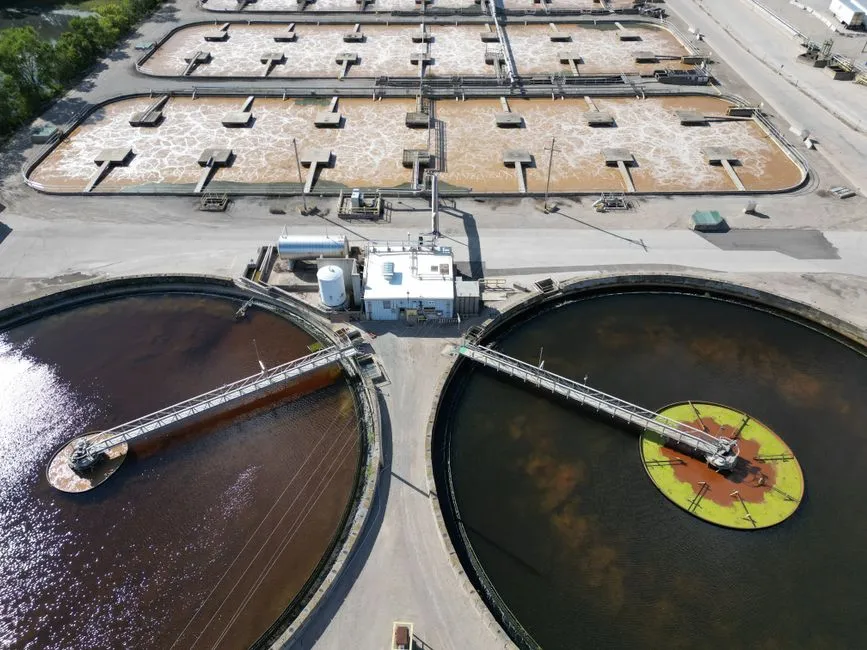
In conventional activated sludge, microorganisms oxidize biodegradable organics in an aeration basin. Mixed liquor enters a secondary clarifier, where solids settle by gravity. Settled sludge is returned as return activated sludge, while excess sludge is removed as waste activated sludge. Effluent quality therefore depends on biological treatment and the settleability of the resulting sludge.
MBR combines activated-sludge aeration with submerged PVDF hollow-fiber or flat-sheet membranes. The membranes retain biomass and suspended material, decoupling effluent solids concentration from floc settleability. The MBR working principle and selection guide provides a useful process-flow reference, while the integrated MBR membrane bioreactor system shows how biological treatment and membrane filtration can be packaged together.
| Treatment function | Conventional activated sludge | MBR | Decision implication |
|---|---|---|---|
| Biodegradable organics | Microbial oxidation in an aeration basin | Microbial oxidation in an aerated biological reactor | Both require site-specific biological loading and mixing assessment |
| Biomass and suspended solids | Secondary clarifier sludge settling | Physical retention by submerged membranes | MBR reduces dependence on floc settleability but introduces membrane fouling controls |
| Dissolved metals | Dedicated precipitation or another metals-treatment step | Dedicated precipitation or another metals-treatment step | Neither membrane capture nor clarification guarantees dissolved-metals compliance |
| Reuse polishing | Application-specific filtration, UV, or reverse osmosis | Application-specific filtration, UV, or reverse osmosis | MBR permeate is not automatically suitable for boiler feed, cooling water, process water, or zero-liquid-discharge use |
HydropureWater’s 2026 comparison cites EPA MBR Fact Sheet values of 0.01–1.31 NTU turbidity and 0.10–0.72 mg/L BOD₅ for referenced facilities. Those are source-specific results, not universal mining-wastewater limits or evidence of dissolved-metals removal.
What mining chemistry can reverse the technology choice
HydropureWater’s 2026 screening flags identify several influent conditions that require pilot validation rather than a technology assumption based only on municipal loading data.
| 2026 screening input | Flag | Why it matters | Required validation |
|---|---|---|---|
| BOD/COD | Below 0.3 | Limited biodegradable carbon relative to measured oxidant demand | Confirm biological feasibility and nutrient requirements |
| Hardness | Thousands of mg/L as CaCO₃ | Scale, precipitation, and sludge-handling implications | Track fouling, cleaning frequency, and recovered flux |
| Sulfate | Above 1,000 mg/L | Dense-water and fouling conditions that can challenge membrane operation | Compare normalized flux and transmembrane pressure |
| TDS | Above 5,000 mg/L | Osmotic effects may inhibit biological activity, particularly nitrifiers | Test the actual water rather than transferring municipal assumptions |
These are HydropureWater’s 2026 screening flags, not universal design thresholds. Low biodegradable carbon, high dissolved solids, sulfate, and hardness can destabilize biological treatment and downstream solids handling. A BOD/COD ratio below 0.3 also requires the designer to establish whether external carbon or another biological strategy is necessary.
Cyanidation circuits can introduce cyanide, ammonia, and thiosulfate, creating oxygen-demand swings that favor equalization before biological treatment. Equalization should be sized from actual diurnal flow and loading data so hydraulic shocks do not pass directly into aeration, clarification, or membranes. Salinity and TDS may inhibit nitrification; biological loading rates must therefore be checked against site chemistry.
HydropureWater’s 2026 field observation reported that CAS systems lost 30–60% of removal efficiency during a 24–72-hour window after a metal pulse. This is not a universal performance claim, but it demonstrates disturbance sensitivity. Metal-bearing biological floc can escape through a clarifier during bulking or other settleability failures, whereas MBR retains solids more consistently but remains vulnerable to fouling and excessive transmembrane pressure.
Sulfate above 1,000 mg/L and hardness in the thousands of mg/L as CaCO₃ are therefore validation triggers for a side-by-side pilot. Measure membrane normalized flux, transmembrane pressure, chemical-cleaning frequency, and recovered performance. If chemical control is required, evaluate a PLC-controlled chemical dosing system, and confirm the pretreatment sequence with a rotary mechanical bar screen where actual wastewater characteristics justify it.
Metals removal and compliance cannot be assigned to the membrane alone
Federal ore-mining and dressing requirements under 40 CFR Part 440 address arsenic, lead, zinc, copper, nickel, and cadmium; membrane solids retention alone does not establish compliance with those metals requirements.
MBR and CAS generally require upstream precipitation or another dedicated dissolved-metals treatment step. Particulate-bound metals may report to captured sludge when the solids are separated. Dissolved metals require chemistry-specific treatment that converts them into removable solids or otherwise removes them before final clarification or membrane separation.
HydropureWater’s approximate 2026 comparison ranges are pH 8.5–9.5 for a CAS precipitation stage and pH 6.5–7.5 ahead of MBR membranes. These are screening inputs, not universal operating instructions. Jar testing and pilot work must establish the chemical sequence, pH, dosing, reaction time, and resulting solids-removal performance using actual Lillian wastewater.
The permit review must extend beyond federal provisions. Confirm current state NPDES conditions for selenium, sulfate, and other site-specific limitations, then connect those limits to the receiving route: surface water, a publicly owned treatment works, an injection well, or reuse. For dissolved-metals polishing and subsequent solids separation, evaluate the high-efficiency sedimentation tank against the actual precipitation chemistry.
The mining and metals compliance review illustrates why a local discharge envelope must be checked separately from federal ore-mining rules. Neither clarified nor membrane-separated effluent should be treated as compliant merely because it contains very little suspended material.
Footprint, operating cost, and sludge handling
MBR’s footprint advantage can be substantial, but the cited cost comparison shows that added capital and operating expense can outweigh that saving when the water has no meaningful reuse value.
| 2026 screening comparison | MBR | CAS | Scope |
|---|---|---|---|
| Concrete and civil footprint | Approximately 60% lower | Reference case | HydropureWater and Lamella-clarifier engineering reference, 2026 |
| Capital cost | 20–40% above equivalent-flow CAS | Reference case | 1,000 m³/day screening example, HydropureWater and Lamella-clarifier engineering reference, 2026 |
| Operating cost | 15–30% higher per m³ | Reference case | Same 1,000 m³/day example and scope, 2026 sources |
| Payback screening condition | Approximately 4–6 years when make-up water exceeds about $2/m³ or brine disposal has a real cost | Not applicable | HydropureWater, 2026; not a guaranteed project outcome |
| Electricity-price screen | Higher power sensitivity | Favorable below about $0.07/kWh | HydropureWater, 2026 |
Require quotations to include membrane cassettes, fine screens, permeate pumps, PLC upgrades, air-scour energy, chemical cleaning, membrane replacement, aeration, clarification, and associated civil work. Use the same flow, effluent duty, civil scope, pretreatment, sludge handling, power, cleaning, and replacement assumptions for both options. The mining wastewater MBR versus activated sludge comparison is a screening reference, not a substitute for a site-specific model.
Sludge must be included in that model. HydropureWater states that MBR waste sludge can have lower settleability and more colloidal particles than CAS waste activated sludge. Consequently, dewatering equipment should be selected from measured sludge properties, not nominal flow. The plate-and-frame filter press should be evaluated against pilot-derived solids concentration, capture behavior, and expected dewatering demand.
A site-specific selection framework for Lillian
A defensible Lillian selection starts with the permit and discharge destination, then applies measured wastewater, site-asset, and lifecycle-cost gates before equipment selection.
| Stage | Required evidence | Decision gate |
|---|---|---|
| 1. Compliance route | Current permit; discharge or reuse destination; local limitations | Reject any proposal that relies on solids capture to prove dissolved-metals compliance |
| 2. Influent characterization | Diurnal flow, BOD/COD, total and dissolved metals, sulfate, TDS, hardness, pH, alkalinity, suspended solids, and cyanide data | Identify biological, precipitation, equalization, and fouling risks |
| 3. Site assets | Footprint, aeration and clarification condition, electrical tariff, make-up-water value, brine-disposal cost, pretreatment requirements, and reuse specification | Favor MBR for reliable separation, constrained footprint, or meaningful reuse value |
| 4. Like-for-like economics | Same flow, effluent duty, civil scope, pretreatment, sludge handling, power, cleaning, and replacement basis | Favor CAS for large dilute flows, inexpensive power, low reuse value, and serviceable basins and clarifiers |
| 5. Pilot and proposal | Measured pilot results, permit language, actual dissolved and particulate metals data | Do not infer compliance from generic performance ranges |
Short metal and loading pulses deserve special attention. Data should resolve their magnitude, duration, and frequency rather than average them into a stable daily load. If the flow is large and dilute, electricity is inexpensive, reuse value is low, and existing aeration and clarification assets remain serviceable, CAS may remain the better economic fit.
If reliable separation, constrained space, or a defined reuse target dominates the decision, MBR moves ahead. That preference remains conditional on acceptable pretreatment, fouling control, cleaning recovery, power demand, and sludge dewatering. Final compliance should be demonstrated against permit language, actual wastewater data, pilot results, and the final equipment proposal.
Validate the decision with a 60–90 day pilot
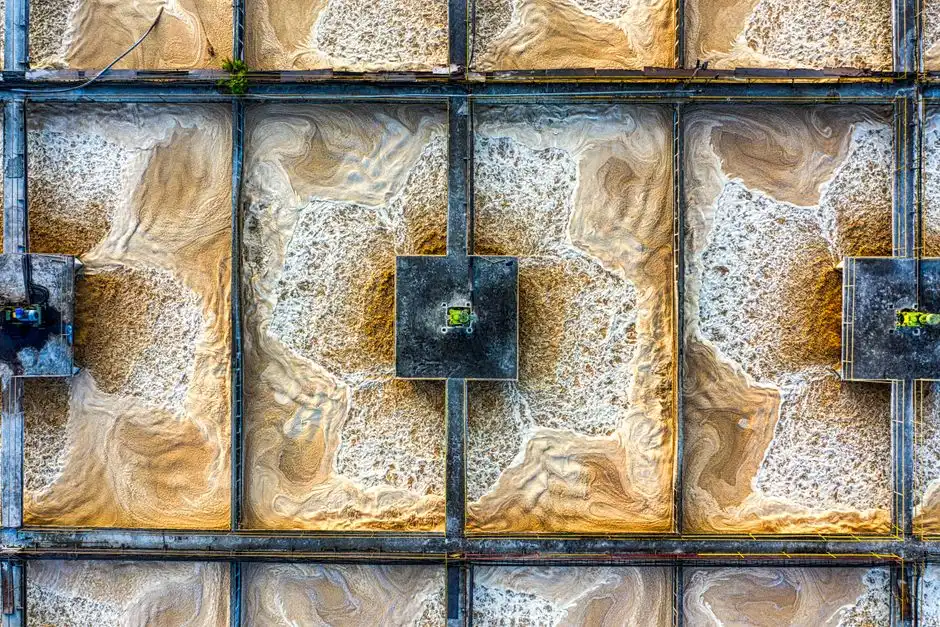
HydropureWater’s 2026 guidance recommends a 60–90 day cassette pilot using actual wastewater when metal pulses, low BOD/COD, sulfate, hardness, or high TDS could affect biological performance, settleability, or membrane flux.
The pilot should compare the same treatment objective rather than isolated water-quality samples. Measure solids separation, total and dissolved metals removal, transmembrane pressure, membrane normalized flux, chemical demand, cleaning recovery, and sludge dewatering. For CAS, record secondary clarifier sludge settling and metal passage. For MBR, record flux and pressure trends before and after chemical cleaning.
Specify pretreatment from the actual influent matrix. HydropureWater’s 2026 specification states that MBR systems require 1–3 mm fine screening, with cited cutoffs of 1–2 mm for hollow-fiber modules and 2–3 mm for flat-plate modules. Equalization must be validated against measured diurnal flow and load. The rotary mechanical bar screen may be part of that pretreatment basis.
Include sodium hypochlorite and citric acid cleaning, reagent delivery, recovered cleaning performance, membrane-condition assessment, and eventual replacement in the operating and lifecycle model. The DF-series PVDF flat-sheet membrane module is a catalog configuration to check against pilot results, not a default selection.
Size from required flow, actual influent matrix, pretreatment, permit duty, and reuse profile rather than nominal peak flow alone. HydropureWater’s catalog states an integrated MBR capacity range of 10–2,000 m³/day. The DF-series module is listed in 80–225 m² configurations producing 32–135 m³/day. Those are configuration checks only; train configuration, redundancy, and wastewater suitability must be confirmed in writing.
Frequently Asked Questions
How much will MBR cost compared with conventional activated sludge?
For the cited 1,000 m³/day screening example, HydropureWater and the Lamella-clarifier engineering reference reported 2026 capital costs for MBR at 20–40% above equivalent-flow CAS and operating costs at 15–30% higher per m³ under the same scope. Do not treat those percentages as a Lillian quotation. Request a site-specific model using actual flow, effluent duty, civil works, pretreatment, sludge handling, electricity, cleaning, and membrane replacement. Also request the sensitivity of payback to the actual tariff and reuse value; the cited 4–6-year screening condition applies only where make-up water exceeds about $2/m³ or brine disposal has a real cost.
How should a supplier be selected and the equipment sized?
Require the supplier to size the train from required flow, actual influent matrix, pretreatment, permit duty, and reuse profile—not nominal peak flow alone. Ask for written confirmation of flow basis, solids-loading duty, module configuration, redundancy, fine-screen requirements, equalization basis, chemical cleaning, and replacement provisions. The stated 10–2,000 m³/day integrated-system range and the DF-series 80–225 m², 32–135 m³/day configurations are screening references that must be reconciled with site data.
Does an MBR meet dissolved-metals limits because its effluent is clear?
No. Membrane solids retention does not establish compliance with the arsenic, lead, zinc, copper, nickel, and cadmium requirements addressed by 40 CFR Part 440. Both MBR and CAS generally require dedicated dissolved-metals treatment. Request the permit language, total and dissolved metals results, chemical sequence, pH, dosing basis, and pilot evidence showing metals removal rather than relying on turbidity or solids-removal data alone.
What should a 60–90 day pilot prove before reuse equipment is selected?
The pilot should demonstrate biological treatment, solids separation, chemical demand, and stability under the actual influent. Track transmembrane pressure, membrane normalized flux, cleaning recovery, total and dissolved metals removal, and sludge dewatering. Do not assume MBR permeate is suitable for boiler feed, cooling water, process water, or zero-liquid-discharge reuse; define the reuse specification first, then add filtration, UV, reverse osmosis, or another barrier only where that specification requires it.