What treatment does a Sangli data center actually need?
A Sangli data center needs treatment defined by stream, cooling configuration and disposal route—not one generic wastewater plant. Cooling blowdown is circulating water removed to control mineral, scale and corrosion accumulation; evaporation leaves salts behind, and blowdown may carry biocides and anti-scalants (North Carolina State University, 2026). The package should separate source-water treatment, cooling chemistry and make-up control, blowdown recovery, sanitary and process wastewater, and residual brine or sludge handling. Sangli source-water chemistry, discharge destination, consent conditions, cooling configuration and water balance remain unverified and must be established. UGA Extension reports up to 70% less water consumption for closed-loop systems than traditional open evaporative cooling, but that is a screening comparison, not a Sangli design guarantee. The detailed selection path follows the closed-loop cooling water treatment guide and Bhavnagar data-center blowdown treatment framework.
Cooling configuration determines both demand and wastewater character. Open evaporative cooling consumes water through evaporation and drift and produces concentrated blowdown. Closed-loop recirculation reduces evaporation but increases the importance of chemistry control. Dry cooling changes the water profile by eliminating a circulating cooling-water stream, while direct liquid cooling introduces a separate coolant-management requirement. Each must be evaluated against heat load, climate, power availability and water-security objectives.
The engineering task is therefore to link every equipment item to a measured flow, a verified water-quality parameter and a defined outlet. Until those links exist, equipment selection is premature.
Build the Sangli site water balance before selecting equipment
The data-center water balance must separate every inlet and outlet before it can size treatment equipment. Peak flow alone is not a sufficient design basis because blowdown depends on evaporation, drift, make-up chemistry, operating cycles and control strategy.
- Obtain source-water analyses for hardness, alkalinity, calcium, silica, conductivity or TDS, chloride, sulfate, suspended solids, turbidity, temperature and residual disinfectant where applicable.
- Record the cooling-system inventory, tower or chiller type, evaporation rate, drift, blowdown frequency, cycles of concentration, make-up-water source and all chemicals dosed into each loop.
- Characterize each wastewater stream for suspended solids, oil and grease, pH, temperature, conductivity, biochemical oxygen demand, chemical oxygen demand, residual chlorine where used, biocides, anti-scalants and corrosion inhibitors.
- Map every outlet to a sewer connection, permitted surface-water discharge, controlled reuse, evaporation or off-site disposal.
- Build monthly balances for normal load, peak demand, seasonal variation, downtime, cleaning losses and expansion. Confirm available freshwater supply and abstraction constraints.
The freshwater-source check matters because UGA Extension reports that approximately 57% of data centers use potable-water supplies, citing Mytton (2021), and that 80% to 90% of this water is consumed from watersheds, citing Novva Data Centers. Those findings do not describe Sangli, but they justify confirming source reliability rather than assuming unrestricted availability.
| Input | Engineering use | Minimum evidence to obtain |
|---|---|---|
| Source-water analysis | Sets make-up treatment, scaling risk and RO feed assumptions | Representative analyses across operating and seasonal conditions |
| Cooling configuration | Determines evaporation, drift and wastewater generation | Approved equipment drawings, duty data and operating modes |
| Stream inventory | Prevents incompatible wastewater blending | Flow, chemistry, destination and sampling point for each stream |
| Cycles of concentration | Controls salinity, chemistry demand and blowdown volume | Operating envelope and control philosophy |
| Monthly water balance | Links treatment capacity to freshwater and discharge obligations | Base, peak, seasonal, cleaning and expansion scenarios |
| Consent route | Defines required treatment and monitoring | Sangli-specific authority requirements and facility consent conditions |
The site water balance should follow the structure used for an India plant RO-capacity assessment, but the treatment basis should remain specific to Sangli rather than transfer generic plant assumptions.
Match each waste stream to its treatment objective
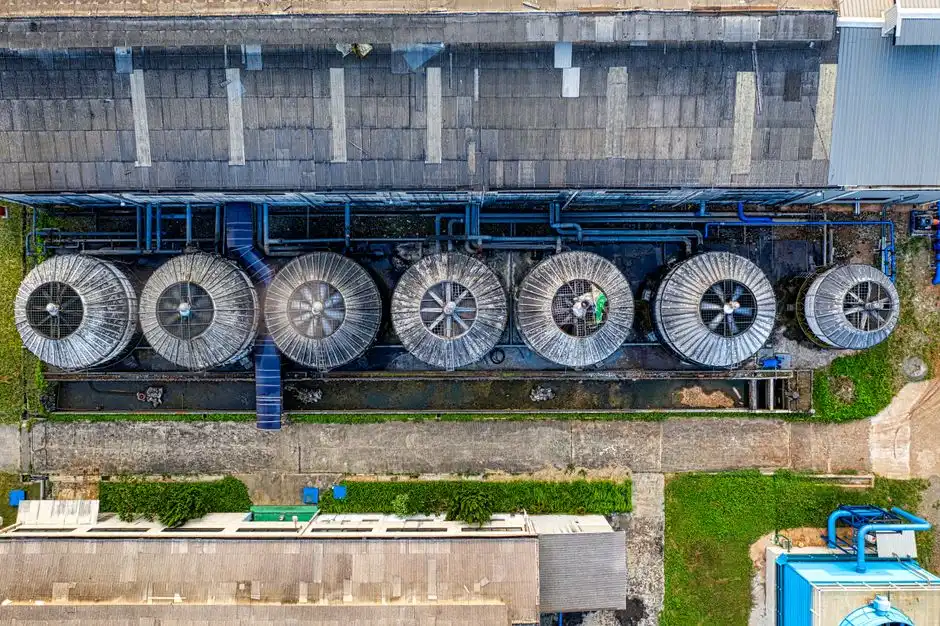
Each Sangli waste stream needs a treatment objective tied to its destination and variability. Cooling blowdown, sanitary wastewater and maintenance rinses should not be blended until compatibility is demonstrated.
For cooling-tower blowdown, treatment priorities are solids removal, hardness or alkalinity control where needed, dissolved-salt management, and control of biocide or anti-scalant carryover. The target depends on whether the water will become make-up water or enter a discharge route. A closed-loop cooling water treatment guide can support the chemistry review, but reuse feasibility still depends on the actual cooling loop and source-water analysis.
Sanitary wastewater should remain a separate biological stream and be sized from confirmed occupancy and wastewater loading. Process and maintenance wastewater should also be segregated: oils, cleaning chemicals or high-conductivity rinses can foul membranes or upset biological treatment. Condensate and other relatively clean cooling streams should be evaluated for direct reuse after quality verification rather than sent automatically through the full plant.
Industrial wastewater pretreatment should match the contaminant. Dissolved-air flotation is an option where floatable oils and suspended material need removal. UF can remove bacteria, colloids and suspended solids without chemical addition; membrane-process selection for industrial wastewater provides a useful adjacent comparison. Industrial RO is appropriate when dissolved salts must be removed for reuse; a industrial reverse osmosis system for cooling-blowdown reuse should be selected from feed chemistry and recovery requirements.
Where on-site microbial control is required, a chlorine dioxide generator for industrial cooling-loop disinfection may be evaluated against the treated-water quality, residual requirement and safety controls. Concentrated RO reject and precipitated solids remain separate residual streams and require documented handling before the reuse option is approved.
| Waste stream | Primary objective | Potential treatment modules | Decision gate |
|---|---|---|---|
| Cooling-tower blowdown | Control solids, salts and treatment chemicals for reuse or discharge | Filtration, softening, chemical control, UF, RO, disinfection | Cooling chemistry and destination |
| Sanitary wastewater | Reduce sanitary pollutants to the required route-specific quality | Biological treatment, clarification, disinfection as required | Occupancy load and reuse or discharge objective |
| Process or maintenance wastewater | Remove incompatible oils, chemicals and dissolved salts | Segregation, equalization, DAF or other targeted pretreatment | Source-specific contaminant analysis |
| Condensate or clean cooling streams | Preserve reusable water quality | Quality verification, filtration and disinfection where required | Contamination and reuse-contact assessment |
| RO concentrate and chemical solids | Provide a controlled residual-waste route | Concentration, precipitation or crystallization, secure collection and disposal | Volume, chemistry and permitted destination |
Compare reuse, compliant discharge and zero liquid discharge
The treatment decision is a comparison of water recovery, discharge obligation, energy demand and residual-waste liability. A modular or high-recovery configuration does not establish compliance by itself.
Direct or partial reuse is the first option to test when blowdown quality and cooling chemistry permit it. The objective is to reduce freshwater withdrawal, discharge and chemical consumption while increasing cycles of concentration. Reclaimed municipal or industrial wastewater should be considered only after its upstream treatment, distribution system and chemistry are matched to the cooling requirements. The 2026 Open Engineering preprint evaluates depth filtration, granular activated carbon and chlorination as one such train.
Conventional brackish-water RO provides a benchmark rather than a universal answer. IDE Tech states that conventional systems often encounter scaling constraints at 75–80% recovery because silica, calcium carbonate and calcium sulfate approach limiting concentrations. The same source reports an industrial brine-desalter application operating at around 95% recovery with permeate silica of about 1 mg/L. That result belongs to a specific application and cannot be transferred to Sangli without testing.
High-recovery reuse should therefore be evaluated through controlled precipitation, advanced membrane operation or another technically justified process. A zero liquid discharge system becomes relevant when local water stress, discharge restrictions or corporate targets justify the additional energy and maintenance burden. Saltworks describes modular evaporator-crystallizers with self-diagnosis, self-cleaning and automation for minimal or true liquid discharge, but the buyer still needs a site-specific salt balance and residue outlet.
Lifecycle impacts must be compared on the same basis. The Open Engineering preprint found that its wastewater scenario had about twice the global warming potential of the freshwater case, with treatment energy accounting for roughly 80% of the difference. It also reported an indirect water penalty of approximately 0.93 L/m³, less than 0.1% of the direct displacement benefit, and found that higher cycles of concentration reduced blowdown and chemical consumption. These findings support a water-and-energy comparison, not a guarantee for a Sangli configuration.
| Option | Water recovery | Principal benefit | Principal risk or burden | Evidence required |
|---|---|---|---|---|
| Direct or partial reuse | Highest where chemistry permits | Reduces freshwater withdrawal and discharge | Variable source quality and cooling-system compatibility | Stream chemistry, pilot data and cooling model |
| Permitted discharge after treatment | Does not eliminate discharge | Protects receiving environment when treatment is validated | Consent requirements, temperature and residual pollutants | Sangli authority requirements and site-specific analysis |
| Conventional brackish RO | Benchmarked by IDE Tech at 75–80% before scaling becomes difficult | Produces low-salinity permeate for reuse | Scaling, pretreatment, cleaning and concentrate | Feed-water analysis and pilot recovery test |
| High-recovery treatment | Application-specific | Higher internal reuse and lower blowdown | Precipitation, additional controls and solids handling | Salt balance and confirmed residue route |
| Zero liquid discharge | Minimal or true liquid discharge | Addresses strict water or discharge constraints | Energy demand, maintenance and solid-residue disposal | Lifecycle energy assessment and authorized residue destination |
The decision logic is therefore straightforward: reuse first where quality supports it; treatment followed by permitted discharge where reuse is not technically credible; and zero liquid discharge only after the energy and residual-waste burden is quantified. The data-center wastewater and cooling-blowdown decision guide provides a comparative reference for that screen.
Design the treatment process for reliable operation
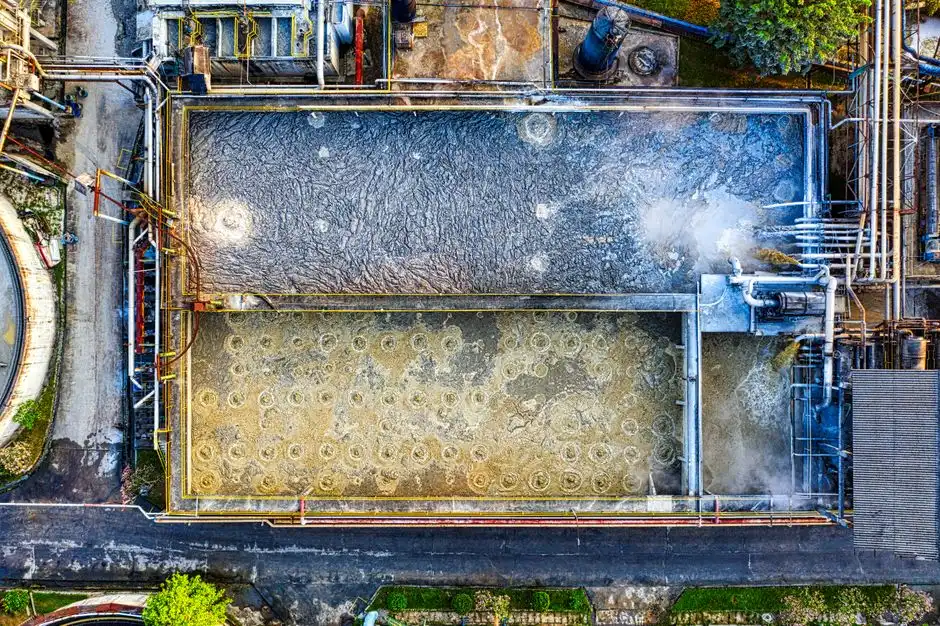
Reliable treatment requires a defined sequence from sampling to baseline performance. The recommended sequence is source-water sampling, stream segregation, bench or pilot testing, process selection, hydraulic sizing, chemical and membrane compatibility review, automation design, commissioning and baseline monitoring.
Multi-media filtration can remove suspended solids, turbidity and colloids when its outlet is suitable for downstream RO protection. Industrial softening should be applied where hardness or alkalinity would otherwise create unacceptable scaling. PLC-controlled chemical dosing for coagulant, flocculant, pH adjustment and specialty chemicals should operate within an envelope established from actual cooling chemistry rather than generic dosing rates.
UF or RO pretreatment should be used where pilot results show it is needed to protect downstream membranes or disinfection systems. A ultrafiltration pretreatment for data-center water recovery and the selected RO train must be matched to the feed and permeate targets. The multi-media filtration equipment guide, industrial water-softener guide and PLC-controlled chemical dosing for blowdown treatment are relevant equipment references, but not substitutes for site data.
Online monitoring should cover the parameters relevant to the process: conductivity, pH, turbidity, flow, differential pressure and residual disinfectant where used. Off-spec flow should be automatically diverted rather than blending into the destination stream. Operators also need defined response actions for membrane cleaning, media replacement, chemical inventory and diversion.
Residual-waste planning must be completed before equipment selection. RO concentrate, spent resin, chemical sludge, filter solids and any crystallized salts need an identified destination, handling method and responsibility owner. A reuse system is incomplete if it transfers the environmental burden to an unverified residual stream.
Specify equipment and supplier guarantees before purchase
Comparable bids require guarantees tied to feed chemistry, stream flow and a defined outlet. Headline recovery percentages are not comparable unless bidders use the same feed basis and report permeate and concentrate consistently.
- Request guaranteed design flow for each segregated stream, including operating and maintenance conditions.
- Define recovery on a consistent permeate-and-concentrate basis and require the feed-water assumptions used to achieve it.
- State treated-water targets for the intended reuse route and any applicable Sangli discharge requirement, with the responsible party for compliance identified.
- Require membrane or media life, cleaning frequency, chemical consumption, expected sludge and concentrate volumes, backup strategy and PLC control scope.
- Compare lifecycle energy demand and utility availability, particularly for RO and zero-liquid-discharge alternatives.
- Require site-relevant pilot or performance data where scaling or fouling risk is material.
- Include delivery, installation, commissioning, operator training, initial spares and remote support in the commercial offer.
The energy requirement is a material comparison variable because the Open Engineering preprint identified treatment energy as the main source of the extra global warming potential in its wastewater scenario. Pilot evidence is particularly important where conventional brackish RO commonly encounters scaling constraints at 75–80% recovery, according to IDE Tech in 2026.
Delivery and commissioning dates should remain bidder-specific variables. Procurement should not accept a generic lead time without a supplier commitment tied to approved drawings, utility interfaces and acceptance tests. The bid structure can be developed alongside the skid-mounted treatment plant procurement considerations.
Frequently Asked Questions
How should treatment capacity be sized for a Sangli data center?
Size each train from its measured worst-case design flow, feed-water quality, required recovery and operating availability. Cooling-system capacity alone is not a sizing input. Include segregated sanitary, process and blowdown streams, then verify the combined demand against the monthly water balance.
How much will the wastewater and cooling-blowdown treatment package cost?
No defensible price can be issued until the reuse or discharge route is fixed. Ask bidders for stream-by-stream equipment, installed utilities, pretreatment, controls, energy demand, chemical use and residual-waste handling as separate priced items. This check prevents a low membrane bid from omitting concentrate disposal or required pretreatment.
Which supplier selection checks matter most?
Require site-relevant feed data, pilot evidence, guaranteed outlet quality, a defined recovery basis, energy consumption, residual-waste responsibilities and lifecycle support. Confirm that the supplier will provide operator training, commissioning support, spares and remote assistance rather than supplying equipment alone.
Does closed-loop cooling or water-efficient design carry lower risk than treating open-loop blowdown?
It may, but the choice depends on climate, heat load, energy availability, water security and cooling reliability. Closed-loop systems avoid evaporation, while treatment of open-loop blowdown must control variable chemistry and additives. Compare both routes using measured site data rather than selecting one from a generic water-saving claim.
What Sangli compliance requirements must be confirmed before approval?
No Sangli-specific regulatory limit was established in the supplied research. Confirm the applicable discharge or reuse route with the relevant authority and the facility’s consent conditions, then map every permit requirement to a monitored parameter, equipment guarantee and responsible operator.