What is the defensible RO capacity estimate for the plant?
The required RO capacity for LG Energy Solution’s new battery plant in India cannot be confirmed from the supplied evidence because no verified plant wastewater flow, source-water analysis, production schedule or recovery target is published. The defensible approach is to calculate plant RO feed from wastewater generation, process-reuse demand and pretreatment losses, then divide required permeate output by the selected RO recovery rate. Energy Recovery’s June 29, 2026 announcement covered five contracted Indian projects totaling 30,000 m³/day, not an LG Energy Solution award. Final sizing therefore requires a verified battery plant water balance, water-quality profile and vendor design data.
An India-wide treatment-volume announcement can establish market context, but it cannot be allocated to an unnamed battery facility. The required output depends on the plant’s daily wastewater by stream, reuse targets, operating schedule, feed chemistry, discharge route and whether ZLD is included.
For preliminary feasibility work, calculate required permeate first, then divide it by a selected recovery expressed as a decimal:
RO feedwater flow = required permeate flow ÷ selected RO recovery
This produces a screening value, not a purchasable equipment rating. A firm specification requires signed flow tags, representative source-water samples, pretreatment losses, a concentrate-management route and a vendor performance basis. The same sequence used for a battery-gigafactory ZLD capacity calculation can structure the LG Energy Solution India battery plant assessment without inventing a plant requirement.
Verified India context versus missing plant-specific inputs
Energy Recovery’s June 29, 2026 announcement confirms that five contracted Indian industrial RO/ZLD projects represented 30,000 m³/day of cumulative capacity, while the company said its devices support more than 230,000 m³/day of industrial wastewater treatment across India.
Those figures describe market activity associated with the vendor’s equipment, not the LG Energy Solution India battery plant. The announcement provides no plant flow, water balance, source-water chemistry, production schedule or awarded treatment-train capacity for that facility.
The same source states that India has approximately 18% of the global population but only 4% of the world’s freshwater resources, and that water demand is projected to be twice available supply by 2030. These are national resource indicators, not inputs that can be converted into an RO flow.
| Item | What the evidence establishes | Use in an LG plant sizing decision |
|---|---|---|
| Five contracted Indian industrial RO/ZLD projects | 30,000 m³/day cumulative capacity, according to Energy Recovery on June 29, 2026 | Market context only; not attributable to the LG Energy Solution India battery plant |
| Energy Recovery devices supported in India | More than 230,000 m³/day of industrial wastewater treatment, according to Energy Recovery on June 29, 2026 | Installed technology scope; not a plant design flow or equipment price |
| Plant wastewater generation | Not stated in the supplied research | Request flow tags by source, production phase and operating day |
| Source-water analysis | Not stated in the supplied research | Request representative samples covering normal and peak conditions |
| Reuse, discharge and ZLD targets | Not stated in the supplied research | Obtain approved water-reuse targets, discharge route and ZLD design boundary |
| Production schedule | Not stated in the supplied research | Define base-case, peak and future-phase operating cases |
Before an investment memo treats capacity as firm, request daily wastewater generation by stream, production-phase ramp-up, water-reuse targets, source-water chemistry, discharge route, ZLD configuration and operating schedule from the plant owner or responsible EPC team. Aggregate Indian treatment volume cannot be apportioned to one plant without an engineering allocation basis.
Build the battery-plant water balance before sizing RO
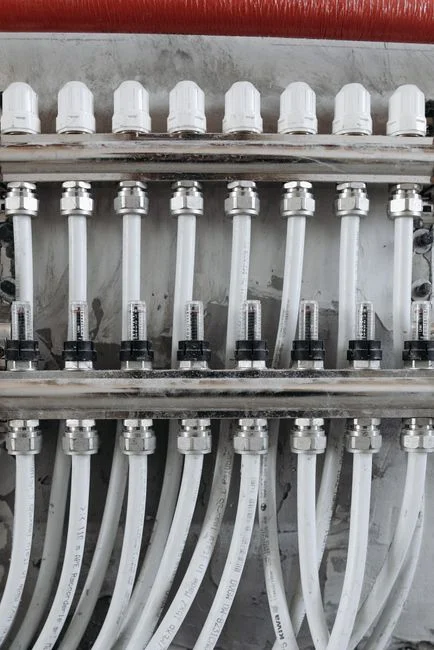
A defensible RO duty starts with a mass balance that identifies every water-bearing stream before any treatment route is assigned.
- Construct separate balances for process wastewater, cooling and washdown streams, sanitary wastewater and storm water.
- Include evaporation, product losses, upstream and downstream treatment losses, bypass flows and the planned number of operating days.
- Allocate each stream to direct reuse, pretreatment followed by reuse, RO or another polishing step, or ZLD.
- Credit water returned to production before calculating the residual flow that must enter RO.
- Reconcile the final balance against metered water intake, production losses and documented discharge.
The allocation step is decisive. Treating every litre of wastewater as RO feed can materially overstate equipment demand because some streams may be directly reusable, while treating only a nominal “process stream” can understate the duty if washdown, cooling or sanitary flows also require desalination.
A commercial social-media report describes an experiment involving battery water breakage and spray wastewater in which contaminant concentrations reached as high as 90%. It also reports that approximately 90% of the distilled water after low-temperature evaporation was pure enough for direct reintegration into production (Electric Vehicles Industry, April 6, 2025). This is qualitative process evidence for a specific experiment, not an LG Energy Solution flow or composition dataset.
It illustrates why reuse allocation must precede RO sizing: recovered water can reduce the volume requiring RO, but the applicable treatment route depends on the actual contaminant load and required product-water quality. The source should therefore inform the questions asked of the plant designer, not substitute for its water balance.
Require the plant or EPC team to sign off flow tags and source-water samples. The minimum documentation should identify stream origin, normal and peak flow, production phase, temperature where relevant, contaminants, intended reuse destination and disposal route. Without those records, the numerical result remains a preliminary scenario rather than a procurement basis.
Convert the water balance into RO feed and permeate capacity
Industrial RO sizing is a flow transformation, and the definitions must remain explicit throughout the calculation.
- RO feedwater flow: the residual flow requiring desalination after stream segregation, reuse credits, pretreatment losses and assignment of streams to other treatment routes.
- Required permeate flow: process-water demand plus any required ZLD feed, adjusted for downstream treatment losses.
- Preliminary permeate capacity: required permeate flow divided by selected RO recovery, with recovery expressed as a decimal.
The industrial reverse osmosis system specification lists recovery rates up to 95%. That is an equipment capability reference, not an assumed recovery for this project. Feed salinity, hardness, silica, organics, particulate load, temperature, scaling propensity and concentrate disposal determine the sustainable recovery and therefore affect feed sizing.
The 2021 Water review, “Recent Desalination Technologies by Hybridization and Integration with Reverse Osmosis,” identifies RO as a leading desalination technology for brackish water and seawater and describes hybridization as a way to reduce the weaknesses of individual treatment technologies. For this plant, the practical question is which upstream or downstream unit closes each water-quality gap.
| Calculation parameter | Definition | Required evidence |
|---|---|---|
| Total generated wastewater | Sum of all relevant water-bearing streams | Signed flow tags and reconciled water balance |
| Reuse credit | Water returned to production without entering the nominated RO train | Approved reuse targets and water-quality acceptance criteria |
| Pretreatment loss | Water removed or consumed before RO feed enters the membranes | Selected process, product data and operating mode |
| RO feedwater flow | Residual flow assigned to RO | Completed stream allocation and loss calculation |
| Required permeate flow | Process-water demand plus required ZLD feed, adjusted for downstream losses | Approved demand and treatment-boundary definition |
| Selected recovery | Permeate flow divided by feed flow, expressed as a decimal | Feedwater analysis, pilot evidence or vendor design calculation |
| Preliminary RO capacity | Required permeate flow divided by selected recovery | Vendor validation against feed conditions and operating schedule |
Present the output as a preliminary design value subject to vendor guarantee, pilot data and detailed pretreatment design. Recovery-based sizing alone is incomplete because the same permeate output can require materially different feed capacity if salinity, scaling risk or fouling potential changes.
Select pretreatment and energy recovery as one RO system
Pretreatment and RO must be selected as one treatment train because equipment suitability depends on the actual contaminants entering each stage.
| Option | Primary treatment duty | Selection condition |
|---|---|---|
| UF pretreatment | Removes bacteria, colloids and suspended solids without chemicals | Use when source-water analysis and membrane-fouling assessment support it |
| Multi-media filtration | Suspended-solids removal through graded media | Use where filtration is sufficient to protect the downstream RO or polishing duty |
| DAF | Suspended solids, FOG, oil and grease, and colloidal matter | Use when wastewater analysis confirms the applicable contaminant burden |
| Pressure exchange | Transfers pressure energy within the RO process | Use only after feed suitability and concentrate management are established |
The UF pretreatment for industrial RO catalog specification gives 2,000–40,000 L/h, 0.03-micron PVDF membranes, turbidity up to 300 ppm, automatic backwash and air scour, and removal of bacteria, colloids and suspended solids without chemicals. These are catalog suitability criteria, not confirmation that UF fits the battery-plant wastewater.
DAF should be considered where analysis identifies suspended solids, free oil and grease, or colloidal matter. Neither UF nor DAF should be selected solely because it is a common pretreatment technology; the treatment objective must follow from representative samples.
Energy Recovery stated on June 29, 2026 that its PX pressure exchangers operate at up to 99% efficiency with a single moving part. This is vendor-reported equipment performance, not a guaranteed plant saving. A pressure exchanger cannot correct unsuitable feedwater, excessive scaling risk or an unconfirmed concentrate route.
The 2022 Desalination study on renewable-energy-driven RO showed that large-scale operation can use model predictive control and variable recovery to match RO load to available power without battery back-up. That supports evaluating variable operation and controls, but it does not determine this plant’s operating policy or energy consumption.
Choose a procurement basis that controls scale and cost risk
An RFQ should define three capacity points because one headline permeate figure can conceal mismatched equipment and utility limits.
- Guaranteed permeate output: the minimum output the supplier commits to under stated feed and operating conditions.
- Minimum feed flow at selected recovery: the hydraulic duty associated with that guarantee.
- Maximum acceptable feed flow: the limit imposed by pretreatment, pumping, utilities, controls and downstream treatment.
| RFQ item | Buyer check |
|---|---|
| Capacity basis | Separate base case, peak demand, future production phases and bypass conditions |
| Performance guarantees | State feedwater and permeate guarantees independently |
| RO recovery | State membrane recovery, operating recovery and the assumptions behind each |
| Energy | Request energy consumption and the electrical load included in the offer |
| Availability | Define the availability metric, exclusions and remedy |
| Controls scope | Confirm instruments, interlocks, PLC, SCADA and required operating modes |
| Concentrate handling | State the route, required concentration and utilities excluded from the offer |
| Assumptions and exclusions | Require a signed list; do not accept pricing without its design boundary |
Do not infer project cost from Energy Recovery’s 30,000 m³/day contracted-project volume or its statement that supported devices cover more than 230,000 m³/day of industrial treatment across India. Those are treatment-system volumes, not equipment prices, and they provide no basis for estimating this plant’s CAPEX or OPEX.
For budget approval, request a supplier quotation against the reconciled water balance, feedwater envelope, operating schedule, recovery basis and concentrate route. Ask separately for capital equipment, pretreatment, ZLD, installation, utilities, controls, guarantees and lifecycle operating assumptions. Also review the difference between RO and RO versus UF pretreatment economics using the actual feed analysis rather than a generic cost ratio.
Frequently Asked Questions
What RO capacity is verified for the LG Energy Solution India battery plant?
No plant-specific RO capacity is verified in the supplied research. The defensible answer is a formula: determine required permeate from approved reuse, process and ZLD demand, then divide it by a recovery rate supported by feedwater analysis and vendor design. A capacity number should enter the RFQ only with its water balance and operating assumptions attached.
What data should a supplier receive before issuing a firm price?
Provide reconciled wastewater flows by stream, production-phase and peak schedules, representative source-water analyses, reuse targets, pretreatment and loss assumptions, recovery basis, discharge or ZLD boundary, concentrate route, utility limits and required guarantees. Without these inputs, a firm price would be a quotation against assumptions the buyer has not controlled.
Should RO capacity be based on permeate demand, ZLD feed or both?
Determine required permeate from both process-water demand and the treatment duty assigned to RO within the ZLD train, then adjust for downstream losses. If another unit handles the ZLD feed, remove that stream before sizing RO. The treatment boundary must be approved before capacity is calculated.
How should RO energy consumption and pressure-exchanger options be compared?
Compare guaranteed specific energy consumption under the same feedwater envelope and permeate output. Treat a pressure exchanger’s advertised operating efficiency as vendor-reported performance, not a guaranteed saving. Require the offer to disclose operating pressure, feed conditions, power basis, exclusions and the treatment steps included in the energy calculation.