What Can—and Cannot—Be Stated About CATL Vietnam ZLD Capacity
A verified ZLD capacity for CATL’s planned Vietnam battery gigafactory cannot be stated from the supplied evidence because no project wastewater flow or CATL-specific water balance is published. A responsible 2026 screening estimate must begin with a design wastewater flow, then calculate RO recovery, evaporation feed and crystal output. For context, one battery production line represents 7 GWh/a for LFP cells or 8 GWh/a for NMC811 cells, while a published industrial precedent reports 80% RO water recovery and 96% total project-water recycling. Final sizing requires source-separated flows, peak factors, water-reuse targets and full water-quality analyses.
The key distinction is between three capacities that are often incorrectly combined: treatment hydraulic capacity in m³/h, membrane permeate and concentrate rates, and thermal ZLD evaporation or crystallization duty in m³/h or kg/h. The first determines how much liquid the plant can receive. The second describes water recovery. The third determines the energy demand, evaporation equipment and solids output.
The strongest plant-scale production reference in the supplied research is the 2025 Nature study, Direct emissions to air, water and soil from a battery gigafactory. It describes one production line as equivalent to 7 GWh/a for LFP cells or 8 GWh/a for NMC811 cells and models a gigafactory with four parallel lines. It does not publish a CATL Vietnam wastewater flow, line count, process-water balance or evaporator duty.
ZLD capacity therefore cannot be inferred directly from GWh/a. Water consumption, wastewater yield, chemistry, process configuration and reuse targets determine the load. A cell-manufacturing gigafactory also differs from a cathode active material facility because cathode production can contribute metal-bearing, fluoride-bearing and solvent-bearing streams that are not necessarily generated at the same intensity in cell assembly.
| Quantity | What it measures | Available CATL Vietnam evidence |
|---|---|---|
| Production scale | Annual cell output and line configuration | Not published in the supplied research |
| Wastewater treatment capacity | Liquid flow accepted by pretreatment | Not published; requires the project water balance |
| RO permeate and concentrate | Recovered water and concentrated residual flow | Conditional calculation required |
| Thermal ZLD capacity | Evaporation or crystallization duty | Not published; depends on RO recovery and concentrate routing |
| Screening benchmark | Context for scale and sensitivity | 50–200 m³/h applies to Indonesian precursor-plant packages, not CATL Vietnam |
Build the CATL Vietnam Wastewater Mass Balance
A defensible mass balance starts with a selected design wastewater flow and separates streams before equipment sizing. The supplied research gives a 50–200 m³/h package range for Indonesian precursor plants, but this is only an order-of-magnitude sensitivity case. It is not evidence of CATL Vietnam’s wastewater flow or ZLD duty.
- Select the design flow. Use the project water balance to establish average flow, peak flow, operating hours and the wastewater fraction by source. If only a broad screening range is available, label every calculation as conditional.
- Separate source streams. Consider cathode-slurry washing, equipment and floor washing, solvent-bearing wastewater, domestic sewage, stormwater, process cooling and blowdown. Mixed streams can change pH, metal loading, fluoride loading and solvent concentration before treatment.
- Apply upstream recovery or treatment. Dedicate solvent recovery to solvent-bearing streams where relevant, and account for any stream diverted from the main treatment line.
- Calculate the RO balance. RO concentrate equals RO feed minus permeate. The evaporation feed is the RO concentrate assigned to thermal treatment after any dedicated recovery or side-stream treatment.
- Calculate the solids balance. Convert the thermal feed and its dissolved-solids concentration into a crystal or concentrated-residue output.
Memva’s published battery-project case provides a useful scenario anchor: its membrane stage recovered up to 80% of the water before thermal treatment. The case also reports 96% total project-water recycling, with treated permeate returned to utility and production-support uses. Neither value is a guarantee for CATL Vietnam.
For a screening calculation, if the assumed wastewater flow is Q and the selected RO recovery is R, the RO concentrate is:
RO concentrate flow = Q − (Q × R), subject to stream-by-stream routing and the actual membrane mass balance.
Evaporation feed is then equal to the RO concentrate sent to thermal treatment, not automatically to the entire RO concentrate. Any bypass, additional recovery step, side-stream treatment or change in operating hours must be reflected in that allocation.
Peak flow can govern pretreatment equipment while daily mass loading governs storage, reagent consumption and evaporation operating hours. Equalization can reduce the peak hydraulic rate, but it does not reduce the total water or salt mass that must be processed. Turndown and ramp-up must also be considered; no CATL-specific peak factor is present in the supplied evidence.
| Step | Required input | Calculation or decision |
|---|---|---|
| 1 | Average and peak wastewater flow | Set hydraulic screening flow and equalization requirement |
| 2 | Wastewater fraction by source | Determine which streams require segregation or dedicated recovery |
| 3 | RO feed flow and recovery scenario | Calculate permeate and RO concentrate |
| 4 | Concentrate routing | Calculate evaporation-feed flow |
| 5 | Thermal-feed salinity and operating hours | Estimate evaporation duty and crystal or concentrate output |
| 6 | Operating schedule and ramp-up | Check storage, turndown and equipment utilization |
Which Treatment Stages Determine the ZLD Duty
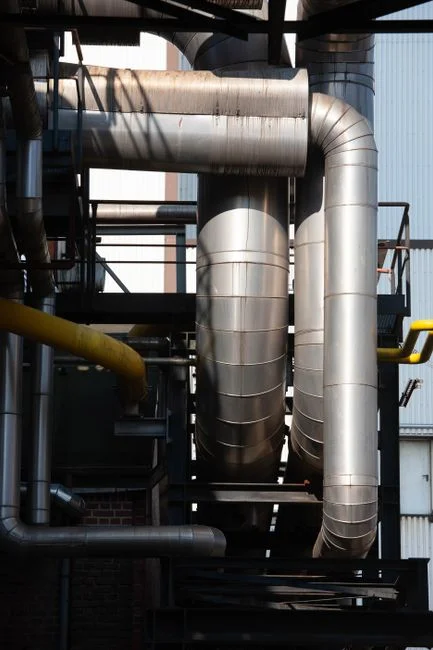
The thermal ZLD duty is determined by the concentrate reaching the evaporator, not by the headline wastewater-treatment flow. A qualitative train for lithium-ion battery manufacturing wastewater is segregation and equalization, chemical precipitation for metals and bulk fluoride, clarification or DAF for generated solids, dedicated solvent recovery where relevant, membrane polishing, and thermal concentration or crystallization.
Memva’s project used two-stage hydroxide and sulfide precipitation, coagulation, dedicated NMP distillation, RO and mechanical vapour recompression evaporation. The influent benchmarks in that case were TDS above 30,000 mg/L, COD of 3,500 mg/L and fluoride at 180 mg/L. These values characterize one battery cathode-material and coating wastewater project; they are not CATL Vietnam design data and must not be transferred without sampling.
High salinity constrains recovery and leaves a concentrated residual stream. The Memva case illustrates the important sequence: chemical pretreatment reduced metals and bulk fluoride, solvent was recovered separately, RO recovered up to 80% of the water, and the concentrate was sent to mechanical vapour recompression evaporation. A low membrane feed does not imply a low thermal duty when the residual brine remains highly saline.
For fluorinated streams, the design team should review the technical basis for fluoride evaporation crystallization design, including salt behaviour, scaling constituents and the required destination of the final solid residue.
Alfa Laval states that ZLD can minimize liquid-waste volume, support water reuse and recover materials. It also emphasizes that the configuration depends on local discharge requirements, water balance, energy cost and brine chemistry. For CATL Vietnam, those four conditions require project-specific confirmation rather than substitution with another factory’s performance.
| Stage | Primary design driver | Evidence or decision required |
|---|---|---|
| Segregation and equalization | Source flow, peak demand and chemical compatibility | Drainage diagrams and source-by-source flows |
| Chemical precipitation | Metals and fluoride concentrations | Laboratory analysis and precipitation trials |
| Solids separation | Solids type, loading and oil content | TSS and generated-sludge characterization |
| Solvent recovery | Solvent identity and concentration | NMP and other solvent screening |
| RO polishing | Feed salinity, scaling and fouling | Recovery scenario and concentrate route |
| Thermal ZLD | Concentrate flow, salinity and operating hours | Evaporation duty, crystal output and residue route |
Select Pretreatment Equipment Against Actual Water Chemistry
Pretreatment equipment should be matched to the contaminant load and stream characteristics, not selected from the headline flow alone. DAF is appropriate for separating fine precipitated solids, suspended solids, oil and colloidal material; final selection must consider peak flow and flotation loading. HydropureWater’s published catalogue range for an industrial DAF system for battery wastewater pretreatment is 4–300 m³/h across 13 standard models, but that range is not a CATL Vietnam sizing conclusion.
Heavy metal and fluoride precipitation requires automatic chemical dosing for metals and fluoride precipitation matched to the required pH, reagent chemistry and dose. The correct sequence cannot be selected until metals, fluoride, alkalinity, organics and solids are measured for the actual streams. High-metal sludge must also be assessed for its hazardous-waste route.
RO should be selected around the required permeate recovery, feed salinity, membrane compatibility and concentrate-management route. HydropureWater’s industrial RO system for high-salinity battery wastewater is specified at recovery rates up to 95%, while the Memva battery-project precedent reported up to 80% RO-stage recovery. These are different kinds of statements: one is an equipment specification, while the other is a project outcome. Neither is a CATL Vietnam guarantee.
Solids handling requires a separate flow and mass balance. A filter press for dewatering battery wastewater sludge should be assessed against hydroxide or sulfide sludge properties, dewatering performance, containerization, storage and final disposal or recovery. Dewatered sludge volume must not be estimated by equating it with the original wastewater volume.
For regulatory context, the supplied S3 source cites QCVN 40:2011/BTNMT limits of Pb below 0.1 mg/L, Ni below 0.5 mg/L and Cd below 0.05 mg/L. Those cited values must not be presented as automatically applicable to the CATL facility. The project’s environmental adviser and permitting authority must confirm the current Vietnamese discharge, reuse and hazardous-waste requirements applicable to the facility.
| Equipment decision | Match to | Do not assume |
|---|---|---|
| DAF or clarification | Peak flow, suspended and precipitated solids, oil and flotation loading | That a generic flow rating guarantees solids separation |
| Chemical dosing | Metals, fluoride, pH, alkalinity and precipitation chemistry | That one reagent sequence fits every battery stream |
| RO | Feed salinity, scaling, fouling, recovery and concentrate route | That catalogue recovery equals project recovery |
| Sludge dewatering | Sludge chemistry, solids fraction, hazardous classification and destination | That sludge volume equals wastewater flow |
Convert ZLD Capacity into Equipment and Commercial Requirements
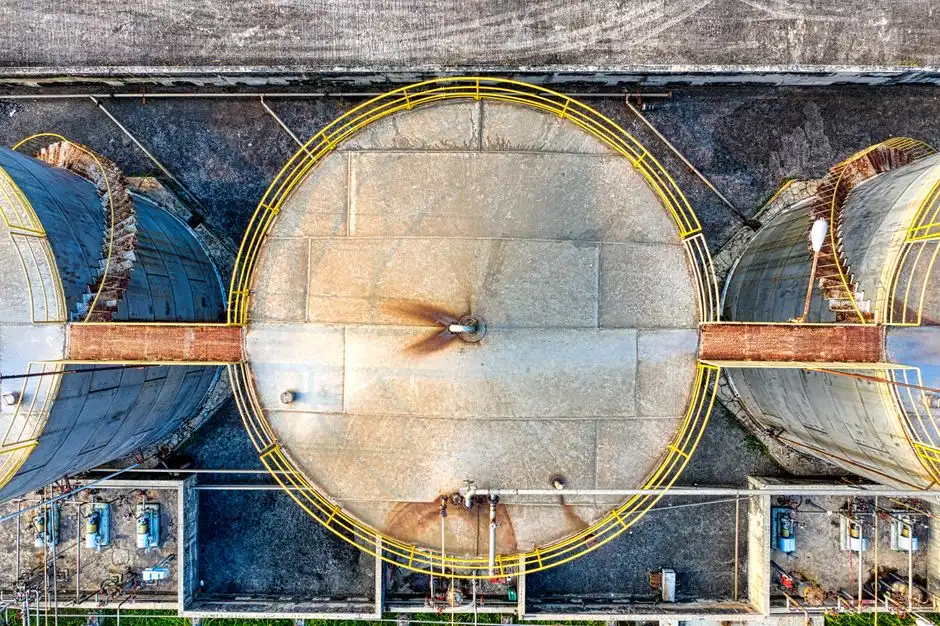
A vendor quotation becomes auditable only when the bidder sizes every unit against the same design basis. The RFQ should state average and peak wastewater flow, operating hours, source-separated flows, RO recovery range, evaporator-feed rate, required crystal or concentrate output, utility requirements and the quality of each reuse stream.
Equipment purchase and EPC scope must be separated. Civil works, chemical storage, hazardous-sludge handling, utilities, controls, operator training, commissioning and long-term maintenance can otherwise be hidden inside a packaged price. The bidder should identify which items are supplied, which are excluded and which are performance obligations.
The 50–200 m³/h range in S1 is an order-of-magnitude EPC screening benchmark for Indonesian precursor-plant packages. It is useful for testing whether a proposed inquiry envelope is plausible, but it is neither a CATL Vietnam flow nor a CATL Vietnam ZLD capacity. Quoting it as either would transfer another geography’s and another process configuration’s commercial scope into Vietnam.
Require guarantees tied to an agreed influent envelope and reference flowsheet. The envelope should define flow, operating hours, TDS or conductivity, metals, fluoride, COD, suspended solids, solvents and temperature. Performance guarantees should be linked to measurable acceptance tests, including permeate quality, recovery, liquid discharge performance, crystal output and residue characteristics.
| RFQ item | Minimum basis required | Commercial control |
|---|---|---|
| Pretreatment equipment | Peak flow, stream chemistry and solids loading | Clarify tankage, pumping, dosing and solids scope |
| RO system | Feed flow, recovery scenario and concentrate route | Specify membrane warranty and performance test |
| Thermal ZLD system | Evaporator feed, salinity, operating hours and product form | Define utility demand, controls and output guarantees |
| Sludge handling | Residue chemistry and hazardous-waste classification | Separate disposal, recovery and storage responsibilities |
| EPC and commissioning | Scope boundaries, utilities and acceptance protocol | List exclusions, schedule, training and warranty explicitly |
No defensible CAPEX or OPEX figure can be produced from the supplied research because the CATL Vietnam flow, water balance and influent chemistry are absent. Pricing should follow the characterized water balance, not precede it.
Procurement Readiness Checklist for a CATL Vietnam ZLD Package
A procurement-ready inquiry requires production and water-balance information that connects the factory design to the treatment design. The project team should collect the production configuration, parallel-line count, product chemistry, expected ramp-up and operating schedule. Cell manufacturing and cathode active material production should be kept distinct because their wastewater sources differ.
- Obtain source-by-source average and peak wastewater flows, drainage diagrams, reuse points and stormwater-segregation plans.
- Request recent laboratory analysis covering pH, TDS or conductivity, COD or TOC, fluoride, nickel, cobalt, lithium, suspended solids, solvents and temperature.
- Confirm applicable Vietnamese discharge, reuse and hazardous-waste requirements with the project’s environmental adviser and permitting authority.
- Define the contractor’s performance basis, acceptance-test protocol, sampling frequency, startup support, operator training and warranty scope.
- State operating hours, shutdown and cleaning conditions, equalization assumptions and expected production ramp-up.
- Identify the destination and ownership of hydroxide or sulfide sludge, evaporation residue and any recovered material.
Use a one-page battery wastewater characterization request before pricing DAF, RO and thermal ZLD equipment. It should have fields for each source stream, average and peak flow, operating schedule, chemical analyses, reuse destination, discharge route and sampling date. If the factory has not yet generated representative wastewater, specify a commissioning sampling campaign and the operating conditions under which samples must be taken.
The commercial package can then be assembled around documented interfaces. That includes water-treatment parts, valves and filter media only after the process flowsheet, materials, pressure ratings and maintenance philosophy are defined.
Frequently Asked Questions
What exact ZLD capacity is required for CATL’s new battery gigafactory in Vietnam?
No verified exact capacity can be stated from the supplied evidence because CATL Vietnam’s project wastewater flow, process-water balance and RO recovery are not published. The first three inputs needed are design wastewater flow, selected RO recovery and allocation of RO concentrate to evaporation. Those values must be supported by the project water balance and source-separated wastewater characterization; plant production in GWh/a alone cannot replace them.
How much would a CATL Vietnam ZLD package cost?
A defensible CAPEX or OPEX number cannot be provided without the water balance, flow profile and influent chemistry. The main commercial drivers are wastewater flow, feed salinity, RO recovery, evaporation duty, solids handling, utilities and the hazardous-residue route. A buyer should request an itemized bid separating equipment, civil works, chemical systems, ZLD, sludge handling, controls, commissioning, utilities and long-term services, with each amount tied to the agreed design basis.
Which supplier-selection criteria matter most for a battery wastewater ZLD package?
Select against guaranteed performance at a defined influent envelope, not against a generic ZLD description. Ask each supplier to identify the agreed flow, recovery rate, permeate quality, liquid-discharge performance, crystal output, hazardous-residue route and commissioning support covered by its guarantee. Confirm that the offer includes startup support, operator training, acceptance testing and a defined warranty scope. This is more useful than ranking suppliers only by headline evaporation capacity.
Is the 50–200 m³/h package range the capacity required for CATL Vietnam?
No. S1 presents 50–200 m³/h as the gigafactory wastewater-package range for Indonesian precursor plants. It is an order-of-magnitude EPC screening benchmark for that market, not a CATL Vietnam flow, treatment-plant requirement or evaporator duty. It may be used to test an inquiry envelope, but it must not appear in a CATL Vietnam capacity claim without project-specific flow and water-balance evidence.
How does wastewater-treatment capacity differ from thermal ZLD capacity?
Wastewater-treatment capacity is the liquid flow accepted by pretreatment, usually expressed in m³/h. Thermal ZLD capacity is the evaporation or crystallization duty applied only to the concentrated stream assigned to thermal treatment, and it also depends on salinity and operating hours. Thus, the ZLD module can process a smaller liquid flow than the headline treatment plant. The exact relationship must be calculated from the RO balance, concentrate routing and the salt mass entering the thermal unit.