Identify the Rules That Control the Discharge
Mining and metals plants near Murray meet sewer pretreatment limits by obtaining the applicable industrial wastewater discharge permit, characterizing wastewater with an acceptable laboratory, and mapping each regulated constituent to a controlled treatment train. The Murray permit establishes site-specific conditions, including applicable effluent limits, BMPs, flow or mass limits, monitoring, compliance schedules, equalization requirements, and slug controls.
That permit is the binding local instrument. It can impose pretreatment requirements, restrict peak discharge rates or timing, designate permitted sewers, require flow regulation or equalization, specify inspection and sampling facilities, and set monitoring locations, frequencies, tests, and reporting schedules (Murray Code §52.52, 2024). Do not treat a federal guideline, equipment catalog, or generic treatment performance figure as a Murray limit.
Federal requirements operate alongside the local permit. EPA states that Clean Water Act point-source discharges from mining operations, including associated impoundment discharges, must be authorized under an NPDES permit (US EPA, Industrial Wastewater, current page accessed 2026). EPA’s Mineral Mining and Processing Effluent Guidelines are codified at 40 CFR Part 436 and cover mine drainage, mineral-processing wastewater, and stormwater runoff (US EPA, Mineral Mining and Processing Effluent Guidelines, current page accessed 2026).
Applicability must be established from the actual process and SIC classification. Ore mining and dressing fall under 40 CFR Part 430, while metal finishing falls under 40 CFR Part 433; these are different activities and cannot be interchanged merely because both produce metals-bearing wastewater (HydropureWater, Mining Pretreatment for Sewer Discharge in the US: 2026 Compliance Guide, 2026). Before selecting equipment, obtain the current Murray permit, applicable federal and state requirements, and a written significant-industrial-user determination. The related mining wastewater pretreatment workflow near Rockholds illustrates why site identity and permit conditions cannot be substituted with regional assumptions.
| Requirement layer | What it controls | Evidence a buyer should request |
|---|---|---|
| Murray industrial wastewater discharge permit | Site-specific limits, BMPs, discharge rate or timing, monitoring, compliance schedule, equalization, inspection facilities, and slug controls | Current permit, application record, and written status as an SIU or non-SIU |
| NPDES requirements | Authorization of point-source mining discharges, including associated impoundment discharges | Permit coverage and applicable state or federal conditions |
| 40 CFR Part 436 | Mineral-mining wastewater framework covering mine drainage, mineral processing, and stormwater runoff | Applicability determination for the site’s mining and processing activities |
| 40 CFR Parts 430 or 433 | Categorical pretreatment standards for ore mining and dressing or metal finishing | Process description, SIC codes, applicable categorical standard, and compliance dates |
Characterize Every Wastewater Stream Before Design
The design basis must be a characterized discharge matrix, not an assumed average flow. Mining and metals facilities can combine pit dewatering, concentrator or process water, contact stormwater, and metal-finishing rinsate; each stream has a different pollutant profile and flow behavior, so keeping them separate until their compatibility is established gives the Pretreatment Coordinator better information and gives the designer a clearer mass balance (HydropureWater, Mining Pretreatment for Sewer Discharge in the US: 2026 Compliance Guide, 2026).
Murray requires the permit application to describe wastewater constituents and characteristics, average daily flow, 30-minute peak flow, and daily, monthly, and seasonal variation. The application also covers process activities, materials that are or could be discharged, known regulated pollutants, pretreatment proposals, products, production rates, raw materials, operating hours, site plans, and the proposed discharge point (Murray Code §52.52, 2024). These fields define the engineering and compliance questions: what can enter the sewer, how much can arrive at once, and which process changes require permit review?
Analyses must be performed by the Murray Sewer System laboratory or a contracted laboratory acceptable to Murray, using EPA procedures under 40 USC Part 136 and Section 304(g), as amended (Murray Code §52.52, 2024). Production-based mass information is equally important. Raw-material quantities, production rates, final products, and process descriptions show what enters the wastewater and support the Pretreatment Coordinator’s significant-industrial-user evaluation.
Equalization should be evaluated against hourly, production-cycle, seasonal, and storm-driven variation. The engineering basis must capture representative worst-case flow and pollutant load; using average flow alone can leave chemical feed, clarifiers, filters, and samplers undersized. For clarification alternatives, compare DAF and clarifier for mining wastewater against the characterized solids and flow profile rather than selecting on nominal equipment capacity alone.
| Design input | Information needed | Why it controls equipment selection |
|---|---|---|
| Stream inventory | Pit dewatering, process water, contact stormwater, and rinsate origins and routing | Separates incompatible pollutants and prevents an undefined blended design load |
| Flow | Average daily flow, 30-minute peak, production-cycle variation, and seasonal or storm response | Sets hydraulic capacity and equalization duty |
| Pollutants | Concentrations, mass loads, sample type, and analytical method | Defines the required removal stages and residual controls |
| Operations | Products, production rates, raw materials, chemicals, and operating hours | Supports SIU status and links treatment capacity to production |
| Permit interface | Discharge points, monitoring requirements, BMPs, and proposed pretreatment | Defines sampling access, reporting, and compliance obligations |
Map Pollutants to a Pretreatment Treatment Train
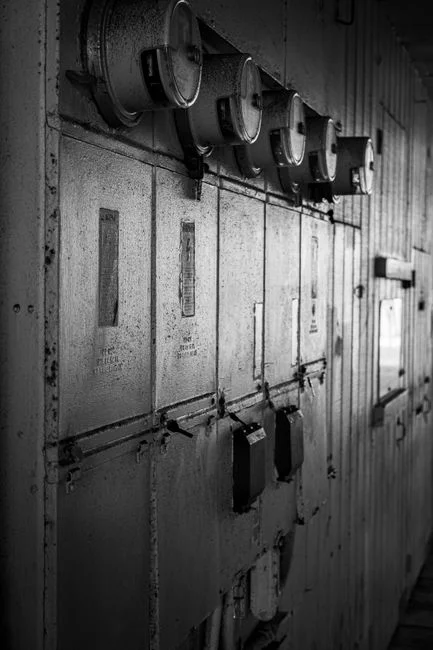
Equalization is the first control step because it stabilizes flow, pH, and pollutant loads before chemical dosing or solids separation. This matters because the discharge load can shift with production, ore grade, operating campaigns, and storm events; the downstream units then see a more controlled feed and can be sized against a defensible worst case (HydropureWater, Mining Pretreatment for Sewer Discharge in the US: 2026 Compliance Guide, 2026).
For dissolved heavy metals, the principal approach is pH adjustment followed by precipitation. Hydroxide precipitation is a common first stage; sulfide precipitation can serve as a polishing option where the chemistry and permit objectives justify it. Selection must reflect influent chemistry, target metal, residual sulfide control, chemical handling, and downstream sludge management. Neither reagent choice nor permissible residual can be selected from an equipment brochure. The current Murray permit and applicable categorical standards must supply the legal effluent targets (Murray Code §52.52, 2024).
After precipitation or coagulation, lamella clarification or DAF addresses suspended solids, colloids, oil and grease, and floatable material. A DAF system for mining wastewater solids removal should be evaluated when floatable solids or colloidal material require that removal mechanism. A high-efficiency sedimentation tank is an alternative when the permit objective and waste characteristics support gravity clarification. Equipment choice should follow the characterization matrix, not a fixed preference for one vessel type.
Biological polishing is conditional. It belongs in the train when the discharge contains biodegradable organic load requiring that stage. An MBR or conventional biological system should not be treated as a substitute for removing regulated dissolved metals; a facility can compare MBR and activated sludge for mining wastewater only after identifying the organic-load objective. Disinfection should also be included only where the permit requires it or where another treatment objective supports it. Adding a process stage without a permit objective increases controls, residuals, energy use, and compliance surface without establishing compliance.
The final design matrix must connect every requirement to an operating response. The law does not become the equipment specification; the permit condition becomes a measurable treatment and monitoring function, and the equipment proposal must demonstrate that function.
| Permit or process objective | Unit operation | Monitoring or design evidence | Residual to manage |
|---|---|---|---|
| Flow, pH, and load stabilization | Flow equalization | Representative flow and load profile; controlled discharge to downstream treatment | Sediment or settleable material retained in the basin |
| Dissolved heavy metals | pH adjustment and precipitation | Influent and effluent metal results, pH control, and residual reagent monitoring | Metals-bearing sludge |
| Suspended solids, colloids, oil and grease, or floatable material | Lamella clarification or DAF | Representative solids characterization and solids-removal performance | Clarifier sludge or flotation scum |
| Biodegradable organic load | Biological polishing | Organic-load characterization and process-control records | Waste activated sludge |
| Permit-required disinfection | Disinfection | Permit objective and verification monitoring | Disinfection by-products or residuals as applicable |
Control Residuals and Prevent Discharges That Exceed Limits
Metals precipitation creates a second regulated material stream: the solids must be characterized, conditioned, dewatered, stored, and given an approved disposal destination (HydropureWater, Mining Pretreatment for Sewer Discharge in the US: 2026 Compliance Guide, 2026). A treatment train that demonstrates compliant water but lacks a residual plan is incomplete.
A filter press for metals-bearing sludge is one solids-separation option for industrial sludge dewatering. Filtrate should be returned to the head of treatment when the process basis requires it. The bid specification should define sludge characterization, conditioning, cake handling, filtrate return, storage, and disposal documentation rather than treating dewatering as an accessory.
Dilution is not a reliable compliance strategy. Murray may impose a mass limitation where a user relies on dilution or where a mass limitation is otherwise appropriate (Murray Code §52.52, 2024). A dilute discharge can still violate a mass-based condition, and the permit application must identify relevant pollutant concentrations and loading. The facility also must notify the Pretreatment Coordinator of new wastewater constituents, substantial changes in wastewater volume or character, and slug discharges as required by its permit (Murray Code §52.52, 2024).
Automatic chemical dosing can improve repeatability in pH and precipitation control, but the control strategy must be tied to measured variables, alarms, fail-safe responses, and operator action. Reagent selection and dose should follow jar testing and the permitted residuals; they are not set by the nominal size of the dosing skid. Slug controls should address the actual source and response sequence, including containment, diversion, notification, and restart criteria.
Build the Monitoring and Compliance File
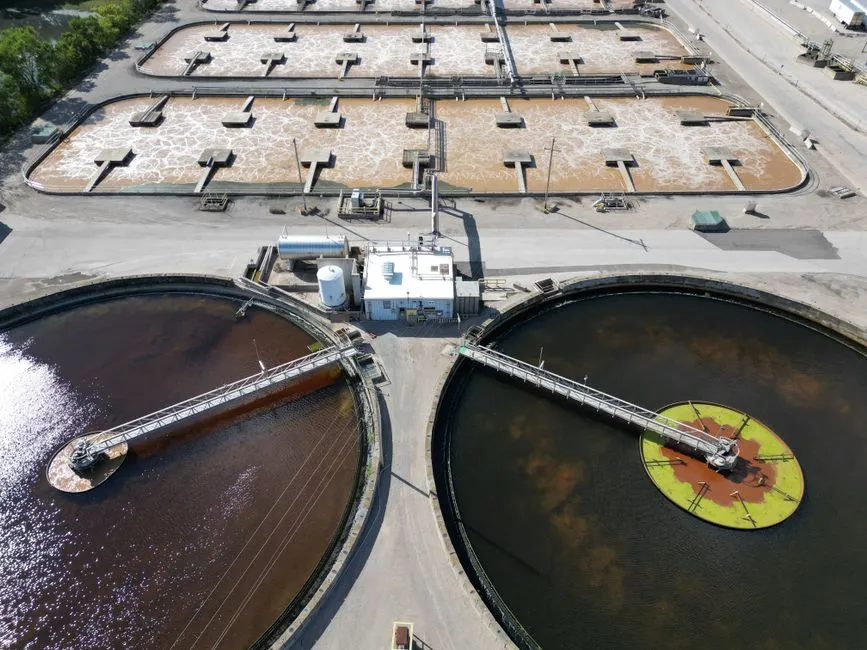
An industrial pretreatment system is only defensible when its operating evidence can be reconstructed from records. Murray requires a baseline monitoring report at least 90 days before the initiation of discharge. It must include production data, process description, SIC code, raw materials, process and cleanup chemicals, final products, discharge points, total plant flow, batch or continuous discharge information, regulated-pollutant results, pretreatment equipment, and compliance certification (Murray Code §52.52, 2024).
For an SIU subject to a categorical pretreatment standard, the required semiannual reports are due in June and December unless the standard or control authority requires more frequent monitoring. Reports must include the nature and concentration of pollutants limited by the categorical standard or discharge permit (Murray Code §52.52, 2024). Monitoring waivers are site-specific and must appear as permit conditions.
Install and maintain the inspection and sampling facilities required by the permit. The sampling plan should identify location, frequency, number and type of tests, standards, reporting schedule, and responsible personnel. POTWs must inspect all SIUs at least annually under 40 CFR 403.8(f)(2)(v), and Murray must be allowed access to records and wastewater-related plant areas at reasonable times (Murray Code §52.52, 2024).
Records create the audit trail. Pretreatment and wastewater-discharge records must be retained for at least three years, and local-limits records must be maintained during the effective dates and for three years after the limits end (Murray Code §52.52, 2024). The file should preserve permit limits, sampling plans, laboratory reports, flow records, equipment logs, chemical-use records, chain-of-custody records, corrective actions, and certified compliance reports. Instrument-selection guidance for ORP and water-quality monitoring should therefore be tied to the control and sampling plan rather than treated as a separate procurement exercise.
| Audit file category | Required operational record | Permit linkage |
|---|---|---|
| Baseline compliance | BMR, production and process data, analytical results, equipment list, and certification | At least 90 days before discharge initiation |
| Monitoring | Sampling plan, laboratory reports, flow data, chain of custody, and results | Permit monitoring frequency, methods, and reporting schedule |
| Treatment operations | Equipment logs, chemical use, controls, alarms, operating changes, and calibrations | BMPs, compliance schedules, and treatment-function requirements |
| Residual management | Sludge characterization, dewatering, storage, disposal, and filtrate-return records | Residual-management obligations and disposal destinations |
| Changes and deviations | Notifications, slug-discharge records, corrective actions, and return-to-service approvals | Notification and permit-modification requirements |
Choose Between Sewer Discharge and Water Reuse
Sewer pretreatment is the baseline compliance route, but it should be compared with partial reuse and full zero-liquid-discharge options before capital is committed. The comparison must use local POTW fees, freshwater cost, energy demand, residual-management burden, permitted discharge capacity, reuse value, operating reliability, and exposure to future local-limit tightening; unsupported generic price ranges do not provide a valid business case (HydropureWater, Mining Pretreatment for Sewer Discharge in the US: 2026 Compliance Guide, 2026).
An MBR integrated wastewater treatment system can provide a high-quality permeate and serve as a pretreatment step for membrane-based reuse. The reverse osmosis water purification system adds a separation step but also creates a concentrate stream that requires management. Reuse therefore does not eliminate residual management, and full ZLD must address more than the liquid discharge.
The decision rule is lifecycle-based. If direct sewer discharge is feasible and the combination of POTW fees, freshwater purchases, residual disposal, permit risk, and expected tightening does not justify a reuse or ZLD investment, pretreatment to sewer remains the lower-regret route. If water value, discharge restrictions, residual constraints, or future permit risk materially change that comparison, evaluate membrane reuse or ZLD using site-specific mass balances.
| Decision factor | Direct pretreatment to sewer | Partial reuse | Full zero-liquid-discharge |
|---|---|---|---|
| Permitted outlet | Remains dependent on POTW capacity and permit conditions | Uses reclaimed water while retaining residual discharge obligations | Eliminates liquid sewer discharge but requires separate air-permit review |
| Water and utility burden | POTW fees and chemical consumption remain | Adds membrane and polishing utility demand while reducing freshwater use | Highest energy demand and largest equipment base |
| Residual burden | Metals-bearing sludge and treatment residuals | Sludge plus membrane concentrate or reject stream | Concentrate, salt, or crystallization product |
| Future permit exposure | Affected by local-limit tightening and permit reissuance | Reduced discharge volume, but reuse and residual rules still apply | Reduces liquid-discharge exposure; other environmental permits remain relevant |
| Required inputs | Current permit, sewer capacity, flow, loads, residuals, and lifecycle costs | Same inputs plus reuse demand, membrane recovery basis, and concentrate destination | Same inputs plus complete mass balance, energy profile, and final-product or concentrate route |
Frequently Asked Questions
How should pretreatment equipment near Murray be sized?
Size equipment from representative peak flow, pollutant mass loading, required removal stages, operating variability, and the current Murray permit—not from a generic flow-per-ton rule. The permit application inputs should establish average daily flow, 30-minute peak flow, and daily, monthly, and seasonal variation. Equipment sizing should then trace each pollutant from the characterized stream to its treatment step and permitted discharge condition. The relevant belt filter press process-flow guide illustrates why a dewatering stage must also be connected to the wastewater mass balance.
What should a mining wastewater treatment bid include for budget review?
Request separate costs for treatment equipment, chemical use, sludge dewatering and disposal, monitoring, utilities, controls, installation, commissioning, and long-term operation. The supplied research does not establish a defensible generic price range for a Murray mining or metals project, so require each bidder to state the flow, load, chemistry, residual assumptions, and permit basis behind its price.
How should a treatment supplier be selected?
Require a permit-specific proposal containing a process flow diagram, design basis, equipment sizing, control philosophy, monitoring plan, sludge-handling plan, and performance guarantees tied to the permitted discharge. The mining and metals sewer-limits decision guide provides a useful check on how discharge obligations should be transferred into equipment functions.
What schedule assumptions should buyers request from bidders?
Ask bidders to separate equipment manufacturing, controls integration, fabrication, field installation, commissioning, training, and permit-related schedule assumptions. The supplied research does not support a universal lead time. A credible schedule should also identify long-lead items, approval dependencies, site readiness, and the point at which each performance test occurs.
Related Equipment
- DAF system for mining wastewater solids removal — specifications, capacity range, and technical data