
What Makes Pharmaceutical Wastewater Different?
Pharmaceutical manufacturing produces wastewater containing pharmaceutical intermediates, metabolic by-products, residual pharmaceuticals, and refractory organic contaminants that are highly toxic and difficult to purify, according to a June 2024 academic review in the Journal of Water Process Engineering. Those pollutants can threaten human health and the environment. A commercial pharmaceutical wastewater overview published in 2024 observed that some treatment-plant effluents contained pharmaceutical concentrations 10 to 1,000 times higher than typical wastewater; that observation is not a universal plant value.
For a Mexican pharmaceutical or formulation facility, the engineering implication is that generic industrial wastewater assumptions are usually insufficient. Product changes, cleaning campaigns, and active pharmaceutical ingredients can alter both organic load and treatment demands. Source segregation and batch-level monitoring therefore belong in the treatment design, not in an operating afterthought.
Start the site audit by identifying formulation and cleaning waters, synthesis streams, laboratory drains, high-strength mother liquors, and equipment washings. Do not assume every stream can enter one biological unit. A mother liquor may require controlled collection, dilution, pretreatment, or a separate route, while routine cleaning water may fit the main plant after equalization.
Production information is part of the wastewater profile: product families, campaign frequency, cleaning chemicals, solvent use, salt additions, and planned expansions determine both flow and load variability. This stream-by-stream review is consistent with the factory wastewater system selection guide, which frames equipment selection around the actual waste profile rather than a generic treatment recipe.
Build the Wastewater Characterization and Permit Basis
The project brief must convert wastewater characterization, destination, and reuse objectives into measurable design inputs before equipment is selected. A plant-wide average is not enough because it can conceal high-strength batch dumps and dilute cleaning flows that determine equalization, pretreatment, and biological loading.
Build a representative sampling plan covering normal production, cleaning cycles, batch dumps, peak days, and unusual product campaigns. Analyze streams separately as well as the combined flow. The June 2024 academic review identifies chemical oxygen demand, biochemical oxygen demand, total nitrogen, ammonia nitrogen, total phosphorus, total suspended solids, and suspended solids as core pharmaceutical wastewater parameters. Supplement them with pH, salinity, active pharmaceutical ingredients, and constituents identified by the site’s products and processes.
Do not import a generic Mexican limit into the specification. The supplied research contains no universal Mexican concentration limit for a pharmaceutical facility. Effluent limits, daily volumes, monitoring duties, and reuse conditions must come from the facility’s current permit and a verified review of the receiving sewer or water body and responsible Mexican authority or sewer operator.
| Engineering input | Buyer must obtain | Decision supported |
|---|---|---|
| Production schedule | Product families, campaign frequency, cleaning cycles, batch-dump practices, and future expansions | Peak flow, equalization, toxicity management |
| Stream characterization | Representative COD, BOD, nutrients, suspended solids, pH, salinity, and identified active pharmaceutical ingredients | Source control, biological loading, polishing |
| Discharge destination | Receiving sewer or water body, current permit, pretreatment requirements, and responsible operator | Applicable treatment objectives |
| Reuse objective | Intended reuse application, required recovery percentage, and water-quality specification | UF, RO, and downstream disinfection scope |
| Site constraints | Footprint, utilities, energy availability, sludge route, operating hours, and expansion plan | Equipment configuration and project execution |
Request the required recovery percentage for any water-reuse application rather than assuming that reuse means unrestricted recycling. An automatic chemical dosing system may then be considered once the required pH correction, coagulation, flocculation, and chemical dosing duties have been established from the source inventory.
Choose a Pretreatment Train for Variable Industrial Streams
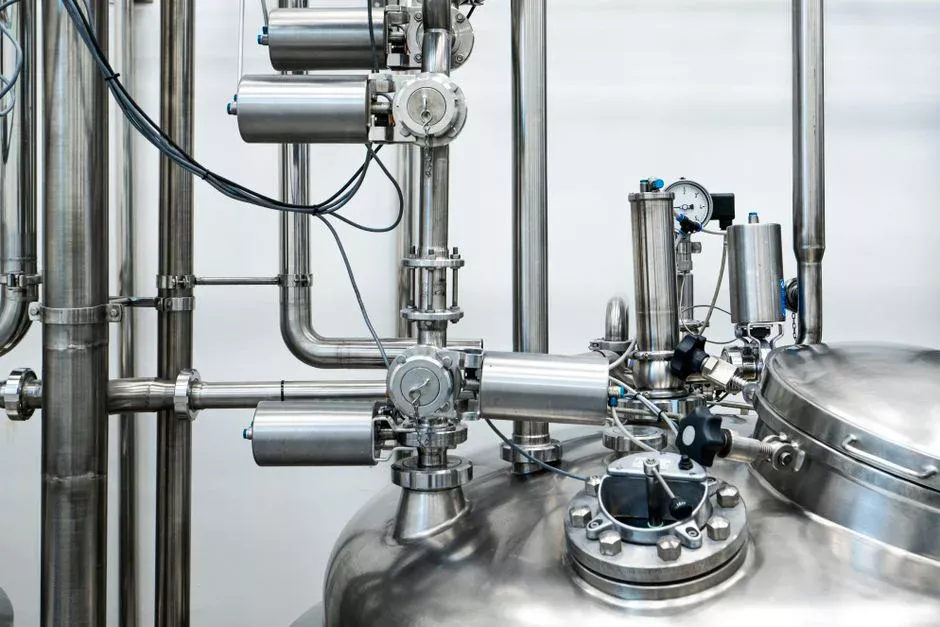
Pretreatment should protect downstream biological and membrane equipment from variable loads, suspended material, oil and grease, colloidal matter, and incompatible discharges. Selection follows the source inventory; there is no mandatory sequence that fits every pharmaceutical plant.
A 2024 commercial treatment overview describes filtration and sedimentation as the primary solid-removal functions, with coagulation and flocculation aggregating particles for easier separation. Screening protects pumps and downstream equipment. Equalization buffers batch variation, while pH correction establishes the condition required for downstream biological treatment. The same overview identifies pH, nutrient balance, temperature, and batch variability as important operating factors.
Use a mechanical screen where discrete solids or packaging fragments may enter the collection system. Position dissolved air flotation for industrial streams containing suspended solids, FOG, oil and grease, or colloidal matter, subject to jar testing and the actual oil-and-solids fraction. HydropureWater states that its DAF range covers 4 to 300 m³/h across 13 standard models; those specifications indicate available capacity, not guaranteed contaminant removal.
Chemical dosing should be tied to measured duties: coagulant and flocculant for selected solids, pH adjustment for biological protection, and specialty chemicals only where compatibility and residual effects are established. The PLC-controlled automatic chemical dosing skid should be evaluated for control logic, chemical storage, duty cycle, and factory-tested integration.
| Condition | Relevant pretreatment function | Verification before purchase |
|---|---|---|
| Discrete solids or packaging fragments | Mechanical screening | Screen aperture, extracted waste route, and solids handling |
| Suspended solids, FOG, oil and grease, or colloids | DAF with appropriate conditioning | Stream trials, loading basis, and sludge characteristics |
| Variable or batch discharges | Flow and quality equalization | Average and peak volumes, storage behavior, mixing |
| pH unsuitable for biological treatment | Automatic chemical dosing | Influent range, chemical demand, probe and control strategy |
| Incompatible or high-strength stream | Segregation and controlled treatment | Waste acceptance criteria and independent route |
Equipment such as a DAF flotation machine or mechanical bar screen should follow this evidence-based sequence rather than a fixed catalogue configuration.
Treat Biochemical Load with a Membrane Bioreactor
A membrane bioreactor combines biological treatment with membrane solids separation, making it appropriate where biological treatment must retain biomass and produce an effluent suitable for downstream polishing or water reuse. The June 2024 academic review lists anaerobic, aerobic, and advanced treatments within commonly combined pharmaceutical wastewater trains, while the 2024 commercial overview identifies biological treatment as the stage that breaks down organic matter.
MBR selection should follow the design load and required output, not simply the installed tank volume. Obtain average and peak flow, COD and BOD loads, nutrient ratios, temperature, pH, toxicity indicators, soluble salts, required mixed-liquor suspended solids, aeration demand, and membrane design-flux assumptions from the project engineer. Where pharmaceutical residuals or antibiotic-resistance concerns remain in the applicable permit or reuse specification, add a targeted polishing step rather than treating the MBR as complete removal.
HydropureWater specifies that its integrated MBR membrane bioreactor combines activated sludge treatment with submerged PVDF membrane filtration, provides filtration below 1 μm, occupies 60% less space than conventional systems, and is offered from 10 to 2,000 m³/day. These are supplied equipment specifications; they are not a site performance guarantee.
For a formulation facility, MBR may be justified when biological separation, compact installation, and downstream reuse preparation must be combined. For a synthesis operation with toxic, saline, or sharply variable discharges, pretreatment, equalization, toxicity control, and possibly pilot work become more important before selecting the biological configuration.
The project should also define membrane cleaning, backwash, aeration, sludge wasting, standby strategy, and bypass prevention. A more detailed industrial ETP design and commissioning guide provides adjacent process-planning context, but its local examples do not replace Mexico-specific permit review.
Polish for Discharge, Reuse, or Residual Pharmaceutical Control?
Polishing is justified when biological treatment is insufficient for the discharge permit or water-reuse specification. The 2024 commercial overview distinguishes three functions: activated carbon adsorbs many pharmaceutical compounds, membrane filtration removes small particles, and advanced oxidation processes break down complex pharmaceutical compounds. These functions should not be treated as interchangeable.
Use ultrafiltration as a solids, colloid, and bacteria barrier before sensitive membranes or reuse stages. HydropureWater specifies its hollow-fiber ultrafiltration system with 0.03 μm PVDF membranes, capacity from 2,000 to 40,000 L/h, automatic backwash, air scour, and inlet turbidity up to 300 ppm. Confirm whether actual feed conditions fall within those limits and whether pretreatment is needed.
| Treatment barrier | Primary function | Decision question |
|---|---|---|
| UF | Solids, colloid, and bacteria barrier | Is feed turbidity within the stated limit, and is a sensitive downstream membrane protected? |
| Industrial RO | Separation for process-water or reuse quality | What permeate specification, recovery requirement, concentrate route, and pretreatment are required? |
| Activated carbon | Adsorption of selected compounds | Which constituents are adsorbable, and when does breakthrough require media replacement? |
| Advanced oxidation | Chemical breakdown of complex compounds | Which target compounds, byproducts, residuals, and downstream barriers apply? |
| Disinfection | Microbial control | What microbial objective applies separately from pharmaceutical removal? |
For pharmaceutical process-water or reuse applications, industrial reverse osmosis may be justified. HydropureWater states recovery rates up to 95% for pharmaceutical applications, but final permeate quality, scaling risk, concentrate disposal, and pretreatment remain project-specific requirements.
Carbon captures compounds amenable to adsorption; oxidation chemically breaks down compounds that must be destroyed. Both require compatibility and byproduct review. Disinfection is a separate decision: HydropureWater’s chlorine dioxide generators range from 50 g/h to 20,000 g/h, but microbial disinfection does not by itself establish complete pharmaceutical removal.
Manage Sludge and Protect Long-Term Plant Performance?
Concentrated treatment residues must enter the process and mass balance from the start. The 2024 commercial overview states that treatment-plant sludge can contain concentrated pharmaceuticals and requires careful planning. Biological growth, chemical precipitates, DAF float, membrane-retained solids, and dewatering reject streams each require a defined destination.
For solid-liquid separation and sludge dewatering, HydropureWater specifies plate and frame filter presses with filtration areas from 1 m² to 500 m² and manual, hydraulic, and fully automatic PLC-controlled operation. The correct configuration depends on expected solids concentration, batch frequency, conditioning chemistry, filtrate return, and cake logistics.
Commissioning should verify sludge characteristics, polymer or other conditioning requirements, filtrate quality, cake handling route, maintenance access, and responsibility for the concentrated residue. The plate and frame filter press should not be treated as a disposal solution unless the downstream cake route is complete and approved for the material involved.
Reliability also depends on routine influent and effluent monitoring, calibration records, alarm response, maintenance intervals, and operator training. The 2024 commercial overview identifies monitoring as essential for optimization and notes that newly introduced drugs can challenge existing biological and advanced-treatment systems. Establish a trigger for reevaluating the process when product formulations change.
Plan the Mexico Project from Engineering Basis to Commissioning?
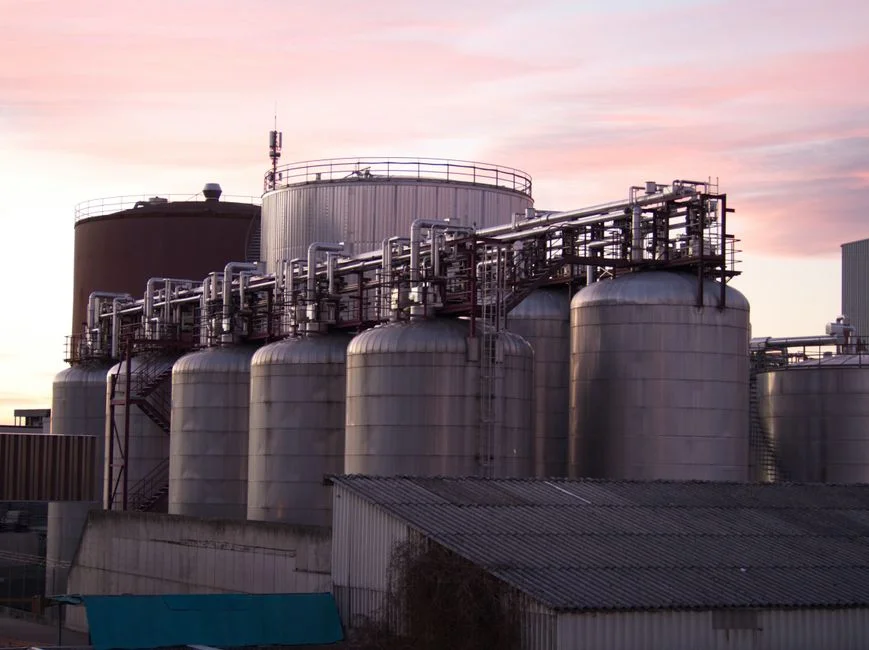
A defensible Mexico project proceeds from verified requirements to a balanced treatment train, then to controlled startup. The design basis should cover current and future flow, complete characterization, source control, destination, permit targets, treatment objectives, footprint, utilities, energy demand, sludge route, and reuse objectives.
Require suppliers to size equipment at both average and peak loads and state chemical consumption, aeration, membrane cleaning, backwash, solids handling, and power requirements. Those quantities should reconcile with the water and solids mass balances. A flow-based quotation that omits contaminant load, nutrients, toxicity, salinity, and reuse quality is incomplete.
Use pilot testing when variability, toxicity, refractory compounds, or new products make a catalogue default inappropriate. Test representative campaign samples across the relevant operating envelope rather than relying on one grab sample. If the pilot changes the selected process, update the mass balance, drawings, control philosophy, and guarantees together.
| Project stage | Required deliverable | Buyer’s hold point |
|---|---|---|
| Design basis | Characterization, source inventory, permit review, destination, and reuse objectives | No equipment selection before the basis is approved |
| Process development | Mass balance, train selection, pilot evidence where justified | Resolve scale-up and concentrate risks |
| Supplier evaluation | Process suitability, technical data, references, service and warranty evidence | Compare offers against the same requirements |
| Construction and commissioning | Installation, training, monitoring plan, alarms, bypass prevention, and contingency operation | Do not accept before functional tests |
| Operation | Routine monitoring, maintenance, product-change review, and sludge tracking | Verify sustained operation against acceptance criteria |
Evaluate suppliers using process suitability, membrane and material specifications, control philosophy, local service capability, spare parts, reference installations, acceptance tests, commissioning support, and warranty scope. The industrial ETP design and commissioning guide can support the adjacent planning framework, while the factory wastewater system selection guide provides general sequencing context.
Before acceptance, define performance tests, operator training, maintenance intervals, alarm strategy, bypass prevention, and contingency operation for variable drug-production streams. Confirm who owns each permit deliverable and how permit or reuse requirements will be transferred into operating procedures.
Frequently Asked Questions
What will pharmaceutical wastewater treatment cost in Mexico?
The supplied research does not provide a valid Mexico project price or a defensible generic cost range. Request a cost breakdown covering flow and load, treatment objectives, advanced polishing, sludge handling, civil works, utilities, controls, installation, commissioning, training, and long-term chemical and membrane replacement costs. Compare quotations against the same design basis so that a lower equipment price is not offset by unpriced civil, utility, or residue obligations.
How should an MBR or UF system be sized for a pharmaceutical facility?
Size from both flow and contaminant load, then verify peak conditions, nutrient ratios, toxicity, salinity, required MLSS, membrane-flux assumptions, and the final reuse or discharge specification. Selecting the largest peak flow alone omits the constraints that determine biological and membrane capacity. The project engineer should document the duty basis and treatment objectives before equipment selection.
What should buyers check when selecting a wastewater-treatment supplier?
Ask for a process guarantee tied to the documented design basis, reference installations, membrane and equipment data, control philosophy, local service capability, spare-parts availability, commissioning support, acceptance criteria, and warranty scope. Also request the operating response for chemical variability, membrane cleaning, sludge handling, and product changes; these details reveal whether the offer addresses lifecycle performance or only initial equipment selection.
Can a general treatment guide substitute for Mexican permit review?
No. A general environmental overview is not a permit substitute, and the supplied research contains no universal Mexican effluent limit for pharmaceutical wastewater. Verify requirements for the facility’s location, receiving sewer or water body, current authorization, reuse application, and responsible Mexican authority or sewer operator. This review provides no site-specific numeric limits or reuse criteria.