What Water Does an Ibb Data Center Actually Need to Treat?
An Ibb data center needs two distinct treatment trains: one for cooling tower blowdown and another for sanitary wastewater. Cooling blowdown should first be characterized by flow, conductivity, pH, suspended solids, silica, hardness and treatment chemicals. A modular train may use DAF or clarification, multimedia filtration, UF or conservative RO, disinfection and sludge dewatering; sanitary flow requires a separate biological treatment package. First optimize leaks, controls and cycles of concentration, which can reduce blowdown from 25% of makeup at 4 CoC to 20% at 6 CoC. Final sizing must use measured Ibb flows and water chemistry, not generic per-megawatt assumptions.
Cooling tower blowdown is the controlled purge used to prevent dissolved solids, scaling and corrosion from becoming unacceptable as cooling water evaporates. A closed cooling loop is not water-free: evaporation is a consumption loss, while blowdown is a recoverable discharge rather than permanent consumption. Humidification condensate, equipment-room wash water and any generator-area oily runoff should remain separate until contamination checks confirm where they can be blended.
Sanitary wastewater comes from washrooms, staff kitchens and associated sanitary fixtures. It needs biological treatment and disinfection; it should not be mixed with cooling blowdown, which contains concentrated treatment chemicals and potentially oil or corrosion products.
IDE Tech reports up to 2 million liters per day for a 100 MW evaporatively cooled facility, but that figure cannot be scaled directly to Ibb without the cooling configuration, operating schedule and measured flows. Genesis Water Technologies reports that blowdown represents 20–40% of intake in the facilities it describes, which justifies a project-specific balance rather than a generic design allowance.
| Stream | Primary contaminants or risks | Initial treatment decision |
|---|---|---|
| Cooling tower blowdown | Dissolved salts, silica, hardness, corrosion products, suspended solids and cooling chemicals | Characterize before selecting clarification, filtration, UF or RO |
| Sanitary wastewater | Organic matter, nutrients and pathogens | Separate packaged biological treatment train |
| Humidification condensate | Possible corrosion products or contamination | Test before reuse or blending |
| Equipment-room wash water | Suspended solids and possible cleaning residues | Characterize independently |
| Generator-area oily runoff | Oil and solids | Keep segregated; assess oil-removal pretreatment |
This stream separation is the starting point for any Ibb data-center treatment concept.
Build the Ibb Water Balance Before Sizing Equipment
The defensible blowdown design basis is the measured water balance, not the facility’s IT rating. Genesis Water Technologies publishes the relationship blowdown ratio = 1/(CoC−1), where CoC is cooling tower cycles of concentration. At 4 CoC, blowdown is 25% of makeup; at 6 CoC, it is 20%. The move from 4 to 6 CoC therefore reduces blowdown volume by 20%, not 50%, according to Genesis Water Technologies.
Higher concentration is not automatically better. Genesis Water Technologies reports that biological and scaling risks rise sharply above 5–6 CoC without advanced treatment. Fouling, microbiologically influenced corrosion and scaling can force operations back to a lower CoC. The Ibb design must therefore test whether the cooling system, chemical program and downstream treatment can sustain the selected concentration without increasing unplanned blowdown.
Install measurement at makeup and blowdown, and record evaporation estimate, cooling-loop volume, conductivity, pH, suspended solids, silica, calcium, hardness, temperature and every chemical product used. This baseline identifies actual consumption, emergency dumps and variability that a steady-state calculation misses.
The HydropureWater Sanaa guide uses approximately 20,000 L/day makeup, 5,000 L/day blowdown at 4 CoC and 4,000 L/day at 6 CoC for a 1 MW reference site. Those are Sanaa-derived examples, not Ibb design values, and they must be replaced by measured Ibb data.
Water usage effectiveness can conceal the distinction between consumption and discharge. Genesis Water Technologies explains that WUE measures site intake relative to IT energy but does not distinguish recycled discharge from water permanently lost through evaporation. Track evaporation, consumptive use, recoverable discharge and reuse separately.
| Water-balance item | Measured input required | Decision supported |
|---|---|---|
| Makeup flow | Hourly and daily flow by source | Cooling demand and blowdown denominator |
| Blowdown flow | Continuous metering plus event dumps | Treatment skid capacity |
| Evaporation | Estimated from measured balance | Actual consumption and water-saving target |
| Cooling chemistry | CoC, conductivity, pH, silica, hardness and products | Scaling control and membrane compatibility |
| Operating conditions | Cooling-loop volume, temperature and operating hours | Storage, controls and restart sequence |
| Sanitary flow | Hourly and daily flow by source | Packaged biological treatment size |
Select the Right Treatment Train for Each Stream
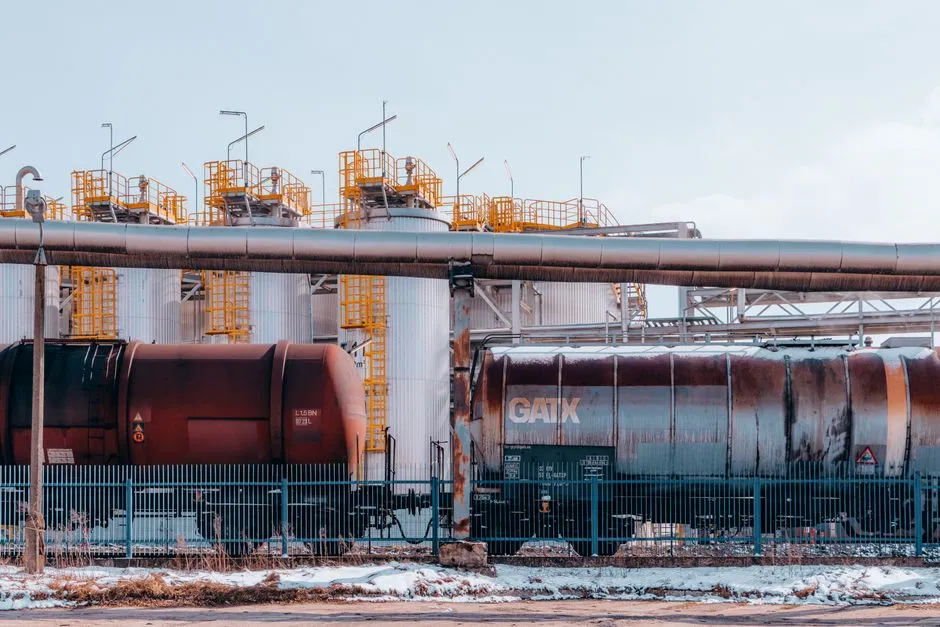
Cooling-blowdown treatment should follow the destination: discharge after adequate pretreatment, reuse for non-critical service, or recovery as closed-loop cooling makeup. A modular train may begin with DAF pretreatment for cooling blowdown when suspended solids, oil or colloidal material may enter the stream. Clarification is an alternative where the waste stream and operator capability support it. A multimedia filtration stage can polish lower suspended-solids loading before reuse or membrane protection.
UF removes suspended material but does not remove dissolved salts. An UF system for non-critical reuse or RO pretreatment is therefore simpler than RO when the reuse point can accept the retained dissolved solids. For closed-loop cooling makeup, an industrial RO system for cooling makeup reuse addresses the dissolved-salts requirement, subject to silica scaling control, antiscalant selection and site chemistry.
IDE Tech identifies silica, calcium carbonate and calcium sulfate as concentrated, scale-prone constituents of cooling tower blowdown. It reports that conventional brackish water RO typically plateaus at 75–80% recovery because scaling, chemical consumption and instability become difficult to manage. The HydropureWater Sanaa guide recommends 70–75% conservative RO recovery or UF-only reuse for smaller sites. By contrast, IDE Tech’s approximately 95% MAXH₂O case uses a higher-complexity architecture combining RO with fluidized-bed salt precipitation. It is a reference case, not a default Ibb specification.
Sanitary wastewater requires a separate biological package. An A/O system is a conventional option; an integrated MBR wastewater package provides a different footprint and effluent-quality proposition. Add UV or chlorine dioxide disinfection for reuse water where storage, reuse or sanitary-discharge objectives require microbial control. If sludge volume and containerized disposal justify dewatering, a plate-and-frame sludge dewatering press can reduce wet-sludge hauling.
| Cooling treatment option | Best-fit objective | Principal limitation | Decision test |
|---|---|---|---|
| DAF or clarification plus discharge | Remove solids and oil where present before the authorized discharge route | Does not remove dissolved salts | Does measured chemistry permit disposal after pretreatment? |
| Multimedia filtration plus UF | Non-critical reuse or pretreatment | Cannot alone support closed-loop makeup requiring dissolved-salt removal | Does the receiving use tolerate the permeate chemistry? |
| Conservative brackish RO | Closed-loop cooling makeup | Silica, scaling, antiscalant and concentrate management | Can recovery remain controlled under worst-case chemistry? |
| Advanced high-recovery brine treatment | Large-scale makeup closure with integrated salt management | Higher process and operator complexity | Does measured scale and staffing justify the additional integration? |
Optimize Operations Before Buying a Large Treatment Plant
Operation optimization precedes treatment capital because it changes the flow and chemistry entering the proposed skid. Genesis Water Technologies recommends a staged sequence: establish a measured baseline, repair leaks, remove once-through cooling, optimize blowdown controls, improve filtration, and then evaluate capital treatment.
Controlling cooling tower cycles of concentration is the first major operating lever. Moving from 4 to 6 CoC changes blowdown from 25% to 20% of makeup, but higher CoC increases fouling, microbiologically influenced corrosion and scaling risks. Raising CoC without chemical control, filtration improvement and downstream treatment may simply create unstable operation.
Use PLC-controlled chemical dosing to maintain treatment within measured limits and reduce manual intervention. The automatic chemical-dosing system should support automatic restart, dry-run protection and controlled shutdown so unstable power does not cause a full-dose discharge or repeated overdosing.
Scale also matters. Genesis Water Technologies warns that hyperscale RO, ion-exchange and multistage-filter arrangements can fail to transfer economically or operationally to smaller facilities because they require dedicated operators, substantial capital and unavailable scale economies. A modular Ibb skid should target the contaminants and reuse destination that the measured balance justifies.
The same source cites a 15 MW facility recovering 60% of blowdown with a $200,000 capital cost and a 6.7-year simple payback on water alone, improving to 3–5 years when broader water-cost benefits are included. This is a reference case, not an Ibb estimate. Request an Ibb budget based on measured flow, recovery target, local fabrication, freight, duties, power, chemicals and sludge handling.
- Measure makeup, blowdown, evaporation and water quality.
- Repair leaks and remove unnecessary once-through cooling.
- Optimize blowdown controls and filtration.
- Set a safe, sustainable CoC and chemical program.
- Evaluate modular treatment against the revised balance.
Plan for Ibb's Power, Logistics and Service Constraints
The Ibb treatment architecture should start and stop cleanly under variable power availability and require no continuous attended operation. Specify a modular, PLC-controlled skid with automatic restart, dry-run protection, interlocks and a documented control narrative. Treated-water storage should allow cooling operations to remain stable during a power interruption or treatment shutdown.
Procurement should minimize dependence on regular imported consumables. Require a short consumables list, local or regional spare-parts support, clear membrane and media specifications, and documentation for every chemical product. Operators need to know what can be sourced locally, what must be imported, and how lead time affects safe inventory levels.
Plan sludge handling before equipment selection. A plate-and-frame press can reduce wet-sludge hauling and produce containerized dry cake, but the supplier must provide an expected cake form, moisture basis, container arrangement and disposal interface. Without a confirmed route for the cake, dewatering only transfers the logistics problem.
Do not copy IDE Tech’s approximately 95% recovery case automatically. That architecture relies on advanced integration, including RO and fluidized-bed salt precipitation. For a smaller Ibb facility, require the supplier to demonstrate an installation at a comparable scale and operating context, including generator-backed operation, operator workload and local service—not only a hyperscale reference.
The electrical scope should include start-up current, connected load, control-power quality, generator compatibility, UPS requirements and protection philosophy. The hydraulic scope should include storage, valves, backflow prevention, sample points, pressure instrumentation and a defined response to a treatment fault. These details determine whether the equipment remains a functioning plant or merely a collection of tanks and membranes.
Procurement Checklist for an Ibb Treatment System
A defensible request for quotation begins with measured flows and water chemistry, not a preferred skid name. Each bidder should state the design basis, present stage balances, identify concentrate and sludge destinations, and define the acceptance tests. If the site has not yet collected the required data, the RFQ should identify that gap and prohibit firm sizing from IT megawatts alone.
Require one integrated scope covering pretreatment, filtration, membranes, storage, dosing, disinfection, sludge dewatering, controls and local instrumentation. A bidder that excludes foundations, wiring, fuel or reagent storage, commissioning, training or operator documentation should clarify those exclusions.
Ask for shipped dimensions, utility requirements, chemical consumption, maintenance intervals, membrane life, spare parts, PLC functional descriptions and start-stop sequences. Delivered-cost and operating-cost breakdowns should separately cover local fabrication, freight, import duties, power, consumables, sludge disposal and operator labor.
Make final acceptance conditional on site-specific influent testing, trial operation, reuse-water or permeate quality verification, and confirmation of the applicable Ibb discharge route and permit authority. Current permits and receiving-authority requirements should be identified during design; this article does not assert local limits for Ibb.
| RFQ package | Required information | Buyer check |
|---|---|---|
| Design basis | Hourly and daily makeup, blowdown, sanitary flow, CoC, source chemistry, recovery, destination and operating hours | Are values measured and traceable? |
| Mass balance | Flow, concentrate volume, sludge dry solids, reject-water route and reuse-water quality | Do inputs and outputs reconcile? |
| Mechanical scope | Equipment dimensions, storage, utilities, controls, instrumentation and required building works | Can the skid fit and operate at the Ibb site? |
| Operations | Chemical use, maintenance, membrane life, spare parts, PLC functions and training | Can the site team maintain it? |
| Commercial | Delivered price, duties, power, consumables, sludge disposal and labor | Are local and lifecycle costs separated? |
| Acceptance | Influent testing, trial run, quality verification and permit/discharge confirmation | Are obligations defined objectively? |
Frequently Asked Questions
How should an Ibb data-center treatment system be sized?
Size the cooling-blowdown skid from measured daily and hourly blowdown at the intended CoC, then verify the design flow from the actual water balance. IT megawatts may support a preliminary planning estimate but cannot establish flow, recovery or storage requirements. The sanitary train should be sized independently from measured staff, kitchen and washroom flows. Replace all Sanaa-derived reference figures with Ibb measurements before issuing an RFQ.
Should the Ibb site choose UF, conservative RO or advanced high-recovery treatment?
Choose UF where the destination is non-critical reuse or where UF is pretreatment for another process; it does not remove dissolved salts. Use conservative brackish RO when recovered water must become closed-loop cooling makeup, subject to silica and scaling assessment. Consider advanced brine treatment only when measured chemistry, flow, scale and operator capability support its additional integration. IDE Tech’s approximately 95% recovery case should be treated as a reference architecture, not the default specification.
What should procurement require from a treatment-system supplier?
Require a modular, PLC-controlled package with automatic restart, dry-run protection, automatic chemical dosing, treated-water storage, a short consumables list, local or regional service support and a similarly scaled reference installation. Also request shipped dimensions, PLC functional descriptions, membrane and media documentation, spare parts, maintenance intervals, operator training and a clear boundary between local site works and supplier scope.
What budget should an Ibb buyer request?
Request an Ibb-specific delivered and lifecycle cost based on measured flow, recovery target, local fabrication, freight, import duties, power, chemicals, sludge disposal and operator labor. Genesis Water Technologies cites a $200,000 capital cost for a 15 MW reference case, but that figure is not an Ibb price and should not be scaled without a vendor-specific breakdown.
How should compliance risk be controlled?
Confirm the receiving authority, discharge route and applicable current permit requirements before finalizing the treatment train. The assessment should cover temperature, pH, suspended solids, dissolved solids and the effect of cooling chemicals on each authorized outlet. If the discharge route is unresolved, keep the final destination and acceptance criteria open in the RFQ rather than presenting an assumed Ibb limit as fact.
Related Equipment
- DAF pretreatment for cooling blowdown — specifications, capacity range, and technical data
- industrial RO system for cooling makeup reuse — specifications, capacity range, and technical data