What wastewater streams does a Port Said data center need to treat?
A Port Said data center generally needs two distinct treatment routes: domestic wastewater and cooling-loop blowdown. The blowdown train should remove suspended solids, oil and colloidal material, protect downstream membranes from hardness, silica and residual chemicals, and provide a final microbial barrier. A defensible configuration is rotary screening, DAF or lamella clarification, multi-media filtration, 0.03 μm UF, RO and chemical or UV disinfection, with disinfection adjusted to the selected endpoint. Equipment flow must be calculated from measured cooling makeup, evaporation and cycles of concentration—not IT load.
Cooling blowdown is not ordinary cooling water. Evaporation concentrates dissolved and suspended contaminants while treatment chemicals remain in the circulating loop. HydropureWater’s 2026 Giza guide, citing Genesis Water Technologies (2026) and IDE Tech (2026), identifies total dissolved solids, calcium and magnesium hardness, silica, chloride, sulfate, suspended solids, microbiological activity, scale inhibitors, corrosion inhibitors and biocides as relevant contaminant families.
Domestic sewage requires a separate sanitary treatment assessment. A blowdown polishing train is not automatically suitable for sewage effluent, so sanitary flow, wastewater characteristics, collection arrangements and receiving requirements must be assessed independently. Makeup-water pretreatment residuals and any RO reject from the water-recovery train must also appear in the site water balance, even though site-specific flows were not supplied.
Cooling configuration changes the wastewater problem. The UGA Extension 2026 field report explains that closed-loop cooling can reduce water consumption by up to 70% compared with traditional open evaporative cooling, but requires greater system complexity. A Port Said design should therefore begin with the actual cooling arrangement, not a generic data-center water balance. The regional examples in the data center cooling blowdown treatment guide for Krakow and Mediterranean data center blowdown treatment approach provide useful design context, but their flow and regulatory assumptions are not Port Said evidence.
| Site stream | Main treatment objective | Design information required |
|---|---|---|
| Cooling-tower blowdown | Remove solids, colloids, oil, dissolved salts and treatment-chemical residues; deliver the quality required by the selected endpoint | Cooling makeup, evaporation, blowdown, drift, cycles of concentration, temperature, chemistry and hourly and daily flow |
| Domestic wastewater | Provide sanitary treatment and arrange an approved collection or discharge route | Fixture flow, wastewater analysis, sewer access and receiving requirements |
| Makeup-water pretreatment residuals | Contain and treat regenerant waste, backwash waste and other residuals | Treatment configuration, regeneration frequency, residual volume and composition |
| RO reject from recovery | Route concentrate to a permitted reuse, discharge or further-treatment destination | Feed analysis, recovery, concentrate quality, disposal route and applicable approval |
How much cooling blowdown should a Port Said facility generate?
The defensible blowdown flow comes from the cooling system’s water balance, not from facility IT load. For each cooling configuration and operating season, obtain measured or vendor-guaranteed makeup, evaporation, blowdown, drift and cycles of concentration. Then reconcile those values with the proposed treatment endpoint and future expansion.
Cycles of concentration describe the concentration of dissolved solids in circulating water relative to makeup water. HydropureWater’s 2026 Giza guide cites Genesis Water Technologies (2026) for a relationship of blowdown to makeup of 25% at 4 CoC and 20% at 6 CoC. The same guide states that 20–40% of cooling-loop intake can leave as blowdown. These are design references, not a Port Said flow estimate.
Two comparative examples show why scale matters. HydropureWater’s 2026 Giza guide, citing IDE Tech (2026), states that a 100 MW class evaporatively cooled facility can demand up to 2 million liters of water per day. Separately, the same source cites Genesis Water Technologies (2026) for a 15 MW evaporatively cooled facility at 4 CoC, with roughly 15 million gallons of monthly intake and 3.75 million gallons of monthly recoverable blowdown. Neither example establishes the Port Said project flow.
Before equipment sizing, require the cooling vendor to state maximum daily and hourly blowdown, expected operating ranges, minimum and maximum cycles of concentration, future capacity, drift losses and abnormal-event flows. Include makeup-water temperature because it affects membrane performance and treatment design. A review of a data-center cooling-blowdown treatment guide for Pune supports the same cooling-side approach, but its geography cannot supply Port Said tariffs or discharge conditions.
| Balancing input | Procurement requirement | Why it changes treatment scope |
|---|---|---|
| Cooling makeup and evaporation | Monthly and seasonal values from the cooling vendor, supported by operating data where available | Defines the water consumed and concentrated in the cooling loop |
| Blowdown and drift | Maximum hourly and daily flows, plus operating ranges | Sets pretreatment and polishing capacity |
| Cycles of concentration | Normal and maximum operating values by season | Influences dissolved-solids loading and treatment intensity |
| Cooling chemistry | Inhibitors, biocides, pH, conductivity, hardness, silica and chloride | Defines contaminant loads and downstream compatibility |
| Future expansion | Committed and reserve cooling capacity | Determines whether parallel trains or reserve capacity are required |
No Port Said water tariff, sewer acceptance condition or facility-specific blowdown flow was supplied in the research. The buyer should obtain current tariff schedules and written receiving-utility criteria rather than extrapolate the Giza or 15 MW references.
Which treatment train protects the cooling system and the receiving environment?
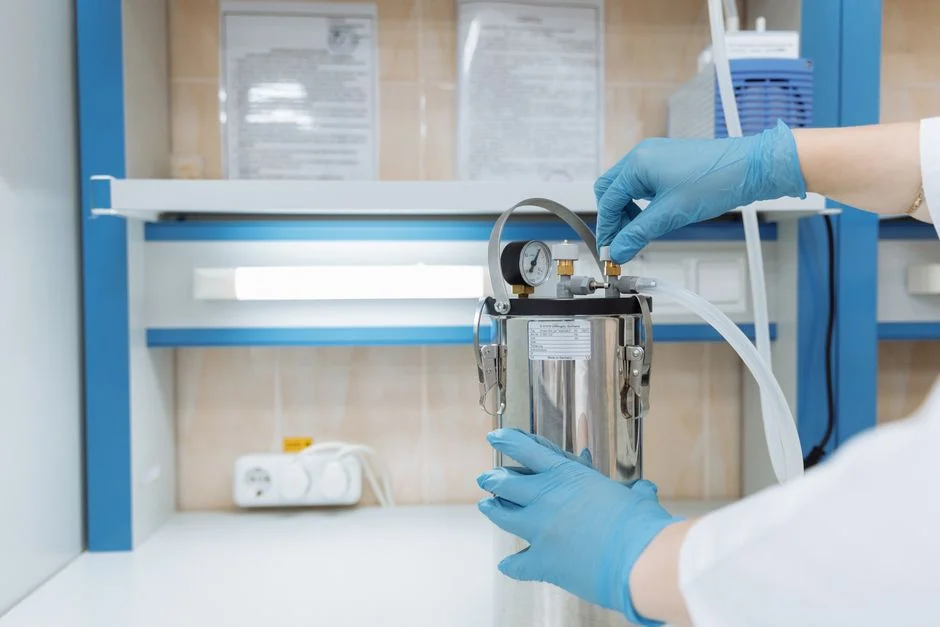
A defensible cooling-blowdown train maps each contaminant family to a defined barrier: screening removes gross material; clarification removes suspended and floating material; media filtration lowers turbidity; UF removes colloids and bacteria; RO removes dissolved ions; and disinfection provides the final barrier for the selected endpoint. The exact configuration follows measured water quality rather than a standard train copied from another project.
- Rotary screening: Remove rags, plastics, fibrous debris and other material that could damage pumps, valves or downstream treatment.
- DAF or lamella clarification: Choose DAF pretreatment for cooling blowdown when analysis indicates emulsified oil, light suspended solids or colloidal material. Choose lamella clarification when solids loading and footprint dominate, subject to actual water-quality data.
- Multi-media filtration: Remove residual suspended solids and turbidity and reduce the fouling load on membranes.
- Ultrafiltration: Use a 0.03 μm ultrafiltration system before RO to remove colloids, bacteria and residual suspended solids. HydropureWater’s UF specification covers 2,000–40,000 L/h, accepts feed turbidity up to 300 ppm, and includes automatic backwash and air scour.
- Reverse osmosis: Apply RO when high recovery or reuse requires a dissolved-solids barrier against hardness, silica and other ions. HydropureWater’s industrial RO specification states recovery rates up to 95%.
- Disinfection: Apply chemical or UV disinfection according to the selected reuse or discharge route. Do not copy a microbial criterion from another jurisdiction.
Training chemicals require particular attention. Inhibitors and biocides may affect coagulation, membrane compatibility, residual disinfectant demand and whether the recovered water is acceptable as cooling makeup. The design should therefore request chemical compatibility data and identify which substances the blowdown can contain.
The supplied research did not provide Egyptian discharge limits or Port Said reuse criteria. The final permit specification must come from the competent Egyptian environmental authority and the receiving sewer or water authority. The data center cooling blowdown treatment guide for Krakow is useful for sequence development, but its legal thresholds should not be transferred to Egypt.
| Process stage | Primary target | Key design question |
|---|---|---|
| Rotary screen | Rags, plastics and fibrous debris | What screening aperture and duty match the measured stream? |
| DAF or lamella | Oil, suspended solids and colloids | Which contaminant and solids-loading condition determines the choice? |
| Multi-media filter | Turbidity and residual suspended solids | What pretreatment performance protects the UF and RO? |
| 0.03 μm UF | Colloids, bacteria and residual solids | What feed condition is needed to avoid membrane fouling? |
| RO | Dissolved ions, hardness and silica | What recovery is required at the design water temperature and chemistry? |
| Disinfection | Microbial barrier | What criterion follows from the confirmed reuse or discharge endpoint? |
Should Port Said reuse treated blowdown or discharge it?
Reuse and discharge are different design endpoints, not interchangeable descriptions of the same treatment train. Reuse means returning treated blowdown as cooling-tower makeup, requiring a more stringent quality, recovery and operational-control case. Discharge means delivering treated blowdown to a sewer or receiving-water route whose current acceptance conditions have been confirmed in writing.
The reuse case should compare freshwater avoided, sewer fees and charges, chemical and energy use, membrane cleaning, lost water value, permit risk, reserve capacity and redundancy. It must also examine whether recovered water chemistry is compatible with the cooling system’s chemistry program. The discharge case should include sewer charges, required pretreatment, receiving-water conditions, permit obligations and the consequence of tightening future acceptance criteria.
HydropureWater’s 2026 Giza guide cites Genesis Water Technologies (2026) for a 15 MW water-stressed facility recovering 60% of blowdown with a $200,000 capital cost and a 3–5 year payback when sewer, compliance and ESG costs are included. This is a facility-specific commercial reference, not a Port Said estimate. A Port Said quotation must use measured Port Said flows, tariffs, permit conditions and energy costs.
Water savings also carry consequences. The UGA Extension 2026 field report emphasizes that saving water can require more electricity and greater system complexity. The business case must include energy and operating consequences rather than water savings alone.
| Decision factor | Reuse as cooling makeup | Accepted discharge |
|---|---|---|
| Water quality | Must meet confirmed cooling-makeup and chemistry-compatibility requirements | Must meet written sewer or receiving-water acceptance conditions |
| Treatment intensity | Usually requires stronger polishing and tighter process control | Depends on the applicable discharge route and permit |
| Commercial value | Counts avoided freshwater and recovered water value | Counts avoided freshwater, less sewer and compliance costs |
| Risk | Higher process, membrane and cooling-compatibility risk | Risk of permit rejection, tightening acceptance conditions or unavailable capacity |
| Required decision evidence | Cooling-vendor quality envelope and measured recovery test | Written receiving-authority acceptance and discharge route |
The available equipment references include reverse-osmosis systems for blowdown recovery and a UV disinfection package for the final barrier. Neither establishes the suitability of a specific Port Said configuration without the confirmed endpoint and water analysis.
How should Port Said equipment be specified and tendered?
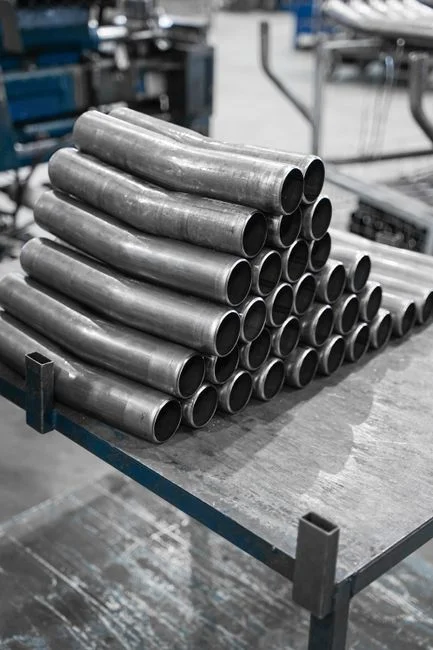
The tender package should convert the selected endpoint and measured cooling design basis into enforceable vendor obligations. Issue the complete water analysis, hourly and daily blowdown, cooling chemistry, expected cycles of concentration, water temperature, required recovery, discharge endpoint and operating scenarios. Require bidders to identify where each value came from and to state which values are design assumptions.
Each proposal should state design flow, process assumptions, number of trains, redundancy, expected RO recovery at the design water temperature and cleaning-in-place frequency. Train sizing should permit maintenance without losing the required treatment endpoint. Where treatment train and cooling guarantees interact, make the interface a contractual responsibility rather than leaving it between suppliers.
Supplier qualification should include operating references in arid or water-stressed climates at comparable facility scale, not generic industrial references. Require named local service response times for membrane cleaning, chemical cleaning, spare parts and critical equipment. Specify that treatment scope, cooling-side performance guarantees and site permits are separate, clearly allocated contractual interfaces.
HydropureWater’s product specifications provide reference boundaries: DAF systems from 4–300 m³/h across 13 models, UF systems from 2,000–40,000 L/h and industrial RO at recovery rates up to 95%. These boundaries can screen a proposal, but they do not establish the Port Said treatment capacity. Relevant reference equipment includes the DAF package, the high-efficiency sedimentation tank and RO and UF membrane elements.
| Tender schedule | Minimum information or deliverable | Acceptance check |
|---|---|---|
| Measured design basis | Flows, analyses, chemistry, temperature, cycles of concentration, recovery and endpoint | Values are measured, vendor-guaranteed or explicitly identified as assumptions |
| Process proposal | Flow diagram, unit duties, materials, controls and chemical requirements | Every major contaminant has a defined treatment barrier |
| Capacity and redundancy | Train arrangement, maintenance isolation and future-capacity provisions | Capacity follows the selected flow basis, not IT load |
| Performance commitments | Flow, recovered-water quality, RO recovery, cleaning frequency and endpoint compliance | Tests and guarantees use the confirmed Port Said basis |
| Service and spares | Named response times, local support and critical spare-parts list | Response commitments are contractually measurable |
| Permit support | Permit schedule, data package and allocation of authority submissions | Approval dependencies appear in the EPC and procurement schedule |
An integrated scope covering screening, DAF or clarification, media filtration, UF, RO and disinfection can reduce interface risk. For automated controls, the SCADA versus PLC comparison for automated water treatment helps define the control architecture, but it does not replace process guarantees.
What permits and evidence should be secured before construction?
Environmental approval, receiving-system acceptance and water allocation must be resolved before irreversible equipment procurement. The supplied sources do not state numeric Port Said discharge limits, sewer acceptance criteria or water-allocation conditions. The project team must identify the competent Egyptian environmental authority, the receiving sewer or water body, the proposed discharge route and the current permit requirements.
Secure written sewer acceptance if the selected endpoint is municipal discharge. If discharge is to a receiving water, establish the applicable environmental permit route and receiving-water conditions instead. The cooling vendor should coordinate with the permitting team on abstraction, reuse and discharge assumptions so that the water balance presented to authorities matches the installed cooling design.
Retain baseline sampling before treatment and define a commissioning sampling plan. Parameters should cover TSS, turbidity, conductivity, hardness, silica, chloride, sulfate, residual treatment chemicals and microbiological indicators relevant to the chosen endpoint. The U.S. EPA references reproduced by UGA Extension provide technical and permitting context, but they are not Egyptian regulatory authority.
The Port Said desalination search result was blocked by a human-verification page and cannot support specific project claims. It is only a prompt to verify regional infrastructure developments through accessible primary sources. The UGA Extension and EPA material should likewise be treated as technical context rather than substitutes for Port Said approvals.
- Confirm the competent authorities and written receiving route.
- Freeze the selected reuse or discharge endpoint and applicable quality requirements.
- Align cooling-water demand, allocation, treatment and discharge approvals with the EPC schedule and financing milestones.
- Complete baseline and commissioning sampling plans with named acceptance authorities.
- Place permit conditions, commissioning tests and treatment guarantees into the tender and contract documents.
Frequently Asked Questions
How much should a Port Said data center budget for cooling blowdown treatment?
Request a measured-flow quotation split into equipment, installation, chemicals, energy, membrane replacement, cleaning, local service and disposal of treatment residuals. Also provide the current freshwater and sewer tariffs, expected operating hours and confirmed discharge or reuse endpoint. The $200,000 capital cost and 3–5 year payback cited in HydropureWater’s 2026 Giza guide apply to a 15 MW water-stressed facility recovering 60% of blowdown; they should not be used as a Port Said budget.
Should the project use DAF or a lamella clarifier for cooling blowdown?
Use DAF when analysis confirms emulsified oil, light suspended solids or colloidal material. Use lamella clarification when higher solids loading and footprint are the dominant constraints. Require bidders to state the measured contaminant basis behind the selection and show how the chosen unit affects downstream media, UF and RO performance.
Can treated cooling blowdown be reused as cooling-tower makeup in Port Said?
Technically, it can be designed as a reuse endpoint, but the quality and operating envelope must be confirmed with the cooling vendor. The recovered water must satisfy the confirmed makeup specification, cooling chemistry compatibility and operating-control requirements. Also obtain the relevant local approval for the reuse arrangement before sizing the recovery train.
How long should lead time for equipment and environmental approval be allowed?
Do not adopt a delivery date without a supplier-specific manufacturing schedule and a local permitting schedule. Ask the bidder to identify long-lead items, approval dependencies and the permit information needed at tender stage. The treatment-equipment lead time and the environmental, water-allocation and sewer-acceptance schedule should be tracked as separate risks because the research provides no verified Port Said approval duration.
What should a buyer request from a cooling-blowdown treatment supplier?
Request the design flow and assumptions, complete process flow diagram, equipment duties, train arrangement, redundancy, performance guarantees, RO recovery at design temperature, cleaning frequency, chemical requirements, comparable operating references and named local service response times. For an integrated proposal, ask how screening, clarification, media filtration, UF, RO and disinfection interfaces will be tested and accepted.