Why Pune Is the Hard Case for Data Center Water in 2026
A Magarpatta hyperscale permit was denied in 2026 at the 1,500 m³/day ceiling because the intake application did not include a documented reuse train — and that single rejection frames the engineering problem for every STT, Equinix and CtrlS-class developer sizing a hall in Pune today. The Mula-Mutha right-bank corridor (Hinjawadi, Magarpatta, Kharadi) and the left-bank corridor (Pimpri-Chinchwad, Talawade, Chakan) are both over-allocated, so the PMC industrial-water tariff is now the binding freshwater cost — not a volumetric abstraction used in vendor brochures. Pune ambient swings between 32 and 40 °C, with March–May peaks that collapse cooling-tower cycles of concentration to 5–8 before silica scales the chiller condenser; this is the single biggest chemistry differentiator against Bengaluru or Chennai builds where the same silica curve sits closer to 6–10 cycles. Bhigwan and Temghar reservoir allocation is gated by the State Water Resources Department, and 2026 intake permits for new hyperscale halls are now being issued only with a reuse train on the face of the application rather than as a deferred consent condition. Pune also averages four-to-six power-quality events per week (per MSEDCL outage logs, 2025-08), and these derate RO recovery on UPS-fed instrument loops by 5–10% unless the high-pressure pump is accumulator-buffered — a non-obvious CAPEX line item the EPC's standard spec usually omits.
Pune Raw-Water and CTBD Characterisation
Bhigwan-supplied Pune municipal water typically lands at TDS 200–450 mg/L, silica 8–25 mg/L as SiO₂, and chloride 15–60 mg/L; cooling-tower blowdown then concentrates 4–8× to TDS 1,200–3,500 mg/L and silica 32–200 mg/L as evaporation proceeds through the cycle (Genesis Water Tech, 2026). Blowdown TSS sits at 10–50 mg/L from corrosion products, biofilm fragments, and Pimpri-Chinchwad-direction PM₁₀ carryover — the latter is non-trivial during winter inversion events. Biological content includes planktonic bacteria and biofilm-forming organisms that must be neutralised before any membrane stage. Treatment chemicals concentrate proportionally — biocides, corrosion inhibitors, scale inhibitors, dispersants — and Pune sites pulling legacy chromate chemistry from older Chakan-area estates will see Cr(VI) breakthrough on a side-stream filter alone, which is why conservative designs pre-empt it at softening. Side-stream spiral filtration at 1–5% of circulation flow at 10–25 micron is the lowest-cost intervention that drops blowdown TSS to membrane-protective levels (Genesis Water Tech, 2026). The CTBD envelope is consistent with the HydropureWater Ahmedabad characterisation: CTBD at TDS 500–2,500 mg/L, silica 10–80 mg/L, residual ClO₂/Cl₂ 0.1–1.0 mg/L, against an organic process-wastewater line carrying COD 200–1,500 mg/L, fluoride 50–800 mg/L, copper 0.5–10 mg/L, and TMAH 5–50 mg/L.
| Parameter | Bhigwan raw water | Pune CTBD (4–8×) | RO permeate target |
|---|---|---|---|
| TDS (mg/L) | 200–450 | 1,200–3,500 | <50 |
| Silica as SiO₂ (mg/L) | 8–25 | 32–200 | <5 |
| Chloride (mg/L) | 15–60 | 60–480 | <10 |
| Hardness as CaCO₃ (mg/L) | 80–180 | 320–1,440 | <5 |
| TSS (mg/L) | 5–15 | 10–50 | <1 |
| Residual ClO₂/Cl₂ (mg/L) | 0.2–0.8 | 0.1–1.0 | n/a |
The 2026 MPCB Consent Envelope for Data Centers in Pune
CPCB GSR 53(E) sets the 2026 public minimum for inland surface water at BOD ≤30 mg/L, COD ≤250 mg/L, TSS ≤100 mg/L, TDS ≤2,100 mg/L, pH 6.0–9.0, total Cr ≤2 mg/L, F⁻ ≤2 mg/L, and residual Cl₂ ≤1 mg/L. MPCB typically layers NH₃-N ≤50 mg/L and Cu ≤3 mg/L on top of the CPCB envelope, and site-specific consent orders in the Pune industrial belt (Chakan, Talawade, Ranjangaon) frequently add TDS ≤1,500 mg/L and zero-discharge conditions on the concentrate stream (HydropureWater Ahmedabad benchmark, conservatively applied to Pune). The design target should sit 20–30% below the load-bearing parameters (TDS, F⁻, total Cr, residual Cl₂) so two years of compliant 24-hour composite sampling survives the MPCB renewal cycle without a retrofit — a posture that mirrors Bangladesh DoE S.R.O. 229/Law/2023, which is data-driven rather than paper-driven. Consent to Establish (CTE) is filed before civil work; Consent to Operate (CTO) is granted only after two years of compliant monitoring — the 2026 MPCB sequence therefore forces the reuse train to be a permit artefact, not an after-the-fact add-on. Some jurisdictions now prohibit discharge above 1,500 mg/L TDS (Genesis Water Tech, 2026), and that ceiling is the binding limit forcing concentrate-stream sizing on every Pune site above ~200 m³/d.
| Parameter | CPCB GSR 53(E) 2026 | MPCB typical Pune belt | Design target |
|---|---|---|---|
| TDS (mg/L) | ≤2,100 | ≤1,500 | ≤1,200 |
| F⁻ (mg/L) | ≤2 | ≤2 | ≤1.5 |
| Total Cr (mg/L) | ≤2 | ≤2 | ≤1.5 |
| Residual Cl₂ (mg/L) | ≤1 | ≤1 | ≤0.7 |
| NH₃-N (mg/L) | — | ≤50 | ≤35 |
| Cu (mg/L) | — | ≤3 | ≤2 |
Treatment Train for a Pure Data Hall in Pune
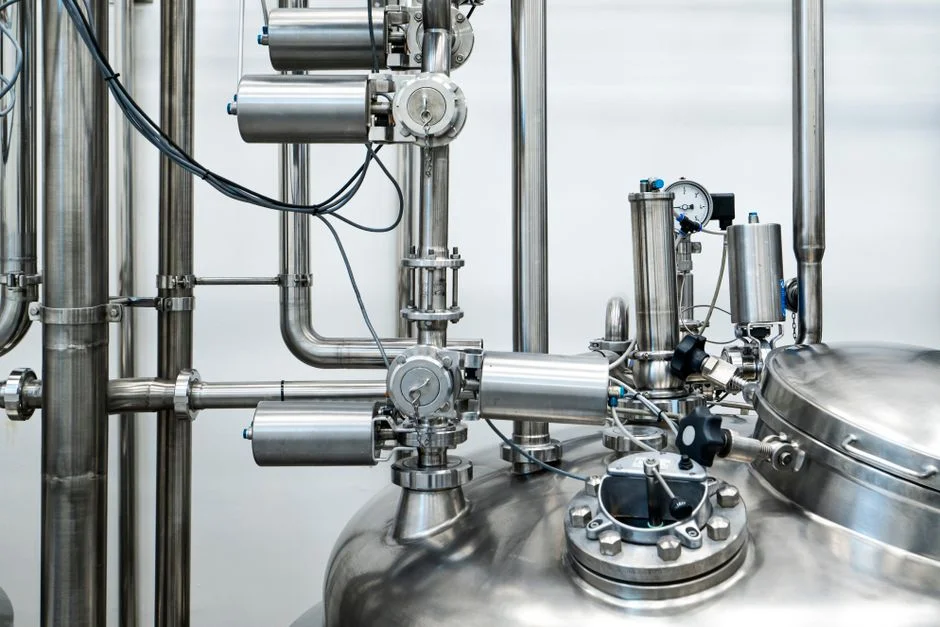
The pure data-hall train — no CMP, no TMAH, no fluoride source — is biology-free, tighter, and lower-CAPEX than the equivalent Ahmedabad fab-support configuration, and is sized for Pune's silica-bound cycle and Pune's residual chloride exposure. Module 1 is equalisation and pH dampening: 8–12 h retention at pH 9–10 with +25% freeboard in FRP or SS316L tanks, because carbon-steel tanks fail in 18 months under Pune's residual chloride window. Module 2 is particulate removal, anchored on a multi-media filter with cartridge polisher at 5–10 µm, plus side-stream spiral filtration at 1–5% of circulation flow cutting blowdown TSS to <50 mg/L as CaCO₃ and <20 mg/L as SiO₂. An optional DAF pre-treatment unit is added only if the open basin carries corrosion-inhibitor carryover, and a UF pretreatment skid at 90–95% recovery and 10–30 psi replaces or supplements the MMF stage when biofilm carryover is the primary concern (Genesis Water Tech, 2026). Module 3 is softening — non-optional at 32–40 °C Pune ambient — delivered via a twin-tank industrial water softener at 90–95% hardness removal, which drops the Langelier Saturation Index and keeps silica within the RO envelope. Module 4 is two-pass RO through an industrial two-pass RO system: first pass at 70–75% recovery, second pass at 85–90%, permeate TDS <50 mg/L, concentrate at 25–40% of feed, with a conductivity probe on the RO reject line at 4,000 µS/cm tripping dump-to-ZLD. Conventional brackish RO plateaus at 75–80% recovery (IDE Tech, 2026); high-recovery designs reach 85–95% via controlled silica/CaCO₃ precipitation and dynamic RO operation. Module 5 is sludge dewatering via a plate and frame filter press at 25–35% dry solids — cake transport stays inside Maharashtra Solid Waste Rules — and, above 30 m³/d of concentrate, a falling-film evaporator plus crystalliser to clear the 95% total Cr removal bar if the CTO demands it.
| Module | Function | Key spec | Output |
|---|---|---|---|
| 1. Equalisation / pH dampening | Flow and pH smoothing | 8–12 h, pH 9–10, +25% freeboard, FRP/SS316L | Stable feed to Module 2 |
| 2. Particulate removal | TSS, biofilm, PM₁₀ carryover | MMF + 5–10 µm cartridge; side-stream spiral 1–5% | TSS <50 mg/L; SiO₂ <20 mg/L |
| 3. Softening | Hardness removal | Twin-tank softener, 90–95% removal | LSI negative; SiO₂ within RO envelope |
| 4. Two-pass RO | Dissolved solids + silica rejection | Pass 1 70–75%, Pass 2 85–90% | Permeate <50 mg/L TDS |
| 5. Sludge + ZLD on concentrate | Cake transport; brine to solid | Plate & frame press 25–35% DS; MVC above 30 m³/d | Transportable cake; crystallised solids |
When the Tenant Mix Changes: Adding a Process-Wastewater Train
Co-located fab support or specialty tenants bring COD 200–1,500 mg/L, fluoride 50–800 mg/L, copper 0.5–10 mg/L, and TMAH 5–50 mg/L — a chemically incompatible envelope with CTBD at TDS 500–2,250 mg/L, silica 10–80 mg/L, and residual ClO₂/Cl₂ 0.1–1.0 mg/L. The fix is a segregated process line: an MBR integrated wastewater treatment skid plus activated alumina and chelating resin, because silica and residual chlorine dioxide in CTBD would blind MBR biomass if the streams were combined (HydropureWater Ahmedabad benchmark, 2026). For a pure data hall — the realistic STT GDC, CtrlS, Equinix-style build with no CMP, no fab tenant — the train is tighter, biology-free, and lower-CAPEX, and the MBR is skipped entirely. If a fab support line is added later, the civil and electrical layout should pre-allocate footprint and 33 kV HT capacity for an MBR skid and an activated-alumina vessel set without re-routing the CTBD HP pump room. This is the single biggest design decision a Pune project will make in 2026, because retrofit segregation under a live CTO is the most expensive mistake an EPC can leave on the table.
ZLD, Partial ZLD, or Discharge: Pune's Decision Matrix
Full ZLD (RO + MVC/brine concentrator + crystalliser) is triggered when concentrate volume exceeds 30 m³/d, when total Cr / TMAH removal must clear 95%, or when the MPCB CTO cites a basin-wide default — and Pune's 2026 posture on the Mutha right-bank is converging on the Sabarmati/Gujarat default (HydropureWater Ahmedabad, 2026). Partial ZLD — RO plus thermal polishing of concentrate to 20–30% dissolved solids — is the cost-effective middle ground; MVC distillate TDS <10 mg/L at 95–98% recovery, 15–25 kWh per 1,000 US gallons, $1–3M capex for 10,000–30,000 GPD (Genesis Water Tech, 2026). Closed-loop with air-side economisation and industrial two-pass RO reuse is the 2026 Indian policy default for new hyperscale halls, but a Pune site that must still reject high ambient heat typically lands on a hybrid evaporative-plus-adiabatic arrangement with RO reuse and Bhigwan/Nira allocation as freshwater top-up. Discharge to CETP is increasingly unavailable above 200 m³/d — shared CETPs in comparable jurisdictions reported >90% hydraulic utilisation in 2025 (HydropureWater Ahmedabad benchmark, 2026), and a single upstream non-compliance inside a shared facility triggers regulator action against all members.
| Configuration | When it applies (Pune 2026) | Recovery | CAPEX band (INR) |
|---|---|---|---|
| Closed-loop with economisation + RO reuse | Edge halls, AI inference racks <2 MW | 85–90% | 3–5 cr |
| Hybrid evaporative + adiabatic + RO reuse | Hyperscale 50–200 m³/d, Mula-Mutha basin | 80–85% | 5–8 cr |
| Full ZLD (RO + MVC + crystalliser) | Concentrate >30 m³/d or Cr/TMAH >95% removal | 95–99% | 8–12 cr |
Pune CAPEX, OPEX and Payback in 2026
All-in CAPEX for a mid-size hyperscale hall train — civil, equipment, install, instrumentation, commissioning — sits in the INR 5–10 crore band, with a +15–20% adder for Pune logistics and the dedicated 33 kV HT supply that most MIDC estates require for RO high-pressure pumps. OPEX lands at ₹2,200–4,800 per m³, broken into energy, chemicals, sludge handling, labour, and a membrane replacement reserve (HydropureWater Ahmedabad benchmark, 2026). At 60% recovery on a 200 m³/d train running 365 days/yr, the site saves ~73,000 m³/yr against the PMC industrial tariff, yielding a 2.5–4 year simple payback. State-of-the-art designs at 85–90% recovery (IDE Tech, 2026) sit at the upper end of CAPEX and the lower end of payback — the two-step logic (spend more on RO to recover more water, then lock the savings against the PMC tariff) is the only configuration that survives a 2026 finance-committee review in Pune. An automatic antiscalant and biocide dosing skid on the RO feed line is the cheapest single OPEX lever a Pune project can pull, because chemical mismatch is the dominant cause of membrane replacement in this envelope.
| Band | CAPEX (INR cr) | OPEX (₹/m³) | Simple payback (yrs) |
|---|---|---|---|
| Edge hall ≤50 m³/d | 3–5 | 2,200–3,000 | 3.5–4.0 |
| Mid-size hyperscale 200 m³/d | 5–8 | 3,000–4,000 | 2.5–3.5 |
| Full hyperscale 500+ m³/d with ZLD | 8–12 | 3,800–4,800 | 3.0–4.0 |
Frequently Asked Questions
What MPCB consent sequence applies to a 2026 hyperscale build in Pune?
Consent to Establish (CTE) is filed before civil work begins; Consent to Operate (CTO) is granted only after two years of compliant 24-hour composite sampling on file. Pune's 2026 MPCB posture mirrors Bangladesh DoE S.R.O. 229/Law/2023 in being data-driven, so the reuse train must appear on the face of the CTE application, not as a deferred condition.
Why is silica the binding species for cooling-tower cycles of concentration in Pune?
At 32–40 °C Pune ambient, silica solubility drops faster than CaCO₃, and the chiller condenser scales at 5–8 cycles if silica is not stripped. The Pune ambient cycle collapses cycles of concentration to 5–8 — lower than Bengaluru or Chennai — making silica the cycle-limiting species, and forcing a non-optional twin-tank industrial water softener plus a two-pass industrial two-pass RO system ahead of the chiller loop.
When does a Pune data hall need to add a fab-support process-wastewater train?
Only when a co-located fab support or specialty tenant introduces COD 200–1,500 mg/L, fluoride 50–800 mg/L, copper 0.5–10 mg/L, or TMAH 5–50 mg/L. For a pure data hall (STT GDC, CtrlS, Equinix-style build) with no CMP, the train remains biology-free and the MBR stage is skipped entirely — but the civil layout should pre-allocate footprint for an MBR integrated wastewater treatment skid in case a fab tenant is added in a later phase.
What concentrate volume triggers full ZLD in Pune?
Above 30 m³/d of RO concentrate, or when the MPCB CTO cites 95% total Cr / TMAH removal, full ZLD (RO + MVC + crystalliser) becomes the binding configuration. Below that threshold, partial ZLD with thermal polishing of concentrate to 20–30% dissolved solids is the cost-effective middle ground (Genesis Water Tech, 2026).
How is the closed-loop cooling default applied to a Pune site that still rejects high ambient heat?
Closed-loop with air-side economisation and industrial two-pass RO reuse is the 2026 Indian policy default, but a Pune site that must still reject high ambient heat lands on a hybrid evaporative-plus-adiabatic arrangement with RO reuse and Bhigwan/Nira allocation as freshwater top-up. Direct-to-chip liquid cooling tightens the water budget further on AI training halls where the per-rack thermal load justifies it, with an on-site ClO₂ generator on the make-up line to keep biofilm off the cold plate headers. For related engineering context outside Pune, see the Hong Kong data center CTBD engineering guide, the Athens data center CTBD engineering guide, and the Accra data center CTBD engineering guide.