
Why a Giza Data Center Has a Wastewater Problem Before It Has a Cooling Problem
Giza is hot, dry, and Nile-adjacent. Cooling towers on such a site evaporate aggressively, so a 100 MW class facility can demand up to 2 million liters of water per day, comparable to the daily demand of thousands of households (IDE Tech, 2026). Of that intake, 20–40% leaves the cooling loop as blowdown — water that has already been paid for, treated to makeup standards, and now carries concentrated dissolved solids (Genesis Water Technologies, 2026). For a hyperscale build on the Giza plateau, blowdown — not the IT load itself — is usually the binding constraint during permitting and ESG review, because it determines how much of the Nile allocation the facility must surrender to the sewer versus recirculate on site.
National infrastructure policy reinforces this constraint. Egypt's Ministry of Finance has lined up 16 PPP water and power projects worth $3.08bn, reported on 22 September 2026, signaling tighter scrutiny on how new industrial and data center users account for freshwater intake, discharge quality, and reuse (HydropureWater industry news, 22 September 2026). The treatment train on the wastewater side has two defensible endpoints: recover treated blowdown as cooling tower makeup, or polish it for compliant discharge to the municipal sewer. Each route reshapes equipment selection, so the choice must be made before vendor proposals are scored.
What Cooling Tower Blowdown Actually Contains
Cooling tower blowdown is recirculating water whose dissolved load has been concentrated by evaporation. The standard metric operators use to describe this concentration is cycles of concentration (CoC), which Genesis Water Technologies (2026) defines as the ratio of dissolved solids in the circulating water to dissolved solids in the makeup water. The blowdown ratio is 1/(CoC − 1): at 4 CoC, blowdown equals 25% of makeup, and at 6 CoC, it falls to 20% — a 5 percentage-point reduction, not the 50% that the percentage change in CoC suggests.
The blowdown stream carries species the cooling water has concentrated: total dissolved solids, calcium and magnesium hardness, silica, chloride, sulfate, suspended solids drawn in with makeup air, microbiological activity, and residual treatment chemicals such as scale inhibitors, corrosion inhibitors, and biocides (Genesis Water Technologies, 2026; IDE Tech, 2026). Pushing CoC above 5–6 without advanced treatment produces an exponential rise in scaling, fouling, and microbiologically influenced corrosion risk, which usually forces operators to back off the cycle target (Genesis Water Technologies, 2026). For a Giza reader evaluating any vendor's water analysis, every contaminant family in the list maps to a specific unit operation downstream — DAF or clarifier for suspended solids, softening and media filtration for hardness and turbidity, ultrafiltration for colloids and bacteria, and reverse osmosis for dissolved ions.
The Treatment Train a Giza Data Center Actually Needs
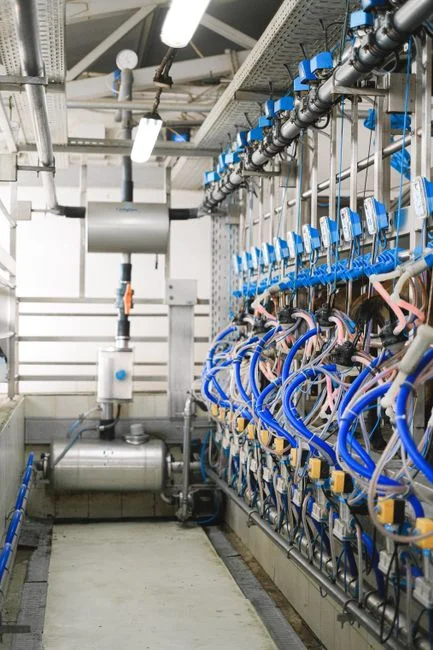
A defensible blowdown train for a Giza data center runs in six stages, each serving a measurable purpose.
- Screening. A rotary bar screen for headworks protection removes rags, plastics, and fibrous debris before any downstream unit sees them.
- Primary clarification. A DAF system for cooling blowdown pretreatment or, for higher-solids streams, a lamella clarifier alternative to DAF takes out free oil, FOG, and the bulk of suspended solids.
- Media filtration. A multi-media filter ahead of UF and RO drops turbidity and SDI into the band that membranes can tolerate.
- Ultrafiltration. A 0.03 μm UF as RO pretreatment strips residual colloids, bacteria, and turbidity, protecting the RO membranes from biological fouling.
- Reverse osmosis. High-recovery RO for blowdown reuse removes the bulk of dissolved ions; conventional brackish RO is generally limited to 75–80% recovery on this stream, with high-recovery designs reaching around 95% (IDE Tech, 2026).
- Disinfection. A ClO₂ disinfection for reuse and discharge streams step, or UV polishing, closes the train before reuse or discharge.
| Stage | Unit operation | Target contaminants | Typical Giza-site role |
|---|---|---|---|
| 1 | Rotary mechanical bar screen | Rags, plastics, debris | Headworks protection |
| 2 | DAF or lamella clarifier | Oil, FOG, suspended solids | Primary clarification for blowdown |
| 3 | Multi-media filter | Turbidity, SDI | RO feed conditioning |
| 4 | Ultrafiltration (0.03 μm PVDF) | Colloids, bacteria, residual TSS | RO pretreatment barrier |
| 5 | Reverse osmosis | Dissolved ions, silica, hardness | Permeate for makeup or discharge |
| 6 | ClO₂ or UV | Microbiological activity | Final barrier before reuse or sewer |
The split between DAF and lamella is a site decision based on specific water quality metrics. DAF handles emulsified oil and light TSS better; lamella clarifiers are typically the right pick where the solids load is higher and footprint is constrained.
Blowdown Reuse or Discharge: How to Choose for a Giza Site
The choice between reuse-as-makeup and discharge-to-sewer is driven by five local inputs: the water stress index of the catchment, the marginal cost of makeup water, the sewer discharge limits enforced locally, the availability of treated municipal wastewater for blending, and incentive programmes tied to Egypt's $3.08bn PPP pipeline (HydropureWater industry news, 22 September 2026). On a Giza plateau site where the municipal water tariff is rising and sewer acceptance is uncertain, reuse usually wins on ESG and long-run cost; on a site with reliable sewer acceptance and a lower water tariff, a discharge-compliant train without full RO may be more defensible to finance.
Genesis Water Technologies (2026) sequences the decision as a five-stage roadmap — measurement, system optimization, chemical upgrades, blowdown treatment implementation, and advanced integration — and reports a 15–25% makeup reduction once a two-stage physical-separation train (media filtration plus DAF) is followed by targeted polishing. That roadmap is the gating logic for capex phasing: every stage should be commissioned only after the previous one is metered and stable. For a hyperscale Giza build, this usually means starting at Stage 1 during the mechanical commissioning of the cooling plant and reaching Stage 4 within the first year of operation, with the RO train scaled to actual measured blowdown rather than the nameplate intake.
Sizing the Plant to the Data Center, Not the Other Way Round
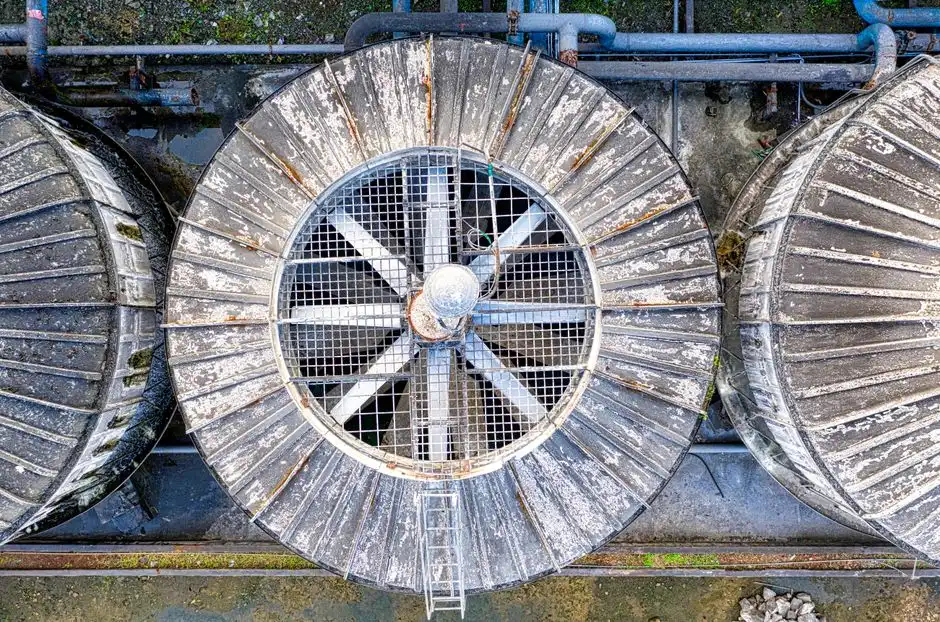
Equipment capacity must be derived from the cooling side, not assumed from the IT load. Genesis Water Technologies (2026) anchors a 10 MW evaporatively cooled facility at 4 CoC to roughly 15 million gallons of monthly intake and 3.75 million gallons of recoverable blowdown per month. A 100 MW class hyperscale site handling close to 2 million liters per day (IDE Tech, 2026) sits in a different flow band, and that single number drives equipment selection: a standard DAF system for cooling blowdown pretreatment covers mid-market enterprise loads, while a hyperscale Giza build needs multi-train RO skids and parallel clarification trains to keep each unit inside its operable range.
Genesis Water Technologies (2026) flags the risk of copying a hyperscale RO-plus-ion-exchange layout onto a 5 MW colocation hall, where per-gallon capex can be 3–4× higher and the operational complexity exceeds the available staff. For a Giza reader, the corollary is that hyperscale and colocation specifications are not interchangeable. Most local EPCs in the Egyptian cooling market deliver the cooling-side mechanical scope rather than the blowdown treatment scope, so the water treatment package usually requires a specialist vendor with a documented reference plant in an arid climate.
Procurement, Cost and Compliance Checklist for Egypt
The commercial case for a Giza blowdown train is best framed in total cost of water, not utility savings alone. Genesis Water Technologies (2026) shows that a 15 MW water-stressed facility recovering 60% of blowdown can reach a 3–5 year payback once avoided costs — sewer fees, compliance exposure, and ESG reporting value — are included, against a $200,000 capital cost that on water savings alone would imply a 6.7-year simple payback. This logic applies in Egypt, where sewer and water tariffs are not the only line items a finance committee will weigh.
The procurement inputs a buyer should require from any short-listed supplier are listed in the table below.
| Checklist item | What to request from the supplier |
|---|---|
| Discharge compliance | Documented performance against the discharge parameters set by the relevant Egyptian environmental authority for the specific sewer or receiving water body. |
| Full-train scope | Ability to deliver screens, DAF or clarifier, media filter, UF, RO, and disinfection from one vendor to reduce interface risk. |
| Reference plants | Operating references in arid or water-stressed climates at a similar facility scale (MW and L/day), not generic industrial references. |
| Local service footprint | Service and spare-parts coverage in Cairo and Giza, with named response times for membrane cleaning and chemical cleaning cycles. |
| PPP alignment | Procurement and permitting schedule aligned with the 16-project, $3.08bn water and power pipeline reported on 22 September 2026 (HydropureWater industry news) so that water allocation and financing milestones are sequenced. |
For a Giza project specifically, request the supplier's view on the trade-off between DAF and lamella for the expected TSS range, the projected RO recovery at design water temperature, and the cleaning-in-place frequency they assume. These answers expose whether a proposal was sized for the climate or copied from a temperate-climate reference.
Frequently Asked Questions
What wastewater and cooling blowdown treatment does a data center in Giza, Egypt need?
A Giza data center needs a six-stage train: rotary screening, DAF or lamella clarification, multi-media filtration, 0.03 μm ultrafiltration, reverse osmosis sized for high-recovery operation, and chemical or UV disinfection before reuse as cooling tower makeup or compliant discharge to sewer (Genesis Water Technologies, 2026; IDE Tech, 2026).
How much does a data center blowdown treatment system cost in Egypt?
Public research cites a $200,000 capital cost for a 15 MW water-stressed facility recovering 60% of blowdown, with a 3–5 year payback once avoided sewer, compliance, and ESG costs are included (Genesis Water Technologies, 2026). For a Giza hyperscale site, request a vendor quotation against the actual measured blowdown flow and the chosen reuse-versus-discharge endpoint rather than extrapolating from this figure.
How do I choose a wastewater treatment supplier for a Giza data center?
Short-list suppliers that can deliver the full train from one vendor, document operating references in arid or water-stressed climates at a comparable facility scale, and hold a service footprint in Cairo or Giza with named response times. Most local Egyptian EPCs identified in the 2026 supplier listings deliver the cooling-side mechanical scope rather than the blowdown treatment scope, so the water treatment package usually requires a specialist.
What is the typical lead time and permitting risk for a blowdown treatment plant in Egypt?
The lead time is set by the discharge permit from the relevant Egyptian environmental authority, the water allocation permit tied to the Nile abstraction, and the alignment of both with the 16-project, $3.08bn PPP water and power pipeline reported on 22 September 2026 (HydropureWater industry news). Request the supplier's permitting track record on the same corridor, not just on equipment delivery.