What treatment does a Zarqa data center actually need?
A data center in Zarqa generally needs a treatment train that measures and characterizes cooling-tower blowdown, removes suspended solids and biofilm, reduces dissolved minerals, disinfects the recycled stream and establishes a lawful discharge route for concentrate. HydropureWater’s 2026 Jordan guide reports that evaporative cooling can lose 70–80% of withdrawn water and discharge 20–30% as liquid blowdown. It also identifies 1,200–6,000 mg/L as a design band for blowdown TDS. For reuse, UF can protect RO, while RO commonly provides 75–90% recovery. Partial ZLD is considered when the remaining brine cannot be accepted, but the final configuration must use measured Zarqa water chemistry and site-specific permit requirements.
Start by separating the wastewater streams. Domestic sewage requires sanitary treatment; process wastewater depends on the chemicals or products involved; once-through cooling discharge does not necessarily have the same mineral load as evaporative cooling; and tower evaporation is a water-consumption loss rather than a liquid stream to treat. Cooling-tower blowdown is usually the most addressable liquid recovery stream, but only if its chemistry and discharge route are characterized.
For a preliminary treatment train, use this sequence:
- Characterize and equalize the blowdown.
- Remove suspended solids, corrosion products, oil, colloids and biofilm fragments.
- Use hollow-fiber UF pretreatment for cooling blowdown reuse where membrane protection is required.
- Apply industrial RO for Zarqa blowdown reuse when dissolved minerals limit cooling-loop reuse.
- Disinfect, store and blend the treated water under automatic control.
- Provide a permitted solution for RO concentrate or the remaining liquid waste.
The Jordan data center cooling-blowdown treatment guide is a regional reference only. Its values were not measured at a Zarqa site. The water source, seasonal chemistry, cooling configuration, sewer or discharge route and permit conditions must be confirmed before equipment sizing or capital approval.
Build the Zarqa water balance before selecting equipment
A measured water balance should precede the treatment decision because theoretical blowdown volume does not represent the flow that a recovery skid must handle. Genesis Water Technologies reports that measured blowdown can exceed theoretical volume by 15–30% because of unmeasured losses and emergency dumps. Those events should remain visible in the design basis rather than being averaged out.
Instrument makeup water, evaporation, continuous blowdown, emergency dumps and every other discharge destination. Record conductivity, pH and suspended solids alongside the flow data. The cooling-team chemical inventory must identify phosphonates, dispersants, corrosion inhibitors, biocides, scale inhibitors and any substances that could foul membranes or enter the reuse stream.
Cycles of concentration provide a useful screening relationship. Genesis Water Technologies gives the blowdown ratio as 1 divided by CoC minus one: at 4 CoC, blowdown equals 25% of makeup-water volume; at 6 CoC, it equals 20%. The reduction from 4 to 6 CoC is therefore 20% of blowdown volume, not 50%. Increasing CoC can also raise silica, calcium sulfate, corrosion, biofouling and chemical-residue risks, so the operating target must be optimized rather than maximized.
| Water-balance input | Why it changes equipment scope | Evidence or required confirmation |
|---|---|---|
| Makeup-water flow and chemistry | Defines the incoming mineral load and achievable cycles. | Measure source, season, flow, TDS or conductivity, hardness, silica and treatment history. |
| Continuous blowdown flow | Sets the base recovery-train flow. | Use a metered seasonal dataset. |
| Emergency dumps and unmeasured losses | Can create a larger treatment peak than steady-state calculations predict. | Genesis Water Technologies, 2026: measured blowdown can exceed theory by 15–30%. |
| Cycles of concentration | Controls blowdown volume, TDS and scaling risk. | Genesis Water Technologies, 2026: 4 CoC gives 25% blowdown; 6 CoC gives 20%. |
| Cooling chemicals | Determines membrane compatibility, fouling potential and reuse restrictions. | Obtain the complete chemical inventory, dosage and rotation schedule. |
| Discharge destinations | Determines whether reuse-only, partial ZLD or full ZLD is feasible. | Confirm sewer access, permitted parameters, sampling requirements and concentrate route. |
Request at least one representative seasonal dataset covering makeup and blowdown quality, flows, chemical additions and all discharge destinations. This is the minimum basis for separating confirmed Zarqa site facts from Amman reference values and design assumptions.
Match Zarqa blowdown contaminants to the treatment objective
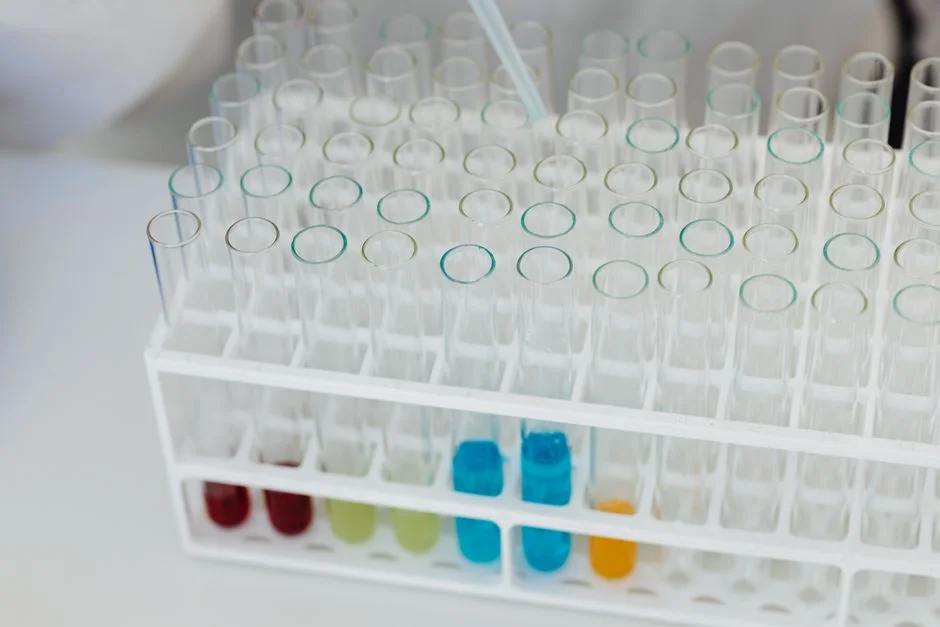
HydropureWater’s 2026 Jordan guide places cooling-tower blowdown at approximately 1,200–6,000 mg/L TDS for its discussed design conditions. This is a regional screening band, not a substitute for Zarqa sampling. The contaminant that most limits reuse must determine the process step: solids and biofilm favor filtration or UF, while dissolved hardness and silica favor nanofiltration or RO.
The regional side-stream design cited by HydropureWater treats 1–5% of circulation flow at a filtration rating of 10–25 µm. Its UF reference uses 0.01–0.1 µm pores, 10–30 psi operating pressure and feed turbidity up to approximately 300 NTU, with 90–95% recovery. These values define a preliminary verification envelope; site chemistry, recovery duty and membrane manufacturer limits still govern procurement.
For a return to the cooling loop, dissolved minerals matter more than filtration performance alone. HydropureWater’s 2026 regional reference reports RO removal of 95–99% TDS, 10–50 mg/L permeate, 150–400 psi operating pressure and 50–85% system recovery. Nanofiltration is the lower-pressure alternative when hardness rather than complete TDS removal is binding: the cited range is 75–150 psi, 70–85% recovery and permeate at 30–50% of feed TDS.
| Contaminant or constraint | Primary process response | Reference parameters and decision limit |
|---|---|---|
| Suspended solids, corrosion products and biofilm fragments | Side-stream filtration or DAF, followed by UF where required. | Regional side stream: 1–5% of circulation flow at 10–25 µm. |
| Turbidity and particulate load before RO | UF protection with automatic backwash. | 0.01–0.1 µm pores, 10–30 psi, up to about 300 NTU feed and 90–95% recovery in HydropureWater’s 2026 regional reference. |
| Dissolved minerals, hardness and silica | RO where comprehensive demineralization is required. | 95–99% TDS removal, 10–50 mg/L permeate, 150–400 psi and 50–85% recovery. |
| Hardness as the main constraint | Consider nanofiltration before committing to RO. | 75–150 psi, 70–85% recovery and permeate at 30–50% of feed TDS. |
| Microbiological growth in recycled loops | Disinfection plus corrosion and residual control. | Chlorine dioxide or UV; neither replaces a validated Legionella-control program. |
Non-critical uses such as washing or toilet flushing may tolerate a lower-grade product than cooling-loop makeup. Return to the cooling loop requires a stricter balance among conductivity, corrosion tendency, scaling ions, residual disinfectant and biological activity. This is why reuse destinations must be fixed before the membranes are selected.
Choose a treatment train that fits Zarqa’s discharge route?
The discharge route determines whether the project should stop at RO, add partial ZLD or proceed to full ZLD. A conventional train collects blowdown, equalizes it, applies side-stream filtration or DAF where characterization shows it is needed, uses UF to protect RO, applies RO, disinfects the permeate, and manages concentrate through storage, blending, evaporation or off-site handling. Each arrow should have an owner and a verified destination.
For non-critical reuse, Genesis Water Technologies reports that modular physical treatment followed by targeted contaminant removal can reduce makeup demand by 15–25%. For return to the cooling loop, HydropureWater’s broader 2026 recycled-water reference lists TDS below 500 mg/L, COD below 30 mg/L and conductivity below 1,000 µS/cm. These are preliminary targets subject to the final cooling-water chemistry, heat-transfer equipment limits and site-specific controls.
Partial ZLD adds thermal treatment to the RO concentrate. HydropureWater’s 2026 Jordan reference reports 85–95% overall recovery and 80–90% liquid-waste reduction for partial ZLD, compared with 95–99% overall recovery for full ZLD. Full ZLD adds crystallization and solid-cake handling, so it should be selected only when liquid disposal is categorically excluded or the residual risk justifies the additional scope.
| Site constraint | Defensible treatment direction | Before equipment selection, obtain |
|---|---|---|
| Permitted discharge can accept controlled RO concentrate | UF–RO reuse train with monitored concentrate disposal. | Current permit, sewer limits, sampling frequency and receiving-system confirmation. |
| Concentrate chemistry or volume is not acceptable | Evaluate partial ZLD and a lawful residual-brine route. | Mass balance, evaporation or off-site route, land availability and residual-disposal approval. |
| Liquid discharge is prohibited | Evaluate full ZLD with crystallizer and solid-waste handling. | Written regulatory position, waste-classification route and solids-disposal capacity. |
| Suspended solids, oil, colloids or FOG are elevated | Confirm DAF as pretreatment before UF or RO. | Representative wastewater characterization and oil-bearing stream inventory. |
| Only non-critical reuse is needed | Size modular physical treatment to the lower-grade reuse specification. | End-use demand, seasonal flow profile and required water-quality schedule. |
DAF should be included only where wastewater characterization supports it. A dissolved-air flotation pretreatment option can remove oil, organics, colloids and suspended material that would otherwise burden the membranes, but the equipment decision follows analysis rather than precedes it.
Do not carry Amman’s reported screening threshold of approximately $8 per thousand gallons into a Zarqa business case as a universal rule. It is a comparative assumption from HydropureWater’s 2026 regional guide and must be replaced with Zarqa’s current sewer and discharge charges.
Control biological risk and protect the cooling system
Low mineral content alone does not establish safe reuse. Conductivity, corrosion tendency, residual disinfectant and biological activity must be controlled together, because the recovered loop can otherwise accumulate biofilm and support Legionella.
HydropureWater’s 2026 Jordan guide identifies chlorine dioxide and UV as principal disinfection approaches for the reuse loop. It favors chlorine dioxide where a residual is needed at the higher pH common in recycled cooling systems. A UV disinfection stage for the reuse loop can be evaluated as part of the disinfection train, but the final choice must reflect the required residual, demand, chemistry and validation program.
Include automatic dosing, residual monitoring and control interlocks in the mechanical and controls scope. Neither UV nor chlorine dioxide eliminates the need for a validated Legionella-control program. The operating plan should also define sampling frequency, action limits, response to excursions and responsibility for cooling-loop hygiene.
Solids removed by DAF, filters or UF become a managed waste stream rather than disappearing from the balance. Their volume, water content and contaminant composition should enter the dewatering and disposal plan. For example, a plate-frame filter press for pretreatment sludge dewatering can be evaluated during design, with the final choice based on sludge characteristics and the approved disposal route.
Compare capital cost, operating cost and recovery
Cost comparisons are only meaningful when capacity, treatment scope, recovery duty and discharge assumptions remain attached. HydropureWater’s 2026 Jordan reference gives an installed cost of $250,000–$500,000 and an operating cost of $1.50–$3.00 per thousand gallons treated for a 50,000 GPD RO skid. That figure belongs to the stated capacity and scope; it is not a Zarqa quotation.
The same source reports $1–3 million capital cost for a 10,000–30,000 GPD MVC unit, 95–98% recovery of RO concentrate, distillate below 10 mg/L TDS and 15–25 kWh per 1,000 US gallons. For full ZLD, HydropureWater reports $3–8 million capital cost, $5–15 per thousand gallons operating cost and 95–99% overall recovery. These values support option screening, not a bankable estimate.
| Option | Published reference | Key commercial uncertainty for Zarqa |
|---|---|---|
| 50,000 GPD RO skid | $250,000–$500,000 installed; $1.50–$3.00 per thousand gallons treated. HydropureWater, 2026. | Actual blowdown flow, pretreatment complexity, power cost, membrane replacement and brine route. |
| MVC unit | $1–3 million capital cost for 10,000–30,000 GPD; 95–98% concentrate recovery; distillate below 10 mg/L TDS; 15–25 kWh per 1,000 US gallons. HydropureWater, 2026. | Concentrate feed, thermal duty, available waste heat, footprint and residual-brine disposal. |
| Full ZLD | $3–8 million capital cost; $5–15 per thousand gallons operating cost; 95–99% overall recovery. HydropureWater, 2026. | Regulatory need, electricity price, crystallizer operation, salt classification and solid disposal. |
Build the ROI from avoided potable-water purchases, avoided discharge charges, lower blowdown volume, chemical savings and changes in labor and maintenance. Genesis Water Technologies notes that total-cost accounting can materially improve a simple payback case. Do not transfer the regional examples in the source directly into Zarqa finance.
No valid Zarqa ROI can be calculated until actual flows, freshwater cost, discharge fees, permit route, electricity cost and chemical consumption are provided. The cooling-tower blowdown recycling specifications provide useful technical framing, but their location-specific cost examples require local replacement.
Specify, test and commission the treatment plant
Procurement should begin with a 30-day representative sampling plan covering blowdown flow, TDS or conductivity, pH, suspended solids, hardness, silica, chloride, COD, and oil and grease where applicable. Sampling should include normal operation and any foreseeable dump events. The result should establish both the average design flow and the transient treatment requirement.
Document the cooling design, operating cycles of concentration, chemical program, blowdown controls, peak makeup demand, available footprint, electrical and drain utilities, and permitted discharge route. The equipment specification should define automatic backwash for UF, PLC-controlled operation, online conductivity and flow instrumentation, chemical-dosing interlocks, membrane-cleaning provisions and concentrate monitoring.
Use the regional UF feed condition of up to approximately 300 NTU as a verification point, not an unconditional guarantee. Final equipment selection should follow Zarqa influent testing and the membrane supplier’s operating envelope. An automatic dosing system for biocide and antiscalant control should be specified with fail-safe behavior and independently verified flow measurement.
Similarly, an RO and UF membrane replacement plan should identify compatible elements, expected cleaning frequency, spare inventory and lifecycle cost. Acceptance testing must depend on contracted permeate-water targets, recovery rate, energy consumption, automatic-control function and safe handling of the final concentrate. Include an operator training and performance-test plan rather than relying only on a factory acceptance test.
Frequently Asked Questions
What site data are required to size wastewater and cooling blowdown treatment for a Zarqa data center?
Request a representative seasonal dataset for makeup and blowdown flow, TDS or conductivity, pH, suspended solids, hardness, silica, chloride, COD, chemical additions and every discharge destination. Also provide the cooling configuration, operating cycles of concentration, peak makeup demand, footprint and available utilities. These inputs establish flow variability, contaminant loading and the disposal constraint before equipment capacity is quoted.
When should a Zarqa site choose RO instead of partial ZLD?
Choose RO when the permitted route can accept the resulting concentrate and the recovered water satisfies the intended reuse specification. Move to partial ZLD when brine chemistry or volume presents an unacceptable discharge risk and a residual-brine route can be legally and technically provided. The decision should be recorded against written permit limits rather than a generic regional threshold.
How should the budget for blowdown treatment be estimated?
Obtain an itemized quotation tied to measured blowdown flow, required recovery, pretreatment, disinfection, controls, concentrate management and site-specific civil works. Request separate capital and operating costs for power, chemicals, membrane replacement, sludge handling and residue disposal. The published regional figures are screening references, not a substitute for a Zarqa supplier offer.
What should procurement verify when selecting a treatment-system supplier?
Check that the supplier has sized the system from Zarqa influent data rather than catalogue flow rates alone. Require guarantees for permeate quality, recovery, energy consumption, automatic controls, availability and final-concentrate handling. Also verify the applicable Jordan discharge route, residual-waste route, commissioning tests, operator training, spare parts and local service capability before award.