Muscat's Three Hard Constraints That Dictate Every Equipment Choice
Ambient temperatures in Muscat frequently exceed 45°C, which derates MBR flux from a standard 25 LMH (at 20°C) to 18–21 LMH, necessitating a 15–25% increase in membrane area compared to generic datasheets [S2]. This thermal challenge is one of three primary constraints that govern effective wastewater treatment plant (ETP) design in Oman. Firstly, the high ambient temperatures of 35–45°C during summer accelerate metabolic rates in biological treatment, demanding precise aeration control to prevent dissolved oxygen (DO) depletion and increased evaporative losses from open tanks [S1]. uninsulated biological tanks operating above 42°C can lead to nitrification loss and sludge bulking, a common failure mode in Gulf plants [S2]. Secondly, any industrial facility within the 5-km coastal discharge band of the Gulf of Oman must meet stringent effluent limits, including BOD <20 mg/L, COD <150 mg/L, TSS <30 mg/L, and Oil & Grease <5 mg/L [S1, S2]. These limits, enforced by the 2023 MOAF Ministerial Decision which remains binding in 2026, are tighter than many inland discharge standards and require advanced secondary biological treatment with tertiary polishing [S1, S2]. The shallow saline water table, often 1–2 meters below grade in areas like Al Seeb, Muttrah, and the Batinah coastal strip, mandates vacuum sewer collection or above-grade pump stations instead of conventional gravity networks to prevent buried infrastructure from floating during wadi floods [S2]. Critical electrical equipment must also be sited 1.5 meters above the 100-year wadi flood level, as demonstrated by the AECOM Al Seeb project in 2024 [S2]. Thirdly, Oman's severe water scarcity, reflected in one of the highest water stress indices globally, makes water reuse a regulatory expectation and an economic imperative under Vision 2040 [S1]. Industrial facilities achieving over 60% water recovery, typically by polishing MBR permeate to a TDS below 500 mg/L for cooling tower make-up, can convert discharge fees into a financial return through reduced MOAF charges [S2]. This incentive drives the adoption of advanced treatment trains like MBR followed by reverse osmosis (RO) systems, aiming for overall recovery rates of 60–85% [S1, S2].Decision Tree: Match Your Factory Type and Flow to the Right 2026 System Configuration
Selecting the optimal industrial wastewater treatment system in Muscat for 2026 depends primarily on your factory's specific influent characteristics and daily flow rate, as dictated by the 2023 MOAF Ministerial Decision [S2]. For new builds or expansions, a tailored approach ensures compliance and operational efficiency.For industrial facilities with daily flows exceeding 50 m³/day and characterized by high FOG (fats, oils, grease) or significant seasonal shock loads—common in food processing, dairy, dates, juice, refinery, and textile operations—the default treatment train begins with a DAF equalization stage [S2]. These DAF systems, sized 4–300 m³/h, typically operate with an air-to-solids (A/S) ratio in the 0.005–0.015 range and a polymer dose of 2–5 mg/L to effectively manage high FOG loadings, providing a 20–30 minute hydraulic retention time in the DAF zone and an 8-hour equalization buffer [S2].
This pre-treated effluent then feeds into an MBR bioreactor, designed for flows from 10–2,000 m³/day, where the membrane flux is specifically derated to 18–21 LMH for 45°C operation, requiring 15–25% extra membrane area [S2]. Post-biological treatment, a ClO₂ generator provides disinfection at a 0.5–1.0 mg/L residual, followed by a plate & frame filter press to achieve 22–28% dry solids in the sludge cake for economical disposal [S2]. For more detailed DAF sizing, cost models, and vendor comparison, consult resources on best DAF units for industrial wastewater.
For smaller operations below 50 m³/day or those with batch processes, such as certain dairies or tanneries, a DAF equalization stage followed by a Sequential Batch Reactor (SBR) system is often preferred [S2]. SBRs offer a lower CAPEX and can be suitable where a larger footprint is acceptable, maintaining the same disinfection and dewatering requirements as larger systems [S2].
Metal finishing and electroplating facilities, characterized by heavy metals (5–50 mg/L), cyanide (CN⁻), and hexavalent chromium (Cr⁶⁺) [S2], typically require specialized pre-treatment to address these specific contaminants before DAF and MBR stages. For these industries, an RO polish after MBR is often necessary for zero liquid discharge (ZLD) mandates [S1]. Logistics hubs, vehicle maintenance facilities, and machine shops dealing with high oil content (100–1,000 mg/L) benefit from an API/CPI gravity separator followed by a two-stage DAF system with polyelectrolyte dosing to achieve an oil content below 5 mg/L, meeting marine discharge standards [S1]. A cost comparison for oily wastewater systems can provide further insight.
When a water-reuse mandate exists, specifically for cooling tower make-up requiring TDS <500 mg/L, TSS <5 mg/L, and free chlorine 0.5–1.0 mg/L, an RO polishing stage after MBR is essential [S2]. This configuration enables overall water recovery rates of 60–85% [S2]. Small factories with flows below 10 m³/day can often utilize a packaged physico-chemical unit, including a FOG trap and sand filter, which is generally accepted by MOAF under the 2023 Ministerial Decision [S2].
| Industry Type & Flow Rate | Key Influent Characteristics | Recommended System Configuration | Key Design Considerations |
|---|---|---|---|
| Food Processing, Dairy, Dates, Juice, Refinery, Textile (>50 m³/day) | High FOG, seasonal shock loads, pH 4–11, color (ADMI 1,000–4,000) [S2] | DAF EQ → MBR → ClO₂ Disinfection → Filter Press | MBR flux derated to 18–21 LMH; 8-hr EQ buffer; polymer 2–5 mg/L [S2] |
| Batch Dairy, Tannery, Intermittent (<50 m³/day) | Intermittent flow, pH swings, organic loads [S2] | DAF EQ → SBR → ClO₂ Disinfection → Filter Press | Lower CAPEX; larger footprint acceptable [S2] |
| Metal Finishing, Electroplating | Heavy metals (5–50 mg/L), CN⁻, Cr⁶⁺, surfactants [S2] | Specialized Pre-treatment → DAF → MBR → RO Polish (for ZLD) | Heavy metal removal pre-DAF; RO for ZLD/reuse [S1, S2] |
| Logistics Hub, Vehicle Maintenance, Machine Shop | Oil 100–1,000 mg/L [S1] | API/CPI Gravity Separator → Two-stage DAF with Polyelectrolyte | Achieve <5 mg/L oil for marine discharge [S1] |
| Any Industry with Water Reuse Mandate (>60% recovery) | TDS <500 mg/L, TSS <5 mg/L, Free Cl 0.5–1.0 mg/L required for reuse [S2] | MBR → UF → RO Polish | 60–85% overall recovery; unlocks Vision 2040 incentives [S1, S2] |
| Small Factory (<10 m³/day) | Small flows, FOG, general industrial waste [S2] | Packaged Physico-chemical Unit + FOG Trap + Sand Filter | Accepted by MOAF under 2023 Ministerial Decision [S2] |
Muscat-Derated Specification Comparison Matrix
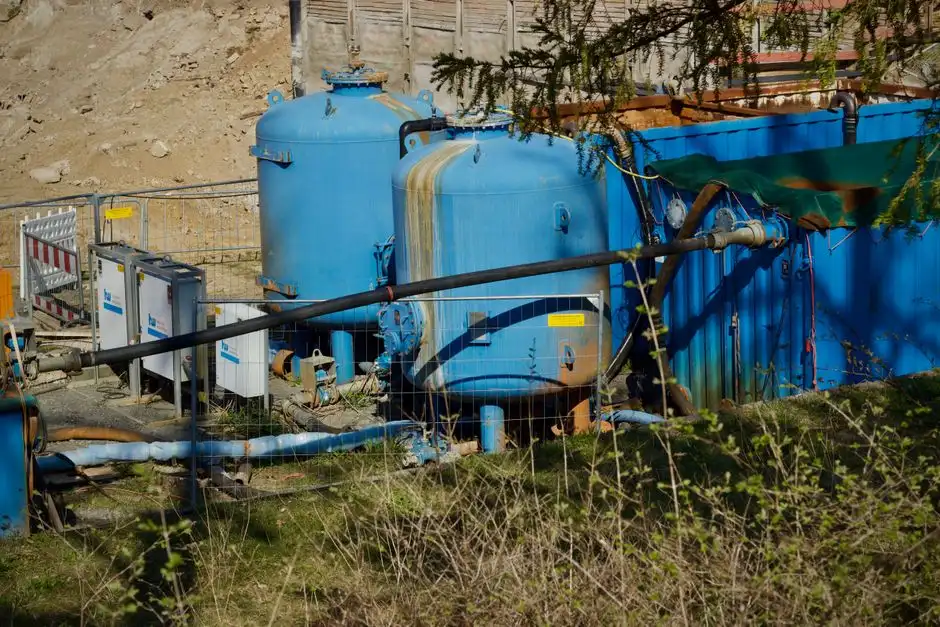
For primary treatment, GX series rotary mechanical bar screens with a 3–6 mm aperture are standard, with a 5 mm default aperture common for protecting 80 mm solids-handling pumps from rags, grit, and wadi-debris loads prevalent in Muscat's wadi-fed infrastructure [S2]. Dissolved Air Flotation (DAF) units, essential for FOG and TSS removal, are available in 13 standard models ranging from 4–300 m³/h, featuring micro-bubble technology and auto-skimming. Materials specified for these units are SS316L or HDPE to resist marine corrosion [S1, HydropureWater product catalog]. For an in-depth understanding of the DAF mechanism and efficiency, refer to how a DAF machine works.
The core of biological treatment for many Muscat plants is the MBR system. Our DF series MBR modules utilize submerged PVDF flat-sheet membranes with a 0.1 µm pore size, offering module areas from 80–225 m² and individual capacities of 32–135 m³/day. These systems incorporate integrated aeration scouring and demonstrate 10–20 times lower energy consumption compared to cross-flow designs [S2, HydropureWater product catalog].
Automatic chemical dosing systems are PLC-controlled, skid-mounted units for precise application of coagulants, flocculants, pH adjusters, and polymers (typically 2–5 mg/L for DAF), factory pre-wired for rapid installation [S2, HydropureWater product catalog]. For disinfection, ClO₂ generators are preferred over chlorine gas due to safety regulations in Oman, with capacities from 50 g/h–20,000 g/h, available in chemical or electrolytic variants, and compliant with EPA/EU/WHO standards [S2, HydropureWater product catalog]. Sludge dewatering is achieved using plate & frame filter presses, which range from 1–500 m² filtration area, with options for manual, hydraulic, or PLC automatic operation, targeting a dry solids content of 22–28% [S2, HydropureWater product catalog].
Environmental protection and durability are paramount. Biological tanks require insulated, air-conditioned covers to mitigate high temperatures, while equalization tanks utilize HDPE-lined or FRP materials with active sulfide scrubbers to meet zero-odor-at-boundary benchmarks [S2]. Electrical panels and control systems must be IP55/IP65 rated, often with pressurization or air conditioning, and motors specified as TEFC (Totally Enclosed Fan Cooled) rated for 45°C+ ambient temperatures [S1, S2]. Automation includes SCADA with remote monitoring capabilities from India, enabling automatic DO control and comprehensive alarm management to support local Omani operators [S1].
| Equipment Category | Key Specification for Muscat (2026) | Reference Source |
|---|---|---|
| Screening | GX series rotary mechanical bar screen, 3–6 mm aperture (5 mm default), stainless rake teeth, dual overload protection | [S2], HydropureWater product catalog |
| DAF Unit | 13 standard models (4–300 m³/h), micro-bubble tech, auto skimming, SS316L/HDPE for marine corrosion | [S1], HydropureWater product catalog |
| MBR Modules | Submerged PVDF flat-sheet (0.1 µm pore), 80–225 m² modules (32–135 m³/day each), integrated aeration, 18–21 LMH flux (at 45°C) | [S2], HydropureWater product catalog |
| Chemical Dosing | PLC-controlled skid-mounted, factory pre-wired, polymer dose 2–5 mg/L | [S2], HydropureWater product catalog |
| Disinfection | ClO₂ generator (50 g/h–20,000 g/h), chemical/electrolytic, residual 0.5–1.0 mg/L, EPA/EU/WHO compliant | [S2], HydropureWater product catalog |
| Sludge Dewatering | Plate & frame filter press (1–500 m² filtration area), 22–28% dry solids target | [S2], HydropureWater product catalog |
| Enclosure & Electrical | Insulated AC-covered bio tanks, HDPE/FRP EQ tanks with sulfide scrubbers, IP65/IP55 panels, TEFC motors rated 45°C+ | [S1, S2] |
| Automation | SCADA with remote monitoring from India, auto DO control, alarm management | [S1] |
2026 Muscat CAPEX/OPEX Benchmarks and Phased-Implementation Economics
The turnkey CAPEX for a 200 m³/day DAF+MBR plant in Muscat, encompassing civil works, equipment, installation, and commissioning, varies based on influent strength and discharge class, as well as the choice between MBR and SBR [S2]. While specific benchmark ranges for turnkey CAPEX are not universally published, it is understood that these factors significantly influence the overall project cost [S2]. Operational expenditure (OPEX) for a 200 m³/day plant in Muscat typically breaks down as follows, based on HydropureWater field data from 2026: energy accounts for 35–45%, chemicals 15–20%, labor 15–20%, sludge disposal 10–15%, and membrane replacement 5–10% [S2].| OPEX Category (200 m³/day plant) | Typical Percentage Range (2026) | Reference Source |
|---|---|---|
| Energy | 35–45% | [S2] HydropureWater field data, 2026 |
| Chemicals | 15–20% | [S2] HydropureWater field data, 2026 |
| Labor | 15–20% | [S2] HydropureWater field data, 2026 |
| Sludge Disposal | 10–15% | [S2] HydropureWater field data, 2026 |
| Membrane Replacement | 5–10% | [S2] HydropureWater field data, 2026 |
- Phase 1 (Months 1–6): Immediate Compliance for FOG/TSS. Begin with a skid-mounted DAF system, screening, ClO₂ disinfection, and a filter press [S1]. This initial investment can immediately meet FOG and TSS discharge limits, allowing MOAF permit submission to commence (a process typically taking 4–8 months) [S2]. Skid-mounted systems for 10–200 KLD capacity are accepted by MOAF if built to the required limits and incorporate MOAF-recognized equipment and site civil provisions for flood and water table protection [S1, S2].
- Phase 2 (Months 7–12): BOD/COD Compliance. Introduce the biological stage, either an MBR or SBR system, to achieve full BOD/COD compliance [S2]. This phase significantly enhances treatment capabilities.
- Phase 3 (Months 13–18): Water Reuse for ROI. Add an UF and RO polish to the treatment train. This enables over 60% water recovery, producing permeate with TDS below 500 mg/L suitable for cooling tower make-up, thereby unlocking reduced MOAF discharge fees under the Oman Vision 2040 industrial water-reuse incentive [S2]. This final phase transforms a compliance cost into a financial return.
Supplier Due-Diligence Checklist for Muscat Projects