Choose the Right Domestic Sewage Treatment System for Uzbekistan
Domestic sewage treatment in Uzbekistan should begin with a site-specific design basis: domestic flow, occupancy, wastewater characteristics, discharge route, reuse target and operating conditions. For decentralized projects, an A/O package plant such as the WSZ series is a practical starting point for flows from 1–80 m³/h, while an MBR is more appropriate where compactness or tighter solids separation or reuse-grade treatment is required. Load estimation should follow ASTM E2717-18R25 with local inputs. Final treatment selection and compliance must be confirmed against current project permits and Uzbek standards.
The need for decentralized treatment is structural: the supplied HydropureWater commercial source states that rural and peri-urban mahallas often lack conventional sewerage. The UNECE 2026 Uzbekistan water-security update also connects wastewater infrastructure with industrial safety, climate adaptation and water-security priorities, although the update does not establish a technology selection for any individual site.
Start with the dominant constraint rather than with a purchase price. A buried A/O package is normally the simpler screening option where land, civil access, power and maintenance arrangements are available. An MBR deserves closer consideration where the footprint is constrained or the reuse specification requires membrane separation. Neither route proves compliance by itself; the buyer must confirm the permit, effluent basis and site data.
| Selection driver | Initial route to investigate | Decision still required |
|---|---|---|
| Land available and standard domestic discharge route | underground A/O package sewage treatment plant | Confirm hydraulic capacity, civil works and discharge permit. |
| Constrained footprint or tighter solids separation | MBR wastewater treatment system | Confirm influent characteristics, reuse target and membrane lifecycle plan. |
| Small public institution or homestead-scale load | Compact biological decentralized system | Compare local execution evidence, effluent route and whole-life operating resources. |
For procurement, treat the [domestic sewage treatment engineering guide](/blog/13549-domestic-sewage-treatment-in-astana-2026-engineering-guide.html) as a methodology reference, not as proof of applicability in Uzbekistan. Current site data, the applicable permit and the final supplier proposal remain separate approval items.
Build a Site-Specific Design Basis
ASTM E2717-18R25, reapproved in 2025, provides a four-method framework for estimating the environmental load discharged from residences: Averages, Unique Product Parameters, Adjusted Averages, and Additional/Alternative Chemicals. The standard explicitly states that its parameters reflect North American averages and would need modification when used elsewhere, according to the supplied HydropureWater commercial source.
For Uzbekistan, that source recommends the Adjusted Averages method: retain the contaminant framework while replacing unsuitable occupancy, fixture and flow assumptions with project information. Use the applicable KMK 2.04.03-97 flow value for the building type from its supplied range of 120–250 L/cap·day. The range is not a universal design allowance; identify which value applies and document the reason.
- Record connected population, occupancy schedules, connected floor area and domestic-water demand.
- Establish average, peak and minimum flow, including the wastewater fraction discharged to the treatment system.
- Compile fixture and appliance discharge data, then request chemical-use information for soaps, detergents, disinfectants and locally significant products.
- Obtain wastewater analysis for BOD, COD, TSS, fats and oil, grit and seasonal variation.
- State the discharge or reuse route before equipment capacity is fixed.
| Design input | Evidence available from the research | Site-specific confirmation required |
|---|---|---|
| Per-capita domestic flow | KMK 2.04.03-97 range of 120–250 L/cap·day, depending on building type, as reported by the HydropureWater commercial source. | Applicable building-type value and whether fixture discharge differs. |
| Load method | ASTM E2717-18R25 offers four methods and warns that North American averages require modification elsewhere (HydropureWater commercial source, 2025). | Occupancy, fixtures, local chemicals and measured wastewater flows. |
| Illustrative flow | The supplied source illustrates 500 people at approximately 150 L/cap·day as roughly 75 m³/day. | Use only as a screening calculation, not as a design input. |
| Water quality | BOD, COD and TSS must be considered during process selection. | Influent sampling and the applicable effluent limits. |
Keep the distinction between sourced facts and project values visible in the design report. A flow rate, occupancy assumption or laboratory result entered by the designer becomes a design value only after its source, date and applicability are recorded.
Compare A/O Package Plants, MBR and Decentralized Biological Systems
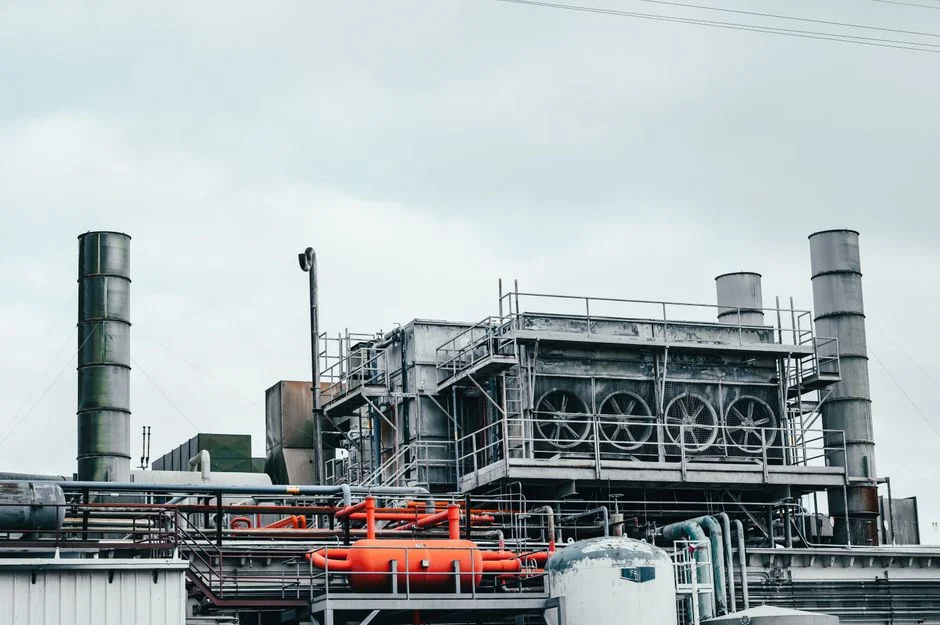
The verified WSZ catalog scope is 1–80 m³/h, with anoxic/aerobic biological contact oxidation, sedimentation and disinfection combined in one buried package unit. It is described as fully automated and requiring no operator, with installation below grade and landscaping above; optional trailer mounting supports mobile deployment, according to the HydropureWater verified product catalog.
The supplied MBR catalog scope is 10–2,000 m³/day, using submerged PVDF membrane filtration with filtration below 1 μm and a footprint stated as 60% smaller than conventional systems. These are catalog claims, not independent site-performance evidence. The quoted footprint comparison also requires a defined conventional-system basis before a buyer uses it for comparison.
An MBR introduces membrane fouling control, cleaning, aeration, operator competence and replacement planning. Continuous aeration generally adds an electricity load that must be included in the lifecycle comparison, but the research provides no Uzbek tariff or site-specific consumption data. Any energy statement should therefore request equipment kW, expected duty, control strategy and an auditable calculation from the supplier.
Smaller decentralized biological systems may also deserve consideration. The IntechOpen vermifiltration study describes the approach as decentralizable, viable and less expertise-intensive in a water-stressed context, but it does not establish performance for an Uzbek site. Soil, climate, loading, groundwater and discharge requirements must be verified separately.
| Criterion | WSZ A/O package | MBR | Other decentralized biological route |
|---|---|---|---|
| Catalog capacity | 1–80 m³/h | 10–2,000 m³/day | No common range established in the supplied research. |
| Process | Anoxic/aerobic contact oxidation, sedimentation and disinfection in one buried package. | Submerged PVDF membrane filtration; filtration stated as below 1 μm. | Vermifiltration combines filtration with earthworms; suitability is site-specific. |
| Footprint | Buried installation with landscaping above; no comparative figure supplied. | Catalog states 60% smaller than conventional systems. | No comparative figure established in the supplied research. |
| Main technical risk | Hydraulics, blower performance, sludge access and civil installation. | Fouling, cleaning, aeration, controls and membrane replacement. | Soil, climate, loading, groundwater and biological stability. |
| Best initial fit | Lower-to-moderate decentralized projects with suitable land and civil access. | Constrained sites or projects requiring tighter solids separation. | Sites where the responsible authority accepts the process basis. |
The E3S Web of Conferences brewery study supports biological treatment as an investigated lower-cost approach in Uzbekistan’s water-shortage context. Its industrial and domestic brewery findings must not be transferred directly to a residential package plant.
Match the Effluent Route to Reuse Requirements
Domestic wastewater reuse must be specified as one of four procurement scenarios: irrigation or landscaping, permitted surface-water or sewer discharge, toilet-flushing reuse, and higher-grade reuse. Each has a different performance and approval basis, so the chosen treatment route should follow the intended outlet rather than precede it.
- Irrigation or landscaping: request the required irrigation-water parameters, public-health controls and crop or landscape restrictions.
- Permitted surface-water or sewer discharge: obtain the receiving authority’s current limits and confirm the proposed treatment route against them.
- Toilet-flushing reuse: define the reuse demand, storage, distribution and any required polishing.
- Higher-grade reuse: establish the end-use specification independently; neither filtration performance nor a product description establishes regulatory approval by itself.
The supplied commercial source reports that effluent from the Karakalpakstan rehabilitation-center Johkasou pilot irrigated 12–13 hectares per year. This is a site-specific pilot observation, cited by the source to the UNDP information from 2025-06, not a universal irrigation output guarantee.
The same source states that discharge to a water body or reuse for toilet flushing would require additional polishing such as a sand filter or MBR retrofit. Use an automatic chlorine-dioxide generator or UV sterilizer for water treatment only after the disinfection objective, dose, contact conditions and downstream requirements are defined; equipment selection does not replace the permit.
| Reuse or discharge scenario | Required procurement evidence |
|---|---|
| Irrigation or landscaping | Applicable water-quality parameters, site application rate, crop or area basis, public-health approval and monitoring plan. |
| Surface-water or sewer discharge | Permit limits, receiving point, sampling requirements and demonstrated process basis. |
| Toilet-flushing reuse | Reuse-flow balance, treatment specification, storage and additional polishing where required. |
| Higher-grade reuse | End-use standard, water-quality schedule, reliability evidence and formal acceptance criteria. |
Confirm all of these requirements with the responsible local authority and public-health specialists. An MBR should be justified by the specified reuse target; filtration below 1 μm alone does not establish compliance for every outlet.
Plan Permitting, Procurement and Factory Acceptance
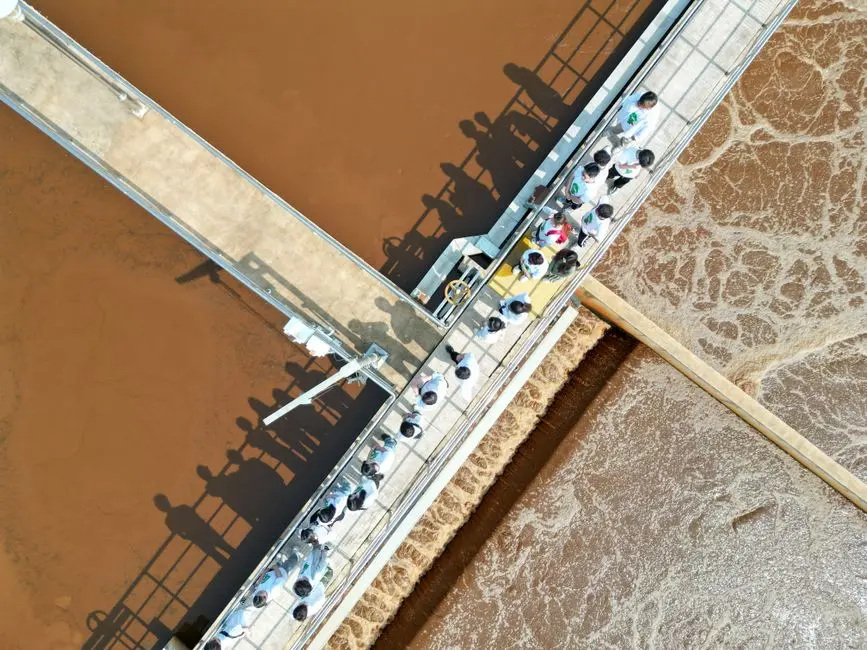
An auditable quotation separates four approval tracks: engineering design, environmental permitting, commercial supply and commissioning. The supplied HydropureWater commercial source identifies SanPiN 0056-16 and KMK 2.04.03-97 as part of the compliance matrix, while also instructing buyers to confirm current versions and site-specific permit conditions. Neither standard should be treated as a substitute for the project’s discharge authorization.
Require each bidder to state its design flow, process route, hydraulic-loading approach, expected effluent basis, automation, utilities, sludge handling, installation boundary, spare parts, warranty and excluded work. Also request local execution evidence: reference projects with comparable flow, wastewater characteristics, climate and operating staffing.
The UNDP–Japan pilot received $96,000 in funding for three public sites in Karakalpakstan—the rehabilitation center, kindergarten and specialized school—according to the supplied commercial source citing UNDP information from 2025-06. Treat that as a funding reference for a defined pilot scope, not as a unit price or universal 2026 quotation.
| Procurement package | Minimum content to request | Acceptance evidence |
|---|---|---|
| Design basis | Flow, occupancy, wastewater analysis, reuse target, site constraints and applicable standards. | Signed design memorandum and compliance matrix. |
| Technical offer | Process narrative, drawings, equipment list, utilities, automation, sludge handling and installation boundary. | Technical-compliance schedule with deviations identified. |
| Commercial offer | Prices, exclusions, civil scope, delivery, installation, commissioning, training, warranty and spares. | Auditable bill of quantities and clarification record. |
| FAT/SAT | Approved procedures, test instruments, acceptance criteria and responsible witnesses. | Signed FAT and SAT reports, training records and handover file. |
| Site risks | Groundwater, flood level, frost, soil bearing, access, sludge removal, power reliability and effluent routing. | Design responses and responsibility matrix. |
Factory acceptance should confirm fabrication, utilities, controls, alarms and process-equipment readiness against approved documents. Site acceptance should then demonstrate installation, utilities, controls, process function and agreed operating conditions before handover. Include an automatic chemical dosing system only where the approved process requires it, with its safety, containment and control requirements defined in the offer.
Commission, Operate and Protect Lifecycle Performance
Acceptance should depend on documented wet commissioning and representative influent and effluent sampling. The sampling locations, frequency, analytical methods and acceptance limits must follow the permit and buyer specification; the research does not establish a universal sampling schedule.
Turn the manufacturer’s procedures into a site maintenance plan covering sludge removal, inspections, blower or aeration operation, membrane cleaning, consumables and spare parts. Intervals must come from the selected equipment, measured operating conditions and manufacturer guidance, not unsupported generic dates.
For an MBR, register membrane condition, differential pressure, cleaning history and replacement provision from commissioning. The [seven-step membrane bioreactor maintenance protocol](/blog/774-submerged-membrane-bioreactor-maintenance-7-step-industrial-protocol.html) is a useful maintenance reference, but site procedures should state who performs each task, records the result and triggers escalation.
For WSZ, provide safe access for inspection and maintenance even though the verified product catalog states that no operator is required. That statement concerns equipment operation; it does not remove the owner’s responsibilities for routine inspections, sludge management, reporting and permit compliance. The package MBR wastewater treatment system and an A/O package should each have a named responsible operator or service provider.
Track lifecycle items as assets rather than as general operating expenses: blower or aeration equipment, controls, sludge-removal arrangements, chemical supplies, membranes, UV or disinfection assets and critical spares. Confirm power availability and backup arrangements against the approved electrical design.
Regulatory conditions can also change by sector. The [Uzbekistan reservoir tourism wastewater rules, October 2026](/blog/13555-uzbekistan-sets-reservoir-tourism-wastewater-rules-oct-2026-20261029.html) is a logical regulatory follow-up for tourism or reservoir-adjacent facilities, where discharge and reuse requirements may evolve. The responsible permit holder should verify whether the rule applies and how it affects the operating plan.
Frequently Asked Questions
How much does a domestic sewage treatment plant cost in Uzbekistan?
The supplied research does not provide a universal 2026 unit price. Request a quotation against the design flow, wastewater analysis, reuse target, civil-works boundary, site conditions, utilities, sludge handling, delivery, installation and commissioning. The $96,000 UNDP–Japan funding reported in the supplied commercial source covered a three-site pilot and is not a plant price; use it only as a reference requiring an equivalent scope breakdown.
Should a mahalla choose an A/O package plant or an MBR system?
Choose according to the dominant constraint. The verified WSZ catalog covers 1–80 m³/h and describes a buried, automated package, while the supplied MBR catalog covers 10–2,000 m³/day and targets tighter solids separation or reuse where justified. Confirm both selections against the same design flow, peak demand, footprint, reuse requirement, electricity availability and maintenance capacity.
How is a sewage treatment system sized for an Uzbek residential community?
Use ASTM E2717-18R25 to structure the environmental-load calculation, but replace its North American defaults with local occupancy, fixture, chemical-use and flow information. The supplied commercial source reports a KMK 2.04.03-97 range of 120–250 L/cap·day depending on building type. Confirm the applicable value, peak factors and wastewater fraction before selecting plant capacity.
Can treated domestic sewage be reused for irrigation in Uzbekistan?
Reuse is site- and permit-specific. The supplied Karakalpakstan pilot reported irrigation of 12–13 hectares per year, but that observation does not establish general compliance. Obtain written confirmation of the applicable water-quality parameters, public-health requirements, monitoring method and permitted use from the responsible local authority.
What should a wastewater equipment supplier include in an Uzbekistan quotation?
Require the sizing basis, process description, effluent performance basis, drawings, utilities, automation, sludge handling, installation boundary, FAT/SAT procedures, training, warranty, spares and comparable Uzbek references. Also require site-specific pricing for groundwater, flood, frost, soil, access, power and effluent-routing constraints rather than accepting those risks as undefined exclusions.