
Start with the receiving body and the intended water use
A Naucalpan data center needs two separate treatment solutions: one for sanitary wastewater and one for cooling-tower blowdown. The blowdown train should normally begin with side-stream filtration, followed by UF and, where reuse requires dissolved-solids control, RO; NF can be considered when hardness is the principal constraint. Sanitary wastewater requires biological treatment, with an MBR selected when high-quality reuse is needed. The final scope depends on the receiving body, NOM-001-SEMARNAT-2021 limits, utility tariffs, industrial-park pretreatment rules, blowdown chemistry and reuse targets. Partial ZLD should be evaluated where discharge fees or permit limits make brine disposal uneconomic.
The receiving body and end use determine the applicable discharge criteria, monitoring requirements and treatment objective. NOM-001-SEMARNAT-2021 governs industrial discharges in Mexico, but the implementation depends on whether the flow enters a municipal collector, reaches surface water, or is delivered to a reuse-permitted user. Sewer discharge, surface-water discharge, cooling-makeup reuse and irrigation reuse are not interchangeable design bases.
The permit-kickoff package should request the current NOM-001 limits for the selected receiving body, the cessionario or municipal tariff schedule, and written confirmation of industrial-park pretreatment rules. Naucalpan-specific limits, tariffs and reuse concessions must be verified with the relevant authority; Mexico City requirements should not be assumed to apply automatically to Naucalpan de Juárez. The regional comparison in the Ciudad Juárez data-center wastewater treatment guide provides a useful document list, but not a substitute for local confirmation.
| Design question | Information required before sizing | Treatment consequence |
|---|---|---|
| Municipal collector | Current NOM-001 limits, sewer tariff and pretreatment rules | Design for sewer compliance and pretreatment approval |
| Surface water | Receiving-body authorization and applicable discharge limits | Define the final polishing and monitoring scope |
| Cooling-makeup reuse | Reuse specification, cooling-system chemistry and overflow route | Specify polishing for the reuse target, not merely the sewer limit |
| Irrigation reuse | User requirements and pathogen-control requirements | Set the applicable sanitation and residual-control criteria |
Treat sanitary wastewater and cooling blowdown as separate streams
Sanitary wastewater and cooling-tower blowdown have different contaminants, treatment duties and disposal routes, so they should not be combined into one plant without a demonstrated hydraulic and water-quality basis. Sanitary wastewater is primarily a biological treatment duty. Cooling blowdown is primarily a side-stream filtration, membrane-polishing and concentrate-management duty. The two streams may share a receiving point or storage system, but their unit processes, control strategies and performance tests should remain separate.
The Mexico City guide provides a useful tiered logic: DAF alone may address discharge-only treatment where TSS exceeds 20 mg/L; softening plus side-stream RO supports partial reuse; and full pretreatment with RO plus optional ZLD supports hyperscale reuse-first operation (HydropureWater, 2026). These are decision tiers, not Naucalpan permit limits. For Naucalpan, the selected cooling system and reuse target should determine whether polishing, softening or a membrane system is warranted.
Blowdown volume cannot be inferred reliably from MW alone. Request the cooling-system vendor’s makeup flow, cycles of concentration, expected blowdown volume, chemical program and seasonal operating profile. The Ciudad Juárez reference reports that at four cycles of concentration, roughly 25–30% of makeup water is discharged, while also requiring project-specific calculations (HydropureWater, 2026).
| Decision point | Sanitary wastewater | Cooling-tower blowdown |
|---|---|---|
| Primary objective | Remove organic matter, nutrients and pathogens as required | Control solids, dissolved salts, hardness and treatment-chemical residuals |
| Discharge-only route | Packaged biological treatment with disinfection | Filtration and dechlorination or other residual control, subject to local limits |
| Reuse route | MBR followed by reuse-specific disinfection and polishing | Side-stream filtration, UF and RO; NF where hardness is the limiting constituent |
| Key unresolved data | Flow, BOD, TSS, ammonia, phosphorus and reuse target | Makeup, blowdown, cycles, chemistry, chemicals and seasonal profile |
For the polishing stage, compare an industrial RO system for cooling blowdown recovery against NF and discharge-only alternatives once the water analysis is available.
Select the sanitary wastewater train by flow and reuse target
Sanitary treatment should be selected by hydraulic load, effluent objective and reuse intent rather than by package size alone. The Mexico City guide uses approximately 80 m³/day as a practical threshold: below that flow with no reuse intent, consider a WSZ underground integrated sewage plant; where cooling-makeup, toilet-flush or irrigation reuse is required, specify an MBR (HydropureWater, 2026). This is a purchasing screen, not a Naucalpan sizing rule; actual flow and permit conditions remain controlling.
The catalog-applicable MBR range is 10–2,000 m³/day. Submerged PVDF membranes provide a physical barrier below 1 μm, supporting near-reuse-quality effluent. The MBR should therefore be considered when biological treatment must be combined with reliable solids separation and reuse preparation. A membrane bioreactor for sanitary wastewater treatment is the relevant package to compare against reuse alternatives.
The WSZ package range is 1–80 m³/h. Its fully automatic configuration combines A/O treatment, sedimentation and disinfection without a continuous on-site operator duty. That configuration can suit a lower-complexity discharge project, subject to hydraulic loading, standards, footprint and sludge handling. See the WSZ underground integrated sewage treatment package for its catalog configuration.
The MBR selection record should include sanitary flow; BOD, TSS, ammonia and phosphorus; the intended reuse specification; available footprint; sludge route; and operator availability. Without those inputs, selecting either package would substitute catalog capacity for project design.
Build the cooling-blowdown train from fouling control to reuse
A practical blowdown treatment sequence starts with equalization and analysis, followed by side-stream filtration, UF, NF or RO, residual control or polishing, reuse storage, and managed concentrate disposal. The sequence should stop where the confirmed end use allows: discharge compliance does not automatically require RO, while cooling-makeup reuse requires the permeate to meet the cooling-system specification.
Side-stream filtration removes suspended solids, biofilm fragments and corrosion products before the membranes. The cited design basis is 1–5% of total circulation flow using 10–25 μm self-cleaning spiral or multimedia filtration. UF then provides a biological and particulate barrier at 0.01–0.1 μm, 10–30 psi and 90–95% recovery (HydropureWater, 2026). Review the multi-media filtration equipment and UF pretreatment for RO and reuse as separate bid packages.
RO is the preferred option when broad dissolved-solids reduction is required. The cited performance is 95–99% dissolved-solids removal, 150–400 psi operating pressure, 50–85% blowdown recovery and 10–50 mg/L permeate TDS. NF is the alternative when hardness is the discharge limiter: its cited operating range is 75–150 psi, recovery is 70–85%, and permeate TDS is 30–50% of feed (HydropureWater, 2026).
| Stage | Function | Cited design basis |
|---|---|---|
| Equalization and analysis | Stabilize flow and characterize contaminants | Use project water analyses and vendor operating data |
| Side-stream filtration | Remove particulates and protect membranes | 1–5% of circulation flow; 10–25 μm |
| UF | Provide a biological and particulate barrier | 0.01–0.1 μm; 10–30 psi; 90–95% recovery |
| NF | Remove hardness where that is the limiting constituent | 75–150 psi; 70–85% recovery; permeate TDS 30–50% of feed |
| RO | Broad dissolved-solids removal for reuse | 150–400 psi; 50–85% recovery; permeate TDS 10–50 mg/L |
| Residual control and storage | Protect the reuse destination and managed supply | Specify from final-use and discharge requirements |
| Concentrate management | Provide a lawful residual route | Confirm authority requirements before selecting ZLD |
Genesis Water Technologies gives cooling-water design checks of 500–1,500 mg/L TDS, 200–400 mg/L hardness as CaCO₃, 10–25 mg/L suspended solids, pH 6.5–8.5 and 50–200 mg/L alkalinity as CaCO₃. These are design checks, not automatic Naucalpan permit limits. The final specification should reconcile them with source-water chemistry, the cooling vendor’s chemical program and the receiving-body requirements.
Decide whether partial ZLD is justified
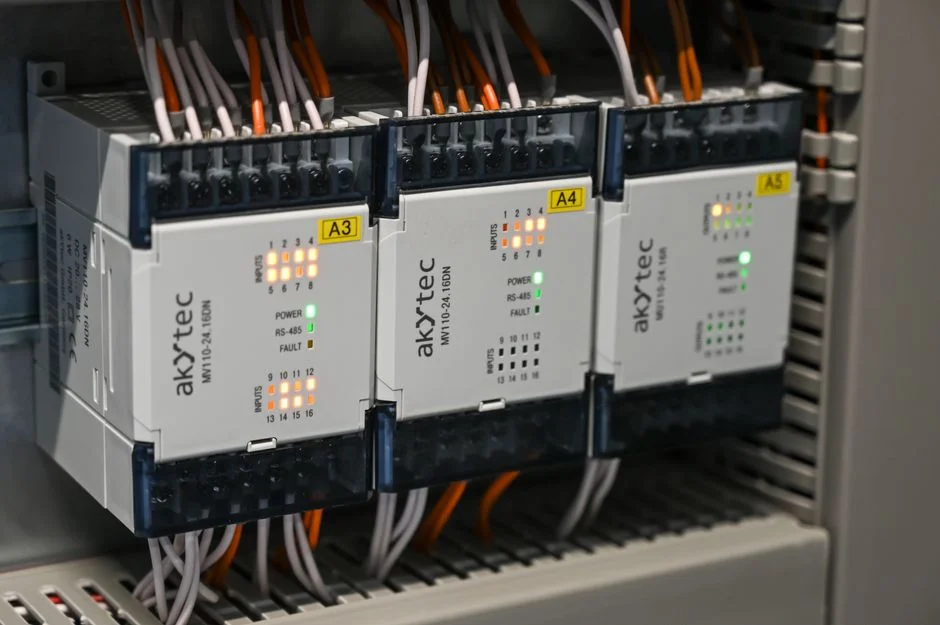
Partial ZLD concentrates the residual RO reject to reduce discharge volume while retaining a permitted brine-disposal route. Full ZLD adds evaporation and crystallization so that no liquid discharge remains. The distinction matters because partial ZLD addresses a disposal constraint, while full ZLD changes the project into a more capital- and energy-intensive salt-management facility.
The cited MVC benchmark is 95–98% concentrate recovery, distillate TDS below 10 mg/L and 15–25 kWh per 1,000 gallons (Genesis Water Technologies, as cited by HydropureWater, 2026). Full ZLD becomes relevant when local discharge is effectively prohibited, brine hauling is infeasible, or the cost of permitted disposal outweighs evaporation and crystallization. It should not be included merely because the campus is pursuing reuse.
HydropureWater’s 2026 regional reference gives a discharge-fee screening band of more than US$5–15 per thousand gallons. That is not a Naucalpan tariff. Obtain the written concessionaire or municipal tariff before comparing partial ZLD with direct discharge. Mandatory feasibility inputs include land availability, climate, concentrate chemistry, crystal handling and CONAGUA or local disposal requirements. A residual-control system, including an chlorine dioxide generator for controlled residual management, must be evaluated against the selected reuse route.
| Route | What it does | Decision evidence required |
|---|---|---|
| RO plus permitted brine discharge | Recovers permeate and concentrates contaminants | Tariff, permit limit, brine route and recovery target |
| Partial ZLD | Reduces residual discharge volume through concentration | Disposal cost versus evaporation cost and site constraints |
| Full ZLD | Evaporates and crystallizes the residual liquid | Prohibition or high disposal cost, land, power and crystal disposal |
Compare indicative costs without losing the site-specific variables
Published benchmarks provide an initial budget range, not a Naucalpan quotation. HydropureWater’s 2026 reference lists US$50,000–200,000 installed for side-stream filtration and US$250,000–500,000 installed for a 50,000 GPD blowdown RO system. The same source gives RO operating cost of US$1.50–3.00 per thousand gallons. Full ZLD with a crystallizer is listed at US$3–8 million CAPEX and US$5–15 per thousand gallons OPEX.
The OPEX comparison must be like-for-like. Each bid should separately price energy, chemicals, membrane replacement, labor and concentrate disposal. A membrane replacement schedule should distinguish normal replacement from cleaning and unscheduled failure.
Genesis Water Technologies states that treated wastewater typically costs 30–50% less than potable water in most markets. That is a broad market comparison, not a Naucalpan tariff quote or an achievable project saving. The business case must use the written Naucalpan water tariff and discharge fee.
| Published benchmark | Indicative value | Main scope limitation |
|---|---|---|
| Side-stream filtration | US$50,000–200,000 installed | Requires circulation flow, filter duty and site installation pricing |
| 50,000 GPD blowdown RO | US$250,000–500,000 installed | Does not establish the required Naucalpan capacity |
| Blowdown RO OPEX | US$1.50–3.00 per thousand gallons | Compare complete bidder cost boundaries |
| Full ZLD | US$3–8 million CAPEX; US$5–15 per thousand gallons OPEX | Final cost depends on salt load, evaporation duty and crystal handling |
The variables that control final cost are blowdown flow and chemistry, sanitary flow, reuse percentage, recovery rate, receiving-body limits, utility tariffs, footprint, electrical power and concentrate route. The 2026 data center wastewater treatment planning guide provides a broader regional reference, but the Naucalpan budget must remain conditional on site data and written local charges.
Use a staged procurement plan for the Naucalpan campus
A staged procurement sequence prevents the treatment scope from being fixed before the cooling system, receiving body and reuse objective are understood. This sequence can also be used as the basis for the data center wastewater and cooling blowdown treatment guide.
- Stage 1 — Establish the basis of design. Obtain the cooling vendor’s seasonal makeup and blowdown data, conduct source-water analysis, and confirm the receiving body, tariffs and industrial-park pretreatment rules in writing.
- Stage 2 — Tender separate scopes. Issue sanitary wastewater and cooling-blowdown packages with defined reuse targets, recovery targets, monitoring plans and performance guarantees.
- Stage 3 — Benchmark membrane alternatives. Compare UF, NF and RO bids against the cited operating ranges. Require explicit assumptions for membrane replacement, cleaning, energy and chemicals.
- Stage 4 — Price residual-management alternatives. Evaluate partial ZLD and full ZLD against the written disposal tariff and concentrate-management route rather than including either automatically.
Each bidder should provide a mass balance, guarantee points, controls philosophy, redundancy, O&M assumptions and commissioning acceptance criteria. Sanitary and blowdown bids should remain commercially separate even if final storage or conveyance interfaces are coordinated.
Frequently Asked Questions
Which permit route should a Naucalpan data center confirm before selecting treatment equipment?
Confirm whether the flow will enter a municipal collector, reach surface water or serve a reuse-permitted user. The permit-kickoff documents should include current NOM-001-SEMARNAT-2021 limits for that receiving body, the applicable municipal or concessionaire tariff, and written industrial-park pretreatment rules. Mexico City rules should not be transferred to Naucalpan without authority confirmation.
How should sanitary treatment be sized when the campus may reuse wastewater?
Use measured sanitary flow and constituent data, then select the process from the reuse objective rather than from building size. The Mexico City guide uses approximately 80 m³/day as a screening threshold for considering packaged A/O treatment without reuse; an MBR is the more appropriate candidate for cooling-makeup, toilet-flush or irrigation reuse. Final sizing also requires BOD, TSS, ammonia, phosphorus, footprint and sludge-route information.
How is cooling-blowdown RO capacity established?
Size it from the vendor-confirmed blowdown flow and the selected recovery target. The cited side-stream filtration basis is 1–5% of circulation flow, and the published 50,000 GPD RO system is a cost benchmark rather than a capacity recommendation. The project also needs TDS, hardness, silica, residual biocide and seasonal operating data.
How should buyers compare cost and select a supplier?
Request a complete cost boundary for energy, chemicals, membrane replacement, labor and concentrate disposal. Use the US$5–15 per thousand gallons disposal band only as a screening benchmark and obtain the written Naucalpan tariff before deciding on partial or full ZLD, whose cited cost is US$3–8 million CAPEX and US$5–15 per thousand gallons OPEX. Select on demonstrated guarantees, controls, redundancy, commissioning criteria and site-specific mass balance—not headline price alone.