What treatment does a Nova Iguaçu data center actually need?
A data center in Nova Iguaçu generally needs separate treatment concepts for sanitary sewage and cooling-tower blowdown, with additional assessment of reverse-osmosis reject, softening reject and drain-down water. Cooling towers reject heat by evaporating water, leaving minerals behind; operators discharge the minimum blowdown needed to control dissolved-material buildup and replace it with fresh make-up water. The required route depends on cooling design, make-up-water quality, sewer capacity, land and the applicable Brazilian approvals. Site-specific equipment sizing requires average and peak flows, temperature, pH, conductivity, treatment chemicals and make-up-water data. Nova Iguaçu-specific permits, tariffs and discharge conditions must be confirmed with the competent authorities rather than inferred from the address.
The immediate planning error is combining every wastewater duty in one generic package. Sanitary sewage has a biodegradable organic load; cooling blowdown has a different chemistry and thermal condition; membrane and softening reject can carry the highest dissolved-solids concentration. Segregation preserves treatment flexibility and prevents one stream from setting the capacity or chemical demand for all the others.
The relevant data center wastewater and cooling blowdown treatment framework provides the broader stream-separation logic, while the Guadalajara data center treatment guide shows why discharge routes must be evaluated locally rather than through a universal equipment prescription.
| Decision category | Typical source | Principal treatment decision |
|---|---|---|
| Sanitary wastewater | Restrooms, kitchens and staff facilities | Separate sanitary treatment or lawful connection to the municipal sewer |
| Cooling-tower blowdown | Evaporative cooling system | Control concentration; treat for sewer acceptance, reuse or another permitted route |
| Process reject | Softening or reverse osmosis, plus maintenance drain-down | Determine composition and disposal or reuse route before sizing treatment |
Black Forged Data Centers states the governing water-balance rule: every gallon of make-up water not evaporated becomes wastewater, and it is more mineralized than the utility-supplied water. Blowdown volume must therefore come from the mechanical engineer because it depends on cooling design, climate and make-up-water quality. For a Nova Iguaçu project, identify the municipal sewer or treatment utility, state environmental authority, responsible water provider and any basin or watershed body before fixing the discharge concept.
Build the data center water balance before selecting equipment
Blowdown cannot be sized reliably from a generic rule because its volume changes with the cooling design, climate and quality of the cooling make-up water. The mechanical engineer should issue a design water balance, supplemented by operating meters where available. This 2026 data center wastewater treatment guide provides a useful cross-market structure, but Nova Iguaçu project data must govern the final calculation.
Document these flows separately: evaporation, drift, blowdown, sanitary demand, softening reject, reverse-osmosis reject, cooling-system drain-down and peak-event discharge. Also record freshwater demand, proposed reclaimed-water demand, storage volume and backup operating mode. Black Forged Data Centers notes that actual blowdown sampling can determine whether the stream can go to a treatment plant without added treatment; that logic requires a representative sample rather than a water-quality assumption.
Peak events belong in the design basis. Santa Clara, California, commissioned a consultant to study extreme cooling-discharge events during heat waves, when multiple facilities could discharge simultaneously and potentially lead to restrictions on disposal methods. The lesson for Nova Iguaçu is not to import a U.S. restriction, but to test coincident facility demand, downstream conveyance and treatment capacity.
| Water-balance input | Evidence required | Why it affects equipment selection |
|---|---|---|
| Cooling-system flows | Evaporation, drift, average blowdown, peak blowdown and drain-down | Defines hydraulic and equalization duties |
| Water chemistry | Dissolved solids, temperature, pH and residual biocides, scale and corrosion inhibitors | Defines segregation, chemical control and treatment objectives |
| Domestic demand | Average, peak and event flows | Sets sanitary treatment and conveyance duties |
| Process reject | Flow and composition by source | Determines whether segregation is necessary |
| Reuse boundary | Freshwater demand and required cooling-water quality | Links treatment output to cooling cycles of concentration |
For every reuse option, quantify the operational margin required to protect the cooling system. The 2026 study Reclaiming Cooling: Wastewater Reuse as a Strategic Resource for Data Center Water Management found that an ultrafiltration-plus-reverse-osmosis scenario increased cycles of concentration, reducing blowdown and chemical consumption. That trade-off must be demonstrated with Nova Iguaçu source-water chemistry and the selected cooling design.
Choose between sewer discharge, reuse and off-site treatment
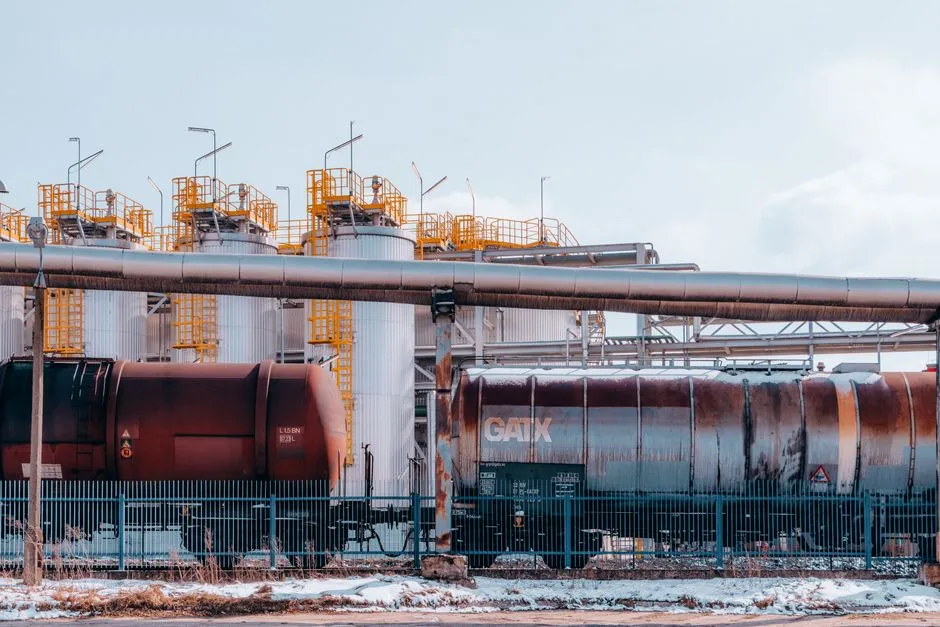
The preferred discharge route is the one supported by both conveyance capacity and enforceable acceptance criteria; treatment capacity at the receiving plant is only one part of that decision. Black Forged Data Centers notes that a plant may have hydraulic headroom while the gravity sewer is full or a lift station is undersized. A Nova Iguaçu site must therefore evaluate the entire path from the discharge point to the receiving facility.
| Route | What must be verified | Main risk | Contractual evidence needed |
|---|---|---|---|
| Municipal sewer | Treatment-plant capacity, gravity sewer and lift station, industrial-user or pretreatment status, local limits, monitoring, reporting and required network contributions | Interference, pass-through, capacity failure or refusal of service | Written acceptance, sewer-use contract, discharge limits and capacity reservation |
| Off-site treatment or disposal | Permitted destination, chain of custody, truck routing, emergency storage and operating cost | Disposal-site interruption or incomplete responsibility for the waste | Manifest system, destination approval and contingency plan |
| Partial or high reuse | Total site demand, blowdown reduction, treatment energy, chemicals, footprint, maintainability and permit conditions | Higher energy demand or insufficient cooling-water quality | Guaranteed reuse quality, energy consumption and cooling performance |
| Surface-water or other outfall | Receiving-water capacity, seasonal constraints and environmental authorization | Environmental authorization or receiving-capacity failure | Valid authorization with discharge conditions and monitoring |
Commercial commitments can materially affect project structure. Under a Goodyear, Arizona development agreement approved in March 2023, Microsoft agreed to pay $36 million toward a roughly $90 million plant expansion and secure 1.2 million gallons per day of capacity, post more than $5 million for a dedicated line, and air-cool later facilities. A Shreveport council packet estimated about 2.5 million gallons per day of wastewater and blowdown for a proposed facility. These U.S. cases are not Nova Iguaçu requirements; they demonstrate why sewer capacity and peak demand must be addressed in agreements rather than left as residual design risks.
For off-site treatment, the buyer should request a Samarinda discharge-route assessment and use the Rohini 2026 treatment guide to structure reuse and off-site comparisons. No route should be advanced to procurement until the responsible Brazilian authorities confirm the applicable legal basis.
Match each wastewater stream to its treatment train
No single product performs every required duty. Sanitary sewage usually calls for solids removal, biological treatment and disinfection, while cooling blowdown treatment depends on whether the objective is sewer acceptance, reuse, concentration control or liquid-waste minimization. Process reject requires its own compositional assessment before entering the train.
For sanitary sewage, compare a packaged anoxic-oxic treatment system with an integrated MBR wastewater treatment system. Screening and solids removal precede biological treatment; clarification or membrane separation then removes residual solids, and disinfection provides microbial control. MBR merits closer consideration where footprint or clarified effluent quality is important, but the comparison must use the same flow and effluent basis. The MBR versus conventional activated-sl sludge comparison provides the basis for that technical evaluation.
For cooling blowdown, begin by defining the receiving objective. Equalization handles variable flow; solids removal protects downstream equipment; pH control and chemical management address incompatibility with a sewer or reuse system; softening can reduce scale tendency; filtration and membranes can produce reusable water; concentrate management becomes central when liquid discharge is restricted. Use an industrial reverse osmosis system only where dissolved solids must be reduced and the feed chemistry supports the intended recovery.
| Process step | Applicability | Available equipment evidence | Design condition |
|---|---|---|---|
| DAF | Suspended solids, oil and grease or colloidal matter where present | DAF system: 4–300 m³/h across 13 standard models | Site sizing still requires flow and wastewater analysis |
| UF | Suspended solids, colloids and microorganisms ahead of RO | UF system: 2,000–40,000 L/h; 0.03-micron PVDF membranes; make-up turbidity up to 300 ppm | Verify feed chemistry and cleaning requirements |
| RO | Dissolved-solids reduction for reuse or concentrate management | Industrial RO system: recovery up to 95% | Recovery remains subject to feed chemistry and system design |
| Disinfection | Microbial control after the required treatment stages | Process-specific selection | Establish the target organism, dose and residual requirement |
Chemical compatibility testing should precede disinfection or neutralization claims. Residual biocides, scale inhibitors and corrosion inhibitors may affect biological treatment, membrane performance or downstream reuse. Equipment selection should follow representative analysis rather than substitute a generic specification for contaminant identification.
Confirm local permits, sewer capacity and operating obligations

A Nova Iguaçu connection requires written confirmation from the municipal sewer or treatment utility that the proposed flow and composition are acceptable. Treatment-plant capacity alone does not establish feasibility because gravity sewers, lift stations and the receiving point can impose independent constraints.
The project team should identify the municipal sewer or treatment utility, the state environmental authority, the responsible water provider and any applicable basin or watershed body. For each proposed route, request written answers on environmental licensing, outfall authorization, sewer-use agreements, pretreatment or industrial-user status, construction approval, monitoring and reporting. The exact list must come from the competent authorities; international planning material cannot substitute for a local determination.
Black Forged Data Centers describes a U.S. significant-industrial-user framework: an industrial user may fall within that category when it discharges an average of at least 25,000 gallons per day of process wastewater, contributes at least 5% of the plant’s average dry-weather hydraulic or organic capacity, or is designated because it could harm the plant or cause violations. Sanitary, noncontact cooling and boiler blowdown flows are excluded from the 25,000-gallon count, while the capacity and harm tests can still apply. These thresholds are international context only; Brazil and Nova Iguaçu use their own legal framework.
Before equipment procurement, turn the authority’s response into enforceable terms. Include utility sign-off, treatment performance guarantees, bypass response, sampling, chemical-use controls, operator training, maintenance obligations and any expansion contribution. The Columbus sewer-limits guide illustrates why treatment performance and discharge compliance should be aligned in the commercial scope.
Plan equipment sizing, validation and lifecycle trade-offs
Equipment should be sized around verified peak and event flows, required equalization, downtime, redundancy and planned cooling expansion, not average make-up demand alone. The design basis should include seasonal source-water variation, conductivity or dissolved solids, hardness, temperature, pH, treatment chemicals and anticipated excursions.
Use representative wastewater characterization as the sizing basis. The mechanical engineer’s water balance establishes hydraulic duty; the analytical dataset establishes treatment objectives. A pilot may be warranted where the available data cannot represent variability or membrane compatibility, but the pilot protocol should define what will be confirmed rather than treating it as a substitute for site data.
| Evaluation item | Supplier information required | Buyer check |
|---|---|---|
| Hydraulic basis | Design flow, peak flow, equalization and redundancy | Trace every value to the approved water balance |
| Treatment performance | Guaranteed effluent or reuse targets and bypass provisions | Define test methods, sampling points and acceptance period |
| Lifecycle inputs | Energy, chemical consumption, media and membrane life | Compare the same duty and boundary |
| Operations | Maintainability, spare parts, training and remote support | Confirm local service capability and operator competence |
| Expansion | Future-flow provisions and upgrade interfaces | Match expansion assumptions to the campus cooling plan |
| Commercial | Equipment, installation, utilities, consumables, maintenance and disposal costs | Request site-specific pricing; no package cost is defensible before inputs are known |
The 2026 reuse study used a full life-cycle comparison rather than comparing treatment equipment alone. Its wastewater scenario had about twice the global warming potential of the freshwater case, and treatment energy accounted for roughly 80% of the difference. In the UF-plus-RO scenario, wastewater energy use grew to over five times the freshwater case, but improved cycles of concentration reduced blowdown and chemical consumption. The lesson is to evaluate the reuse train against freshwater supply and cooling performance, not to label reuse as environmentally preferable by itself.
For chemical handling and valves, request consumption data and compatibility information rather than a generic package. A chemical dosing system and treatment valves and filter media should be evaluated against the selected chemistry, storage, containment and maintenance strategy.
Frequently Asked Questions
What discharge route is most likely for a data center in Nova Iguaçu?
A municipal sewer connection may be the simplest route if the utility confirms treatment-plant capacity, conveyance capacity and acceptance conditions for the proposed wastewater. That conclusion is site-specific: request written confirmation from the sewer or treatment utility, the state environmental authority and the responsible water provider. If sewer capacity or acceptance is unavailable, compare off-site treatment, partial reuse and any separately authorized outfall.
How much does a complete data center wastewater treatment package cost?
A defensible price cannot be stated without the water balance, wastewater analysis, selected discharge route, treatment targets, footprint, utilities and required civil work. Ask bidders for a common commercial boundary covering equipment, installation, equalization, controls, chemical systems, residuals, commissioning, training, energy use, consumables and maintenance. Also request separate priced alternatives for sewer discharge, off-site treatment and reuse. Without those inputs and quotations, any package total would be speculative.
What flow and water-quality data must be submitted before selecting a treatment system?
Submit the mechanical engineer’s water balance, including average and peak blowdown, evaporation, drift, sanitary demand, process reject, drain-down and future expansion. Provide representative samples and seasonal source-water data covering conductivity or dissolved solids, hardness, temperature, pH, residual biocides, scale and corrosion inhibitors, and any other treatment chemicals. For reuse, also define the required cooling-water quality and maximum acceptable reduction in operational cycles of concentration.
Should cooling blowdown be treated separately from sanitary sewage?
Evaluate it separately before deciding whether the physical treatment trains can be combined. Sanitary sewage requires organic and solids removal; blowdown requires concentration and chemical control; reverse-osmosis or softening reject may have a substantially different dissolved-solids concentration. Segregation can preserve route flexibility and prevent the largest-volume stream from determining every unit’s capacity. A combined installation is defensible only after the water balance and compatibility testing demonstrate equivalent hydraulic and treatment performance.
What is the main compliance risk when connecting cooling blowdown to a municipal sewer?
The main risk is discharging water that the sewer authority considers incompatible with its treatment process or collection system, even when the plant has spare hydraulic capacity. Request written acceptance criteria covering dissolved solids, temperature, pH and treatment chemicals, together with pretreatment obligations, monitoring, reporting and any capacity contribution. Also verify the gravity sewer and lift station between the site and receiving plant; treatment capacity at the plant does not eliminate a conveyance bottleneck.