Why Guadalajara Is a Special Case for Data-Center Water
Guadalajara sits inside CONAGUA's Region Hidrológica 12 (RH-12, the Santiago River basin), one of Mexico's officially listed priority stressed basins. Lake Chapala — Mexico's largest natural lake and the surface-water source feeding much of the Guadalajara Metropolitan Zone through the Calderón and Chapala-Guadalajara systems — has been losing stored volume for over two decades, and the underlying Atemajac aquifer is in confirmed overdraft (CONAGUA, 2024). SIAPA municipal supply drawn from these sources typically runs 400–900 mg/L TDS, with calcium hardness excursions of 200–350 mg/L as CaCO3 during the March–May dry-season drawdown. For a cooling-tower operator, that means 4 cycles of concentration (CoC) lands circulating water around 1,600–3,600 mg/L TDS, and 6 CoC pushes it past 2,400–5,400 mg/L — both well above the calcium-carbonate and silica scaling thresholds that drive membrane-fouling risk. Annual precipitation at the site is roughly 900–1,000 mm, with 75–80% concentrated between June and September (SMN, 2025); a facility that does not store or recycle faces a 6-month dry season where SIAPA block tariffs step up sharply for industrial users. CFE electricity at Tarifa OM and HS lands between roughly MXN 1.40 and MXN 2.20 per kWh (≈USD 0.08–0.12) for industrial customers, which means energy is the second-largest OPEX line after chemicals on any high-recovery train.
The Regulatory Floor: NOM-001-SEMARNAT-2021 and CONAGUA Discharge
NOM-001-SEMARNAT-2021 is the binding standard for industrial wastewater discharges to Mexican water bodies, and it sets monthly average limits that any Guadalajara data-center CTBD stream must clear. The 2021 update tightened the salinity, sulfate, and metal columns relative to the 1996 version, and the body-of-water classification (Río, Embalse, Suelo, Humedal, Marina, Estuario) determines which column applies. A campus discharging to the Santiago River or its tributaries is in the "Río" freshwater-body column, where monthly average limits include 2,000 mg/L TDS, 1,000 mg/L sulfates, 1,000 mg/L chlorides, 60 mg/L total nitrogen, and trace metals (Pb 0.6 mg/L, Cd 0.2 mg/L, Hg 0.02 mg/L, Cr total 1.5 mg/L) — plus a 40 °C temperature ceiling on instantaneous discharge (NOM-001-SEMARNAT-2021, DOF 11-Mar-2022). A CTBD stream at 4–6 CoC from 500 mg/L SIAPA makeup typically lands at 2,000–3,000 mg/L TDS with sulfates already >600 mg/L, which means a direct sewer or river discharge is non-compliant without treatment. Discharge to municipal drenaje (SIAPA sewer) falls under CONAGUA's Condiciones Particulares de Descarga and may add local chloride and thermal limits on top of NOM-001. For a new campus, the SEMARNAT environmental impact submission (MIA) or preventive report (IP) now routinely requires a site-wide water-mass balance and a binding discharge-quality commitment, which is becoming a permit-risk driver in its own right.
| Parameter | Untreated CTBD (4–6 CoC, ~500 mg/L makeup) | NOM-001-SEMARNAT-2021 Río column (monthly avg.) | Compliance status |
|---|---|---|---|
| TDS | 2,000–3,000 mg/L | 2,000 mg/L | Borderline / non-compliant at upper end |
| Sulfates | 600–1,200 mg/L | 1,000 mg/L | Non-compliant above 4–5 CoC |
| Chlorides | 350–700 mg/L | 1,000 mg/L | Compliant with margin |
| Total nitrogen | 5–15 mg/L (chemical program dependent) | 60 mg/L | Compliant |
| Temperature (instantaneous) | 32–42 °C at tower basin | 40 °C | Non-compliant without cooling |
| Lead / Cadmium / Mercury | Below detection (no corrosion of dissimilar metals) | 0.6 / 0.2 / 0.02 mg/L | Compliant |
What Cooling Tower Blowdown Actually Contains in Guadalajara
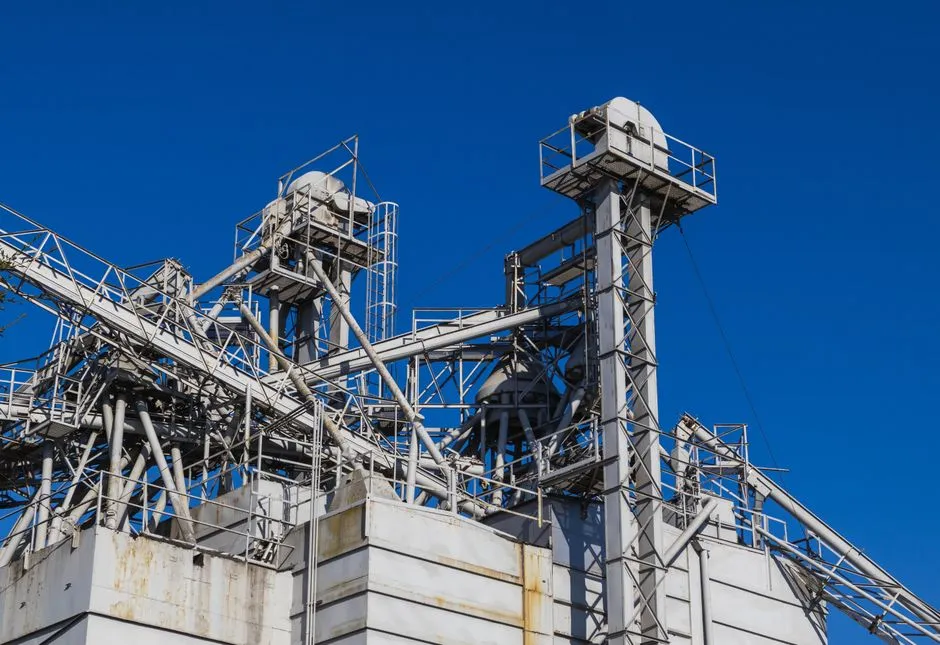
Evaporative cooling removes pure water as vapor and leaves everything else behind. Cycles of concentration (CoC) is simply the ratio of dissolved solids in the circulating loop to the makeup supply — for SIAPA at 500 mg/L TDS, a 5 CoC loop sits at roughly 2,500 mg/L TDS. Blowdown is the controlled purge that keeps the loop below its scaling ceiling, and the purge rate is calculated as 1 / (CoC − 1) of the makeup flow: at 4 CoC, blowdown = 25% of makeup; at 6 CoC, blowdown = 20% (HydropureWater field data, 2026). A 10 MW Guadalajara facility on SIAPA at 4 CoC draws on the order of 15 million gallons (≈57,000 m³) per month of makeup and generates ≈3.75 million gallons (≈14,200 m³) of recoverable blowdown — water that is already paid for, already conditioned, and already dosed. The scale-formers that will foul a downstream RO are silica (SiO2, typically 20–60 mg/L in CTBD), calcium carbonate (saturation index rises sharply above 4 CoC in SIAPA-style water), and calcium sulfate (whose solubility limit is hit between 5 and 6 CoC when sulfate ≥200 mg/L in makeup). The foulants are iron and manganese picked up in the tower fill, residual oxidizing biocides (chlorine, bromine), and phosphonates and polymers from the scale-inhibitor program — these either pass through and accumulate in the RO concentrate or react with antiscalant and degrade membrane performance. Biological load, measured as TOC and biofilm formation rate, is the third axis: at warm basin temperatures and high organics, biofouling will set the RO clean-in-place frequency before scaling does.
Process-Train Options for CTBD Treatment and Reuse
Four process trains cover the realistic design space for a Guadalajara data center, and the right choice is set by site size, discharge feasibility, and the MIA permit envelope rather than by technology preference. A baseline train — multi-media filter (MMF) → cartridge filter → brackish-water RO at 75–80% recovery, with antiscalant dosing — is the right answer for edge sites under 5 MW that can accept sewer discharge of the residual 20–25% brine, or that will reuse RO permeate for non-critical applications such as landscape irrigation. A high-recovery train — MMF → UF (0.03 µm PVDF) → RO → brine desalter or fluidized-bed crystallizer — pushes overall recovery to 90–95% with permeate silica near 1 mg/L, which is the practical ceiling for closed-loop CTBD reuse-as-makeup (per IDE MAXH₂O case data, 2026, ≈95% recovery on a blended industrial CTBD/brine feed with ≈1 mg/L permeate silica). A zero liquid discharge (ZLD) train adds mechanical vapor recompression (MVR) or MVC evaporation plus a crystallizer downstream of the high-recovery RO, takes recovery to 95–99%, and emits only dry salt cake; it earns its keep only when there is no legal discharge path and the MIA requires zero surface or sewer release, which is rare outside hyperscale Guadalajara-area builds. A minimal liquid discharge (MLD) approach — high-recovery RO with a small residual sent to on-site storage, periodic hauling, or non-potable reuse (irrigation, toilet flush) — is the most cost-effective configuration for mid-size facilities between 5 and 30 MW. Decision rule: choose baseline if sewer discharge is permitted and SIAPA accepts the brine; choose high-recovery RO if makeup is constrained or discharge fees are punitive; choose MLD if a small residual has a legal home; choose ZLD only if no liquid can leave the fence. The pretreatment line is common to all four options: a multi-media filter ahead of either cartridge or UF, plus PLC-controlled antiscalant and biocide dosing to keep the RO membranes within their scaling envelope. Note that conventional BWRO tops out at 75–80% recovery on CTBD chemistry; pushing higher with a single RO stage forces the concentrate past the silica and CaSO4 solubility limits and into chemically unstable operation (per IDE technical brief, 2026).
| Process train | Recovery | Permeate silica (typical) | Reject volume (% of CTBD feed) | Energy (kWh/m³ permeate) | Best-fit Guadalajara site |
|---|---|---|---|---|---|
| Baseline BWRO | 75–80% | 2–5 mg/L | 20–25% | 0.5–1.0 | Edge / colocation <5 MW with sewer permit |
| High-recovery RO + brine desalter | 90–95% | ≈1 mg/L | 5–10% | 1.0–2.0 (with brine management) | Mid-size 5–30 MW reuse-as-makeup |
| MLD (high-recovery RO + residual reuse) | 92–96% | ≈1 mg/L | 4–8% (hauled or reused) | 1.0–2.0 | 5–30 MW where on-site reuse exists |
| ZLD (RO + MVR + crystallizer) | 95–99% | <1 mg/L (distillate) | ~0% (dry cake) | 15–25 (MVR crystallizer) + 1–2 (RO) | Hyperscale 50+ MW with no discharge path |
Specifying an industrial reverse osmosis system is the right first step for any of these trains; the multi-media filter, ultrafiltration pretreatment, and PLC-controlled antiscalant and biocide dosing round out the upstream and chemical-feed skids.
Side Streams Beyond the Cooling Tower
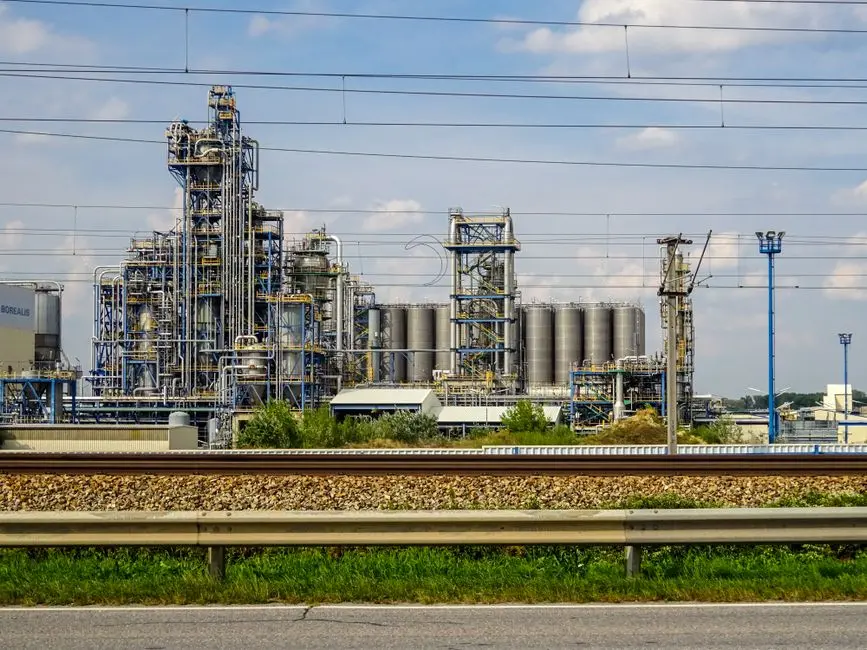
A data-center water balance that only counts the cooling tower will underdesign the treatment train. Chiller and adiabatic-cooler blowdown carry a similar TDS profile to the tower but with lower silica and slightly higher copper or aluminum from the heat-exchanger metallurgy, and they can usually feed the same RO train after a smaller MMF. Humidification bleed-off and air-handling condensate are low-TDS streams (typically 30–150 mg/L) that can be reused directly for landscape irrigation or toilet flushing after basic 5 µm filtration and UV or chlorine disinfection — keeping them out of the RO concentrate extends membrane life and reduces overall reject volume. Domestic wastewater from the admin block and guard house (50–150 L per employee per shift) should run through a packaged MBR system before reuse or sewer discharge, particularly if the MIA commits the campus to on-site treatment of sanitary flows. Floor washdown from the generator hall, UPS battery rooms, and diesel day tanks may contain trace fuel, lube oil, or battery acid, and must pass through an oil-water separator — a dissolved air flotation (DAF) unit — before it joins the main treatment train, otherwise a slug of oil will foul the RO prefilter and contaminate the antiscalant dosing tank. The single most common design error in Guadalajara data-center builds is treating the cooling tower in isolation and then discovering during commissioning that the sanitary, humidification, and floor streams are 15–25% of the total hydraulic load on the discharge permit.
Sizing for Guadalajara: Matching System Capacity to Facility Load
Size the treatment train from facility WUE, not from IT load alone. Industry benchmark WUE for evaporative-cooled data centers sits at 0.47–0.65 Gal (1.8–2.5 L) per kWh, and Guadalajara's hot, dry climate pushes the upper end of that range during summer (Genesis Water Technologies, 2026). A 30 MW campus at WUE 0.5 Gal/kWh draws roughly 1,000,000 L of makeup per day, of which about 250,000 L/day becomes CTBD at 4 CoC and 200,000 L/day at 6 CoC — that is the treatable stream the RO must be sized for. Hyperscale treatment economics (full RO plus ZLD with crystallizer) only pencil at 50 MW and above, because the MVR evaporator capex is roughly USD 1.5–3 million per 100 m³/day of distillate capacity; below 10 MW, modular skid-mounted trains at 50–300 m³/day are 3–4× more capital-efficient per cubic meter than copying hyperscale designs (Genesis Water Technologies, 2026). Always design for turndown: spec the RO to run efficiently at 30–110% of nominal flow, because Guadalajara's mild winter drops cooling-tower evaporation, which drops makeup and blowdown together, and an RO that cannot throttle down will force operators to dump blowdown to sewer and lose the recovery benefit for three months of the year.
Capex, Opex, and Payback in a Mexican Context
For a 100–200 m³/day modular high-recovery RO plus brine-desalter train, installed Capex lands in the USD 250,000–800,000 range, with the main cost drivers being PVDF versus zirconia UF membranes, single-pass versus two-pass RO, and whether a thermal evaporator is included (each step can roughly double the equipment line). Opex is dominated by energy and chemicals: RO at 0.5–1.0 kWh/m³ of permeate and an MVR evaporator at 15–25 kWh/m³ of distillate, plus antiscalant and CIP chemicals (HydropureWater field data, 2026). At CFE industrial tariffs of USD 0.08–0.12/kWh, high-recovery RO is economically attractive on energy alone, while ZLD is justified only when discharge is impossible. As a reference, a 15 MW facility recovering 60% of its blowdown at USD 200,000 of Capex has a 6.7-year simple payback on water savings alone, but that figure drops to 3–5 years once the avoided costs are added: SIAPA industrial block-tariff water, SIAPA/CONAGUA sewer discharge fees, SEMARNAT MIA mitigation offsets, and the reduced CFE pumping load from less fresh water moving through the system. In Jalisco's current tariff environment, these avoided-cost lines routinely push a well-scoped CTBD reuse project across the 5-year payback threshold that most Mexican CFOs will sign off on.
| Cost line | Baseline BWRO (100 m³/day) | High-recovery RO + desalter (100 m³/day) | ZLD (100 m³/day, with MVR) |
|---|---|---|---|
| Capex (USD, installed) | 150,000–350,000 | 400,000–800,000 | 1,500,000–3,000,000 |
| Energy (kWh/m³ permeate) | 0.5–1.0 | 1.0–2.0 | 16–27 (RO + MVR) |
| Annual energy cost @ USD 0.10/kWh (100 m³/day) | ≈1,800–3,700 | ≈3,700–7,300 | ≈58,000–99,000 |
| Antiscalant + CIP chemicals (USD/yr) | 3,000–6,000 | 5,000–10,000 | 8,000–15,000 |
| Simple payback on avoided water + sewer (typical Guadalajara site) | 5–8 years | 3–5 years | 8–15 years (or never on OPEX alone) |
Frequently Asked Questions
What regulatory limits apply to cooling-tower blowdown discharge in Jalisco?
Discharges to a river, reservoir, or soil are governed by NOM-001-SEMARNAT-2021, with monthly average limits of 2,000 mg/L TDS, 1,000 mg/L sulfates, 1,000 mg/L chlorides, 60 mg/L total nitrogen, trace metals, and a 40 °C instantaneous temperature ceiling for the "Río" freshwater column. Discharges to municipal sewer additionally fall under CONAGUA's Condiciones Particulares de Descarga and SIAPA's local sewer-use rules, which can impose stricter chloride and thermal caps.
Is reverse osmosis enough, or do I need ZLD?
RO is the default and the right answer for most Guadalajara sites. ZLD only earns its keep when no legal liquid discharge path exists — typically hyperscale campuses with a binding MIA commitment, or sites where SIAPA or CONAGUA will not accept the brine volume. For everything else, high-recovery RO with brine desalter or MLD gives 90–95% recovery at a fraction of the energy and capex of a thermal ZLD train.
What is the typical recovery rate for a CTBD reuse system?
Conventional brackish-water RO plateaus at 75–80% recovery on CTBD chemistry because of silica and calcium-sulfate scaling limits. A high-recovery train with UF pretreatment, dynamic RO operation, and a brine desalter or fluidized-bed crystallizer pushes overall recovery to 90–95% with permeate silica near 1 mg/L. The trade-off is capex and chemical complexity, not permeate quality.
How much water can a 10 MW data center in Guadalajara realistically save?
At a WUE of 0.47–0.65 Gal (1.8–2.5 L)/kWh and 4–6 cycles of concentration, a 10 MW evaporative-cooled campus draws roughly 13,000–22,000 m³ of makeup per month and produces 2,600–5,500 m³ of recoverable CTBD. Reusing 90% of that blowdown as cooling-tower makeup saves 2,300–5,000 m³ per month of SIAPA freshwater, which is the figure to put in front of an EHS or finance committee.
Does Guadalajara's source-water hardness force a specific pretreatment?
SIAPA's 200–350 mg/L as CaCO3 hardness, combined with silica in the 20–60 mg/L CTBD range, means a Guadalajara data center cannot skip pretreatment. The standard configuration is MMF for turbidity and iron, optional UF (0.03 µm PVDF) for SDI control ahead of the RO, and PLC-controlled antiscalant dosing selected specifically for high-sulfate, high-silica CTBD chemistry. Brackish-water RO membranes with high rejection and good fouling resistance are the right selection for this water profile.