Determine which Paden-area requirements control
Mining and metals plants near Paden meet sewer pretreatment limits through a permit-to-equipment verification process: identify the controlling POTW and applicable rules, characterize each wastewater stream, then size treatment and monitoring against the verified worst case. EPA distinguishes direct point-source discharges, which require NPDES authorization, from indirect dischargers governed by POTW industrial-user permits or equivalent mechanisms. The supplied research does not identify the receiving Paden-area POTW or its numeric limits, so those requirements must be confirmed before equipment selection. A federal category or generic design value is not proof that a Paden discharge will comply.
Build the regulatory stack in this order: federal categorical pretreatment standards, the receiving POTW’s industrial-user permit and locally developed limits, state requirements, and sewer-use, spill-control, or slug-control rules. The HydropureWater 2026 pretreatment guide identifies 40 CFR Part 430 for ore mining and dressing and 40 CFR Part 433 for metal finishing, but the operator must verify the facility’s actual industrial category and which streams each category covers.
EPA’s Local Limits Development Guidance is nonbinding. EPA states that indirect-discharger obligations are determined by POTW industrial-user permits or equivalent control mechanisms and regulatory requirements, and that permits or regulations control if they conflict with the guidance. Obtain the current permit, definitions, numeric limits, monitoring frequency, sampling method, reporting requirements, and equipment-approval procedure from the receiving authority.
| Control layer | What to verify | Decision consequence |
|---|---|---|
| Federal categorical standards | Industrial category, covered process streams, applicable subpart | Defines the minimum regulatory framework, not necessarily the site’s final limit |
| POTW industrial-user permit | Locally developed limits, prohibited discharges, monitoring and reporting | Often establishes the binding sewer-discharge conditions |
| State and local rules | State pretreatment authority, sewer ordinances, slug controls | May add or clarify operational requirements |
| Approved basis of design | Discharge point, worst-case load, sampling protocol, treatment objectives | Provides the basis for equipment sizing and acceptance testing |
For a comparable workflow, see how mining plants characterize wastewater and meet sewer limits. The necessary sequence is permit-first: identify the receiving POTW, confirm whether the plant is a significant industrial user, obtain the applicable industrial-user discharge permit, and secure written acceptance of the proposed monitoring and control plan before final design.
Characterize each wastewater stream separately
Blending streams before characterization can conceal the exact condition that drives a permit exceedance. Dewatering discharge, ore-processing water, tailings-pond effluent, contact stormwater, and metals-finishing rinsate should remain distinguishable through sampling, even if they ultimately share a treatment train.
The HydropureWater 2026 guide notes that acid mine drainage differs materially from process wastewater and tailings-pond effluent. AMPAC USA’s September 2025 process profiles report that ore-processing streams may contain cyanide, ammonia, or chloramines, while tailings-pond effluent can contain fine solids, processing chemicals, and leached metals. Dewatering discharges can vary sharply with geology. These are different failure modes: an acidic slug changes pH and reagent demand; process reagents introduce toxic or biodegradable constituents; and tailings fines can overload clarification or solids handling.
Request the following basis-of-design data for every stream:
- Peak and average flow, including the basis for each value and flow variability by operating campaign.
- pH; metals and metalloids; TSS; oil and grease where relevant; hardness; alkalinity; sulfate or TDS; and every pollutant named in the permit.
- Representative analytical results across normal operations, startup, shutdown, storm events, and identified slug conditions.
- Proposed entry points into equalization and treatment, including whether segregation is needed to prevent short-duration exceedances.
| Stream | Characterization focus | Design implication |
|---|---|---|
| Dewatering discharge | Acidity, dissolved metals, flow surges, geology-dependent variability | Confirm equalization and pH-control response against slugs |
| Ore-processing water | Cyanide, ammonia or chloramines, metals, TSS, process reagents | Assign treatment steps to specific permit constituents |
| Tailings-pond effluent | Fine solids, leached metals, processing chemicals | Check clarification loading and residual solids handling |
| Contact stormwater | Suspended solids, metals, oil and grease, event-driven flow | Establish diversion, containment, and monitoring rules |
| Metals-finishing rinsate | Complexed metals, cyanide, oils, variable production discharges | Verify applicable industrial category and local limits |
The supplied research does not establish a universal sampling frequency for Paden. Use a site-specific sampling plan developed with the POTW, covering operating and storm conditions. A single grab or blended sample is not a defensible design basis.
Build a treatment train around the pollutants
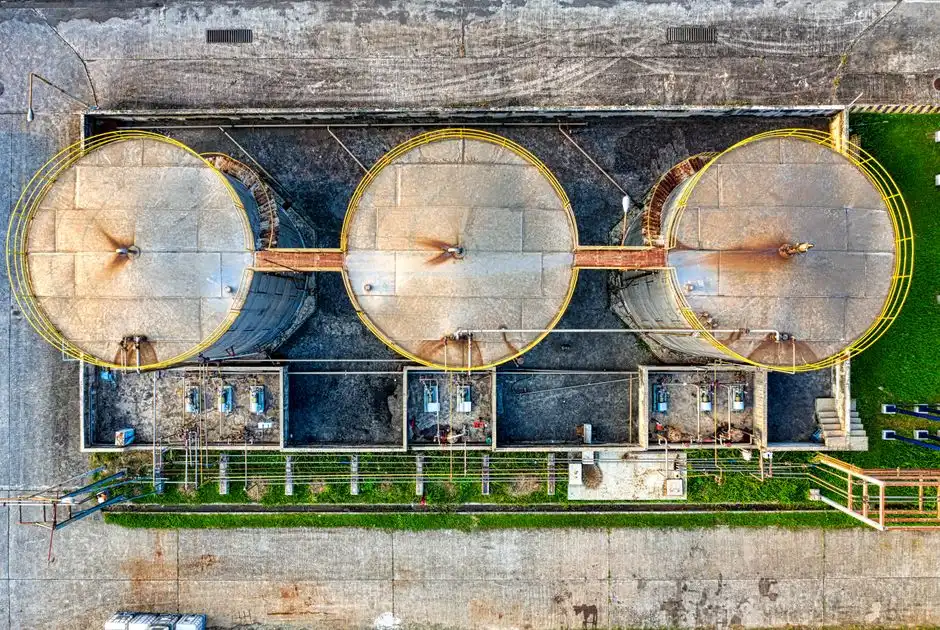
Each treatment step should have a measurable compliance function; otherwise, equipment becomes a collection of tanks and pumps without a defensible permit narrative.
- Use equalization and screening to stabilize hydraulic and chemical slugs.
- Adjust pH under flow-paced control where metals precipitation is required.
- Apply coagulation and flocculation to create solids suitable for the selected separation step.
- Use hydroxide or sulfide precipitation for regulated dissolved metals.
- Separate floc using DAF or lamella clarification according to density and floatability.
- Add filtration or membrane polishing only for the residual contaminant or reuse risk identified.
- Provide disinfection where required, then monitoring and sludge dewatering.
Metal hydroxide precipitation converts dissolved metals into insoluble hydroxides; sulfide precipitation forms metal sulfides. The HydropureWater 2026 source cautions that precipitation is pH-sensitive and produces metal-bearing sludge that needs a disposal plan.
DAF is the better fit for buoyant floc, oil-bearing water, and floatable fines; a lamella clarifier is better matched to dense metal-hydroxide sludge and space-constrained installations. The HydropureWater September 2025 source reports lamella surface-loading rates of 20–40 m/h and up to 30% lower chemical consumption than conventional basins. These are preliminary screening values, not Paden guarantees. Compare DAF and clarifiers for mining wastewater, then require site-specific data in the bid.
Polishing should follow the actual risk. Multimedia filtration can protect RO from colloids and provide an RO-compatible SDI; UF removes colloids and suspended solids; RO addresses dissolved salts and residual metals; biological polishing applies where biodegradable load and permit requirements justify it. The HydropureWater September 2025 source gives preliminary RO recovery of 50–70% for AMD feed and 70–85% when RO precedes thermal ZLD. These are not universal guarantees, so request a recovery curve for the actual feed.
Ion exchange should not be the primary clarification step because oil, grease, and hardness can cause fouling. Equipment options include a DAF system for floatable mining solids, a lamella clarifier for metal-hydroxide sludge, multimedia filtration, and UF where the downstream membrane basis requires them.
| Process function | Preferred unit | Required evidence |
|---|---|---|
| Slug buffering | Equalization with controlled mixing | Peak-flow and worst-case load profile |
| Dissolved-metal removal | Controlled hydroxide or sulfide precipitation | Jar test and residual chemistry profile |
| Floc separation | DAF for buoyant floc; lamella for dense floc | Floc density, oil loading, solids capture test |
| Membrane protection | Multimedia filtration or UF | Target SDI, turbidity, and fouling data |
| Dissolved-solids removal | RO where sewer reuse or ZLD requires it | Site-specific recovery curve and concentrate route |
Choose the right solids and metals-removal sequence
Choose the separation device from the floc’s physical character: DAF when oil, buoyant fines, or floatable material dominate; lamella clarification when dense metal-hydroxide floc is the principal target. If neither condition has been measured, the equipment choice remains a screening assumption.
pH control is inseparable from metals removal because hydroxide or sulfide reactions, residual reagent, and sludge generation depend on influent chemistry. The HydropureWater 2026 guide reports achievable sulfide performance of Pb below 0.1 mg/L and Hg below 0.01 mg/L. These are reported commercial benchmarks, not verified Paden limits or guarantees; jar or pilot testing must establish performance with site chemistry.
Sulfide introduces a safety trade-off. The same source reports that NaHS can generate H2S if pH drops, requiring sealed equipment and toxic-gas controls. A sulfide system therefore needs an engineered residual-control strategy, ventilation assessment, alarms, and operating procedures rather than relying only on an aqueous metal result.
Integrate solids handling during conceptual design. The scope should connect thickening, conditioning, a plate-and-frame filter press, filtrate return, cake storage, and disposal characterization. The HydropureWater 2026 source describes filter-press cake at 30–45% dry solids, but actual cake characteristics and the receiving facility’s acceptance criteria must be verified before selecting chemical conditioning or a disposal route.
| Decision | If condition applies | Required validation |
|---|---|---|
| Separation | Buoyant floc, oil, or floatable fines | DAF bench or pilot test and recovered-solids analysis |
| Separation | Dense metal-hydroxide floc | Lamella settling test with representative pH and polymer residuals |
| Precipitation | Hydroxide chemistry meets verified limit | Jar-test residuals and metal-bearing sludge generation |
| Precipitation | Tighter metal limit or hydroxide refractory species | Sulfide jar test plus H2S and residual-control review |
| Solids handling | Metal-bearing sludge remains on site | Cake characterization and written disposal acceptance |
For equipment concepts, review a plate-and-frame filter press for dewatering metal-bearing sludge and flow-paced chemical dosing controls. No single treatment train guarantees compliance until final performance is demonstrated against the verified permit.
Turn permit limits into monitoring and acceptance tests

Every permit condition should become an operating target, an outlet criterion, a monitoring method, a frequency, a responsible operator, and a defined corrective action.
The HydropureWater 2026 guide identifies continuous pH and flow instrumentation at the headworks, with conductivity monitoring where justified, and describes a 24-hour composite sampler plus online pH and conductivity as a defensible design basis. Include these instruments in the verification schedule and align the composite protocol with the POTW’s stated sampling method.
Chemical dosing should respond to flow and pH rather than follow a fixed manual schedule. Define high-flow, high-metal, low-pH, and off-line conditions, then specify alarms, standby power, chemical reserve, and operator actions.
| Permit or process condition | Design conversion | Acceptance evidence |
|---|---|---|
| Maximum or average pollutant limit | Worst-case inlet load plus treatment objective | Representative composite compared with the verified limit |
| pH restriction | Control range and alarm setpoints | Calibrated probe and dynamic response test |
| Flow restriction | Headworks and equalization capacity | Peak-flow test with valid readings |
| Monitoring frequency | Sampler, laboratory, and reporting schedule | Unattended sampling trial and chain-of-custody procedure |
| Sludge or discharge controls | Solids inventory, filtrate return, characterization | Mass balance and waste acceptance records |
Commission each stage separately, then test the integrated train. Include solids capture, filtrate quality, chemical response, alarm behavior, mass balance, stable operation under peak and slug conditions, and recovery of upset water. Acceptance must be tied to the verified Paden-area permit and representative worst-case composite—not a catalog removal percentage.
Maintain a compliance file containing the POTW permit, local limits, source characterization, equipment submittals, chemical records, waste acceptance records, calibration certificates, operator training, operating logs, deviations, and corrective-action records.
Compare sewer discharge, partial reuse, and ZLD
The preferred route depends on permit exposure, water value, concentrate disposal, energy availability, and future production—not on a generic “best” treatment train.
| Option | Primary benefits | Primary exposures |
|---|---|---|
| Pretreatment to sewer | Lowest process complexity when the POTW accepts the discharge basis | POTW fees, chemical use, permit renewal, local-limit tightening |
| Partial reuse with membrane polishing | Reduces freshwater demand and sewer volume | Membrane capital and energy use, pretreatment, brine management |
| Full ZLD | Eliminates liquid sewer discharge | Highest equipment and operating complexity, concentrate and crystallization handling |
The HydropureWater 2026 source reports an MBR benchmark of TSS below 5 mg/L and COD removal above 95%. These figures explain when biological or membrane polishing may support a reuse train; they do not automatically justify MBR or RO at a Paden site.
Request site-specific comparisons of sewer fees, freshwater cost, power and chemical costs, expected changes in local limits, membrane recovery, brine or concentrate disposal, and anticipated production changes. Full ZLD also requires review of evaporation, crystallization, and residual-disposal obligations. The supplied research provides no standard Paden-area capital cost, operating cost, or delivery schedule, so none should be inferred. An integrated MBR treatment concept and an RO polishing concept can be compared only after the reuse target and concentrate route are defined.
Issue a quotation-ready basis of design
A comparable bid starts with the same verified permit, wastewater profiles, objectives, and exclusions—not with a catalog package assembled from an average flow.
Require each bidder to state peak and average design flow; stream-by-stream pollutant profiles; verified POTW limits; treatment objectives; operating availability; reagent consumption; sludge-generation basis; monitoring; controls; commissioning; and warranty scope. Ask whether performance tests will use analytical sampling, continuous instruments, or both, and tie guarantees to the defined worst-case influent.
| Bid deliverable | Minimum content |
|---|---|
| Design basis | Flows, stream chemistry, verified limits, discharge point and reuse objective |
| Process design | Unit functions, sizing calculations, controls, reagents, residuals and redundancy |
| Performance commitment | Defined influent, outlet parameter, test method, duration and corrective remedy |
| Solids plan | Expected quantity and characteristics, dewatering, filtrate return, storage and disposal assumptions |
| Commissioning | Tests, sampling plan, training, documentation and handover |
| Commercial exclusions | Civil work, utilities, permits, taxes, waste disposal, schedule and power limitations |
Ask for reference installations at comparable flow and wastewater character. Suppliers must disclose assumptions that could invalidate performance, including chemical residuals, clean-water demand, site utilities, and disposal acceptance. Use the mining wastewater DAF and clarifier factory-selection guide as a technical check during bid review.
Resolve these pre-award risks before price comparison: receiving POTW identity, permit category, local limits, discharge point, sampling rules, sludge acceptance, reuse percentage, project schedule, and power availability. Do not publish or infer a complete-system price without a quotation based on those site-specific inputs.
Frequently Asked Questions
What pretreatment limits apply to a mining or metals plant near Paden?
Federal categorical pretreatment standards provide part of the legal framework, but the applicable Paden-area limits cannot be stated from the supplied research. Obtain the current permit from the receiving POTW, confirm the facility’s industrial-user or significant-industrial-user status, and review locally developed limits, pollutant definitions, monitoring requirements, and prohibited discharges.
Do not use a generic treatment value as a substitute for the permit. Confirm whether 40 CFR Part 430, 40 CFR Part 433, or another category applies and which streams it covers.
How should wastewater treatment equipment be sized for variable mining discharges?
Size the train using peak flow, representative stream chemistry, identified slug loads, the verified permit limits, and the resulting solids inventory. Equalization may be necessary where acidic dewatering discharges or process slugs can exceed the treatment system’s short-term capacity.
Require the supplier to map every stream into the train and state its sizing assumptions. Pilot or jar testing should establish treatment of the actual worst-case matrix.
What information is needed for a defensible Paden-area treatment-system price?
The supplied research does not support a universal Paden capital or operating cost. A supplier needs peak and average flow, stream-specific analytical results, verified permit limits, treatment objectives, utilities, site constraints, sludge-disposal assumptions, and the desired reuse percentage.
Request itemized pricing for equipment, tanks, controls, chemical systems, membranes, sludge handling, installation, commissioning, and exclusions. Compare bids against the same written basis rather than a headline system price.
How should an owner select a wastewater treatment supplier?
Select a supplier that demonstrates an integrated process design, not isolated equipment. Request a jar-test or pilot basis, a guarantee tied to a defined influent and outlet limit, a commissioning plan, and reference projects with comparable flow and wastewater character.
Also verify controls, chemical consumption, sludge-handling assumptions, analytical support, operating availability, and the supplier’s willingness to make the permit compliance basis explicit in the submittal.