Is an SBR the Right Choice for Municipal Sewage?
An SBR is suitable for municipal sewage when variable or intermittent flows, limited land availability, or operating flexibility outweigh the complexity of automated controls. It treats sewage in timed Idle, Fill, React, Settle, and Draw stages, combining equalization, biological treatment, and secondary clarification within a reactor. EPA guidance says SBRs are typically used at flowrates of 5 MGD or less, while larger plants require more sophisticated operation and are generally less favorable according to its 1999 fact sheet. Final sizing still depends on permit limits, flow and load, wastewater characteristics, temperature, and downstream treatment needs.
The U.S. EPA describes an SBR as a fill-and-draw activated-sludge system. Unlike continuous-flow activated sludge, where equalization, biological treatment, and clarification occur in separate process tanks, an SBR performs these functions in one reactor through a predetermined operating sequence. EPA identifies low or intermittent flow, limited land availability, operating flexibility, and the ability to modify cycles for nutrient removal as favorable application conditions.
The main trade-off is process consolidation against operational complexity. Fewer process vessels and a smaller footprint can reduce civil works, but automated valves, timing controls, aeration equipment, decanting equipment, and maintenance access become more critical. A post-SBR equalization basin may also be necessary when downstream filtration cannot accept the batch discharge.
Process suitability does not establish regulatory approval. Design should begin with the applicable NPDES permit or local discharge authorization, then test whether the proposed cycle and treatment train can consistently meet its limits. Engineers can use municipal sewage treatment plant solutions as context, but site-specific characterization remains the controlling basis.
How the Municipal SBR Treatment Cycle Works
EPA defines the SBR operating cycle as Idle, Fill, React, Settle, and Draw, with each phase performing a defined hydraulic or biological function. The sequence is not simply five empty time periods: fill strategy, mixing, aeration, wasting, and decanting determine the treatment received by each batch.
| Phase | Process function | Design implication |
|---|---|---|
| Idle | Treated effluent is removed, influent may be admitted, and biomass can be conditioned or sludge wasted. | Variable idle time can provide equalization. |
| Fill | Influent enters the reactor under static, mixed, or aerated conditions. | Fill strategy must match the required biological sequence. |
| React | Aerobic, anoxic, or anaerobic reactions are completed. | Aeration and mixing requirements follow the permit target. |
| Settle | Biomass separates under generally quiescent conditions. | Settling performance affects decant quality. |
| Draw | Treated supernatant is removed through a floating or fixed decanter. | Sludge carryover is a configuration-specific risk. |
During static fill, no mixing or aeration occurs, leaving a high substrate concentration when mixing begins. EPA associates this condition with an environment favorable to floc-forming organisms and notes that static fill can favor organisms that store internal products required for biological phosphorus removal. Mixed fill combines influent with biomass and may initiate denitrification under anoxic conditions. Aerated fill begins aerobic treatment and can reduce the aeration time subsequently required during React; aerated React can provide nitrification.
Decanting separates equipment suppliers because a floating decanter travels with the liquid surface, whereas a fixed decanter draws from a selected elevation. EPA identifies discharge of floating or settled sludge during Draw as a potential disadvantage with some configurations. The selected decanter therefore needs review for minimum draw depth, travel limits, scum control, access, and cleaning requirements.
Because biomass remains in the reactor, an SBR generally eliminates the return activated-sludge system associated with conventional activated sludge. Excess biomass is wasted during the cycle. A typical flow is: Headworks and screening → Fill → React → Settle → Draw → optional equalization, filtration, and disinfection → solids handling. The mechanical bar screen for preliminary screening belongs to the upstream treatment train, not to the biological cycle itself.
Design Inputs That Control Reactor and Cycle Sizing
EPA’s design sequence starts with anticipated influent characteristics and effluent requirements, then proceeds to cycle configuration, basin count, reactor volume, aeration, decanting, and associated piping. Its municipal design table is an example rather than a universal design standard, and its figures must not replace site-specific calculation.
| Example parameter for conventional municipal loading | EPA example value | Scope |
|---|---|---|
| Food-to-mass ratio | 0.15–0.4/day | EPA example table for conventional municipal loading |
| Treatment-cycle duration | 4.0 hours | EPA example table |
| Mixed-liquor suspended solids | 2,000–2,500 mg/L | EPA example table |
| Hydraulic retention time | 6–14 hours | EPA example table |
The design request should include design flow, maximum daily flow, BOD5, TSS, pH, alkalinity, wastewater temperature, TKN, ammonia-nitrogen, and total phosphorus. Site elevation and total dissolved solids are also required when sizing aeration equipment, according to EPA. These inputs establish organic and nutrient loading, clarifyability, nitrification conditions, oxygen demand, and equipment constraints.
Permit limits determine the biological sequence. EPA states that an ammonia-nitrogen or TKN requirement generally calls for nitrification, while a total-nitrogen limit calls for both nitrification and denitrification. Phosphorus requirements may drive anaerobic and anoxic sequence selections. The selected phase durations and aeration profile must then be checked against temperature, alkalinity, biomass concentration, and settling behavior.
EPA says primary clarifiers are typically not required before an SBR for municipal wastewater. It advises evaluation of historical data and consultation with the SBR manufacturer when influent BOD or TSS exceeds 400–500 mg/L. That is an evaluation trigger, not an automatic instruction to install primary clarification.
EPA also states that two or more batch reactors are used to optimize performance. The concept must therefore address peak-flow capture, continuity during maintenance, and the allocation of Fill, React, Settle, and Draw time among reactors. Basin volume, cycle duration, reactor count, decant volume, detention times, aeration equipment, and decanting equipment cannot be finalized from generic capacity alone. Where solids dewatering may be required, the sludge dewatering filter press should be evaluated as part of the complete solids-handling scope.
Equalization, Settling, Filtration, and Solids Handling
An SBR can provide equalization while filling and can absorb peak flows or peak loads, but EPA’s guidance means that pre-SBR equalization remains a site-specific decision. The reactor’s buffering capacity is a design feature, not proof that a separate basin can always be omitted.
EPA identifies a specific downstream constraint: if effluent proceeds directly to filtration, the filters must accept the full SBR batch discharge. Filters sized for that batch flow can require an impractically large surface area, so equalization between the SBR and filters may be necessary. This decision depends on batch volume, permitted downstream flow, filter loading criteria, and the selected configuration.
The reactor performs secondary clarification within the cycle and therefore eliminates the separate secondary clarifier used in conventional activated sludge. It does not automatically replace every downstream unit. Optional equalization, solids removal or effluent filtration, and disinfection should be selected according to the discharge route and reuse specification. If filtration is not required by the permit or reuse conditions, it should not be inserted merely because it is common in packaged plant designs.
Sludge handling also remains downstream. EPA describes possible thickening and aerobic digestion, while actual needs depend on the sludge characteristics and disposal route. Where the selected SBR produces sludge requiring further liquid-solid separation, the commercial scope should state whether a sludge dewatering filter press, sludge transfer, storage, and disposal are included. Disinfection can be considered only when the reuse or discharge requirements call for it; an UV disinfection system should then be evaluated against the actual downstream flow and water-quality target.
Mixed Industrial Wastes Can Change the Treatment Basis
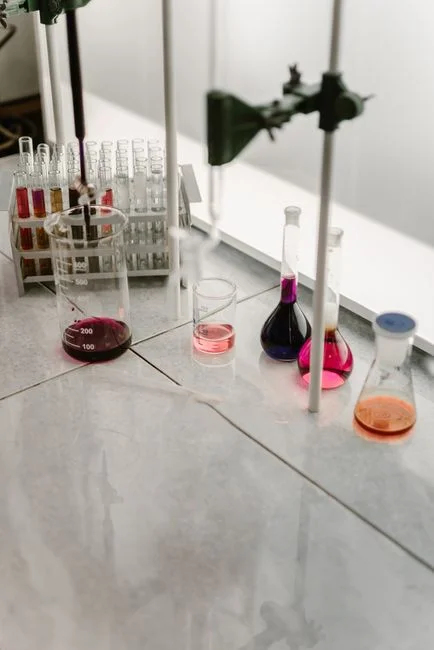
A municipal sewer can contain industrial contributions whose biodegradability, COD fractions, nutrients, toxicity, or loading pattern differ from domestic sewage. Municipal design values should not be transferred to a mixed sewer without identifying the contributing discharges and reviewing their effects on the biological basis.
In the Desalination and Water Treatment study, “Impacts of dairy wastewater and pre-aeration on the performance of SBR treating municipal sewage,” the optimal non-pre-aerated dairy-sewage contribution was 30%, and increasing dairy sewage increased COD remaining-fraction concentrations. The finding is scoped to that study’s SBR and wastewater; it does not establish 30% as a general mixing limit for municipal projects.
The E3S Web of Conferences study, “COD fractions changes in the SBR-type reactor treating municipal wastewater with controlled percentage of dairy sewage,” found that COD concentrations and proportions among COD fractions changed during the SBR cycle. Its excerpt reports insoluble, hardly biodegradable COD fractions of 49.6% in raw municipal wastewater and 64.5% in raw dairy wastewater, confirming that the two streams differed in composition.
Industrial users, sewer dischargers, and regulators should therefore be treated as source-identification partners. The engineering record should include current wastewater characteristics, production schedules, permitted discharge data, and anticipated changes in operation or effluent composition.
Where an industrial stream is new, variable, concentrated, or materially different from historic municipal data, request treatability testing or an updated process study. EPA specifically notes that treatability studies are typically required for industrial wastewater applications. The adjacent SBR design for industrial wastewater provides a useful reference for separating industrial design questions from established municipal practice.
Choose Between SBR, Package A/O, and MBR
SBR, integrated package A/O, and MBR systems differ in process architecture, so comparison begins with treatment objectives rather than a nominal flow figure. The correct process family depends on the permit or reuse specification, land constraints, operator resources, lifecycle requirements, and the acceptable risk associated with more advanced equipment.
| Decision point | Conventional SBR | Package A/O | MBR |
|---|---|---|---|
| Core architecture | Timed fill-and-draw activated sludge; equalization, biological treatment, and secondary clarification occur in the reactor. | HydropureWater’s WSZ Series combines anoxic/aerobic biological contact oxidation, sedimentation, and disinfection in a single buried unit. | HydropureWater combines activated sludge with submerged PVDF membrane filtration. |
| Best initial fit | Flexible batch treatment, relatively low flow, possible nutrient sequencing, and a compact biological footprint. | A project seeking an integrated buried package arrangement for the stated product flow range. | Reuse-oriented quality requiring tighter solids separation, provided membrane operation is acceptable. |
| Important qualification | Performance depends on cycle controls, settling, decanting, and downstream treatment included in the design. | It is not a timed SBR; its biological-contact-oxidation architecture and packaged scope must be evaluated separately. | Membrane separation adds equipment, operating, and maintenance considerations beyond activated sludge. |
The integrated underground sewage treatment plant is listed by HydropureWater’s verified product catalog at 1–80 m³/h. It is described as an automated WSZ Series package combining anoxic/aerobic contact oxidation, sedimentation, and disinfection, with no operator required.
The MBR membrane bioreactor for municipal sewage is listed for 10–2,000 m³/day municipal and reuse applications. HydropureWater states that it combines activated sludge with submerged PVDF membrane filtration, provides filtration below 1 μm, and uses a footprint 60% smaller than conventional systems.
These claims are screening inputs, not performance guarantees. Footprint, automation, and reuse claims should be compared using the same influent basis, effluent target, treatment scope, utilities, solids handling, and owner requirements. Use the SBR when flexible sequencing and compact biological treatment are central, examine package A/O where a buried integrated arrangement fits the project, and examine MBR where reuse-oriented solids separation justifies membrane operation.
Procurement and Owner-Readiness Checklist
A defensible request for proposals begins with the design basis, not a generic flow rate. Ask each bidder to state the design flow, maximum daily flow, influent BOD5 and TSS, temperature range, nitrogen and phosphorus loads, and the assumed permit or reuse specification. The proposal should also identify reactor count, cycle sequence, hydraulic retention time, aeration approach, decanter type, sludge-wasting method, and every downstream unit included or excluded.
Primary-treatment and equalization recommendations should be explicit, particularly where historical BOD or TSS exceeds EPA’s 400–500 mg/L evaluation range. Request the control narrative, alarm strategy, fail-safe behavior, valve and decanter maintenance access, and fouling controls for aeration devices. Clarify who is responsible for regulatory compliance and how performance will be demonstrated.
Industrial contributors are part of the commercial risk allocation. Require the bidder to explain how changes in industrial influent characteristics will trigger review of cycle settings, loading, and guarantees. A useful reference for packaging scope and owner expectations is the prefabricated wastewater plant procurement guide.
Finally, compare long-term consumables, sludge handling, operator training, remote monitoring, maintenance support, and performance guarantees on one basis. Guarantees should refer to the agreed influent conditions and permit or reuse target, not to generic treatment claims. This also allows technical suitability, commercial scope, and lifecycle exposure to be reviewed before equipment selection.
Frequently Asked Questions
How much wastewater can an SBR treat?
EPA’s 1999 fact sheet says SBRs are typically used at flowrates of 5 MGD or less and notes that more sophisticated operation discourages their use at larger flowrates. A project near that screening limit still needs site-specific design based on maximum daily flow, load, reactor count, cycle allocation, and permit requirements.
Is SBR better than MBR for municipal sewage?
Not universally. An SBR is a timed activated-sludge process with process flexibility and a relatively small footprint, while an MBR adds membrane solids separation and is attractive for reuse-oriented quality. Compare both against the same discharge or reuse target, land availability, utilities, operator capability, maintenance exposure, and lifecycle requirements.
What does a supplier need before an SBR can be sized?
Request design flow, maximum daily flow, BOD5, TSS, pH, alkalinity, wastewater temperature, TKN, ammonia-nitrogen, total phosphorus, effluent requirements, industrial contributor information, and downstream treatment needs. Also provide site elevation and total dissolved solids because EPA identifies them as inputs to aeration-equipment sizing.
Does an SBR require equalization and a secondary clarifier?
An SBR provides equalization during filling and performs secondary clarification within the reactor, so a separate secondary clarifier is not required. However, EPA notes that equalization may still be needed between the SBR and downstream filters when direct batch discharge would require an impractically large filter area.