When SBR Is the Right Fit for Paper Mill Wastewater
An SBR is a suitable candidate for paper mill wastewater when equalization and solids removal can produce a biologically treatable feed, but it is not a universal solution for every mill stream. The process combines biological reaction, settling, and discharge in controlled operating phases, with each phase managed by sequencing controls. Selection depends on wastewater variability, biodegradable COD, nutrient balance, settling behavior, and the required discharge or reuse quality. The attached-growth study examined real recycled paper mill wastewater at influent COD of 800–1300 mg/L and considered COD, BOD, suspended solids, color, residual natural organic matter, and potentially toxic chlorinated compounds (ScienceDirect, 2015).
Choose an SBR configuration only after confirming that the biologically degradable fraction, nutrient balance, solids separation, and pretreatment requirements are compatible with it. A conventional suspended-growth SBR may be sufficient for a relatively stable feed after upstream treatment. SBBR or attached-growth configurations merit evaluation where retaining biomass on carrier media improves solids capture or biological treatment. GAC-assisted attached growth adds adsorption for residual organics, but its capital, media-management, and regeneration implications must be included in the comparison.
| Decision condition | Engineering implication |
|---|---|
| Variable flow or pollutant load | Provide equalization and confirm that reactor controls can manage hydraulic and organic variation. |
| High suspended-solids or fiber content | Evaluate screening, primary clarification, or DAF pretreatment for paper mill wastewater before biological loading. |
| Residual color or recalcitrant organics | Compare biological polishing, attached growth, and GAC-assisted treatment against the reuse specification. |
| High or uncertain nutrient demand | Calculate nitrogen and phosphorus availability from the representative feed before fixing cycle time or carbon dosing. |
A field-characterization workflow for industrial SBR design can support the same sampling discipline, but the paper mill’s process route must determine the samples and contaminant list.
Characterize the Wastewater Before Choosing the Reactor
A single COD value cannot define an SBR design because paper mill wastewater can change with furnish, recycled-fiber content, pulping, bleaching, production, and prior treatment. Characterize the actual stream across production cycles and identify whether it is primary, secondary, or final effluent. The attached-growth SBR study evaluated COD, turbidity, ammonia-nitrogen, phosphate-phosphorus, suspended solids, and color, while the broader treatment context included BOD, residual natural organic matter, and potentially toxic chlorinated compounds (ScienceDirect, 2015).
Upstream treatment can materially change the biological feed. In the UASB–SBR/SBBR comparison, COD decreased from 4292.41 ± 58.99 mg/L to 473.57 ± 14.64 mg/L, while TSS decreased from 135 ± 10.13 mg/L to 51 ± 2.7303 mg/L after the upstream treatment sequence (Bioresources, 2005). Those values describe that recycled paper mill and its treatment train; they are not universal acceptance limits for a commercial installation.
| Required input | What the buyer should obtain |
|---|---|
| Production context | Mill process, furnish, recycled-fiber content, pulping or bleaching stage, prior treatment, and operating schedule. |
| Hydraulic data | Flow, daily and hourly variation, operating hours, equalization volume, and drain-down requirements. |
| Organic and solids data | COD, BOD, TSS, settleable solids, color, and turbidity across representative operating conditions. |
| Biological constraints | pH, ammonia-nitrogen, phosphate-phosphorus, temperature, residual natural organic matter, and mill-specific contaminants. |
| Compliance target | Applicable permit conditions or reuse specification, including whether analytical averages or individual samples apply. |
Request the sampling plan and raw laboratory results before comparing reactor proposals. Coordinate chemical dosing requirements with the characterized pH, nutrients, and treatment objectives; chemical equipment should not be selected from generic assumptions. Any media or valve selection can be checked against the actual wastewater chemistry through the supplier’s treatment-parts and media specification process.
Build a Treatment Train That Protects the SBR
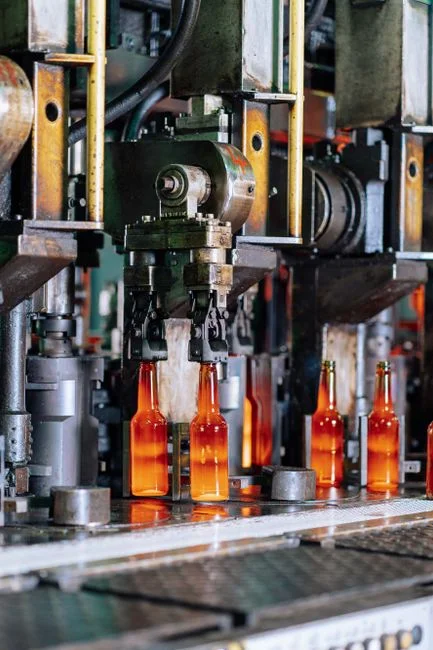
A reliable paper mill treatment train normally follows a process-flow logic: flow equalization, fiber or screen removal where needed, solids removal, biological SBR treatment, and polishing or disinfection required by the reuse or discharge specification. Equalization reduces hydraulic shock; upstream solids removal limits organic loading and protects settling; the SBR addresses biodegradable material; and downstream treatment targets constituents that biological treatment does not reliably remove.
DAF is relevant where suspended solids, oil and grease, or colloidal material interfere with biological treatment. The DAF pretreatment for paper mill wastewater should be evaluated against actual fiber, solids, and chemical-conditioning behavior. It is not a substitute for characterization or pilot confirmation.
Biomass support changed solids capture in the UASB-fed comparison. After 80 days, TSS removal was 47.02 ± 5.84% for SBBR and 20.84 ± 5.15% for SBR; the authors attributed the difference to adsorption of insoluble organic matter onto the biofilm (Bioresources, 2005). This supports evaluating attached growth when solids separation is a design constraint, but it does not establish that SBBR will remove the same fraction in every mill.
| Train stage | Primary purpose | Design evidence required |
|---|---|---|
| Equalization | Balance flow, load, pH, and production variation. | Hourly flow and load profile, operating schedule, equalization model. |
| Screen or fiber removal | Prevent fibers and suspended material from entering the reactor. | Fiber characteristics, screen duty, extracted-solids handling. |
| Solids removal | Reduce particulate and colloidal load before biological treatment. | TSS, settleability, chemical demand, pilot effluent quality. |
| SBR treatment | Remove biodegradable organics and support nitrogen treatment where required. | Cycle, biomass, aeration, settling, nutrient balance, and pilot records. |
| Final polishing | Address residual organics, filtration, or microbial requirements. | Permit or reuse specification and continuous trial data. |
Select post-treatment by objective: GAC-assisted attached growth for residual recalcitrant organics, an MBR system for high-quality effluent reuse where near-reuse filtration is required, and UV disinfection where the reuse application requires microbial control. No pretreatment or post-treatment unit guarantees regulatory compliance by itself; the final train must follow the mill’s permit, reuse specification, and pilot results.
Compare Conventional SBR, SBBR, and Attached-Growth SBR
Conventional suspended-growth SBR and SBBR differ materially because SBBR retains biomass on carrier media, increasing the active solids inventory within the reactor and providing surfaces for insoluble organic matter to adsorb. The same UASB-treated recycled paper mill wastewater was used in the direct SBR–SBBR comparison, but the results apply only to that feed and reactor context (Bioresources, 2005).
| Configuration | Scoped evidence | Selection interpretation |
|---|---|---|
| Conventional suspended-growth SBR | After 80 days, COD removal was 21.79 ± 3.4%; effluent COD was 370.20 ± 15.88 mg/L. TSS removal was 20.84 ± 5.15% (Bioresources, 2005). | Consider where suspended solids are controlled upstream and the target does not require the additional capture or retention associated with media. |
| SBBR biofilm reactor | After 80 days, COD removal was 38.38 ± 2.69%; effluent COD was 281.51 ± 7.87 mg/L. TSS removal was 47.02 ± 5.84% (Bioresources, 2005). | Evaluate when improved effluent quality or solids capture justifies carrier media, filling fraction, and maintenance implications. |
| Attached-growth SBR with GAC and additional biomass | Average reductions were 95% COD, 95% turbidity, 86% ammonia-nitrogen, 60% phosphate-phosphorus, 92% suspended solids, and 82% color using real recycled paper mill wastewater (ScienceDirect, 2015). | Consider for polishing biologically treated mill effluent where residual recalcitrant organics and adsorption are central objectives. |
The GAC-assisted result applies to effluent from an existing DAF unit at a recycled paper mill, a 24-hour cycle, influent COD of 800–1300 mg/L, and an approximately 100:5:1 COD:N:P ratio (ScienceDirect, 2015). It must not be transferred directly to raw mill wastewater or converted into a commercial guarantee.
These studies used different feeds, prior treatment, reactor arrangements, and operating contexts. They support option screening, not a universal ranking. The SBR design guide for another high-strength industrial wastewater stream can help structure pilot reporting, but paper mill evidence remains the basis for performance claims.
Design the Cycle Around Loading and Settling Performance

SBR cycle duration must be derived from representative loading and settling behavior rather than copied from another mill. The UASB–SBR/SBBR study used a 12-hour SBR cycle comprising 5 minutes of influent addition, 700 minutes of continuous aeration, 10 minutes of settling, and 5 minutes of discharge (Bioresources, 2005). That operating condition documents the study’s reactor; it is not a standard paper mill recipe.
The attached-growth SBR research used a fixed 24-hour cycle, influent COD of 800–1300 mg/L, and an approximately 100:5:1 COD:N:P ratio (ScienceDirect, 2015). The combination of cycle duration and nutrient condition must be validated together because extended aeration cannot correct a nutrient deficit, while an unnecessarily long cycle increases reactor volume and operating cost.
| Design parameter | Measurement or decision |
|---|---|
| Hydraulic cycle | Influent addition, reaction, settling, discharge, and idle periods. |
| Biomass inventory | Mixed-liquor suspended solids, sludge volume, biomass concentration, and sludge-wasting rate. |
| Settling | Sludge blanket depth, settleable solids, decant depth, and clarified-supernatant quality. |
| Aeration | Air demand, dissolved-oxygen control, blower operation, and observed foam or bulking. |
| Treatment response | COD, BOD, TSS, color, turbidity, nitrogen, phosphorus, and residual-organic indicators. |
Require the supplier to report how each phase responds to the mill’s load and flow pattern. Include biomass concentration, aeration and dissolved-oxygen control, removal results, settling observations, and any foaming or bulking during the trial. A site pilot or representative continuous trial is necessary before commercial sizing when reuse quality depends on residual organic matter or when the pilot feed differs materially from full-scale flow.
Validate Scale-Up, Controls, and Long-Term Operation
Commercial scale-up must connect flow and contaminant loads to reactor volume, aeration, solids inventory, sludge wasting, and final polishing. Influent COD alone cannot establish reactor capacity. The proposal should also reconcile maximum and minimum hydraulic conditions, biological residence requirements, solids accumulation, and the operating sequence across production changes.
Ask how the controls respond to flow, COD, pH, dissolved oxygen, temperature, and inhibited biological activity. Require alarm logic, fail-safe provisions for pumps and blowers, manual operating modes, data logging, and defined response actions. These controls determine whether the reactor remains stable during mill-production changes and wastewater shocks.
| Validation area | Evidence to request before acceptance |
|---|---|
| Mass balance | Flow and pollutant loads reconciled with reactor, aeration, solids, wasting, and polishing capacities. |
| Controls | Control narratives, alarms, fail-safe states, data access, and operating manual. |
| Performance | Mill-specific acceptance criteria based on representative continuous data, not literature percentages. |
| Operational risk | Register covering production variation, biological shocks, fiber carryover, foaming, sludge separation, odor, and corrosion. |
| Maintenance | Schedules for media, GAC, membranes, UV equipment, sludge handling, instruments, and critical spares. |
Research percentages are comparison evidence, not pass/fail limits. The attached-growth SBR averaged 95% COD removal, while the UASB-fed SBR study reported 21.79 ± 3.4% after 80 days because the feed and treatment contexts differed (ScienceDirect, 2015; Bioresources, 2005). Acceptance criteria must reflect the actual mill feed, selected train, operating range, and applicable permit or reuse specification.
Compare life-cycle cost rather than equipment price alone. Relevant inputs include blower energy, biological consumables, chemicals, sludge handling, media replacement, activated carbon, membranes, UV maintenance, and operator attention. If residual solids require dewatering before disposal, evaluate plate-and-press sludge dewatering within the solids balance. Downstream membrane selection and replacement should be evaluated through RO and UF element specifications tied to the confirmed feed and reuse targets.
Make the Purchase Decision with an Evidence Checklist
A defensible purchase progresses through four documented stages: design basis, representative pilot, mass-balanced commercial offer, and contractual acceptance. Each stage has a distinct gate, preventing an attractive pilot percentage from being mistaken for guaranteed commercial performance.
- Define the design basis. Require mill-specific wastewater characterization, flow and operating-hour data, upstream process information, permit conditions, and reuse criteria.
- Validate the configuration. Require a representative pilot of the proposed SBR, reporting raw COD, BOD, TSS, color, turbidity, nutrient, and residual-organic data under defined operating conditions.
- Develop the commercial proposal. Require a mass-balanced description of reactor geometry, aeration, controls, sludge handling, pretreatment, polishing, utilities, construction materials, commissioning, spares, and operating support.
- Contract performance and remedy. Define measurable acceptance criteria, guarantees, data access, operator training, maintenance documentation, and remedy provisions.
| Stage | Mandatory deliverable | Buyer’s decision |
|---|---|---|
| Design basis | Representative characterization, hydraulic profile, permit and reuse criteria. | Proceed only if the feed and objectives are defined. |
| Pilot | Raw time-series and laboratory results with operating records. | Select the configuration supported by the actual feed. |
| Proposal | Mass balance, equipment schedule, utilities, controls, and lifecycle inputs. | Compare complete systems rather than reactor price alone. |
| Contract | Acceptance protocol, guarantees, documentation, and remedies. | Define proof and accountability before award. |
The supplied research establishes no current universal cost benchmark or delivery time for paper mill SBR systems. Obtain budget and lead-time quotations from suppliers against a completed design basis, clearly defined pilot boundary, and delivery scope. Do not infer price or schedule from generic industrial SBR literature or from a pilot percentage.
Frequently Asked Questions
Which SBR configuration should be selected for residual paper mill wastewater?
Select the configuration against the treated feed and reuse target. For biologically treated effluent containing residual recalcitrant organics, GAC-assisted attached growth merits evaluation: the ScienceDirect study reported average reductions of 95% COD, 95% turbidity, 86% ammonia-nitrogen, 60% phosphate-phosphorus, 92% suspended solids, and 82% color under its stated conditions. That result is not a universal guarantee.
What data should be used to size an SBR for a paper mill?
Use representative flow and contaminant-load data, production-cycle variation, upstream treatment, nutrient balance, settling behavior, and the applicable discharge or reuse specification. Require a mass balance covering reactor volume, aeration, solids inventory, sludge wasting, and polishing. Do not size from an influent COD value or a literature removal percentage alone.
How should a buyer evaluate an SBR supplier?
Check for mill-specific pilot evidence using the proposed configuration, raw operating and laboratory data, a mass-balanced equipment proposal, control narratives, commissioning experience with comparable industrial wastewater, maintenance documentation, and contractual acceptance procedures. A supplier that cannot explain how its design handles mill-production variation, fiber carryover, foaming, and sludge separation has not demonstrated the required technical basis.
What budget and lead-time information should be requested?
Request itemized quotations against a completed design basis, including reactor volume, aeration, pretreatment, controls, sludge handling, polishing, utilities, commissioning, spares, and operating support. The supplied research contains no universal price or delivery time for paper mill SBR systems, so neither can be inferred from the cited pilot studies.
What compliance risk remains after pilot testing?
The principal risk is transferring pilot results to a different full-scale condition. Require continuous data across representative operating variability, define how compliance is measured, and obtain applicable permit or reuse criteria. Pretreatment selection, such as DAF pretreatment for paper mill wastewater, and final reuse treatment, such as an MBR system for high-quality effluent reuse, must be validated within the complete train rather than treated as independent guarantees.