Identify the rules that control the discharge point
The applicable Santa Fe Springs POTW, written local limits and categorical category determine whether the proposed discharge is permitted and what equipment it requires. Federal pretreatment rules establish the baseline, but they do not supply site-specific sewer limits, monitoring points or flow restrictions for a Santa Fe Springs facility. Start by identifying the receiving authority, then obtain its current industrial-user permit, sewer-use ordinance, local-limit schedule, fee schedule and monitoring requirements before selecting treatment capacity.
Classify the operation before selecting a rule set. An ore mining and dressing facility may fall under 40 CFR Part 440, with the applicable subcategory defining the scope; a metals finishing operation may fall under 40 CFR Part 433; and a centralized waste treater may be subject to 40 CFR Part 437 in addition to another category. A mixed facility requires a written determination from the receiving POTW rather than a process engineer’s assumption.
Under 40 CFR Part 403, dilution is not a compliance strategy. Pass-through cannot reduce POTW treatment efficiency, contaminate sludge or cause the POTW to violate its own discharge limits. Request the POTW’s headworks analysis, prohibited-discharge list, local limits, fee schedule, monitoring frequency and approved sampling point. Also ask whether an Industrial User Permit, permit amendment, pretreatment study or discharge characterization must be completed before construction.
| Verification item | Why it controls equipment design |
|---|---|
| Receiving POTW and industrial-user permit | Establishes the legally responsible sewer authority, authorized discharge point and applicable monitoring conditions. |
| 40 CFR Part 403 and categorical category | Sets the federal baseline and the scope-specific pollutant standards to compare with local limits. |
| Sewer-use ordinance and local-limit schedule | Provides site-specific numerical limits that may govern equipment sizing and discharge guarantees. |
| Headworks analysis and prohibited discharges | Shows which constituents the collection system and treatment plant can accept. |
| Permit application, study and construction requirements | Defines the approval path before equipment procurement and startup. |
The supplied research identifies Carrizo Springs TPDES permit WQ0010145001 and its 0.7 MGD average daily and 0.35 MGD peak hourly flow limits (HydropureWater, 2026). Those values concern Carrizo Springs and must not be transferred to Santa Fe Springs. The research contains no confirmed Santa Fe Springs POTW identity, permit limits, sewer-use ordinance, local limits or receiving-WWTP headworks data. A 2026 mining pretreatment compliance guide can support the workflow, but it cannot replace confirmation from the actual receiving authority.
Characterize the wastewater before selecting equipment
Representative wastewater data—not nominal plant production—is the only defensible basis for treatment sizing. Sample mining dewatering, aggregate-wash, metals-finishing, stormwater and floor-wash streams during normal production, startup, shutdown and off-spec conditions. The sampling program should identify intermittent batch discharges and determine whether equalization must cover production peaks, rainfall events, wash cycles or contaminated runoff.
Test pH, flow, TSS, oil and grease, total metals and any regulated soluble metals identified by the POTW. For metals finishing, separately characterize hexavalent chromium. The comparable Carrizo Springs analysis describes reducing Cr(VI) at approximately pH 2.0, allowing a 30–60 minute reaction time and monitoring ORP before precipitation at pH 8.5–9.5 (HydropureWater, 2026). Those parameters require bench and jar-test confirmation because reagent demand and reaction behavior depend on the actual wastewater.
Ask the receiving POTW for written discharge criteria rather than a general statement that the discharge is acceptable. Request:
- The local-limit schedule and applicable categorical standards.
- Prohibited constituents and any sewer-use permit conditions.
- Metals acceptance criteria, including any total-versus-dissolved distinction.
- The approved compliance sampling point and required monitoring frequency.
- Composite or grab-sample requirements, analytical methods and averaging periods.
- Headworks information relevant to biological treatment, sludge handling and slug tolerance.
Do not rely on dilution to resolve an exceedance. The comparable South Texas analysis states that a high-strength industrial slug can overwhelm biological treatment in a single pass (HydropureWater, 2026). That is a process-risk warning, not a Santa Fe Springs capacity finding. The receiving authority’s written analysis must establish whether the collection system can accept the proposed flow and pollutant profile.
Record analytical methods, detection limits, sample times and flow conditions. A single compliant sample can conceal startup or batch discharges. Use the resulting dataset to establish design flow, mass-loading ranges, pH control requirements and the contaminants that require precipitation or dedicated polishing. An PLC-controlled chemical dosing system can then be specified around confirmed reagents, control points and interlocks rather than an assumed chemistry.
Build a treatment train that controls slugs and dissolved metals
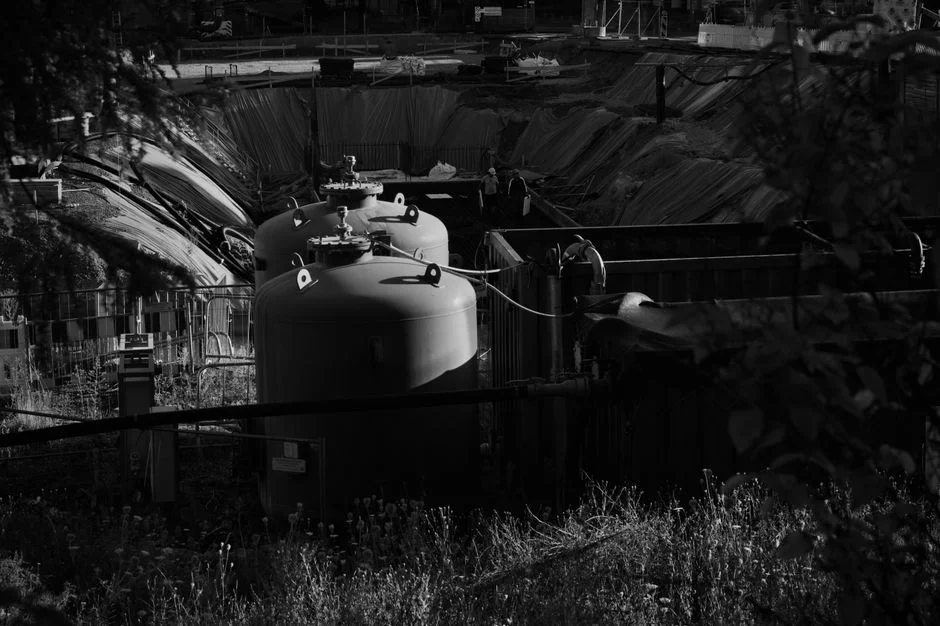
The core treatment train is equalization, pH adjustment and precipitation, dissolved-air flotation, then reactive filtration, with additional polishing only where the confirmed discharge limits require it. The sequence addresses different failure modes: equalization controls hydraulic and concentration slugs, chemistry removes precipitate-forming metals, DAF captures suspended solids and floatable material, and reactive filtration addresses dissolved metals that remain after solids separation.
Use industrial wastewater equalization as the first control barrier. The supplied research specifies 24–48 hours of equalization, online pH and conductivity monitoring and diversion of off-spec flow to a separate holding compartment (HydropureWater, 2026). This is a comparable-case design value, not a Santa Fe Springs requirement. The selected detention time must follow the measured flow and batch-discharge pattern, while the holding compartment must prevent untreated or off-spec water from bypassing the treatment train.
- Equalization and diversion: Blend variable flows, monitor pH and conductivity, and contain off-spec batches.
- pH adjustment and precipitation: Add the confirmed reagent sequence through controlled dosing. Select lime, caustic or another reagent through bench testing and jar testing.
- DAF solids removal: Capture suspended solids, colloidal fines, free oil, oil and grease and newly formed metal precipitates.
- Reactive filtration: Polish dissolved metals remaining after DAF.
- Optional specialized polishing: Add ion exchange, membrane treatment or biological treatment only when the permit and influent data establish the need.
DAF is not a substitute for dissolved-metal treatment. The comparable analysis reports 90–95% TSS reduction for DAF and states that reactive filtration or ion exchange is normally required downstream (HydropureWater, 2026). Treat selenium and arsenic as separate polishing problems. The same analysis identifies ion exchange or membrane polishing as necessary when these dissolved constituents must be reduced below 0.05 mg/L (HydropureWater, 2026); that value is a comparable-case criterion, not a Santa Fe Springs limit.
| Process stage | Primary design duty | Required information before final sizing |
|---|---|---|
| Industrial wastewater equalization | Absorb flow and concentration variation; divert off-spec flow. | Representative flow series, batch schedule, rainfall contribution and maximum slug volume. |
| pH adjustment and precipitation | Create and remove metal hydroxide precipitates. | Total and dissolved metals, pH alkalinity, reagent demand and bench-test results. |
| Industrial DAF system | Remove TSS, colloids, free oil, oil and grease and precipitated solids. | TSS and oil-and-greast load, particle characteristics and required flotation performance. |
| Reactive filtration | Polish dissolved metals after solids removal. | Applicable local and categorical limits, remaining dissolved-metal profile and media alternatives. |
| Ion exchange or membrane | Address severe dissolved-metal or selenium/arsenic polishing duties. | Confirmed constituent-specific limit, ionic background, fouling study and reject-management route. |
| Biological polishing | Remove ammonia or nitrate where supportable by influent data. | Raw ammonia, biodegradability, temperature and biological treatment acceptance criteria. |
Add biology only after the permit and data support it. The comparable analysis recommends an MBBR when raw ammonia exceeds 20 mg/L rather than treating biology as default pretreatment (HydropureWater, 2026). For an integrated treatment and polishing system, the seller should identify which stages are necessary under the confirmed Santa Fe Springs criteria.
Compare treatment options by contaminant and failure risk
Choose each technology by pollutant duty and failure mode, not by packaged-system headline capacity. DAF is generally the stronger fit than a gravity clarifier when the feed contains colloidal fines, free oil, oil and grease or newly precipitated metal solids because flotation captures these materials in a single treatment step (HydropureWater, 2026). It does not, however, remove all dissolved metals.
Chemical precipitation is the primary chemistry step for many metals, but it does not by itself guarantee a very low dissolved-metal concentration. Reactive filtration is the logical downstream option when the remaining compliance concern is dissolved metals after DAF. Ion exchange or membranes are more appropriate when written limits require intensive polishing, including the comparable selenium and arsenic duty identified in the research. See the project-specific analysis of DAF and clarifiers for mining wastewater and the parallel Prattville equipment comparison.
| Technology | Strongest application | Principal failure risk | Buyer comparison item |
|---|---|---|---|
| DAF | Suspended solids, colloids, oil and grease and metal precipitates | Floc carryover, poor bubble contact, inconsistent sludge removal or unsuitable feed chemistry | Guaranteed final effluent, skimming performance, controls, maintenance and redundancy |
| Chemical precipitation | Removal of metals that form insoluble hydroxides under controlled pH | Wrong pH, inadequate reagent dose, poor settling or residual dissolved metal | Chemical consumption, sludge yield, operating range and jar-test performance |
| Reactive filtration | Polishing of dissolved metals after DAF | Media exhaustion, fouling or breakthrough without adequate monitoring | Media life, pressure drop, breakthrough detection and replacement availability |
| Ion exchange or membrane | Intensive dissolved-metal or selenium/arsenic polishing | Fouling, scaling, breakthrough or reject-stream management | Recovery, pretreatment, cleaning, membrane or resin replacement and reject disposal |
| MBBR | Variable-load ammonia or nitrate polishing | Unsupported biology, inadequate retention, toxicity or seasonal performance loss | Media loading, aeration, redundancy, monitoring and biological acceptance criteria |
| SAGR | Cold-climate polishing | Low temperature, variable loading and site-specific operating constraints | Temperature-dependent guarantees, footprint, controls and maintenance |
The comparable research reports more than 100 full-scale North American SAGR installations at temperatures below 1°C (HydropureWater, 2026). That record does not establish superiority for a Santa Fe Springs installation. Require every supplier to guarantee final effluent at the agreed flow, waste characterization, averaging basis and operating conditions. Compare chemical consumption, sludge yield, footprint, controls, redundancy, maintenance, operator workload and replacement-part availability alongside capital price.
Budget for the complete treatment system
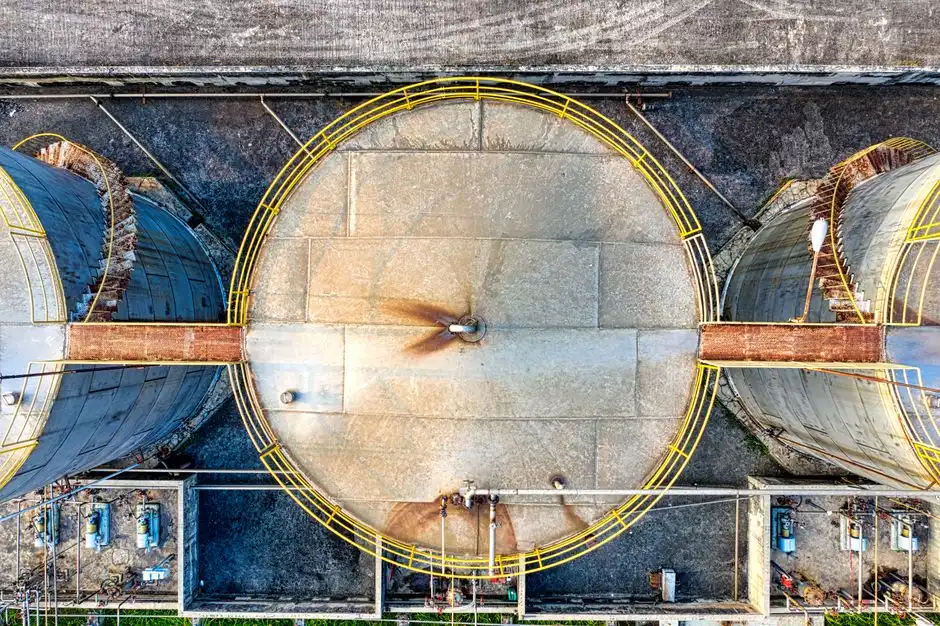
A defensible 2026 budget includes the treatment train, civil works, utilities, controls, chemicals, sludge handling, permitting and contingency—not just the quoted equipment. The comparable 2026 estimate for a packaged 50–200 m³/day skid containing equalization, pH and precipitation, DAF, reactive filtration and automatic chemical dosing is approximately $350,000–$900,000 (HydropureWater, 2026). This is an order-of-magnitude comparable-case benchmark, not a quotation and not a Santa Fe Springs estimate.
The same research estimates an additional $150,000–$400,000 for an MBBR or reverse-osmosis polisher and $80,000–$200,000 for plate-and-frame sludge dewatering (HydropureWater, 2026). Its operating-energy estimate is 0.8–1.5 kWh/m³ (HydropureWater, 2026). Recalculate that energy component using the selected equipment, measured duty cycle and current Southern California electricity tariffs.
| Budget element | Comparable 2026 planning basis | Santa Fe Springs project requirement |
|---|---|---|
| Core treatment skid | Approximately $350,000–$900,000 for 50–200 m³/day with equalization, pH and precipitation, DAF, reactive filtration and automatic dosing (HydropureWater, 2026). | Obtain itemized supplier pricing against the confirmed flow and limits. |
| Biological or membrane polishing | Approximately $150,000–$400,000 for an MBBR or reverse-osmosis polisher (HydropureWater, 2026). | Include only if constituent testing and POTW criteria justify the duty. |
| Sludge dewatering | Approximately $80,000–$200,000 for a plate-and-frame filter press (HydropureWater, 2026). | Confirm solids characterization, cake-moisture target and disposal route. |
| Electrical load | 0.8–1.5 kWh/m³ in the comparable analysis (HydropureWater, 2026). | Rebuild from actual equipment loads, duty cycle and utility tariffs. |
| Site and lifecycle costs | Not priced in the supplied research. | Request civil work, containment, odor control, sampling, laboratory, training, maintenance and contingency separately. |
Include chemical storage, secondary containment, waste lines, electrical service, controls, access platforms, sampling stations, laboratory support, operator training and commissioning. For sludge handling, evaluate a plate-and-frame filter press against generated sludge characteristics and disposal costs rather than including it automatically.
The comparable analysis identifies lime or caustic and sludge hauling as the largest operating-cost lines (HydropureWater, 2026). Tighter chemical control and lower sludge volume can reduce both, but savings must be demonstrated through bench tests, pilot work or defensible operating data. Request reagent consumption, sludge-generation estimates and hauling assumptions as separate supplier inputs.
Use a compliance verification plan before startup
Submit the process narrative, flow diagram, proposed chemical use, waste characterization and control philosophy to the receiving POTW before ordering final equipment. Confirm whether the authority will accept the treatment concept, require design changes or issue a conditional approval. A conceptual train is not an industrial-user permit.
Lock down the compliance sampling point, frequency, analytical methods, averaging periods and composite or grab-sample requirements in writing. Require the supplier to demonstrate those same monitoring requirements during factory and site acceptance testing.
Before sewer discharge, complete equipment startup testing, chemical-response testing and sustained-run sampling. Challenge pH interlocks, conductivity alarms, flow control, diversion logic and power-failure scenarios. Test the actual waste stream through the full process train; do not accept water or substitute reagent during performance demonstration unless the acceptance plan expressly defines it.
Train operators to divert off-spec flow, respond to pH and conductivity alarms, manage chemical dosing and document sample chain of custody. Establish preventive maintenance for pumps, DAF skimming, filters, membranes, instruments and sludge-dewatering equipment. Retain operating logs, calibration records, laboratory results, chemical-use records and corrective actions for compliance review.
The implementation sequence follows the same discipline as this 2026 petroleum-plant pretreatment compliance workflow: verify authority, characterize waste, confirm controls, test the installed process and document operation before accepting sewer discharge.
Frequently Asked Questions
What will a complete mining and metals pretreatment system near Santa Fe Springs cost?
No Santa Fe Springs-specific quotation is supported by the supplied research. Comparable 2026 planning ranges are approximately $350,000–$900,000 for a packaged 50–200 m³/day treatment skid, $150,000–$400,000 for an MBBR or reverse-osmosis polisher and $80,000–$200,000 for plate-and-frame sludge dewatering (HydropureWater, 2026). Request separate installed quotations for civil work, utilities, containment, controls, chemicals, commissioning and sludge disposal. Do not compare those benchmarks with a supplier’s final price until the scope and local limits match.
How should a buyer select and size a treatment supplier?
Give each supplier the same written design basis: confirmed flow, representative waste analysis, applicable local limits, sampling method and required guarantees. Require a process train, chemical-demand basis, equipment sizing, duty-cycle assumptions, controls description, redundancy, maintenance plan and startup protocol. This mining pretreatment compliance guide illustrates how to structure comparable project information without treating another location’s rules as local requirements.
Can DAF alone meet dissolved-metal limits for a Santa Fe Springs discharge?
Do not assume so. The comparable analysis reports 90–95% TSS reduction for DAF but states that reactive filtration or ion exchange is normally added for dissolved-metal compliance (HydropureWater, 2026). Whether either polishing step is needed depends on the Santa Fe Springs POTW’s written limits and representative soluble-metal results. Select DAF for its solids and floatables duty, then verify the remaining dissolved-metal profile.
What should be completed before the treatment system goes into service?
Obtain the applicable Industrial User Permit or other written authorization, confirm the approved sampling point and monitoring requirements, complete startup and sustained-run testing, and document operator training and maintenance readiness. The receiving POTW must first establish the site-specific limits because federal categorical standards alone do not determine the final equipment scope or Santa Fe Springs discharge conditions.
Related Equipment
- industrial DAF system — specifications, capacity range, and technical data