What the Jalandhar Data Center Must Treat
A Jalandhar data center needs separate treatment decisions for domestic sewage, cooling-tower blowdown, process wastewater, sludge, stormwater and construction-period wastewater, not one generic plant sized only around blowdown. The required train depends on water sources, cooling architecture, blowdown chemistry, sewer limits and reuse targets. For an evaporative tower, the supplied specification identifies 3,000–10,000 mg/L blowdown TDS, 75–90% recovery by RO and 99% or greater by ZLD. India-wide rules introduced in 2025 also require bulk users consuming more than 5,000 litres per day to increase treatment and reuse, but Jalandhar and Punjab requirements still need confirmation.
The boundary condition is more important than the equipment name. Domestic sewage may be suitable for biological treatment if its contaminants and flow are suitable for the selected reuse point. Cooling-tower blowdown is a concentrated, scale-prone stream requiring characterization before RO is selected. Laboratory or cleaning discharges may need segregation because their composition can vary and may interfere with biological or membrane treatment. Sludge and concentrated brines require separate handling rather than being diluted into another stream. Stormwater and construction wastewater may remain outside the permanent process train if they are isolated and directed to approved destinations.
HydropureWater and the relevant EPC team should therefore classify each stream by origin, discharge route, reuse destination and responsible operator. Segregation should prevent intermittent high-strength discharges from undermining a biological reactor or RO feed. Where treatment is not economical, the wastewater should go to an authorized sewer, receiving system or approved contractor, with the pretreatment agreement and sample requirements defined before design.
| Wastewater stream | Project decision | Required information before sizing |
|---|---|---|
| Domestic sewage | Discharge, decentralized treatment or reuse after biological treatment | Flow, sewage characteristics, reuse point, sewer agreement and local discharge conditions |
| Cooling-tower blowdown | Internal recovery, controlled discharge or partial recovery with brine route | TDS, conductivity, hardness, silica, chloride, oil, cycles of concentration and blowdown flow |
| Process wastewater | Segregate, pretreat or divert to a permitted stream or contractor | Source, batch frequency, pH, COD, toxicity, metals and cleaning chemicals |
| Sludge and treatment residues | Dehydrate, store and dispose through an approved route | Solids generation, characteristics, storage time and disposal acceptance criteria |
| Stormwater and construction wastewater | Keep separate from process reuse unless treatment is required | Drainage plan, contamination sources, discharge point and construction controls |
For initial planning, the Hindustan Times article published on 2026-08-31 estimates Indian data-centre consumption at 1.5–2.5 litres per kWh of IT load, while noting that actual use depends on cooling technology and climate. Its approximate 1–1.2 million litres per day for a 20 MW centre is industry context, not a Jalandhar design load. Detailed design needs IT load and rack density, cooling architecture, evaporative versus dry heat rejection, makeup source, water analyses, sewer limits, groundwater risk, future expansion and intended reuse points. See the wastewater and cooling-blowdown treatment roadmap for the broader screening logic.
Start With the Water and Cooling Balance
Cooling demand reduction determines whether a recovery plant is justified; it must precede equipment selection for Jalandhar data centre water treatment. Schneider Electric’s sequence is to reduce consumptive demand, identify appropriate non-potable sources, establish treatment requirements, design the cooling and heat-rejection architecture around the result, and measure both consumption and source. That order prevents a treatment skid from being sized around an unnecessarily evaporative system.
Prepare separate balances for evaporation, drift, blowdown, domestic demand, process demand and other consumptive uses. Circulating closed-loop coolant is not consumption unless it leaves through evaporation, leakage, maintenance or disposal. Report net consumptive loss, external withdrawal and source separately. This distinction is central to comparing freshwater, municipal reclaimed water and internally recovered blowdown on a water-risk basis.
Schneider Electric reports that closed-loop direct-to-chip cooling can recirculate more than 95% of its coolant, with relatively small maintenance and leakage losses. An evaporative cooling tower remains a continuing replacement-water user. Dry coolers, air-cooled chillers, hybrid arrangements and direct-to-chip systems therefore need to be compared against present and future rack density, Jalandhar climate, heat-rejection capability, electrical demand and maintainability. Higher cooling-tower cycles of concentration can reduce blowdown, but only if incoming chemistry and makeup controls prevent scaling.
The next decision is the source: municipal treated wastewater, an on-site sewage treatment plant, greywater, rainwater, groundwater or a combination. Schneider Electric states that source availability, reliability, quality and cooling architecture govern this choice. The India wastewater rules for data-centre projects provide additional policy context, while smart monitoring for wastewater reuse systems addresses operational measurement. A groundwater option also needs a hydrogeological assessment; the 2026-08-31 Hindustan Times article notes that groundwater can carry high TDS and require additional dissolved-salt removal.
Build the Treatment Train for Each Water Source
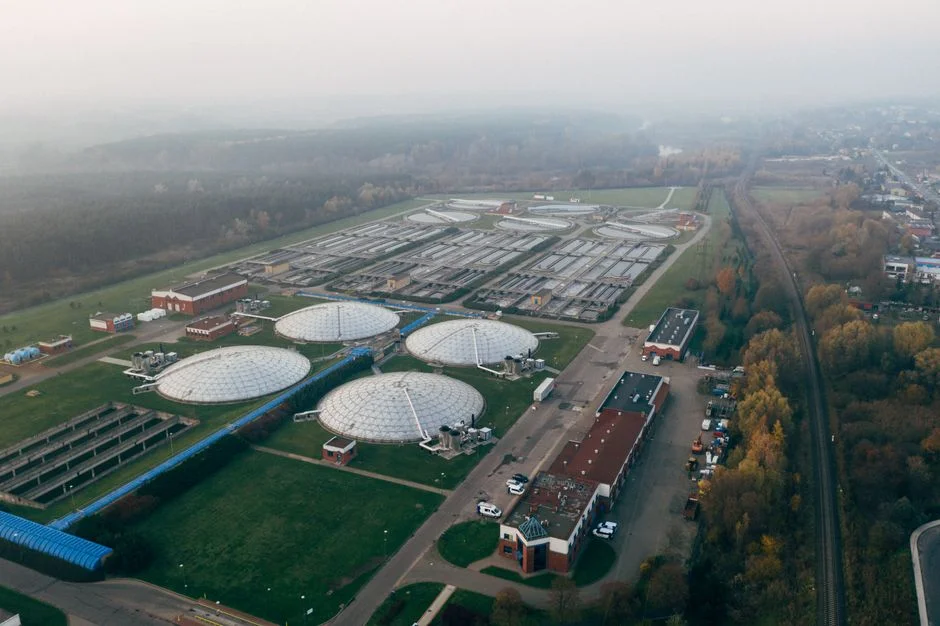
Each source needs a treatment train selected from its actual chemistry and reuse point. Municipal sewage or greywater generally requires biological treatment before membrane separation where reuse quality demands it; the available MBR equipment is designed for water-reuse projects from 10 to 2,000 m³/day. Cooling-tower blowdown follows a different pretreatment sequence because its principal risks are suspended solids, oils, organics, dissolved salts and scale-forming minerals.
The supplied blowdown specification identifies 3,000–10,000 mg/L as typical TDS and recommends characterization before sizing. Where solids, oils or organics are present, DAF can remove them before the membranes. Multimedia filtration or UF provides a further particulate barrier; UF pretreatment for RO and reuse water is the relevant equipment class. The sequence is not a rule that every stream needs DAF and UF: it is the benchmark logic for protecting the downstream process.
For partial recovery, an industrial RO blowdown recovery system is the supplied specification’s primary option. It gives 75–90% recovery, with permeate below 500 mg/L TDS and conductivity below 1,000 µS/cm as design targets. EDI should be added only when the cooling or liquid-cooling specification requires low-ion makeup; the supplied source treats it as a polishing step after RO, not a default for every tower.
ZLD is justified when an authorized brine route is unavailable or its handling cost is unacceptable and the higher recovery target warrants the additional capital and energy. The supplied specification reports 99% or greater recovery for RO integrated with thermal evaporation and crystallization. ZLD also creates a solid-residue stream that must be included in the site’s waste balance.
Disinfection is part of biological-risk control. The supplied specification uses chlorine dioxide for residual disinfection and identifies biofilm and Legionella as risks in reclaimed loops. A chlorine dioxide generator for industrial cooling loops should therefore be evaluated alongside the residual-monitoring regime, rather than treated as a simple dosing accessory.
| Source and reuse point | Candidate treatment sequence | Design benchmark from supplied specification | Key acceptance evidence |
|---|---|---|---|
| Sewage or greywater for cooling makeup | Biological treatment → filtration or UF → RO if required → disinfection → storage | MBR equipment scale: 10–2,000 m³/day | Permeate and reclaimed-water certificates; biological monitoring |
| Cooling-tower blowdown for makeup | DAF where justified → multimedia filtration or UF → RO → disinfection | Feed TDS 3,000–10,000 mg/L; RO recovery 75–90% | Permeate TDS below 500 mg/L; conductivity below 1,000 µS/cm |
| Low-ion liquid-cooling makeup | RO → EDI → disinfection | EDI only where the liquid-cooling specification requires low-ion water | Agreed ion-specific limits and reject analysis |
| Blowdown with no acceptable brine route | RO → brine concentration → evaporation → crystallization | ZLD recovery 99% or greater | Recovery demonstration, solid-residue plan and utility balance |
Set Water-Quality Gates Before Buying Equipment
Vendor quotations should be compared against separate acceptance gates for reclaimed makeup, cooling-loop water, RO permeate, sewer discharge and final brine or solid residue. These are engineering contracts, not interchangeable indicators: a good cooling-loop composition does not prove that RO permeate will protect the membranes, and a compliant permeate does not establish that the final brine or solids can be accepted off site.
The supplied reuse targets—TDS below 500 mg/L, COD below 30 mg/L, conductivity below 1,000 µS/cm and chloride below 150 mg/L—should be treated as design benchmarks for this project, not as Jalandhar statutory limits. The applicable Punjab sewer or discharge limits must be obtained in writing. A quote that states only “suitable for reuse” is not technically complete.
Each parameter should be connected to a failure mechanism. Hardness and calcium carbonate can promote scale; silica can form difficult deposits; chloride increases pitting risk; and biofilm increases fouling and heat-transfer loss. The supplied specification identifies conductivity as a practical real-time control metric. Monitoring should also cover pH, hardness, silica where relevant, disinfectant residual and biological activity. COD and chloride require scheduled laboratory confirmation where they cannot be measured reliably online.
Automatic diversion is essential: off-spec permeate must not enter the cooling tower, and reject water must follow a defined route. The operating manual should set cartridge-change, membrane-cleaning, disinfection and laboratory-testing frequencies based on actual trends rather than fixed assumptions alone. Treatment parts, valves and media should be specified with compatible materials and clear replacement criteria.
The energy balance must sit beside the water balance. Report water savings together with treatment electricity and chemical consumption; otherwise a water-use improvement may conceal a PUE penalty or operating cost.
| Acceptance point | Required specification | Verification and response |
|---|---|---|
| RO permeate | TDS below 500 mg/L; conductivity below 1,000 µS/cm as supplied design targets | Online conductivity with periodic laboratory TDS; automatic reject diversion |
| Reclaimed cooling makeup | COD below 30 mg/L; chloride below 150 mg/L as supplied design targets | Scheduled laboratory testing, disinfectant residual check and biological monitoring |
| Cooling-loop control | Site-specific hardness, calcium, silica, chloride and scale-index limits | Trend-based control with chemical dosing and diversion response |
| Sewer discharge | Punjab and local-body limits confirmed for the receiving system | Written pretreatment agreement, sampling plan and route-specific reject controls |
| ZLD residue or brine | Characterization, storage and disposal route | Waste acceptance certificate and mass-balance record |
Compare the Reuse and Disposal Options
Internal blowdown recovery gives the data center direct control over cooling chemistry and can support higher tower cycles of concentration, but it requires larger treatment equipment and operating expertise. It is most relevant where the facility has a sustained blowdown stream, an authorized recovery objective and operators able to maintain pretreatment, membranes and disinfection.
Municipal reclaimed water shifts more treatment responsibility upstream. The supplied source says reclaimed water is often sold at a 20–40% discount to potable water, while still requiring treatment to meet makeup specifications. Reliability, intermittent supply, off-spec events and site-specific polishing remain the data center’s responsibility.
RO is the partial-recovery route where an authorized sewer can accept the brine. ZLD is the higher-recovery route where discharge constraints or brine-handling costs justify the added equipment and energy. The supplied international budgeting ranges are RO capital cost of $500–$1,500 per m³/day and ZLD capital cost of $2,000–$4,000 per m³/day; these are not Jalandhar quotations and exclude site-specific civil, power, chemical and disposal costs unless the bidder states otherwise.
Foreign regulatory examples should not be relabelled as Indian rules. The comparative data-centre blowdown treatment guide can inform option screening, but Punjab approvals must be established independently. A comparative treatment example is also available in the data-centre wastewater treatment guide.
Lifecycle assessment must include energy, chemicals and freshwater displacement. Open Engineering’s 2026 comparative analysis found that its wastewater scenario had about twice the global warming potential of the freshwater case, with treatment energy responsible for roughly 80% of the difference. Its UF+RO scenario used more than five times the freshwater energy, although improved cycles of concentration reduced blowdown and chemical consumption.
| Option | Water recovery and reuse | Principal advantage | Principal risk or unresolved input |
|---|---|---|---|
| Municipal reclaimed water | Depends on upstream treatment and site polishing | Reduces freshwater demand and upstream treatment burden | Reliability, source quality, polish cost and applicable reuse permission |
| Internal RO recovery | 75–90% recovery under the supplied specification | Controls the cooling-loop chemistry at the facility boundary | Feed variability, pretreatment, membrane fouling and skilled operation |
| RO with permitted brine discharge | Partial recovery with a defined reject route | Lower capital intensity than ZLD where the sewer accepts brine | Discharge limits, surcharge and future rejection risk |
| ZLD | 99% or greater recovery under the supplied specification | Minimizes liquid discharge where brine disposal is constrained | Higher capital and operating cost, energy use and solid-residue handling |
Plan Permits, Operation and Emergency Supply
The treatment concept becomes executable only after the receiving authority, sewer operator and reuse permissions are identified. Jalandhar-specific numerical discharge limits are not established by the supplied research, so the project should obtain the applicable Punjab requirements, local-body conditions, pretreatment agreement, discharge destination, sampling frequency and reuse permissions in writing before finalizing process guarantees.
Schneider Electric reports that 2025 rules require bulk users consuming more than 5,000 litres per day to increase wastewater treatment and reuse. It also cites the Bureau of Energy Efficiency’s 2023 District Cooling Guidelines, which encourage treated wastewater for cooling-tower makeup where feasible. These are national policy directions, not substitutes for the project’s Jalandhar consent conditions.
Operational resilience should be designed into the package: bypasses, reject-water storage, redundant power, membrane-cleaning access, critical spares, remote alarms and a tested response for off-spec reuse water. Treated municipal wastewater, an independent backup source and a controlled potable-water contingency should be considered as separate supply layers.
The MBR integrated wastewater treatment system represents one biological-treatment option where the sewage balance supports it. For monitoring and control, smart monitoring for wastewater reuse systems should be used to define alarms and operating records, not as a substitute for routine laboratory verification.
Track water withdrawal, consumptive loss, source mix, treatment electricity, chemical use, recovery rate and reject volume as separate KPIs. This avoids combining reuse and source quality into a single WUE figure and makes the operating impact auditable.
Build the Supplier Enquiry and Sizing Package
A comparable tender requires one integrated flow diagram and one data package for every stream. Request separate diagrams for incoming sewage, process wastewater, cooling-tower blowdown segregation, pretreatment, RO, disinfection, reuse, reject and sludge or residue handling. The data-centre blowdown treatment project guide can support preparation of the technical enquiry.
Every bidder should state design flow, operating and peak flows, recovery rate, permeate quality, reject quantity and composition, utility demand, chemical consumption, membrane life, redundancy, controls, training, commissioning tests and warranty terms. Vague “reuse-water ready” statements are not acceptance criteria.
The core sizing request should include current blowdown TDS, cycles of concentration and the sewer limit, as required by the supplied specification. Add full site-specific analyses, municipal sewer conditions, Punjab compliance references, expected expansion, disposal routes and every intended reuse point. The bidder should then return a mass and water balance with the equipment list.
Compare lifecycle cost and operational risk, not equipment price alone. Include membrane replacement, energy, chemicals, sludge or brine disposal, operator attendance and future expansion. Use the supplied $500–$1,500 per m³/day for RO and $2,000–$4,000 per m³/day for ZLD only as international budgeting context; request an itemized Jalandhar quotation against the complete site data.
Frequently Asked Questions
Should a Jalandhar data center choose internal blowdown recovery or municipal wastewater reuse?
Choose internal recovery when a sustained, characterized blowdown stream exists and the value of controlled cooling chemistry justifies pretreatment and membrane operation. Consider municipal reclaimed water when its quality, reliability, price and reuse permission are confirmed; the data center must still define polishing and off-spec response. Compare both against reduced cooling demand first rather than assuming one source fits every facility.
What information is required to size cooling-tower blowdown treatment?
Provide blowdown flow, TDS, conductivity, hardness, silica, chloride, suspended solids, oil, pH, cycles of concentration, operating schedule, sewer limits and expansion plans. The supplied specification specifically calls for current blowdown TDS, cycles of concentration and the sewer limit. These inputs determine pretreatment, RO recovery, reject volume and whether ZLD is necessary.
How should the budget compare RO and ZLD?
Use the supplied international ranges of $500–$1,500 per m³/day for RO and $2,000–$4,000 per m³/day for ZLD as screening context, not quotations. Request itemized local offers including pretreatment, power, chemicals, membranes, residue disposal, civil works and expansion. The 2026 Open Engineering analysis also shows why treatment energy must be included: its wastewater scenario had about twice the freshwater scenario’s global warming potential.
What should a supplier provide to demonstrate technical and compliance fit?
Request stream-by-stream flow diagrams, water and mass balances, permeate and reject criteria, utility demand, redundancy, controls, commissioning tests, operator training, warranty terms and documented Punjab or local-body compliance references. For ZLD, also require the solid-residue acceptance route. A supplier unable to identify the sewer or reuse authority should not be given final equipment sizing approval.
Are the water-quality targets in this roadmap Jalandhar discharge limits?
No. TDS below 500 mg/L, COD below 30 mg/L, conductivity below 1,000 µS/cm and chloride below 150 mg/L are supplied design benchmarks for the recovery concept. The applicable Jalandhar and Punjab requirements must be confirmed with the relevant authorities because the supplied research does not establish Jalandhar-specific numerical discharge limits.