What Makes Indonesian Textile Wastewater Difficult to Treat?
Indonesian textile factories generate wastewater streams that cannot be treated as one uniform effluent. Dyeing, printing, washing, finishing and batik operations introduce different combinations of colour, salt, process chemicals, suspended solids and reusable-water demands. A practical design for textile wastewater treatment in Indonesia therefore starts with stream segregation, site sampling and a chemical inventory—not a predetermined equipment list. Each production area must be assessed separately, including any water that will be reused in dyeing, washing or boiler operations.
Persistent synthetic colour and bio-refractory organics require different treatment responses from suspended solids, colloids, oils and process chemicals. Dyeing and printing streams may carry high colour and oxidant demand; washing streams may be comparatively dilute but have substantial hydraulic variation; finishing streams can contain binders and sizing agents. Potentially toxic metals must also be screened. A 2025 Springer review of Indonesian batik treatment reports dye-associated copper and zinc in methylene blue and crystal violet, plus lead and zinc in crystal violet. Those findings support metal analysis rather than assuming colour is the only contaminant of concern.
Published removal percentages are evidence that a method worked under its study conditions, not guarantees for another factory. The 2025 Springer review reports more than 90% removal of turbidity, TSS and TDS by alum or PAC in cited batik studies, but dosage, wastewater composition and operating conditions still require local validation. A plant mass balance should trace water from process use through segregation, treatment, sludge or concentrate disposal, discharge and reuse.
Before selecting a PLC-controlled chemical dosing system for textile wastewater or a textile wastewater DAF pretreatment system, request at least the peak and average flow, production schedule, dye and chemical inventory, pH, COD, BOD, TSS, colour, salinity and relevant metal parameters. The industrial ETP versus DAF buyer’s guide provides a useful equipment-selection framework, but it must be adapted to verified site data and the applicable Indonesian permit.
Indonesia’s Compliance and Infrastructure Context
A 2025 legal study found low compliance with mandatory wastewater-management regulations in Indonesia’s textile sector and linked non-compliance to pollution and water-scarcity risks. The same study recommended more ambitious and measurable contamination thresholds, support for compliant companies lacking financial resources, and recognition of strong compliance performance. These are legal-policy findings, not a substitute for checking a factory’s current permit or confirming the requirements applying to its discharge route.
The Indonesian catalytic-ozonation review cites Ministry of Environment and Forestry Regulation No. 5/2014, amended by Regulation No. P.16/MENLHK/SETJEN/KUM.1/4/2019, as a regulatory reference. Because legal applicability can depend on current rules, permit conditions and receiving waters, procurement teams should verify current textile-specific requirements with the responsible authority before ordering equipment. A quotation should identify the environmental parameters, sampling points, monitoring frequencies and supporting documents included for permit and client due diligence.
Infrastructure gaps make centralized compliance uneven. The 2025 Springer batik review reports that only 33.8% of Pekalongan wastewater was treated at a Waste Treatment Unit and 24% in Bantul at a wastewater treatment plant. It also reports 73,878 m³ of untreated Pekalongan batik wastewater discharged monthly. Those figures indicate both environmental risk and potential demand for distributed or shared capacity, but they do not justify sizing a particular plant without local flow and permit data.
This gap between regulatory requirements and available infrastructure should shape the treatment strategy. A plant without reliable pretreatment may need staged implementation, while a facility near shared treatment capacity may benefit from a compact pretreatment package. Use the framework below to prepare a supplier brief; the industrial wastewater pretreatment-limit guide illustrates why upstream controls must be translated into enforceable equipment criteria.
| Due-diligence item | Evidence a buyer should request | Procurement consequence |
|---|---|---|
| Applicable discharge or reuse requirements | Current permit, cited regulation, receiving-water context and proposed monitoring parameters | Define guarantees against named parameters, not general “compliance” language |
| Existing treatment performance | Recent influent and effluent data, sampling locations and operating records | Identify whether the gap is hydraulic, treatment capacity or wastewater character |
| Infrastructure context | Access to shared treatment, sewer restrictions, sludge handling and utility availability | Compare decentralized, shared and modular implementation |
| Supplier documentation | Test protocols, commissioning criteria, controls, utility demand, maintenance scope and training | Make the evidence part of the acceptance schedule |
Build a Treatment Train Around the Actual Wastewater

A workable textile treatment train removes contaminants in the order in which they interfere with downstream processes. Source control and segregation come first, followed by screening and equalization, then coagulation or pH adjustment, DAF or clarification, biological treatment where suitable, advanced oxidation or membranes where required, and finally disinfection, reuse or compliant discharge. Omitting a stage does not remove its contaminant load; it transfers the problem downstream.
- Control and segregate sources. Separate high-concentration dye baths, washing overflow, printing waste, finishing streams and contaminated first-flush water where practical. Record chemical use and production changes before equipment capacity is fixed.
- Equalize and screen. Equalization protects downstream biological and oxidation systems from batch discharges; screening and coarse solids removal protect pumps and transfer equipment.
- Condition the water. A PLC-controlled chemical dosing system for textile wastewater can dose coagulants, flocculants, pH adjusters and specialty chemicals according to the validated recipe. Jar tests and supplier-supported trials should establish the recipe before automatic control is accepted.
- Remove solids and floatables. DAF is a pretreatment option for suspended solids, oil and grease and colloidal material. HydropureWater’s stated DAF range covers 4–300 m³/h across 13 standard models with automatic skimming; suitability still depends on actual flow, load and flotation performance.
- Treat biodegradable organics biologically where appropriate. Biological treatment is appropriate only after wastewater character, pH, toxicity, temperature and hydraulic variability support the selected process.
- Apply advanced treatment only for a defined residual. Catalytic ozonation, non-thermal plasma and membranes address different objectives and should follow appropriate upstream removal.
The 2025 Springer batik review reports that alum and PAC removed more than 90% of turbidity, TSS and TDS in cited studies. This supports testing coagulation, but not adopting a fixed dose: matrix effects and chemical demand vary. For membrane reuse, a MBR system for industrial wastewater reuse is justified only when the wastewater characteristics, available footprint and reuse target support it. HydropureWater specifies 10–2,000 m³/day capacity and below-1-μm membrane filtration.
Advanced oxidation addresses persistent colour and refractory or toxic compounds; it is not a substitute for solids removal and biological treatment. A Scientific Reports study published 6 July 2026 examined a small corona-discharge reactor at 18.5–21 kV, 3–6 cm electrode spacing and 0.5–1.5 L/min oxygen flow. It reported 60.9 ppm ozone at 21 kV and 4 cm separation. These are experimental plasma-generation conditions, not a commercial ozone-removal guarantee. The available ozone generator for water-tank sterilization should not be represented as the same reactor or performance envelope.
| Train position | Primary role | Design evidence required |
|---|---|---|
| Equalization and screening | Hydraulic control and protection of downstream equipment | Batch-generation profile, peak flow and solids inventory |
| Chemical dosing and coagulation | Destabilization, precipitation and floc formation | Jar test, dose-response curve, pH range and mixing requirement |
| DAF or clarification | Suspended solids, colloids, oil and floatable removal | Particle distribution, load, settling or flotation trial and sludge handling |
| Biological treatment | Biodegradable organic load | BOD/COD ratio, toxicity, temperature and biological loading assessment |
| Advanced oxidation | Residual colour and refractory or toxic organics | Specific target compound, ozone demand, reactor validation and by-product assessment |
| MBR or other membrane | Biologically treated solids separation and defined reuse quality | Flux, membrane fouling tendency, recovery, cleaning and end-use quality |
Compare DAF, Clarification, Oxidation and Membrane Options
The best technology is determined by the contaminant, required water quality and operating constraints—not by a single nominal removal claim. DAF and clarification primarily handle solids; oxidation targets resistant chemical compounds; MBR couples biological treatment with membrane solids separation. Their pretreatment needs, footprint, utility demand and maintenance obligations differ enough that combining them requires a process rationale.
The 2020 Indonesian catalytic-ozonation review covers catalysts including activated-carbon materials, carbon nanotubes, nanoparticles and oxide-based materials. It also compares reactor designs and applications in synthetic and real textile wastewater. This breadth demonstrates that “catalytic ozonation” is not a standardized equipment category: catalyst form, mass transfer, ozone delivery, reactor configuration and wastewater matrix all affect results. A supplier must therefore define the catalyst and reactor, not simply offer the process label.
The 2025 batik review illustrates the range of physical, biological and advanced approaches. It reports 84% colour removal and 98% COD removal for fuel wood ash, and 76.92% chromium removal for a TiO₂/activated-carbon composite in its cited application. These results come from different treatment mechanisms and cannot be used as interchangeable guarantees. A charcoal-like adsorbent does not provide the solids separation of DAF, while an oxidation stage does not provide the clarification function of a lamella or sedimentation tank.
Compare each option against the plant’s actual constraints: influent characteristics, reuse target, land availability, energy and chemical use, operator capability and discharge requirements. Ask suppliers for guaranteed process values, test protocols, utility demand, control philosophy, redundancy, maintenance scope and commissioning acceptance criteria. The high-efficiency sedimentation tank, MBR system for industrial wastewater reuse and textile wastewater DAF pretreatment system should therefore be compared on complete process duty rather than equipment price alone.
| Option | Principal contaminants or function | Key limitation | Question for the supplier |
|---|---|---|---|
| DAF | Suspended solids, colloids, oil and floatables | Requires suitable solids characteristics, recycle performance and sludge handling | What hydraulic and solids loads were used for the guarantee? |
| Lamella or sedimentation clarification | Suspended solids after conditioning | Depends on floc settleability and loading | How will changing chemical conditions affect settling and sludge capture? |
| Catalytic ozonation | Refractory organics, colour and selected toxic compounds | Catalyst and reactor design materially affect results | Which catalyst, reactor and ozone-transfer arrangement will be supplied? |
| Non-thermal plasma | Experimental ozone generation for oxidation applications | Research conditions do not establish commercial effluent performance | What full-scale removal and by-product data support the proposed duty? |
| MBR | Biological treatment, solids separation and reuse preparation | Requires suitable biology, membrane cleaning and disciplined operation | What flux, recovery, cleaning frequency and end-use limits are guaranteed? |
Plan Sizing, Procurement and Commissioning Around Evidence
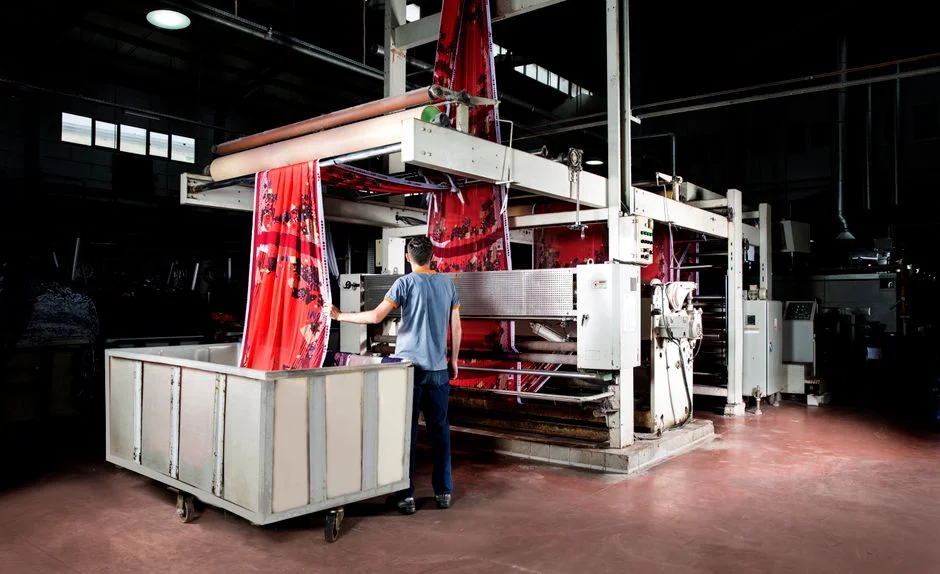
Hydraulic capacity must follow the measured peak flow and operating profile, not average daily production alone. The 2025 Springer batik review cites average wastewater volumes ranging from 4,000 to 25,000 L/day across 18 industries in three Indonesian cities. Those averages describe study participants; they are not design multipliers. A batch dye house, wash cycle or production expansion can create a materially different peak load.
For dispersed MSMEs, modular systems, shared treatment, tanker services and decentralized collection should be compared on total operating responsibility. Logistics, pretreatment consistency, receiving-plant capacity, custody of residues and the effect of variable influent on shared treatment must be included. A modular treatment package cannot solve unreliable segregation, chemical control or sludge handling.
Require a site trial, jar test or equivalent validation for chemical-intensive processes. Sampling locations, parameters, test methods, operating conditions and acceptance values should be written into the procurement package. Specify turndown capability, bypass prevention, sludge or concentrate handling, standby provisions, remote controls, local service support and operator training. A plate-frame filter press may be relevant to dewatering, but its selection still depends on sludge characteristics and disposal requirements.
Control variables should also be measurable. The Scientific Reports study published 6 July 2026 reported ANN predictive accuracy of R² 0.962 versus 0.7825 for RSM when modelling ozone generation. That comparison supports data-driven operating control; it is not a wastewater-removal result. For procurement, require the supplier to explain which variables are measured, how setpoints change, what alarms exist and how performance is demonstrated under operating variation.
| Procurement package | Minimum requirement | Acceptance focus |
|---|---|---|
| Design basis | Measured flow profile, production schedule, wastewater analysis and chemical inventory | Capacity remains adequate at documented peak conditions |
| Process validation | Site trial, jar test or equivalent with the proposed chemical program | Defined performance under recorded operating conditions |
| Controls and safeguards | Setpoints, alarms, interlocks, bypass prevention and remote access | Failure modes identified and tested |
| Residues and utilities | Sludge or concentrate route, water, power, chemicals, cleaning and maintenance | Operating costs and responsibilities are complete |
| Commissioning | Sampling plan, test protocols, training, documentation and handover | Results meet named contract criteria before acceptance |
Frequently Asked Questions
How much does textile wastewater treatment cost in Indonesia?
There is no defensible universal price because treatment cost depends on measured wastewater character, flow profile, selected process, reuse target and site utilities. Ask each supplier for a priced bill of quantities separating equipment, civil works, installation, chemicals, energy, sludge handling, commissioning and monitoring. Also request the test protocol and operating conditions behind any guaranteed treatment value.
What size DAF system is suitable for a textile dyeing or batik plant?
Size the DAF from measured peak flow and contaminant loading, including batch discharges, rather than selecting from average daily wastewater volume. Provide the production schedule, peak flow, TSS, oil and grease, colloids, chemical dosing proposal and sludge-handling route. A textile wastewater DAF pretreatment system should then be checked against the verified duty.
Should a textile factory choose ozonation or an MBR system?
Choose MBR when biological treatment and membrane solids separation support the reuse objective and site conditions; choose advanced oxidation when a verified residual such as persistent colour or refractory organics must be destroyed or transformed. Ozonation is not a substitute for adequate solids and biological pretreatment. Compare both options against the final effluent or reuse specification.
How can an Indonesian textile buyer verify that a treatment supplier meets applicable wastewater requirements?
Ask the supplier to map its guaranteed process values to the parameters in the factory’s current permit and to provide the sampling points, test methods, monitoring frequency, commissioning records and supporting documents included in the offer. Have the legal or environmental team confirm current requirements rather than accepting a general statement that the system is compliant.