
Which Rules Control a Bonnyman Sewer Discharge?
Mining and metals plants near Bonnyman meet sewer pretreatment limits by treating to the most restrictive applicable requirement: the controlling POTW sewer-use ordinance, state authorization and industrial-user permit, and applicable federal categorical standards. A defensible train generally starts with equalization and pH correction, followed by hydroxide precipitation with sulfide polishing when necessary, coagulation/flocculation, DAF or lamella clarification, filtration and controlled sludge dewatering. Equipment must be sized from representative sampling, peak flow and maximum contaminant loading—not generic mining averages. Because no Bonnyman-specific sewer authority, permit or numerical limit can be confirmed from the supplied research, those documents must be obtained in writing before final design.
A sewer discharge to a POTW is regulated through the Clean Water Act §307(b) pretreatment framework and 40 CFR Part 403, with enforcement administered through local sewer-use requirements (HydropureWater, 2026-02). NPDES under Clean Water Act §402 applies to direct surface-water discharges; it may coexist with pretreatment obligations when a facility has separate outfalls. The relevant categorical reference may be 40 CFR Part 437 for Ore Mining and Dressing or 40 CFR Part 433 for Metal Finishing, but the plant’s processes and permit category must be confirmed before either applies (HydropureWater, 2026-02).
Part 433 values supplied in the research are copper at 3.38 mg/L daily maximum and 2.07 mg/L monthly average, and total chromium at 2.77 mg/L daily maximum and 1.71 mg/L monthly average (40 CFR 433.15, as reproduced by HydropureWater, 2026-02). The supplied Part 437 comparison lists zinc at 1.0 mg/L daily maximum and 0.5 mg/L monthly average. These are categorical values, not verified Bonnyman limits. The supplied research does not identify the responsible Bonnyman-area POTW, an industrial-user permit or a verified local numerical limit.
| Requirement | Supplied value or status | How it should be used |
|---|---|---|
| 40 CFR Part 433 copper | 3.38 mg/L daily maximum; 2.07 mg/L monthly average | Apply only after metal-finishing category confirmation |
| 40 CFR Part 433 total chromium | 2.77 mg/L daily maximum; 1.71 mg/L monthly average | Apply only after metal-finishing category confirmation |
| 40 CFR Part 437 zinc comparison | 1.0 mg/L daily maximum; 0.5 mg/L monthly average | Verify the applicable subpart and local ordinance |
| Bonnyman local requirements | Not identified in the supplied research | Obtain the controlling documents in writing |
This hierarchy prevents an NPDES-versus-pretreatment mistake, a distinction also discussed in the 2026 mining and metals pretreatment compliance guide.
Build a Site-Specific Compliance Basis
The equipment design basis must trace back to the current written authorization, not to a generic federal standard or vendor treatment claim. Request the POTW’s current sewer-use ordinance, industrial-user permit or discharge authorization, prohibited-discharge rules, monitoring protocol, sampling method, enforcement provisions and fee schedule. Also obtain the responsible permit owner, issuing authority, revision date, monitoring points, averaging periods, notification duties and any requirement to modify the permit after changes to process chemistry or flow.
Reconcile those documents with state requirements, NPDES coverage for separate discharges, facility process records, reuse rights and signed acceptance criteria. The precedence should be: written permit and current local limits first; applicable categorical standards second; representative site testing third; and vendor literature only for preliminary equipment selection (HydropureWater, 2026-02). A reserved or unlisted categorical subpart is not proof that no requirement applies; the relevant mineral category and subpart still have to be checked (US EPA, 2026).
For a 2026 implementation sequence, request the local analytical suite, including any PFAS parameters the POTW or state requires. The supplied research identifies PFOS, PFOA, PFHxS and PFNA monitoring associated with EPA’s 2024 Multi-Sector General Permit and identifies tighter POTW local limits and 2025 ore-mining BAT revisions as permit-cycle risks; it does not establish that any of those provisions independently controls the Bonnyman sewer connection (EPA 2024 Multi-Sector General Permit, finalized 2024-09; EPA 2025 ore mining BAT revisions, 2025-03). The plant should therefore document permit status, monitoring requirements and potential analytical-suite changes before ordering equipment.
Use the document-request and reconciliation sequence in this site-specific compliance basis for mining plants, then convert it into the final design basis.
Characterize Every Wastewater Stream
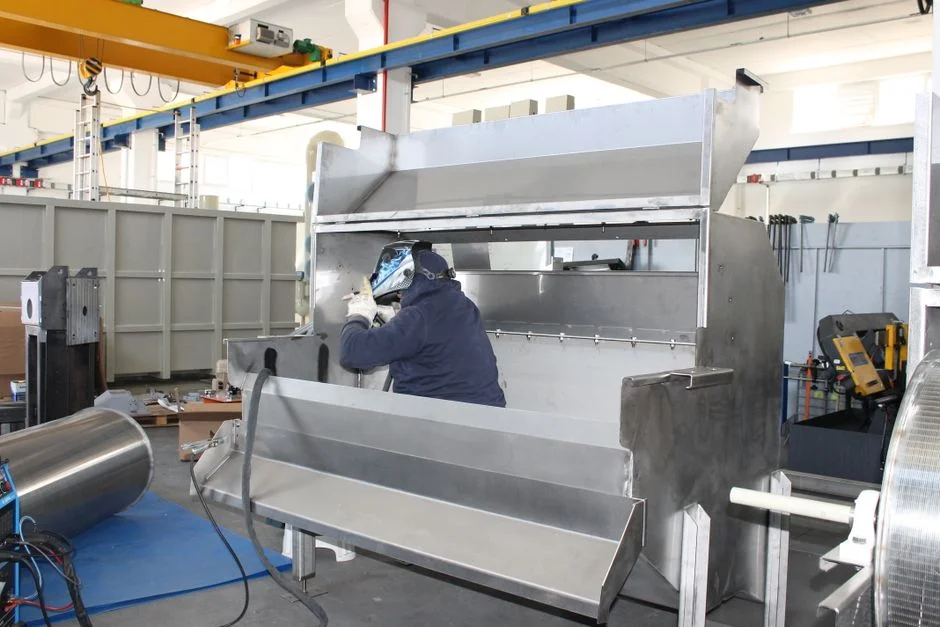
Separate characterization is the first defense against dilution and undersized equipment. Sample mine drainage, mineral-processing water, tailings-pond effluent and dewatering discharge independently before deciding whether they can be combined. Their contaminant profiles, chemical demand and sludge characteristics differ, and combining them can conceal the high-concentration stream that controls treatment load (AMPAC USA, 2025-09).
The program should measure pH, flow, acidity where relevant, dissolved and total metals, TSS, oil and grease, process-reagent residuals, conductivity or TDS, and relevant cyanides, ammonia or chloramines where the process creates them. It must represent normal production, peak production, startup, shutdown, rainfall and storm-event conditions rather than relying on one composite sample (AMPAC USA, 2025-09).
The supplied characterization reports pH of 2–4 in raw acid mine drainage and spent process solutions, with TSS from hundreds to several thousand mg/L. Dissolved metals commonly considered include Pb, Cu, Zn, Cd, Ni and As; acid mine drainage can also carry Fe and Mn (HydropureWater, 2026-02; AMPAC USA, 2025-09). These are characterization ranges, not site limits or Bonnyman averages.
| Stream | Minimum investigation | Design consequence |
|---|---|---|
| Mine drainage | pH, acidity, flow, dissolved and total metals, TSS, conductivity/TDS | Equalization, alkalinity demand and precipitation capacity |
| Mineral-processing water | Metals, TSS, oil and grease, reagent residuals, relevant cyanide, ammonia or chloramines where applicable | Segregation, chemical demand and contaminant-specific treatment |
| Tailings-pond effluent | Flow variability, fine solids, leached metals, process chemicals and pH | Storm-event hydraulic capacity and solids handling |
| Dewatering discharge | Geology-dependent composition, pH, metals and TSS | Discharge controls and possible dedicated treatment |
Calculate hydraulic loading in m³/h and contaminant mass loading from concentration multiplied by flow. Size chemical dosing and solids separation for the controlling mass-loading event, not the daily average. The sampling program should identify the event, duration and flow record that defines that envelope before any equipment bid is accepted.
Size the Treatment Train for the Controlling Event
Equalization should buffer batch discharges, dump-leach cycles, mill clean-outs and storm events. The supplied mining research recommends 8–24 hours of average daily flow; another supplied source gives a preliminary peaking-factor method of 1.5–2.0 (HydropureWater, 2026-02). Final volume must reconcile the measured peak-event hydrograph with storage, pumping and permitted discharge constraints.
Correct pH with lime or sodium hydroxide before hydroxide precipitation. The supplied comparison states that lime generates 3–5 times more sludge and describes 6.5–9.0 as satisfying virtually every POTW instantaneous range in that source (HydropureWater, 2026-02). Neither statement replaces the written Bonnyman limit, and the optimum precipitation pH is parameter-specific; establish it through jar testing.
Hydroxide precipitation is the default. Add sulfide polishing on a slipstream when residual metals must fall below 0.1 mg/L: the supplied research gives sulfide residuals of 0.01–0.05 mg/L for Cu, Zn, Cd and Ni versus 0.5–2.0 mg/L for hydroxide. Sulfide reagent cost is 2–4 times higher and requires sealed reactors with H₂S scrubbing (HydropureWater, 2026-02). Add coagulation and flocculation before solids separation; the supplied source describes polymer coagulant aid at 0.5–3 mg/L and 85–95% total-metals removal under properly controlled precipitation (Fluence, 2024-11).
Choose DAF when oil, grease or buoyant or colloidal material is present. Choose lamella clarification when the main load is metal-hydroxide sludge and footprint or sludge volume constrains the installation. Add multimedia filtration as the final residual-solids barrier: the supplied source describes 1–2 m/h filtration and residual TSS below 10 mg/L. Use UF only for fine colloids or membrane protection; reserve RO for dissolved salts or specific soluble constituents that remain above the sewer requirement or reuse target, with a defined concentrate route.
| Process barrier | Primary purpose | Acceptance evidence |
|---|---|---|
| Equalization | Buffer hydraulic and chemical peaks | Level trends, peak-event model and pump records |
| pH correction and precipitation | Convert dissolved metals to separable solids | Calibrated pH records, dose trends, jar or pilot results |
| Coagulation/flocculation | Aggregate fine particles | Dose, mixer operation and solids-removal data |
| DAF or lamella | Remove precipitated solids and floatable material | Hydraulic loading, TSS performance and sludge generation |
| Multimedia filtration | Remove residual solids and colloids | Differential pressure, run time and turbidity at the control point |
| UF or RO, if justified | Protect membranes or remove residual dissolved constituents | Flux, pressure, recovery and validated permeate quality |
Evaluate an industrial DAF system for mining wastewater solids separation against flotation requirements, while the PLC-controlled chemical dosing system for pH and precipitation should record setpoints, dose trends, alarms and calibration evidence.
Choose Equipment by Stream Conditions

Specify each major unit against the contaminant load and operating evidence, not a catalog flow alone. The supplied DAF catalog covers 4–300 m³/h across 13 models. The supplied comparison uses 5–25 m/h hydraulic loading and reports 90–98% TSS and 85–95% oil/grease removal in mining and metal-finishing service (HydropureWater, 2026-02; HydropureWater product catalog). Those figures are selection values, not guarantees for Bonnyman wastewater.
Specify lamella clarification where compact metal-sludge separation is the priority. The supplied catalog lists surface-loading rates of 20–40 m/h and up to 30% lower chemical consumption; it also presents those values as equipment-selection parameters rather than guaranteed project performance (HydropureWater product catalog). Require bidders to show how the selected loading rate responds to peak chemistry and sludge blanket conditions.
| Selection condition | Preferred barrier | Bid evidence required |
|---|---|---|
| Oil, grease, buoyant floc or colloidal matter | DAF | Feed characteristics, flotation performance and float-sludge handling |
| Metal-hydroxide sludge with constrained footprint | Lamella clarification | Solids loading, chemical demand and underflow performance |
| Variable pH or reagent demand | PLC-controlled chemical dosing | Flow-paced setpoints, trends, alarms and calibration |
| Chemical-precipitation sludge requiring dewatering | Plate-and-frame filter press | Cake volume, dryness, cycle time and disposal acceptance |
Use the supplied plate-and-frame press range of 1–500 m² of filtration area, with manual, hydraulic or automatic configurations, to develop a sludge-dewatering bid rather than selecting by area alone (HydropureWater product catalog). Require each bidder to model average and peak flow, chemical consumption, sludge generation, redundancy, footprint and the proposed final-discharge sampling point. The DAF versus lamella clarifier selection for mining wastewater provides a useful mechanical comparison, but influent testing remains the deciding evidence.
Prove Compliance Before Equipment Acceptance
Acceptance testing should demonstrate the written permit condition at the final discharge, not merely confirm that equipment started. Define sampling points at untreated streams, equalization, chemical treatment, clarification, filtrate and final discharge so operators can isolate an excursion. Require calibrated pH records, flow-paced dosing trends, jar or pilot results, solids-removal data, filter differential pressure, final-effluent analyses and sludge-generation records (HydropureWater, 2026-02).
Tie each performance test to the controlling permit and POTW requirements, including averaging periods and numerical triggers. Reject a generic statement that the system is “compliant.” The acceptance protocol should also identify the analytical methods, laboratory, sample duration, flow conditions and calculation method used for each comparison.
Test the upset case. Written procedures should cover high flow, bypass, equipment failure, permitted storage, notification duties and restart criteria. Where the facility proposes a discharge route during upset, the permit must confirm that route; unapproved dilution or temporary discharge is not a contingency plan.
The supplied mining cost context estimates complete industrial-scale systems at $250,000 to more than $2 million, with annual operating costs at 15–25% of initial capital expenditure (HydropureWater, 2026-02). Use those figures as screening context, not a Bonnyman quotation. The final estimate depends on influent chemistry, flow, numerical limits and reuse objectives. Review the cost structure through industrial wastewater treatment maintenance cost planning before approving the operating-cost basis.
Frequently Asked Questions
What pretreatment limit applies to a mining or metals plant near Bonnyman?
The controlling answer requires the responsible POTW’s written local limits, current industrial-user permit or discharge authorization, and confirmation of the applicable categorical category. No Bonnyman-specific numerical limit or permit is verified in the supplied research, so request those documents before setting equipment guarantees.
How much does a mining wastewater pretreatment system cost?
The supplied range is $250,000 to more than $2 million for a complete industrial-scale system, with estimated annual operating costs of 15–25% of initial capital expenditure (HydropureWater, 2026-02). Require a quote based on measured peak flow, representative chemistry, confirmed limits, sludge destination and reuse objectives rather than accepting the range as a price.
Should a Bonnyman plant choose DAF or a lamella clarifier?
Choose DAF when oil, grease, buoyant floc or colloidal material is present; choose lamella when metal-hydroxide sludge, footprint and sludge volume dominate the decision. Compare bids using measured feed characteristics, peak loading, chemical demand and sludge handling.
What must be measured before equipment can be sized?
Measure representative peak-event flow, pH, dissolved and total metals, TSS, process-reagent residues, conductivity or TDS, and sludge properties under normal, peak, startup, shutdown and storm conditions. Calculate mass loading from concentration multiplied by flow and identify the controlling event.
When are RO or UF justified?
Use UF where fine colloids remain or downstream membranes require protection. Use RO where dissolved metals or salts remain above the sewer requirement or a reuse target; the ultrafiltration system and multi-media filtration system should be evaluated as integrated barriers, with RO concentrate management included before selection.