
Which Rules Govern a Florence Sewer Discharge?
Mining and metals plants near Florence, South Carolina meet sewer pretreatment limits by combining federal categorical requirements, South Carolina administration, Florence’s local sewer rules, and site-specific permit conditions. EPA pretreatment requirements may be numeric limits, narrative prohibitions, or best management practices, and the control authority applies the most stringent applicable provision. A defensible design begins with representative sampling of mine drainage, process water, tailings-pond effluent, and dewatering discharge, then uses equalization, pH adjustment, coagulation and flocculation, solids separation, filtration, and managed sludge handling to meet the signed discharge conditions. Final numerical targets must come from current permits and the Florence POTW, not generic mining benchmarks.
A mining discharge to the Florence sewer is not governed by a single regulation. The engineer must build a document chain: federal pretreatment standards under 40 CFR Part 403, South Carolina’s delegated administration, Florence’s pretreatment program and sewer-use rules, the facility’s NPDES coverage or industrial-user authorization, and any site-specific discharge conditions. The mining and metals pretreatment compliance framework explains how those layers should be reconciled.
EPA describes three forms of pretreatment standard: numeric limits, narrative prohibitions, and best management practices. According to the US EPA’s “Pretreatment Standards and Requirements—Applicability” page, the control authority identifies the applicable standards and applies the most stringent requirement when several provisions apply (US EPA, no publication date shown in the supplied research). “Numeric” does not mean the only enforceable form; a narrative prohibition can be just as important if the discharge presents an interference, pass-through, or contamination risk.
Florence’s program criteria come from the City of Florence’s pretreatment guidance. South Carolina has delegated federal pretreatment administration to the state, and the state guidance requires a POTW with at least 5 MGD of treatment capability that receives covered non-domestic waste to establish a pretreatment program. A POTW below that capacity may need a program when the discharge interferes with treatment, contributes to NPDES violations, contaminates sludge solids, or passes through inadequately treated (City of Florence, SC, no publication date shown in the supplied research).
The same Florence guidance states that industrial personnel must allow authorized inspectors access to relevant premises and records at reasonable times, and that the City samples industrial users annually at a minimum. Equipment vendors should therefore expect site access for inspection and evidence collection rather than treating commissioning as a closed shop test.
| Document to obtain | Engineering use |
|---|---|
| Current Florence sewer-use rules | Establish prohibited discharges, local limits, monitoring rules, fees, and authorization procedures. |
| Local limits and prohibitions | Define the effective numerical and narrative treatment targets. |
| Industrial-user permit or discharge authorization | Identify monitoring, reporting, sampling, operating, and discharge conditions. |
| NPDES coverage | Clarify direct-discharge conditions and any relationship to the sewer authorization. |
| Reuse or discharge rights | Distinguish sewer discharge from internal reuse and identify applicable quality targets. |
| Applicable category and subpart | Identify categorical pretreatment standards that may apply to the mining or metals operation. |
The supplied research does not establish a Florence mining permit, numerical local limit, or the exact sewer authority for a particular discharge point. Those items must be confirmed from current controlling records. Do not place a generic categorical limit or assumed Florence limit into a procurement specification.
Characterize Each Wastewater Stream Before Setting Treatment Targets
Mine drainage, mineral-processing water, tailings-pond effluent, and dewatering discharge require separate characterization because their contaminant profiles, flow behavior, and treatment objectives differ. The controlling design condition is the most demanding combination of flow and concentration—not an annual average.
Build a sampling plan that captures normal production, peak discharge, startup, shutdown, rainfall, and other material operating conditions. Each stream should be tested for flow, pH, metals, TSS, oil and grease, process-reagent residuals, conductivity or TDS, and seasonal or storm-event variation. The objective is to establish the chemical load, hydraulic load, and operating envelope before selecting tanks, pumps, dosing equipment, filters, or sludge handling.
For mine drainage, assess acidity, pH, dissolved metals, flow, and storm variability. For mineral-processing water, examine ore constituents, process-reagent residuals, conductivity or TDS, and relevant metals to determine whether precipitation, polishing, or separate handling is required. Tailings-pond effluent and dewatering discharge need characterization for TSS, fine solids, metals, residual process chemicals, and geology-dependent composition. These streams may need to remain segregated until their treatment behavior is known.
Do not let dilution erase a short, high-concentration event. Peak mass loading is concentration multiplied by flow. Chemical and hydraulic capacity should be checked against that event and against peak discharge separately; meeting average flow does not demonstrate performance during a short storm runoff or production surge.
| Stream | Minimum characterization | Design question |
|---|---|---|
| Mine drainage | Acidity, pH, dissolved metals, flow, storm variability | What pH correction, precipitation capacity, and solids-separation capacity are required at the controlling condition? |
| Mineral-processing water | Ore constituents, reagent residuals, conductivity or TDS, relevant metals | Does the stream require precipitation, polishing, or separate treatment for process-specific contaminants? |
| Tailings-pond effluent | TSS, fine solids, metals, residual process chemicals | What solids capture and sludge-handling capacity are required? |
| Dewatering discharge | Flow variation, pH, metals, TSS, geology-dependent composition | Should this stream be treated separately or combined after equalization? |
The broader DAF versus lamella clarifier comparison for mining wastewater provides a useful equipment-selection framework, but characterization must precede that comparison. No valid treatment train should be sized from a composite sample that excludes startup, shutdown, rainfall, or high-production conditions.
Build a Treatment Train Around the Controlling Discharge Condition
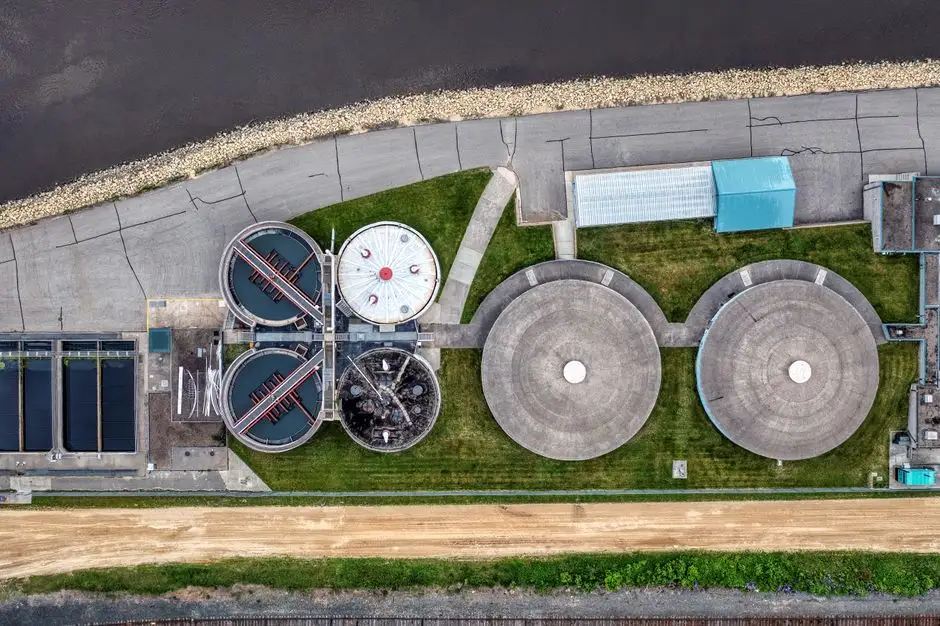
A defensible mining treatment train sequences equalization, pH correction, coagulation and flocculation, solids clarification, filtration, optional membrane treatment, and controlled sludge dewatering, with each stage tied to a measurable compliance function.
Equalization buffers flow and concentration variation before chemical addition and pumping. pH correction supports hydroxide precipitation of dissolved metals, while coagulants and flocculants aggregate suspended solids and fine metal particles into separable floc. A PLC-controlled automatic chemical dosing system should therefore be specified around calibrated pH control, reagent demand, flow pacing, alarms, and traceable dosing trends—not simply a tank volume.
DAF is appropriate when buoyant floc, oils, FOG, floatable fines, or suitable colloidal material must be removed. The supplied DAF system for mining wastewater solids separation catalog specifies 13 standard models with capacities from 4–300 m³/h. These are catalog selection values, not guaranteed project performance or a Florence equipment size.
Lamella clarification is more relevant where footprint and sludge volume constrain the installation. The supplied high-efficiency sedimentation tank catalog specifies lamella surface-loading rates of 20–40 m/h and chemical-consumption reduction of up to 30%; both are catalog specifications, not guaranteed outcomes for an untreated mining stream. A gravimetric solids-loading and sludge-handling check is still required.
Multimedia filtration removes residual solids and colloids and protects downstream membranes. Where fine colloids remain, UF can provide another barrier; the supplied UF catalog specifies 0.03-micron PVDF membranes, capacity from 2,000–40,000 L/h, feed turbidity acceptance up to 300 ppm, and automatic backwash with air scour. These specifications require confirmation against actual feed quality and flow.
RO should be reserved for dissolved metals or salts that remain above the sewer requirement or reuse target. Concentrate management, membrane compatibility, recovery, and site-specific mass balance must be included before RO is accepted. The multi-media filtration system should be evaluated as pretreatment where a membrane follows, not as an automatic substitute for dissolved-solids treatment.
| Process stage | Required evidence |
|---|---|
| Equalization and flow pacing | Peak-flow record, equalization model, level controls, pump-capacity calculation. |
| pH correction | Calibrated pH records, setpoints, dosing trends, and jar or pilot results. |
| Coagulation and flocculation | Reagent identity, dose range, mixer operation, and resulting floc characteristics. |
| DAF or lamella clarification | Hydraulic and solids loading, TSS removal evidence, and sludge-generation data. |
| Multimedia filtration or UF | Differential pressure, run time, turbidity, SDI where relevant, and backwash performance. |
| RO, if justified | Recovery, permeate quality, differential pressure, and concentrate route. |
Size equalization and pumping for the highest anticipated discharge rather than average flow. Provide sampling points at untreated streams, equalization, chemical treatment, clarification, filtrate, and final discharge so an operator can identify where performance changed. Equipment acceptance must demonstrate the signed discharge condition during the controlling flow-and-concentration event, not only during a low-load trial.
Choose DAF or Lamella Clarification Using Site Constraints
DAF is the stronger fit when oils, FOG, floatable fines, buoyant floc, or suitable colloidal material must be separated into a recoverable float. Lamella clarification is the stronger fit when compact installation, settled-solids withdrawal, and sludge recirculation matter more than float recovery.
The comparison must use actual project conditions: feed characteristics, hydraulic and solids loading, chemical demand, float or underflow performance, sludge route, operator capability, redundancy, and installed footprint. Every proposal should state the signed effluent condition it must meet during the controlling flow and concentration event. Nameplate capacity alone does not demonstrate compliance.
| Decision factor | DAF | Lamella clarification |
|---|---|---|
| Preferred feed behavior | Floatable or buoyant contaminants, oils, FOG, suitable colloids | Precipitated solids suitable for settling |
| Primary separation route | Recovered float and clarified residual water | Settled solids and clarified water |
| Sludge consideration | Float handling, skimming, wetting, and downstream dewatering | Underflow withdrawal, sludge volume, and recirculation |
| Installation consideration | Rectangular or compact skid arrangement subject to project constraints | Compact inclined-plate arrangement for footprint-constrained sites |
| Acceptance requirement | Signed discharge condition achieved at controlling flow, concentration, and chemical demand | Signed discharge condition achieved at controlling solids load and hydraulic load |
The supplied research establishes no universal removal percentage, chemical-consumption rate, or Florence-specific equipment size. Treat the DAF versus lamella clarifier comparison for mining wastewater as a screening tool, then require site-specific pilot or performance data during supplier review.
Turn the Treatment Design into a Documented Compliance Case
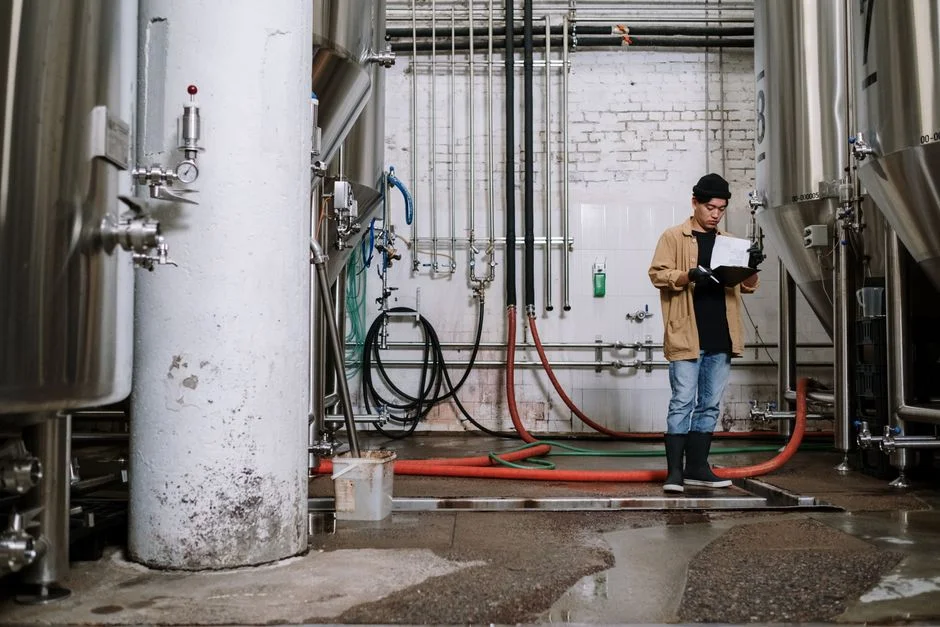
Compliance is demonstrated by records tied to permit conditions, not by a general promise that the treatment system will produce acceptable water. Continuous pH, flow, and conductivity monitoring should feed PLC/HMI records, with alarms and sampling results traceable to the applicable requirement.
Define performance evidence for every stage: pH setpoints and dosing trends for chemical treatment; TSS removal and sludge generation for clarification; differential pressure and run time for filters; and recovery and permeate quality for membranes. The ultrafiltration system for membrane pretreatment should be evaluated through feed-dependent acceptance criteria rather than catalog values alone.
Chemical-precipitation residues need a documented route. The supplied plate-and-frame filter press for precipitated mining sludge catalog lists filtration areas from 1 m² to 500 m² with manual, hydraulic, and fully automatic configurations. Final sizing must use measured cake volume, target dryness, cycle time, and acceptance by the receiving site.
Request a quotation package containing peak and average flow in m³/h, representative influent pH and metals results, POTW limits for metals, pH, and TSS, the reuse target if applicable, process flow diagram, mass balance, chemical use, electrical load, footprint, controls, redundancy, sampling locations, and sludge destination. These inputs let bidders size against the same compliance basis.
Written alarm, bypass, upset, and high-flow procedures should identify isolation points, permitted storage, sampling requirements, notification responsibilities, and restart criteria. A failed treatment stage should lead to isolation and controlled response—not an unpermitted discharge.
| Bid document | Acceptance question |
|---|---|
| Peak and average flow | Is equalization, pumping, clarification, filtration, and chemical dosing sized for the controlling event? |
| Representative analysis and mass balance | Do the proposed removal and recovery assumptions reconcile with measured inputs and all residual streams? |
| Controls and monitoring | Can pH, flow, conductivity, stage performance, alarms, and sampling records be traced to the permit? |
| Sludge route | Are measured cake characteristics, dewatering capacity, transport, and receiving-site acceptance defined? |
| Upset procedures | Are isolation, storage, sampling, notification, and restart responsibilities assigned? |
Do not insert numerical compliance triggers unless they appear in the current permit or Florence sewer requirements. The procurement file should distinguish supplier guarantees from permit obligations and identify which party remains responsible for sampling and reporting.
Frequently Asked Questions
How much should a Florence mining pretreatment system cost?
The supplied research provides no defensible Florence-specific budget for this treatment scope. Request a scoped quote based on peak and average flow, representative influent results, current sewer limits, chemical demand, sludge generation, controls, footprint, and the selected reuse objective. Compare quotations against the same design basis rather than using a generic system price.
What data should a mining wastewater equipment supplier request before sizing?
Require flow records, representative testing across normal, peak, startup, shutdown, and storm conditions, the current industrial-user permit and local limits, stream characteristics, reuse targets, and the residual-sludge destination. The supplier should use these inputs to state peak hydraulic loading, mass loading, chemical demand, stage duties, and acceptance evidence.
Is UF or RO necessary for basic sewer discharge?
UF can provide a fine-solids and colloid barrier before membrane systems, while RO is justified only when dissolved metals or salts remain above the sewer requirement or reuse target. Testing and permit conditions must determine the need; the presence of a mining stream alone does not establish that membrane treatment is necessary.
How can a plant prove compliance during an upset?
Maintain written bypass and high-flow procedures covering isolation, permitted storage, sampling, notifications, and restart criteria. Preserve traceable treatment-stage records and retain the samples associated with the upset. The procedure should identify who authorizes each response and how discharge can resume after corrective action.
Which Florence authority controls the permit?
Contact the current Florence POTW and industrial-user permitting office using the information in the coagulant dosing system design criteria and the City’s pretreatment guidance. South Carolina administers federal pretreatment requirements, but the controlling permit, discharge point, and applicable authorization must be confirmed for the facility before design or procurement.