What an Effluent Treatment Plant in Mosul Must Achieve
An effluent treatment plant in Mosul is a site-designed industrial wastewater system that treats factory effluent to the applicable discharge or reuse standard. The required train depends on measured COD, BOD, TSS, fats, oils and grease, pH, lead, cadmium and flow rate—not simply on the factory sector. A typical sequence may combine screening, DAF for suspended solids and FOG, biological treatment for organics, metal-specific pretreatment where required, clarification, filtration and disinfection. HydropureWater’s Mosul guide cites Iraqi EPA limits of 150 ppm COD, 50 ppm TSS, 0.1 ppm lead and 0.01 ppm cadmium, but every final design should be checked against current permits and site data.
An industrial ETP is not a substitute for municipal sewage infrastructure. The HydropureWater Mosul analysis distinguishes concentrated, potentially hazardous factory wastewater from the city’s municipal treatment works, which were designed for domestic sewage rather than variable industrial pollutant loads. Factory pretreatment is therefore normally a separate, site-specific responsibility, although the final regulatory route still depends on the discharge arrangement and receiving water.
The compliance boundary must also be stated precisely. The cited Iraqi EPA benchmarks are 150 ppm COD, 50 ppm TSS, 0.1 ppm lead and 0.01 ppm cadmium. They are useful screening values, but the facility’s current permit may impose different limits, monitoring conditions or reuse criteria. A discharge-compliant effluent is not automatically suitable for direct potable reuse. In its University of Twente thesis Direct nanofiltration of wastewater treatment plant effluent, nanofiltration is described as a polishing technique evaluated for producing effluent suitable for agricultural or direct and indirect potable uses; it does not replace site-specific analysis and water-safety review. The same distinction appears in the 2026 ETP buyer’s guide for Erbil and the 2026 guide for Sulaymaniyah.
Start with an Effluent Characterization and Compliance Audit
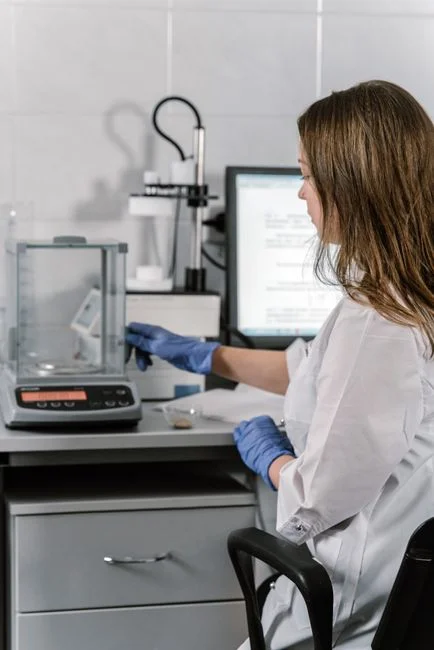
A defensible design begins with representative sampling, not a generic process description. The sampling program should cover flow rate, flow variability, COD, BOD, TSS, FOG, pH, lead, cadmium and any contaminant specific to the factory process. It must also establish whether production discharges, shutdowns and washdown events can exceed the normal operating flow used for equipment sizing.
HydropureWater’s Industrial Wastewater Treatment in Mosul guide, published in 2026, cites University of Mosul research showing cadmium concentrations from 0.03 to 0.21 ppm and lead reaching 8.66 ppm in some industrial outflows. The same guide cites Iraqi EPA maxima of 0.01 ppm cadmium, 0.1 ppm lead, 150 ppm COD and 50 ppm TSS. Those comparisons identify where treatment or closer monitoring is required; they do not establish every plant’s design load because local observations and permit limits have different scopes.
| Design input | Evidence or required buyer action |
|---|---|
| Flow | Measure average flow, variability, production discharge, shutdown and washdown flows before fixing equipment capacity. |
| COD and BOD | Test organic load and biodegradable fraction; the commercial source gives an A/O design condition of 8–12 hours HRT at COD around 500 mg/L. |
| TSS and FOG | Test suspended solids, fats, oils and grease before selecting physical pretreatment and sludge handling. |
| Lead and cadmium | University of Mosul observations reported in the 2026 HydropureWater guide range from 0.03 to 0.21 ppm Cd and reach 8.66 ppm Pb; confirm with site sampling. |
| pH | Record variability because it affects chemical dosing, biological treatment and disinfection. |
| Compliance route | Obtain the current permit, discharge point, reuse objective and receiving-water context. |
Ask each bidder to state the sampling frequency, sample preservation, laboratory methods, sampling locations and design-flow assumptions. A rotary mechanical bar screen may protect downstream equipment from gross solids, but it cannot replace hydraulic, contaminant and load characterization. The audit should close with a written mass and water balance covering incoming flow, bypasses, treated effluent, sludge and chemical consumption.
Map Each Pollutant to the Right Treatment Stage
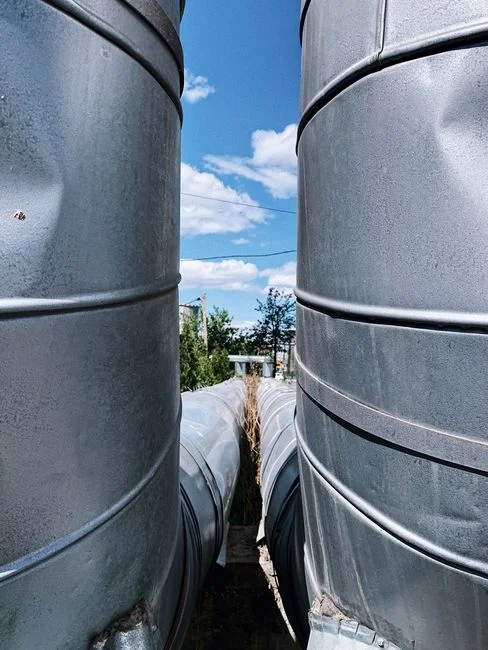
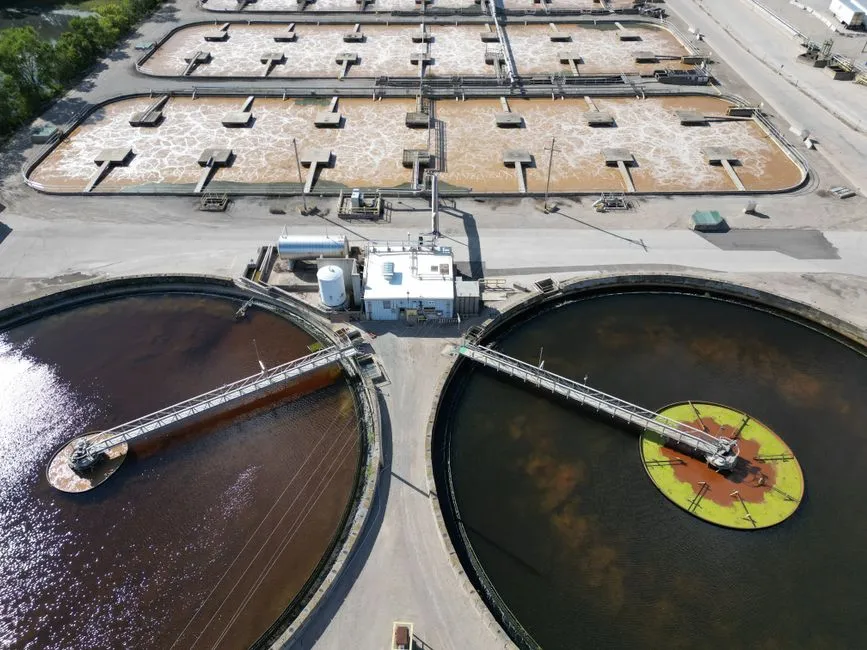
Build the process train by assigning each contaminant to the stage that addresses it: screening and equalization; physical or chemical pretreatment; biological treatment where applicable; solids separation; polishing; disinfection; and sludge handling. The source’s industrial DAF system for TSS and FOG pretreatment is a physical separation step, while an integrated MBR wastewater treatment system combines biological treatment with membrane separation.
For TSS and FOG, the 2026 HydropureWater source reports DAF removal of 92–97% TSS and 85–90% FOG, with a catalog range of 4–300 m³/h. These values support DAF as a high-capacity solids and FOG pretreatment option, subject to site testing and correct equalization. For COD and BOD, the source specifies 8–12 hours HRT for an A/O design condition around 500 mg/L COD. That is a stated design condition, not a universal sizing rule.
Dissolved lead and cadmium require a different stage. The source reports up to 95% removal using a 2% ammonium molybdate solution. Controlled chemical dosing forms insoluble precipitates, so a chemical dosing system must be coupled with solids separation and a defined sludge route. MBR filtration below 1 μm does not substitute for dissolved-metal removal.
| Contaminant or objective | Applicable stage | Evidence and limitation |
|---|---|---|
| TSS and FOG | Equalization and DAF pretreatment | Reported DAF removal: 92–97% TSS and 85–90% FOG; catalog flow range 4–300 m³/h. |
| COD and BOD | A/O biological treatment where suitable | Stated HRT: 8–12 hours at COD around 500 mg/L; biodegradability still requires testing. |
| Dissolved Pb and Cd | Chemical precipitation, reaction and solids separation | Reported removal up to 95% with 2% ammonium molybdate solution; sludge generation is unavoidable. |
| High-quality biological effluent | MBR | Less-than-1 μm filtration, above 95% COD removal and 0.5–1.0 kWh/m³ energy demand, according to the commercial source. |
| Reclamation or direct potable reuse | Advanced polishing and safety review | University of Twente research evaluated direct nanofiltration for effluent reclamation; site-specific validation remains necessary. |
| Micropollutants | Specialist polishing under study | Wageningen University’s 2022 thesis investigated constructed wetlands; this research is not evidence for a default Mosul ETP. |
Constructed wetlands should remain a research-backed or site-validated option, not a default substitute for biological treatment. The Wageningen study concerns micropollutant removal from treatment-plant effluent, while the University of Twente work addresses reclamation through nanofiltration. Both require a defined target compound list, pilot or validation work, and review of public-health and reuse requirements.
Compare ETP Technologies by Flow, Performance and Operating Burden
No unit process is universally best; each addresses a different contaminant group and imposes a different operating burden. DAF is strongest in the supplied comparison as a solids and FOG pretreatment option. A/O reduces biodegradable organic load. Chemical precipitation targets dissolved metals. MBR combines biological treatment with membrane separation. Disinfection controls pathogens, while sludge dewatering reduces the volume sent for disposal.
| Technology | Supplied flow or performance basis | Principal operating issue |
|---|---|---|
| DAF | 4–300 m³/h catalog range; 92–97% TSS and 85–90% FOG removal | Air compression, skimming and flotation-sludge handling. |
| A/O | 8–12 hours HRT at COD around 500 mg/L | Biomass control, aeration and sensitivity to shock loads. |
| MBR | 10–2,000 m³/day catalog range; less-than-1 μm filtration; above 95% COD removal | Energy demand of 0.5–1.0 kWh/m³, membrane fouling and pretreatment. |
| Chemical precipitation | Up to 95% Pb/Cd removal reported with 2% ammonium molybdate solution | Precise reagent control, residual sludge and chemical safety. |
| UV | Planning OPEX of $0.02–$0.08/m³ | Final selection depends on permit, water chemistry and reuse application. |
| Chlorine dioxide | Planning OPEX of $0.05–$0.15/m³ | Residual management, chemical handling and permit requirements. |
Disinfection must be selected against the intended water use and operating conditions. The UV and chlorine dioxide figures above are preliminary planning ranges from the supplied commercial source, not quotations. Neither treatment nor disinfection closes the material balance: solids removed from the water become sludge.
That sludge route belongs in the process comparison. The supplied product range for a plate and frame filter press is 1–500 m² filtration area. Bid sizing should use measured solids generation, expected cake characteristics, operating cycle and disposal route rather than a generic flow rule. For broader mechanical and cost questions, see the industrial sludge dewatering equipment guide.
Build a 2026 Budget Without Mixing Cost Units
The supplied cost figures use different denominators and must remain labelled that way. DAF CAPEX is stated as $150–$300 per m³/h; chemical precipitation as $200–$400 per m³, with OPEX of $0.10–$0.30/m³; and MBR as $500–$800 per m³/day, with separately reported energy demand of 0.5–1.0 kWh/m³. These figures cannot be compared directly without matching flow basis, scope and treatment objectives.
| Item | Preliminary planning figure | Unit discipline |
|---|---|---|
| DAF CAPEX | $150–$300 | Per m³/h of equipment capacity |
| Chemical precipitation CAPEX | $200–$400 | Per m³, exactly as scoped in the supplied source |
| Chemical precipitation OPEX | $0.10–$0.30 | Per m³ treated |
| MBR CAPEX | $500–$800 | Per m³/day |
| 50 m³/h DAF case | $7,500–$15,000 | Commercial-source planning estimate for the stated case |
The 50 m³/h DAF example demonstrates why equipment capacity and installed project cost are different. The source’s $7,500–$15,000 estimate does not establish whether tankage, civil works, electrical installation, controls, chemicals, commissioning and site conditions are included. A bidder must provide a bill of quantities and exclusion schedule so the buyer can determine what is actually covered.
For OPEX, request separate rates or consumption assumptions for energy, chemicals, media or membrane replacement, labor, maintenance, sludge transport and laboratory monitoring. Sludge disposal should be shown as a volume and mass outcome from the selected process, not an unexplained allowance. The industrial ETP versus DAF decision guide provides a comparable regional framework, but every figure remains a preliminary commercial-source range until confirmed by a site-specific quotation.
Permit, Commission and Verify the Project
New industrial treatment facilities or significant modifications generally require an Iraqi EPA discharge permit, municipal approval and an Environmental Impact Assessment under the supplied source’s guidance. That source indicates that an EIA is particularly relevant above 50 m³/day and states a permitting range of 3–6 months. The actual schedule must be confirmed with the authorities because the source also notes that it depends on the project and facility.
Baseline influent and treated-effluent sampling should precede final sizing. Commissioning should then include factory acceptance testing, operator training, emergency operating procedures and calibration plans for pH and flow instruments. The handover record should identify the applicable permit, sampling points, automatic controls, alarm conditions, sludge route and performance-test acceptance criteria.
Where the selected train uses coagulant, flocculant or pH adjustment, specify reagent type, storage, dosing response, interlocks and secondary containment. A controlled automatic chemical dosing system should be assessed as part of the process, not treated as a standalone accessory. Performance claims should be tied to a written test protocol, sample points, frequency and acceptance values.
Questions to Ask Before Ordering an ETP Supplier
Ask suppliers to expose their sizing basis. Which site data were used, which assumptions remain, and which conditions require confirmation by testing? The answer should connect design flow, pollutant loads, treatment objectives and worst-case events rather than name a process without demonstrating its fit.
Then inspect commercial scope. Does the quotation include civil interfaces, electrical supply, control philosophy, installation, commissioning, training, spare parts and performance testing? Request the process-flow diagram, equipment schedule, electrical drawings, O&M manual and an explicit list of performance exclusions.
Compliance should be defined contractually: test protocol, sample points, frequency, acceptance values and remedy for failed performance. Ask how reagent safety, hazardous sludge and disposal responsibility will be handled. The industrial ETP versus DAF decision guide offers a comparable structure, while the industrial ETP or DAF selection guide for factories can be used to test whether the proposal follows a defensible decision sequence.
Frequently Asked Questions
How should an ETP for a Mosul factory be sized?
Size it from representative wastewater data, beginning with average and variable flow, COD, BOD, TSS, FOG, pH, lead and cadmium. The 50 m³/h DAF example in the supplied commercial source is a planning case, not a general sizing rule. Require the supplier to identify peak, shutdown and washdown assumptions and show how each unit responds to them.
What will an industrial ETP cost in 2026?
There is no single defensible project price from the available research. Preliminary ranges are $150–$300 per m³/h for DAF CAPEX, $200–$400 per m³ for chemical precipitation CAPEX with $0.10–$0.30/m³ OPEX, and $500–$800 per m³/day for MBR CAPEX. Ask bidders for an installed-price quotation with civil works, electrical installation, controls, commissioning and exclusions separated.
Which technology should be selected for TSS, FOG, COD and dissolved metals?
Use a staged train rather than one universal unit. The source reports 92–97% TSS and 85–90% FOG removal with DAF, 8–12 hours HRT for A/O at COD around 500 mg/L, and up to 95% Pb/Cd removal with a 2% ammonium molybdate solution. MBR adds biological treatment and less-than-1 μm filtration but requires upstream metal removal where dissolved metals are present.
What compliance risks should be addressed before shipment?
The principal risks are selecting equipment against outdated permit values, under-sizing for variable discharges, treating discharge compliance as proof of potable reuse, and failing to define sludge or chemical handling. Obtain the current permit and baseline test results, require performance acceptance criteria, and obtain an EIA and municipal and Iraqi EPA approvals where applicable; the supplied source states a 3–6-month permitting range for a typical project.