What Domestic Sewage Treatment Must Achieve
Domestic sewage treatment in Sulaymaniyah normally combines screening or local pretreatment, biological treatment, solids separation and disinfection. The WSZ underground package plant is a practical option for residential communities, hotels, hospitals, factories and rural sites, handling 1–80 m³/h in an automated A/O contact-oxidation, sedimentation and disinfection unit. When higher-quality reuse is required, an MBR can provide near-reuse-quality effluent, while DAF is better regarded as pretreatment for oils, grease and solids. Final equipment selection depends on measured flow, BOD, COD, TSS, peak and infiltration flows, available space, reuse objectives and the applicable discharge permit.
Domestic sewage treatment means treating wastewater from homes and domestic-scale occupancies, including hotels and hospitals, before discharge to a sewer, receiving water or an approved reuse point. It is distinct from industrial wastewater treatment: factories may introduce process chemicals, concentrated oils, high-strength production streams or wastewater characteristics that require a different design basis. The sources also support a separate decentralized sewage treatment approach for sites without access to a centralized sewer.
For planning purposes, the Sulaymaniyah Sewage Treatment Equipment Suppliers: 2026 Engineering Guide, published in 2025, cites Iraqi Environmental Law No. 27 of 2009 limits of TSS below 30 mg/L, BOD below 20 mg/L and COD below 100 mg/L. These values are references, not a substitute for the current site-specific permit. Confirm the receiving authority, discharge point, sampling requirements and any stricter reuse conditions before freezing the design.
A sewer-discharge design and a reuse design are not interchangeable. A project intended only for controlled sewer discharge may not be suitable for landscape irrigation, toilet flushing or another non-potable wastewater reuse application. The receiving-water assessment also matters: the Sulaimani Journal for Engineering Sciences study on Qilyasan Stream used 18 parameters, including temperature, pH, alkalinity, hardness, electrical conductivity, total dissolved solids, TSS, turbidity, nitrate, sulfate, phosphate, BOD, COD, dissolved oxygen, lead, cadmium, zinc and copper. Those parameters help assess receiving-water context; they are not a substitute for site-specific effluent limits.
Wet weather must also enter the design basis. The US EPA’s Municipal Wastewater guidance explains that infiltration and inflow in sanitary sewers can cause overflows and operational problems, while wet-weather flow increases can affect treatment efficiency, reliability and unit-process control. Additional design information on pharmaceutical wastewater treatment in Iraq is available in the Iraq wastewater treatment and compliance guide, but it should not be used to infer domestic-plant performance.
Build the Domestic Sewage Design Basis
Hydraulic capacity and contaminant loading must be checked separately before selecting a domestic wastewater treatment plant. A package may handle the average daily flow while remaining undersized for wet-weather peaks, seasonal occupancy or seasonal BOD and COD loading. The design request should therefore combine flow records, laboratory sampling and site constraints rather than rely on occupancy estimates alone.
| Design input | Information to obtain | Reason it affects selection |
|---|---|---|
| Flow | Average flow, peak flow, daily variation, seasonal occupancy and wet-weather conditions | Determines hydraulic duty and the need for equalization or peak-management capacity |
| Wastewater quality | BOD, COD, TSS, oil and grease, pH and relevant temperature information | Defines biological loading and pretreatment needs |
| Infiltration and inflow | Whether the proposed flow includes storm water, groundwater or unauthorized connections | Prevents treatment capacity from being based on a misleading dry-weather flow |
| Outlet and reuse | Public sewer, natural water body, irrigation, toilet flushing, cooling or another approved route | Establishes the applicable receiving and reuse requirements |
| Site and operations | Footprint, buried conditions, access, power quality, odor constraints and sludge-removal route | Determines installation feasibility and lifecycle operating requirements |
Start by collecting average and peak flow, daily flow variation and influent laboratory results for BOD, COD, TSS, oil and grease and pH. Identify whether the flow includes infiltration and inflow. The US EPA identifies wet-weather infiltration and inflow as a major source of sewer overflows and treatment-plant operating challenges, so the plant should not be designed around an annual daily average alone. Map the intended outlet and obtain the approval route before selecting final equipment.
Record the available footprint, buried-installation conditions, maintenance access, power quality, odor constraints, sludge-withdrawal route and distance to the receiving outlet. Require the supplier to include laboratory influent and effluent data in the proposal rather than relying only on generic removal percentages. Where a package may be exposed to rags, plastics, grit or fats, evaluate incoming screening and the treatment role of mechanical bar screening.
For domestic sewage treatment in Sulaymaniyah, the key output is a traceable design basis: measured flow, measured loads, a defined outlet, applicable permit conditions and realistic site constraints. Until those inputs are complete, the equipment capacity remains a preliminary selection rather than a defensible procurement specification.
Compare Package Plants, MBR and Pretreatment
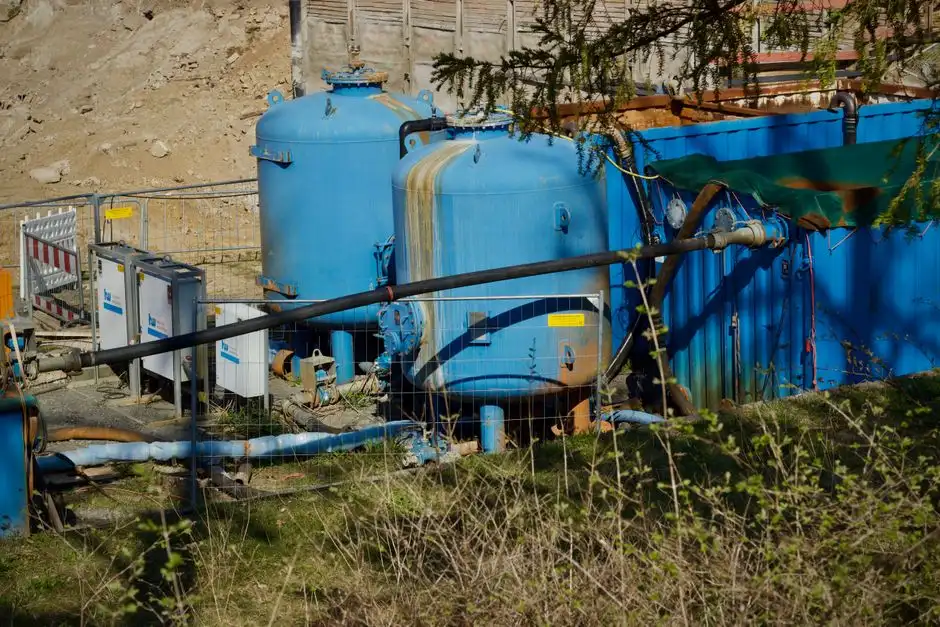
WSZ, MBR, DAF and UF occupy different positions in the treatment train. A package biological plant can integrate several steps; an MBR combines biological treatment with membrane separation; DAF is primarily pretreatment; and UF provides fine solids separation or polishing. They should not be compared as interchangeable products with the same performance objective.
| Technology | Verified product scope | Primary role | Selection implication |
|---|---|---|---|
| WSZ underground integrated plant | 1–80 m³/h; A/O biological contact oxidation, sedimentation and disinfection; automated; below grade or trailer-mounted | Integrated biological package treatment | Consider where buried deployment, compactness and an integrated process are priorities |
| MBR integrated system | 10–2,000 m³/day; activated sludge with submerged PVDF membrane filtration; product source states near-reuse-quality effluent and a 60% smaller footprint than conventional systems | Biological treatment with membrane-separated solids | Consider where tighter solids separation or higher-quality reuse is required |
| DAF system | 4–300 m³/h across 13 standard models | Removal of suspended solids, FOG, oil and grease and colloidal matter | Use upstream of biological treatment where these contaminants require separation |
| UF system | 2,000–40,000 L/h; 0.03 micron PVDF membranes; automatic backwash and air scour; turbidity up to 300 ppm | Fine filtration and polishing | Use as polishing or pretreatment, not as a substitute for biological sewage treatment |
The WSZ underground package sewage treatment plant is the integrated option in this comparison. Its verified catalog scope covers residential communities, hotels, hospitals, factories and rural areas, with below-grade installation or mobile trailer deployment. It is a candidate when the project needs an integrated A/O biological contact-oxidation, sedimentation and disinfection train within the stated hydraulic range.
The MBR wastewater treatment system is the stronger fit where membrane-separated solids and near-reuse-quality effluent are the stated objectives. The product source describes submerged PVDF membranes and a 60% smaller footprint than conventional systems, but the buyer should verify the applicable duty point and the effluent guarantee.
DAF should be selected by its process position. Its verified role is removing suspended solids, FOG, oil and grease and colloidal matter, which makes it useful as pretreatment where those contaminants could interfere with downstream biological treatment. UF operates at a finer separation stage and is justified where specified solids removal or polishing is needed. Neither replaces the biological core of domestic sewage treatment.
Select Equipment Through a Five-Step Decision Process
A defensible shortlist follows from documented scope, technology matching, supplier audit, total-cost comparison and compliance confirmation. Each bidder should answer the same design questions so that proposals can be compared on engineering merit rather than brochure scope.
- Define the project scope. Record domestic sources, average and peak flow, BOD, COD, TSS, outlet, reuse target and wet-weather conditions.
- Match the technology. Use an integrated biological package where space and operational simplicity dominate; use MBR where tighter solids separation or reuse quality is required; add DAF where upstream FOG and solids removal is necessary.
- Audit the supplier. Request a process flow diagram, general arrangement drawing, duty points, materials, controls, performance guarantee, O&M support, spare parts and local project references.
- Compare total cost. Evaluate equipment, installation, civil works, energy, chemicals, labor, sludge handling and disposal rather than purchase price alone.
- Confirm compliance and commissioning. Establish the permit pathway, performance test, startup plan, training, maintenance responsibilities and required technical documents.
During the supplier audit, ask whether the offer represents a domestic wastewater treatment plant, an industrial system or a component. Require the bidder to state design flow, process assumptions, expected effluent guarantees, power and chemical consumption, retention time, sludge yield and exclusions. This prevents an industrial benchmark from being presented as a domestic-package quotation.
| Bid check | Required response | Purchasing decision supported |
|---|---|---|
| Process basis | Flow and loading assumptions, treatment stages, outlet and reuse target | Confirms that the proposal matches the project |
| Performance | Measurable effluent guarantees and proposed test method | Creates a contractual acceptance basis |
| Operations | Power, chemicals, sludge yield, retention time and routine monitoring | Exposes operating-cost and staffing requirements |
| Scope and support | Civil interfaces, controls, spare parts, training, commissioning and exclusions | Reduces procurement gaps and scope disputes |
| Compliance | Applicable permit assumptions and document list | Identifies the approval route still to be confirmed |
The 2026 regional guide cited in the research gives a 3–6 month permitting estimate for industrial wastewater projects. Treat this only as a planning warning: it is not a confirmed approval period for a domestic project, and timing can differ by authority and application scope. Confirm the route directly.
For operating support, clarify whether outsourced wastewater plant operation and maintenance is required. For process control, assess whether online BOD monitoring for wastewater plants is justified by the reuse or permit obligations rather than included by default.
Budget for Capital, Operating and Hidden Costs

The available 2026 regional guide cites $60,000–$110,000 for a total 10–20 m³/h DAF project and $150,000–$350,000 for a standard 50 m³/h industrial system. It also cites $40,000–$75,000 for DAF equipment alone. These are DAF or industrial benchmarks from the commercial guide—not prices for the WSZ domestic package plant and not universal quotations for Sulaymaniyah projects.
Build a five-year total-cost model covering equipment, installation, civil works, power, chemicals, operators, laboratory testing, preventive maintenance, sludge removal and disposal. A domestic package-plant budget must also include excavation, the underground enclosure, access covers, incoming and outgoing pipework, power distribution, odor control, commissioning and local civil-work constraints.
| Cost category | Required budget scope | Common omission |
|---|---|---|
| Capital works | Equipment, civil works, installation, pipework, enclosure, access and controls | Civil interfaces and buried-installation requirements |
| Operations | Energy, chemicals, operators, laboratory testing and preventive maintenance | Staffing and consumables outside the equipment price |
| Residuals | Sludge removal, dewatering and disposal | Transport and disposal obligations |
| Lifecycle support | Warranty, local spare parts and documented O&M support | Treating support and warranty as optional extras |
For MBR or other membrane systems, include membrane-replacement exposure, cleaning chemicals and service support. For biological systems, include aeration, sludge removal and routine biological monitoring. Where solids dewatering is required, the plate-and-frame filter press option should be evaluated as part of the residuals pathway rather than as an unrelated item. Chemical-feed requirements can be checked through an automatic chemical dosing system when the selected process requires controlled dosing.
Request a site-specific quotation with explicit inclusions, exclusions, freight terms, civil-work assumptions, utility requirements, installation responsibility and commissioning scope. The available research does not support a universal domestic treatment-plant price for Sulaymaniyah.
Avoid Common Domestic Treatment Design Errors
The most consequential errors occur when equipment is selected before the project’s flow, loading, outlet and site constraints are defined. A supplier quotation can be internally consistent and still be unsuitable because it solves a different wastewater problem.
- Do not size from average flow alone when wet weather, seasonal occupancy or infiltration can increase hydraulic loading.
- Do not use a generic removal percentage as the design basis; define measurable effluent obligations tied to the intended discharge or reuse route.
- Do not omit incoming screening, solids management or FOG pretreatment when wastewater contains rags, plastics, grit, oils or grease.
- Do not install a buried package plant without confirming access for inspection, membrane or media maintenance, sludge withdrawal, lifting and emergency servicing.
- Do not assume an imported unit is operational on delivery; include local electrical requirements, utilities, commissioning resources, operator training and a maintenance plan.
- Do not treat non-potable reuse as potable supply; establish the specific quality, public-health and end-use controls required by the relevant authority.
For housing and similar developments, the packaged sewage treatment plant selection for housing developments provides a useful comparison point, but local flow data, permits and site conditions must still control the procurement decision. The key check is simple: can the proposed process handle the documented peak flow and contaminant load, meet the defined outlet requirement, fit the available site and be maintained safely?
Frequently Asked Questions
What capacity does a domestic sewage package plant need for a Sulaymaniyah project?
The verified WSZ product range is 1–80 m³/h, but that range does not determine the required duty size. Select the model from measured average and peak flow, BOD and COD loading, seasonal occupancy, wet-weather conditions and infiltration. Request the supplier to state both the design hydraulic flow and the design contaminant loads in its proposal.
Is MBR or a WSZ package plant better for domestic sewage?
Choose MBR when membrane-separated solids and the product’s stated near-reuse-quality effluent are important, particularly where the stated 60% footprint reduction relative to conventional systems supports the site layout. Choose the WSZ underground package plant when an integrated A/O biological, sedimentation and disinfection process is appropriate within its 1–80 m³/h range. Confirm the reuse or discharge requirement before selecting either technology.
How much does domestic sewage treatment cost in Sulaymaniyah?
No universal price for a domestic package plant is supported by the supplied research. Request a site-specific quotation covering equipment, civil works, installation, utilities, controls, commissioning and exclusions. Treat the cited $60,000–$110,000 total 10–20 m³/h DAF project and $40,000–$75,000 DAF-equipment figures only as benchmarks for a different equipment scope, not domestic-plant quotations.
Which discharge values should be included in the procurement specification?
Use TSS below 30 mg/L, BOD below 20 mg/L and COD below 100 mg/L as initial planning references under Iraqi Environmental Law No. 27 of 2009, as reported in the 2025 Sulaymaniyah regional guide. Before issuing the procurement specification, obtain the current site-specific permit and confirm whether stricter limits, reuse controls or additional parameters apply.
Can DAF replace biological sewage treatment?
No. The verified DAF role is removal of suspended solids, FOG, oil and grease and colloidal matter. It is therefore an upstream pretreatment component where those contaminants need separation, while the biological process remains responsible for organic treatment. Its inclusion should follow the influent characterization and the selected downstream process.