Why Online BOD Monitoring Replaces the 5-Day Lab Test
An online BOD monitoring sensor continuously measures biochemical oxygen demand in wastewater using one of three principles: UV spectral absorbance at 254 nm, respirometric/microbial biofilm oxygen consumption, or fluorescence-based estimation. Modern multi-parameter units such as the Xylem WTW Spectral Online deliver BOD, COD, NO3, NO2, and TSS from a single probe with sub-2-minute response, replacing the 5-day BOD5 lab test (APHA 5210B) as the input for real-time aeration control.
The 5-day test lag is the operational problem that justifies the technology. APHA 5210B requires 5 days ± 6 hours of incubation at 20 °C, which means the aeration basin DO setpoint is being adjusted against data that is at least 120 hours old. When a digester supernatant return or a daytime production dump pushes influent BOD from 200 mg/L to 600 mg/L, the DO probe crashes below 0.5 mg/L before the lab result exists, and the blower cannot be trimmed in time to prevent partial anoxic failure or permit-exceedance events. Online sensors push the same measurement into a 1–5 minute window, which is fast enough for closed-loop control rather than forensic reporting.
The financial pressure to close that loop is concrete. Aeration blower power is 50–60% of total WWTP electrical load (per EPA Winder Energy Star guidance for activated-sludge plants, 2024 revision), and 2026 industrial electricity in most U.S. and EU markets runs $0.08–$0.14/kWh (EIA 2026 industrial average, EU Eurostat Q1 2026 industrial band). A medium-sized 10,000 m³/day plant spending roughly 2,500 kWh/day on aeration is therefore writing a $73,000–$127,000/year check to blowers, and a 15–30% trimming of that load via faster BOD feedback is $11,000–$27,000/year in recoverable margin. On the lab side, commercial BOD5 runs $15–$40 per test (per third-party lab pricing surveys, 2025-09), and 3–7 tests/week is typical for medium plants — meaning $4,000–$11,000/year in displaced sample-handling cost. The cumulative payback argument is detailed in the 2026 AI-driven aeration control trends in wastewater analysis.
Three Sensor Principles: UV Spectral, Respirometric, and Fluorescence
Selecting the right online BOD analyzer wastewater platform comes down to matching measurement principle to influent matrix, response-time requirement, and accuracy tolerance. All three principles are commercially deployed in 2026; none is universally superior.
UV spectral sensors measure absorbance at 254 nm, which corresponds to aromatic and conjugated organic compounds that correlate strongly with COD and BOD in municipal matrices. In municipal influent, R² > 0.99 against COD is routinely reported (per Xylem WTW application note, 2025), and the technique gives BOD as a derived value through a site-calibrated correlation. Response time is fast — typically 30–120 s — because the measurement is optical, with no biological lag. The weakness is matrix interference: nitrate, turbidity, and certain industrial surfactants (optical brighteners, phenolics) bias the absorbance reading. Plants with significant industrial contribution typically need a turbidity compensation channel and quarterly matrix-specific recalibration.
Respirometric / microbial biofilm sensors use immobilized bacteria on a membrane; the dissolved-oxygen consumption rate of the biofilm is the direct proxy for BOD. This is the only principle that actually measures biological oxygen demand rather than an optical surrogate, so accuracy against BOD5 is the highest of the three on stable municipal influent. The trade-off is a 2–4 week acclimation period after commissioning while the biofilm stabilizes, a 5–15 minute response time, and acute sensitivity to influent toxicity — a phenol or cyanide slug of even 5–10 mg/L can partially or fully inhibit the biofilm and require reseating. Vendors in this class include Apecs and Applitek BioMonitor; price points and form factors are listed in the comparison table below.
Fluorescence-based sensors excite tryptophan-like or chlorophyll-related fluorophores and estimate BOD by proxy. The BroadSensor-style probes used for this class are inexpensive, have a T90 response as low as 30 s, and draw only 10 mA at 5–12 V (per BroadSensor datasheet, baseline field spec) — which makes them attractive for distributed monitoring across a treatment train. The accuracy band is wider (±15% in mixed industrial effluents is typical, per HydropureWater field data 2026), and the calibration drifts as the relative composition of fluorescent dissolved organic matter shifts seasonally. The technology is well-matched to surface-water and final-effluent surveillance, less so to permit-grade BOD reporting on variable industrial streams.
Online BOD Sensor Specifications: 2026 Comparison
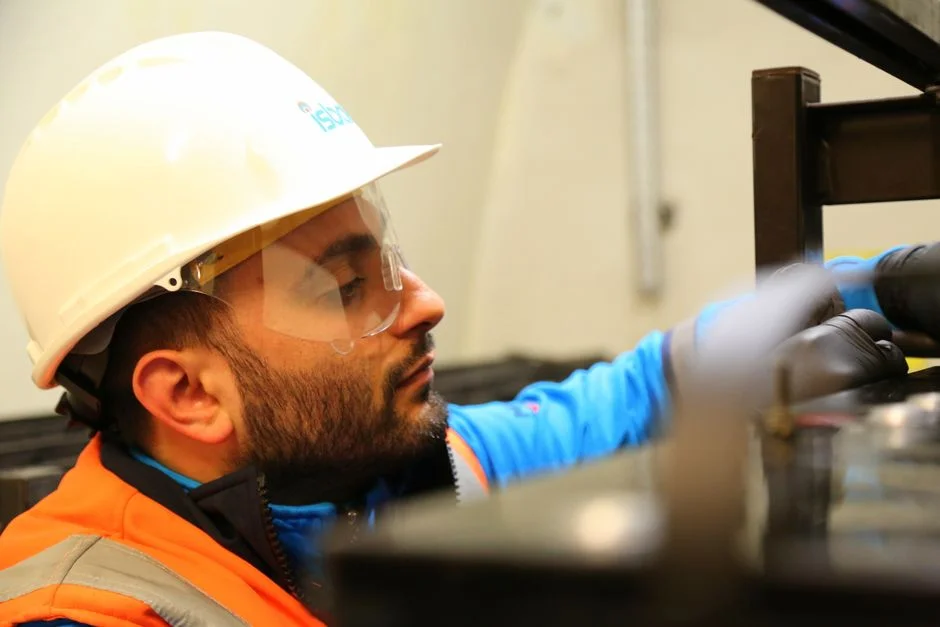
The table below compares the three principles on the eight dimensions that drive procurement, integration, and lifecycle cost. Values are drawn from manufacturer datasheets and 2026 HydropureWater field installations across municipal and food-processing clients.
| Parameter | UV Spectral (e.g., Xylem WTW, Hach UVAS) | Respirometric / Microbial (e.g., Apecs, Applitek) | Fluorescence (e.g., BroadSensor-class probes) |
|---|---|---|---|
| BOD range | 0–500 mg/L (as COD-equivalent) | 0–500 mg/L BOD (direct) | 0–100 mg/L BOD-equivalent |
| Response time (T90) | 30–120 s | 5–15 min | 30 s minimum |
| Accuracy vs BOD5 | ±5% after site calibration | ±10% with stable biofilm | ±15% on mixed industrial effluent |
| Maintenance interval | Cleaning 2–4 weeks; calibration 3 months | Membrane 6–12 months; biofilm reset 2–4 weeks after shock | Wiper cleaning 1–2 months; calibration 6 months |
| IP rating | IP65 (cabinet) / IP68 (probe) | IP65 (cabinet) / IP68 (probe) | IP68, <10 m submersion |
| Output protocol | Modbus RTU/TCP, 4–20 mA, optional Profinet | Modbus RTU/TCP, 4–20 mA | Modbus RTU |
| Indicative 2026 CAPEX (probe + controller) | $12,000–$35,000 | $18,000–$45,000 | $8,000–$20,000 |
| Best-fit application | Municipal influent, multi-parameter SCADA nodes | Municipal aeration tank, stable biofilm-friendly influent | Final effluent surveillance, surface water, distributed trend monitoring |
All three support Modbus RTU/TCP and 4–20 mA, which keeps the PLC integration work similar across principles; the selection decision is therefore driven by matrix fit, response-time requirement, and the accuracy band the plant's permit actually demands. A useful secondary check is what the sensor cannot see: UV sensors cannot distinguish nitrate absorbance at 254 nm without compensation, microbial sensors cannot report during toxicity events, and fluorescence sensors cannot resolve non-fluorescent organics (sugars, volatile fatty acids) without a secondary correlation channel.
Installation and Integration with PLC / SCADA
Sensor placement determines the control value the BOD signal delivers. The three practical locations are equalization basin influent (feed-forward control of the aeration basin), post-screening raw influent (cleanest optical path for UV and fluorescence), and aeration tank return-line mixed liquor (effluent proxy for plants that do not have a clean influent stream). For an aeration-control use case the influent or return-line location is preferred, because the signal must arrive at the PLC ahead of the DO crash in the basin, not after it.
Electrical and signal requirements are uniform across the three principles. Probes run on 24 VDC at 0.5–2 A depending on cleaning wiper load, and connect to the PLC cabinet via a 4-conductor shielded cable (24 VDC, ground, RS-485 A/B for Modbus RTU, or Ethernet for TCP). Cable runs up to 1,200 m are supported on RS-485 without repeaters (per Modbus over RS-485 standard EIA-485, 2024). PLC integration work is documented in detail in the PLC control engineering guide for wastewater plants and the online monitoring for industrial wastewater parameters buyer guide.
The control architecture that converts the BOD signal into energy savings is a PID cascade: outer loop is BOD (or COD surrogate) → DO setpoint, inner loop is DO setpoint → blower VFD speed. The outer loop runs on a 5–15 minute update interval to match the load-response time of the aeration basin; the inner loop runs on a 1–5 s DO update from the existing DO probe. Field life of the probe is typically 2 years before replacement, with 6-month calibration intervals as a baseline (per BroadSensor datasheet, baseline field spec). Plants that already operate a blower VFD see the energy savings; plants with constant-speed blowers need to add a VFD — $8,000–$25,000 incremental — before the closed-loop BOD control delivers its full payback.
For downstream polishing steps such as membrane separation, the MBR membrane bioreactor system documentation covers how upstream BOD control directly reduces membrane fouling load, and the automatic chemical dosing system integration is normally specified when UV-spectral influent readings also drive coagulant trim.
2026 CAPEX, OPEX, and ROI Calculation
The financial case for an online BOD monitoring sensor is built on three line items: CAPEX, OPEX displacement, and aeration energy savings. Working numbers for a 10,000 m³/day medium municipal plant are listed below; industrial sites with higher BOD loading and energy tariffs see a steeper curve, and the per-stream sizing is detailed in the reverse osmosis for wastewater reuse 2026 process specs and ROI analysis, which uses the same energy-tariff framework.
- CAPEX: probe $8,000–$45,000 depending on principle; mounting assembly and probe-rack $1,500–$4,000; PLC integration, cabinet work, and commissioning $5,000–$15,000. Total installed cost is therefore $14,500–$64,000 per stream. A UV-spectral unit on influent with a 6-month commissioning window is the lower bound; a respirometric unit with a 4-week biofilm acclimation and custom skid is the upper bound.
- OPEX: $1,200–$3,500/year for membrane replacement, cleaning solution, calibration standards, and consumables. This figure is partially offset by the displaced BOD5 lab cost of $4,000–$11,000/year (3–7 tests/week at $15–$40 each, per commercial lab pricing 2025-09), so the net OPEX line is typically negative by year 2.
- Aeration energy savings: 15–30% on the 50–60% of plant kWh that is blower power. For a 10,000 m³/day plant at ~2,500 kWh/day total and $0.10/kWh, that is $11,000–$27,000/year saved directly on the electricity bill, before demand-charge reductions.
Payback is 18–30 months for municipal plants at the lower energy-tariff end and under 12 months for industrial sites with high aeration load and $0.12–$0.14/kWh tariffs. A 5-year NPV at 8% discount rate typically lands at $40,000–$120,000 per stream depending on plant size, with the upper end observed at food-and-beverage sites where influent BOD swings 3–4× diurnally and the BOD-driven DO trim tracks that load instead of over-aerating against the daily mean.
Frequently Asked Questions
How accurate is an online BOD sensor vs lab BOD5? UV spectral sensors achieve ±5% against BOD5 on municipal influent after site calibration (per Xylem WTW application note, 2025); respirometric sensors run ±10% with a stable biofilm; fluorescence sensors run ±15% on mixed industrial effluent (per HydropureWater field data 2026). Lab BOD5 itself has a documented reproducibility of ±15% between accredited labs (per APHA 5210B inter-laboratory studies).
How often does an online BOD sensor need calibration? UV spectral units: every 3 months; respirometric: every 6 months plus membrane replacement; fluorescence: every 6 months baseline. Calibration drift is the dominant accuracy loss mechanism and is matrix-dependent.
Can an online BOD sensor be used for industrial wastewater with toxic influent? UV spectral and fluorescence sensors are the appropriate choice for toxic matrices because they are optical and not affected by toxicity. Respirometric / microbial biofilm sensors are not recommended for influent streams that carry slug toxicants because biofilm inhibition is acute and recovery takes 2–4 weeks.
What is the difference between an online BOD sensor and an online COD sensor? An online COD sensor uses the same UV 254 nm absorbance principle and reports chemical oxygen demand directly; BOD is then derived by a site-specific correlation. A dedicated online BOD sensor either uses a microbial biofilm (direct BOD) or a fluorescence proxy (estimated BOD), with no chemical oxidation step required.