How MBBR Treats Municipal Sewage
An MBBR for municipal sewage wastewater uses suspended plastic biocarriers that move through an aerated biological zone, allowing attached microorganisms to remove organic matter and support nitrification. The 2019 Journal of Environmental Management review identifies carrier properties, filling fraction, mixing, dissolved oxygen, and loading rate as central design variables. Reported maximum removal efficiencies of 97% for BOD, 96% for COD, 99% for total phosphorus, and 99% for total nitrogen were summarized across municipal and industrial applications at an HRT of 2–6 h; these are literature ranges, not guarantees for a specific municipal plant. MBBR can serve as a new biological stage, an IFAS upgrade to activated sludge, or part of a hybrid process.
An MBBR is therefore a suspended, moving biofilm reactor: biomass remains attached to carrier surfaces while the carriers circulate through the reactor. Carrier movement keeps the biofilm in contact with wastewater, but it does not perform final solids separation. A conventional activated-sludge process instead retains biomass as suspended flocs, so MBBR changes the biological-retention mechanism rather than removing the need for clarification.
In a typical municipal treatment train, screening and primary clarification precede the biological stage, followed by secondary clarification, filtration where required, disinfection, and reuse or discharge. The exact sequence depends on influent characteristics, treatment objectives, and permit requirements. A municipal wastewater bar screen can serve the headworks, but it cannot replace biological treatment.
The 2019 Journal of Environmental Management review describes biofilm establishment as a sequence of macromolecule adsorption, cell transport, adhesion, irreversible attachment, microcolony development, and formation of extracellular polymeric substances, or EPS. EPS helps bind cells and contributes to biofilm structure; this makes initial attachment, carrier wetting, and seeding central to startup. Heterotrophic biofilm can also accelerate the establishment of slower-growing microorganisms, reducing but not eliminating the startup period.
Where the project objective requires nitrification, the carrier must provide protected surface area and oxygen access while maintaining the hydraulic conditions needed for biomass growth. In IFAS, or integrated fixed-film activated sludge, carriers are added to an activated-sludge basin and remain integrated with the mixed-liquor process. The review also examines A/B-stage treatment, where high-rate carbon removal precedes partial nitritation-anammox, and anaerobic MBBR combined with partial nitritation-anammox as an advanced low-sludge option.
Standalone MBBR, IFAS, or Hybrid Treatment
The 2019 Journal of Environmental Management review states that existing wastewater-treatment infrastructure can often be adapted for MBBR with small modifications, making IFAS a practical option for conventional activated-sludge plants evaluating capacity or performance upgrades.
| Configuration | Best fit | Main engineering focus |
|---|---|---|
| Standalone MBBR | New biological stage or treatment train | Carrier inventory, hydraulics, mixing, aeration, biofilm solids inventory, and downstream clarification |
| IFAS retrofit | Existing activated-sludge plant requiring additional biological capacity or performance | Basin modifications, mixed-liquor solids management, carrier retention, and compatibility with existing clarification |
| Hybrid MBBR | Projects combining anaerobic pretreatment or A/B-stage treatment with fixed-film biology | Carbon routing, stage allocation, oxygen and mixing balance, solids separation, and whole-plant energy performance |
Choose IFAS when existing tanks, aeration, clarifiers, and operating staff can be retained while adding carrier capacity. Require bidders to show how the extra attached biomass affects mixed-liquor suspended solids, sludge production, wasting, and clarification. A nominal capacity increase is not enough if solids separation or controls become the limiting constraint.
Choose a standalone MBBR when the municipality is building a new biological stage or a new treatment train. This removes the need to force an MBBR into an activated-sludge process, but it does not remove upstream and downstream unit operations. The hydraulic profile must connect reactor retention, mixing, aeration, and secondary clarification.
Hybrid options require a different decision. In a municipal UASB-MBBR study reviewed by the 2022 Applied Water Science review, combined COD and BOD removal reached 92% and 99%, respectively, at tested HRTs of 13.3, 10, and 5.0 h. These results describe that tested configuration and cannot be transferred directly to a different plant.
A/B-stage treatment uses high-rate carbon removal before partial nitritation-anammox. The 2019 Journal of Environmental Management review cites energy consumption in the order of 0.3–0.35 kWh/m³ for energy-neutral treatment in that strategy. That is not a universal MBBR energy target; a project-specific energy balance must include aeration, mixing, pumping, sludge handling, and recovered energy.
For decentralized sites where a buried, automated package is more appropriate than a conventional MBBR, an integrated underground sewage treatment plant may be considered. It is an alternative architecture, not proof that an MBBR is unnecessary.
Design Parameters That Control Performance

The biocarrier filling fraction is the ratio of carrier volume to reactor volume, and increasing it can improve performance or volumetric capacity while compromising mixing and creating stagnant areas, according to the 2019 Journal of Environmental Management review.
Require bidders to define carrier type, dimensions, material, protected surface area, bulk density, and intended filling fraction. The same review emphasizes that carrier shape, dimension, and physical-chemical properties affect application performance. A carrier schedule should identify quantities, replacement provisions, retention method, and any effects on inspection, pumping, and tank access.
The 2022 Applied Water Science review reports carrier filling within 30–70% and a minimum specific surface area of 200–250 m²/m³ as literature context. These are not universal municipal design values. Municipal research cited in that review tested filling ratios of 20%, 30%, 40%, and 50%; the review reports that organic-matter removal tended to improve at 50% and 60% filling, while nutrient removal performed better at 30% and 40%.
The same 2022 review describes a pilot-scale aerobic MBBR for municipal wastewater with 60% media filling and a specific biofilm surface area of 500 m²/m³. This pilot result reinforces that filling fraction, carrier geometry, and reactor hydraulics must be evaluated together rather than selected from a generic percentage.
| Design input | Information the proposal must state | Buyer check |
|---|---|---|
| Carrier | Geometry, material, protected area, bulk density, filling fraction | Are all values tied to the supplied carrier schedule? |
| Hydraulics | Active volume, HRT, short-circuiting and stagnant-zone controls, tank arrangement | Does the hydraulic profile support the claimed contact time? |
| Mixing | Mixing energy, equipment arrangement, minimum energy conditions | How are carrier circulation and dead zones verified? |
| Aeration | Demand, dissolved-oxygen distribution, oxygen-transfer basis, fouling access | Is aeration related to load and temperature rather than a generic spare capacity? |
| Biofilm | Attachment area, startup method, solids inventory, wasting strategy | Does the solids balance include attached and suspended biomass? |
| Loading | Average and peak organic and nitrogen loads, seasonal temperature | Are design and peak conditions both defined? |
The 2022 review reports biomass concentrations of approximately 3–4 kg SS/m³ in MBBR and fixed-biomass values up to 10,000–12,000 mg/L. Neither figure should replace a project-specific solids-inventory calculation. It must also be clear whether the stated concentration refers to reactor volume, carrier volume, or another basis.
The same review summarizes maximum removal efficiencies of 97% for BOD, 96% for COD, 99% for total phosphorus, and 99% for total nitrogen across municipal and industrial applications at HRT of 2–6 h. Use these figures as evidence that performance is possible under particular reported conditions, not as default guarantees.
Ask how the designer controls mixing energy, stagnant zones, dissolved-oxygen distribution, biomass attachment, HRT, organic and nitrogen loading, and seasonal temperature effects. A proposed carrier that mixes well under average flow may still short-circuit or accumulate biofilm under peak loading. Supporting valve and filter-media specifications should be traceable to the process design, as in the water-treatment parts and filter-media catalog, rather than treated as generic guarantees.
Performance Evidence and What It Means for Municipal Sewage
The 2019 laundry study demonstrates MBBR treatment mechanisms but does not provide municipal-sewage performance criteria because its influent matrix and treatment objectives differ.
The evidence should be separated by application before it enters a municipal procurement file. Municipal UASB-MBBR and pilot-scale studies deserve greater relevance than laundry or industrial studies, but even municipal results require confirmation that the carrier, filling fraction, loading, temperature, and treatment objectives match the proposed project.
| Evidence set | Reported result | Permitted use in municipal evaluation |
|---|---|---|
| 2019 laundry study | With 20% media filling, 15-day seeding, and 10-day treatment: BOD 441 to 39.67 mg/L; COD 910 to 56.3 mg/L; phosphate 38.24 to 5.31 mg/L; surfactant 47.8 to 5.62 mg/L | Mechanism evidence only. It is not municipal sewage performance or a municipal design basis. |
| Municipal UASB-MBBR study summarized in the 2022 review | 92% COD removal and 99% BOD removal at tested HRTs of 13.3, 10, and 5.0 h | Configuration-specific municipal evidence; require the bidder to demonstrate relevance to the proposed reactor and influent. |
| Municipal pilot work summarized in the 2022 review | 60% media filling with a specific biofilm surface area of 500 m²/m³ | Evidence for further investigation, not a default filling or surface-area specification. |
| Broader review evidence | Maximum reported removals of 97% BOD, 96% COD, 99% TP, and 99% TN at 2–6 h HRT across municipal and industrial applications | Upper literature findings only; not a default municipal guarantee. |
The laundry study reported BOD reduction of 91%, COD of 93.81%, phosphate of 86.10%, and surfactant of 88.22% under its stated conditions. The matrix contained laundry wastewater with surfactants and other constituents unlike municipal sewage. Those figures must not be presented to a permitting authority as municipal treatment performance.
To convert research into a meaningful guarantee, obtain the influent characterization, average and peak loading, HRT, carrier specification, filling fraction, aeration, temperature, startup period, and test method for each guaranteed parameter. Define what happens when influent falls outside the agreed envelope, and specify whether performance is mass-based, concentration-based, or measured at a stated sampling point.
Recommend pilot or side-stream verification when municipal influent is variable, industrial inputs are significant, or the proposed configuration has not been tested at comparable conditions. A pilot also exposes mixing, attachment, odor, aerosol, solids-carryover, and maintenance issues that a datasheet will not resolve.
Build a Complete Municipal Treatment Train
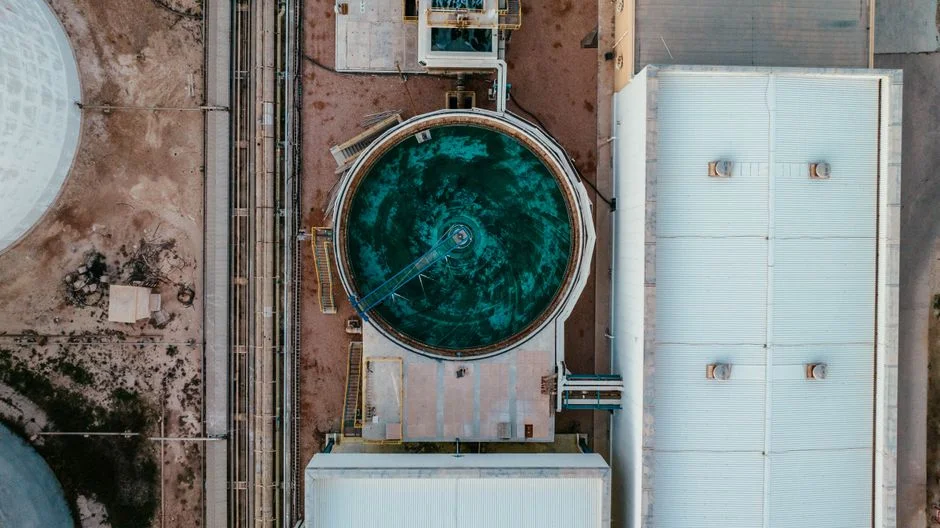
MBBR performance depends on the surrounding treatment train because biological treatment produces solids that must be separated and the clarified effluent may still require filtration, disinfection, and controlled reuse or discharge.
- Headworks remove screenings and protect downstream equipment.
- Primary clarification removes settleable material where included in the process basis.
- The MBBR provides the biological stage for organic removal and, where designed, nitrification or other nutrient-removal functions.
- Secondary clarification separates biomass from treated water.
- Filtration is added where required by the process objective or permit.
- Disinfection follows, using a process matched to the reuse or discharge requirements.
- Final effluent is reused or discharged under the applicable authorization.
The tender should therefore allocate responsibility for solids handling, disinfection, automation, odor control, safe access, bypasses, power failure response, and sampling. Biological guarantees cannot be separated from the performance of upstream pretreatment or downstream clarification.
For decentralized, residential-community, hotel, hospital, or rural applications, the catalog describes the WSZ Series as a packaged alternative combining anoxic/aerobic contact oxidation, sedimentation, and disinfection in a buried unit. The supplied HydropureWater product catalog states a capacity of 1–80 m³/h and no operator required. It is not described as an MBBR system, so it belongs in an alternative-architecture comparison where an integrated underground package is preferred.
For projects considering decentralized procurement, this decentralized domestic sewage treatment sourcing guide provides a wider context for equipment and implementation questions.
Supporting equipment should remain clearly allocated. A on-site chlorine dioxide disinfection system addresses disinfection, not biological treatment. Similarly, a plate-frame filter press can be evaluated within solids handling. Neither substitutes for the MBBR or its clarification and control systems.
Evaluate Suppliers and Define Performance Guarantees
A credible MBBR proposal must connect carrier selection, reactor hydraulics, oxygen transfer, biofilm solids inventory, and downstream treatment to the municipality’s influent and permit conditions.
Ask each bidder for a process narrative, mass balance, hydraulic profile, carrier schedule, mixing and aeration calculations, oxygen-transfer basis, control philosophy, construction materials, and commissioning plan. These documents must identify assumptions rather than relying on the label “MBBR system.”
| Bid component | Minimum information requested | Reason for review |
|---|---|---|
| Basis of design | Design flow, peak flow, influent characterization, organic and nitrogen loading, expected HRT | Establishes whether the proposal represents the actual municipal duty. |
| Reactor and carriers | Active volume, carrier area, bulk density, filling fraction, quantity, retention method | Connects physical equipment to biological inventory and hydraulics. |
| Aeration and mixing | Demand calculation, oxygen-transfer basis, dissolved-oxygen targets, mixing arrangement, fouling access | Tests whether the reactor can avoid oxygen and circulation dead zones. |
| Guarantees | Agreed influent and effluent conditions, test methods, sampling frequency, startup boundaries, remedies | Prevents a generic removal percentage from becoming an unenforceable promise. |
| Commissioning | Seeding, biofilm establishment, testing, training, acceptance criteria, handover | Defines when performance becomes the supplier’s responsibility. |
| Lifecycle support | Media replacement, inspection, spare parts, controls integration, aerator maintenance, support | Compares long-term operating obligations rather than initial equipment price alone. |
Require guarantees tied to agreed influent and effluent conditions, test standards, sampling frequency, startup boundaries, and remedy provisions. The supplied research supports target-setting but does not provide universal regulatory limits or contract terms. Applicable discharge limits must come from the project authority.
Ask how the supplier will manage biofilm startup, carrier fouling, mixing, odor, aerosols, solids carryover, winter operation, and maintenance access. Also request an energy and footprint comparison against the municipality’s existing activated-sludge baseline without treating it as a guaranteed saving. The literature’s 0.3–0.35 kWh/m³ figure belongs to the cited energy-neutral A/B-stage strategy, not every MBBR project.
Lifecycle pricing should include media replacement, aerator cleaning or replacement, inspection access, spare parts, controls integration, operator training, and long-term support. A PLC-controlled chemical dosing system may support nutrient management or disinfection where the process design requires it, but it is not evidence of biological performance. For broader compliance and engineering context, consult this municipal sewage treatment plant engineering and compliance guide.
Frequently Asked Questions
How should an MBBR reactor be sized for municipal sewage?
Size the reactor from the municipality’s average and peak flows, organic and nitrogen loads, temperature, treatment objectives, carrier properties, filling fraction, hydraulics, and oxygen-transfer demand. The literature’s 2–6 h HRT applies to reported maximum-removal applications across municipal and industrial wastewater; it is not a default design value. Ask each bidder to show the active volume, carrier inventory, loading, mixing calculation, and effluent concentration or mass-based outcome that produces its proposed HRT.
What should a utility request when selecting an MBBR supplier?
Request a process-specific proposal containing carrier data, hydraulic and loading calculations, mixing and aeration design, oxygen-transfer basis, control philosophy, commissioning boundaries, measurable guarantees, and lifecycle support. Reject generic “MBBR system” claims that do not identify the carrier schedule, active volume, design flow, peak flow, expected HRT, and test methods. Commercial selection should compare the defined scope and remedies, not price alone.
Should a project choose IFAS retrofit, a new MBBR, or a packaged treatment unit?
Choose IFAS when existing activated-sludge infrastructure can be adapted and additional biological capacity is needed. Choose a new MBBR when building a separate biological stage around project-specific carrier, mixing, and aeration design. Consider a packaged integrated alternative, such as the WSZ Series, where an automated buried system is operationally appropriate. The integrated underground sewage treatment plant described in the supplied catalog combines anoxic/aerobic contact oxidation, sedimentation, and disinfection, but it is not an MBBR configuration.
What is the main compliance risk when using published MBBR removal efficiencies?
The main risk is treating literature results as discharge limits or project guarantees. Review efficiencies describe specific influents, reactor configurations, operating conditions, and test methods; they do not define a permit. Require the bidder to demonstrate performance against the project authority’s applicable limits and the municipality’s agreed influent envelope, including startup, peak loading, temperature, sampling, and remedy provisions. Pilot evidence should be required where the configuration or influent differs materially from the cited municipal studies.