Uttar Pradesh’s Municipal Sewage Treatment Landscape: 2025 Data & Regulatory Context
Uttar Pradesh's 73 municipal sewage treatment plants (STPs) serve an estimated 5.2 million people, with a significant portion—approximately 40%—operating below capacity or being non-operational. This presents a critical challenge for the state, as rapid urbanization intensifies, placing immense pressure on existing infrastructure. Compounding this, the imperative to meet stringent Ganga basin effluent standards (BOD ≤10 mg/L, COD ≤50 mg/L) by 2026, as mandated by the Central Pollution Control Board (CPCB) and enforced by the UP Jal Nigam, necessitates substantial upgrades and new constructions. The UP Jal Nigam's 2024–2027 development pipeline alone includes 12 new STPs with an estimated capital expenditure (CAPEX) of ₹1,200 Crore, with tender preferences leaning towards modular and low-land-use designs, such as underground Membrane Bioreactor (MBR) systems. The state's unique climatic conditions, particularly its monsoon season, further complicate STP design. Peak flow management, requiring robust bypass systems and increased hydraulic capacity, is essential to prevent system overload and environmental discharge violations during periods of heavy rainfall. For instance, plants serving cities like Kanpur must account for a potential 30% surge in influent flow during monsoons.
| Metric | 2025 Uttar Pradesh Data | Implication for STP Design |
|---|---|---|
| Number of Municipal STPs | 73 | Significant capacity gaps and upgrade needs across the state. |
| Population Served (Est. 2025) | 5.2 Million | Growing demand requires scalable and efficient treatment solutions. |
| Operational Status | ~60% Operational, ~40% Under-Capacity/Non-Operational | Prioritize upgrades and rehabilitation for existing plants; new builds must be robust. |
| Ganga Basin Effluent Standards (CPCB 2022) | BOD ≤10 mg/L, COD ≤50 mg/L | Mandates advanced treatment processes for over 30 plants in Ganga basin cities. |
| UP Jal Nigam Pipeline (2024-2027) | 12 New STPs, ₹1,200 Cr CAPEX | Tender focus on modular, low-land-use, and advanced treatment technologies. |
| Monsoon Impact | Up to 30% peak flow surge (e.g., Kanpur) | Requires enhanced hydraulic design, stormwater management, and bypass systems. |
Process Selection for UP’s Municipal STPs: MBR vs SBR vs Conventional Activated Sludge
Selecting the appropriate wastewater treatment process is paramount for meeting UP’s diverse needs, balancing effluent quality, land availability, operational costs, and operator expertise. MBR systems offer superior performance, achieving over 95% COD removal and 99% pathogen reduction, making them ideal for Ganga basin compliance and municipal water reuse projects. These systems typically yield effluent with COD below 30 mg/L. However, MBRs command a 20% higher CAPEX, averaging ₹1.5 Crore per MLD, and require skilled operation and maintenance, a factor frequently highlighted in UP Jal Nigam 2023 tenders. For mid-sized cities (50,000–200,000 population) facing land constraints, Sequencing Batch Reactor (SBR) systems present a viable alternative. They offer 85–90% BOD removal at a CAPEX of approximately ₹1.2 Crore per MLD but can struggle with significant peak flow variations, a concern for cities like Kanpur experiencing monsoon surges of up to 30%. Conventional Activated Sludge (CAS) processes remain cost-effective for smaller municipalities (<50,000 population) with lower influent organic loads (BOD <200 mg/L). Without tertiary treatment, however, CAS systems often fail to meet the CPCB 2022 standards, necessitating additional treatment steps that can increase OPEX by ₹25 Lakh per MLD. A typical process flow for any municipal STP includes essential pretreatment stages like bar screens and grit chambers, followed by biological treatment, secondary clarification, and disinfection. Sludge handling, involving dewatering and disposal, is a critical ancillary process. For instance, the Bharwara STP in Lucknow, a 240 MLD CAS system, contrasts with Ghaziabad's 100 MLD MBR reuse plant, showcasing the diverse technological approaches employed across UP.
| Process | Typical CAPEX (₹/MLD) | Effluent Quality (BOD/COD Removal) | Land Footprint | Operational Complexity | Suitability for UP |
|---|---|---|---|---|---|
| MBR Systems | 1.5 Cr - 2.2 Cr | >95% COD, >99% Pathogen (Effluent COD <30 mg/L) | Low | High (Skilled Operators Required) | Ganga Basin Compliance, Reuse Projects, Land-Scarce Areas |
| SBR Systems | 1.2 Cr - 1.8 Cr | 85-90% BOD | Medium | Medium | Mid-sized Cities, Variable Flow Conditions |
| Conventional Activated Sludge (CAS) | 0.8 Cr - 1.2 Cr | 75-85% BOD (Requires Tertiary Treatment for CPCB Standards) | High | Low to Medium | Small Towns, Low Organic Loads, Non-Ganga Basin Areas |
Engineering Specifications for UP’s Municipal STPs: Influent, Effluent & Equipment Parameters
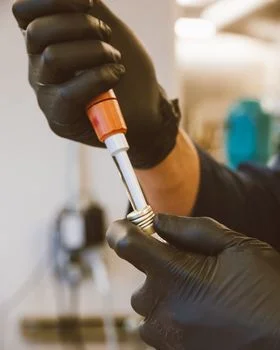
Accurate engineering specifications are the bedrock of effective STP design and equipment selection in Uttar Pradesh. Typical influent characteristics for UP STPs reveal high organic loads: BOD ranges from 200–400 mg/L, COD from 400–800 mg/L, and Total Suspended Solids (TSS) from 250–500 mg/L. Total Dissolved Solids (TDS) can also be significant, often between 500–1,200 mg/L, as indicated by UP Jal Nigam 2024 data. These parameters dictate the sizing and type of treatment units. Effluent targets are primarily driven by the CPCB 2022 standards for the Ganga basin, requiring BOD ≤10 mg/L, COD ≤50 mg/L, and TSS ≤10 mg/L, with fecal coliform levels below 1,000 MPN/100mL. Equipment sizing follows established engineering principles: aeration tanks are designed with a Food-to-Microorganism (F/M) ratio of 0.1–0.3 kg BOD/kg MLSS/day to ensure efficient biological degradation. Secondary clarifiers are sized for a surface loading rate of 15–25 m³/m²/day to achieve effective solid-liquid separation. For disinfection, a UV dose of 30–40 mJ/cm² is typically required for 99% pathogen kill. Specific regional challenges in UP must also be addressed. For example, high TDS levels in areas like Agra, influenced by textile industry discharges, may necessitate advanced pretreatment like Reverse Osmosis (RO) for water reuse projects. Similarly, the complex wastewater from Kanpur's tannery clusters requires specialized coagulation processes, often involving pH adjustment to 8.5–9.0 to effectively remove chromium and other heavy metals.
| Parameter | Typical Influent Range (UP STPs) | CPCB 2022 Effluent Target (Ganga Basin) | Equipment Sizing Guideline |
|---|---|---|---|
| BOD | 200–400 mg/L | ≤10 mg/L | N/A (Biological Process Design) |
| COD | 400–800 mg/L | ≤50 mg/L | N/A (Biological Process Design) |
| TSS | 250–500 mg/L | ≤10 mg/L | Clarifier Surface Loading: 15–25 m³/m²/day |
| Fecal Coliform | High (Variable) | ≤1,000 MPN/100mL | UV Dose: 30–40 mJ/cm² for Disinfection |
| TDS | 500–1,200 mg/L | N/A (Context-Dependent) | RO Pretreatment for Reuse (e.g., Agra) |
| Heavy Metals (e.g., Chromium) | Variable (Industrial Discharge) | N/A (Context-Dependent) | Coagulation/Precipitation (e.g., Kanpur Tannery Wastewater) |
Cost Models for Municipal STPs in Uttar Pradesh: CAPEX, OPEX & ROI Benchmarks
Accurate cost estimation is critical for securing project funding and ensuring long-term financial viability. Capital Expenditure (CAPEX) benchmarks for municipal STPs in Uttar Pradesh for 2025 vary significantly by technology. Sequencing Batch Reactor (SBR) systems typically range from ₹1.2 Crore to ₹1.8 Crore per MLD, while Membrane Bioreactor (MBR) systems, offering superior effluent quality, fall between ₹1.5 Crore and ₹2.2 Crore per MLD. Conventional Activated Sludge (CAS) plants are the most cost-effective upfront, with CAPEX ranging from ₹80 Lakh to ₹1.2 Crore per MLD, according to UP Jal Nigam tender data. Operational Expenditure (OPEX) is dominated by energy consumption, accounting for 40–50% of total costs, followed by chemicals (15–20%), labor (10–15%), and for MBR systems, membrane replacement (5–10%). Innovative approaches can significantly reduce OPEX; for instance, Ghaziabad's MBR reuse plant achieved a 30% OPEX reduction through the integration of solar-powered aeration. Return on Investment (ROI) drivers include water reuse, which can generate savings of ₹20–₹40 per cubic meter, and the potential revenue from sludge-to-energy projects, estimated at ₹5 Lakh to ₹10 Lakh per ton. Financing options like Green Bonds, offering interest rates of 5–7%, present a compelling alternative to commercial loans at 12% or higher. For smaller towns, cost-saving strategies are essential. Underground WSZ series plants, with CAPEX ranging from ₹50 Lakh to ₹2 Crore, effectively eliminate land acquisition costs and significantly reduce operational staffing requirements.
| Cost Component | Typical Range (UP, 2025) | Key Drivers |
|---|---|---|
| CAPEX per MLD | ||
| CAS | ₹0.8 Cr - ₹1.2 Cr | Land, civil works, basic aeration & clarification equipment. |
| SBR | ₹1.2 Cr - ₹1.8 Cr | Batch operation controls, advanced aeration, automation. |
| MBR | ₹1.5 Cr - ₹2.2 Cr | Membrane modules, higher energy |
Related Equipment

The following HydropureWater products are engineered for the wastewater challenges discussed above:
- MBR systems for Ganga basin STPs — view specifications, capacity range, and technical data
- underground STPs for small towns — view specifications, capacity range, and technical data
- tertiary disinfection for UP STPs — view specifications, capacity range, and technical data
- sludge dewatering for UP STPs — view specifications, capacity range, and technical data
Need a customized solution? Request a free quote with your specific flow rate and pollutant parameters.