What MBBR Can and Cannot Treat in Tea Processing
MBBR can treat the biodegradable organic portion of tea processing wastewater by growing attached microbial biomass on moving carriers. A complete system normally needs equalization, solids and oil control, biological treatment, aeration, and downstream separation because MBBR is less efficient at high organic flux and may leave suspended solids requiring separate removal. MBBR performance depends on loading, retention time, pH, temperature, carrier type, filling ratio and aeration. Published results from non-tea wastewater demonstrate strong BOD, COD and nutrient removal, but tea plants should characterize each waste stream and confirm performance through site-specific testing.
An MBBR is an attached-growth biological reactor: moving carrier media provide a surface for biofilm, retain more microorganisms than conventional activated sludge and distribute biomass through the reactor. The 2022 review by Gupta, Lal, Saidulu and Srivastava identifies MBBR as effective for removing organics, nutrients and some recalcitrant compounds. It also states that complex industrial wastewater containing non-biodegradable compounds should be treated by combining biological and physicochemical processes rather than relying on a biological reactor alone.
That distinction is important for a tea factory. Separate process dilution, equipment and floor washing, sludge or residue wash-down, concentrated cleaning solutions, and any stream carrying pesticide residues. Bulk COD may be biodegradable while color, suspended solids, oils, cleaning chemicals, or trace pesticides remain unresolved.
Do not infer removal of those constituents from a favorable BOD or COD result. The supplied literature contains no universal removal rate for tea processing effluent. A defensible decision therefore requires source-separated sampling, plant-specific analysis, and a pilot test. The broader MBBR design guide for food processing wastewater provides useful context, but it does not replace tea-specific characterization.
Characterize the Wastewater Before Selecting MBBR
Tea factories should characterize each waste stream across production and wash-down periods before fixing reactor volume or carrier quantity, because batch processing and cleaning cycles can make a diluted composite sample misleading. Use a sampling plan that separates normal production discharge from wash-down events and captures peak flow, peak organic load, temperature, pH and chemical composition. A representative sampling plan should also identify whether pesticide residues occur in specific drains and whether cleaning solutions are periodically dumped to the wastewater system.
Request analysis for flow, temperature, pH, BOD, COD, TSS, oil and grease, surfactants, ammonia nitrogen, total phosphorus, color, and relevant pesticide or cleaning-chemical residues. Add conductivity and dissolved-solids measurements where relevant to the reuse route. The list is not a substitute for selecting parameters from the discharge permit, reuse specification, or pretreatment assessment.
Use the 2022 review’s operating-factor list as a design checklist: hydraulic loading rate, organic loading rate, hydraulic retention time, sludge retention time, pH, temperature, carrier type, filling ratio, reactor configuration, microorganism type, biofilm thickness, attached and suspended biomass, and aeration. These factors should be populated from site data, not copied from another food-processing stream.
Soluble, biodegradable organics and settleable or suspended solids should be treated as separate design problems. Soluble organics provide the biological load; solids can interfere with carrier movement, mixing and downstream separation, and can raise the solids load handled by the final clarifier.
| Design input | Why it matters for MBBR | Evidence needed before sizing |
|---|---|---|
| Flow and production schedule | Defines hydraulic loading and equalization duty. | Production-period and wash-down flow records, including peaks. |
| COD and BOD | Defines biodegradable organic load and oxygen demand. | Source-separated and time-weighted samples. |
| TSS, oil and grease, surfactants | Identifies pretreatment and solids-separation needs. | Characterization of solids and emulsions. |
| pH and temperature | Influence biological activity and process selection. | Measurements across operating and cleaning conditions. |
| Color and relevant residues | Tests whether biological removal is sufficient for the intended route. | Parameter-specific analysis of candidate streams. |
For the physical inlet, evaluate a rotary bar screen for tea factory wastewater to remove leaves, fibers, packaging fragments, and fibrous debris before biological treatment. Screening capacity should follow the measured peak flow and debris characteristics rather than average production flow.
Build a Pretreatment and Equalization Train
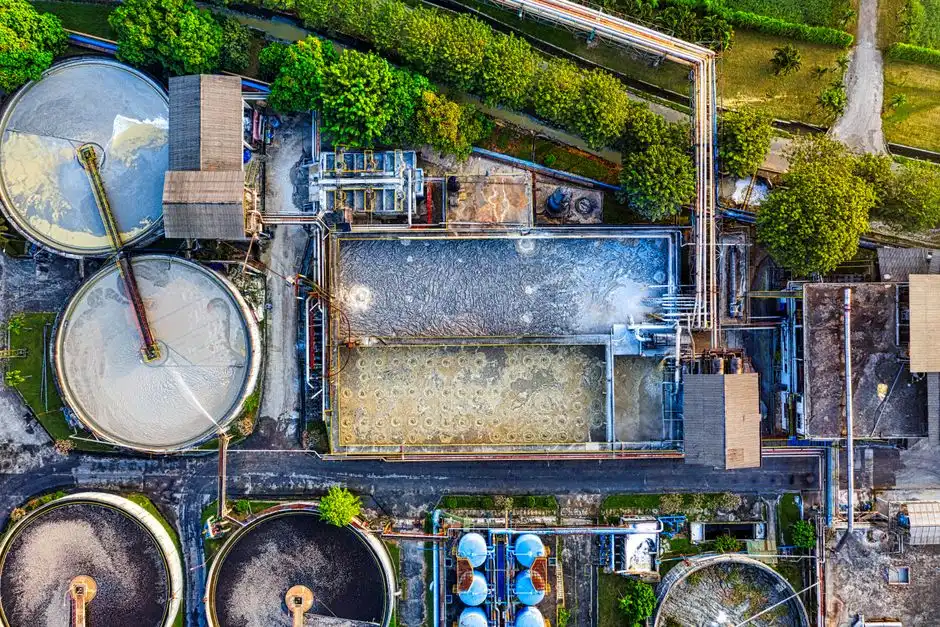
A tea-wastewater MBBR train should remove or control material that can foul the reactor or upset its biology before equalization and biological treatment. The required sequence follows from characterization: segregate incompatible streams, screen solids, equalize flow and load, remove or treat oils, surfactants and other identified contaminants, then feed the biological reactor.
Screening should intercept tea leaves, fibers, packaging fragments, and fibrous debris. Equalization should smooth batch discharges and wash-down peaks. The final vessel should be sized from measured flow and organic-load variation, not average flow alone; otherwise the reactor may experience short-duration organic shocks even when the daily mass balance appears acceptable.
Where analysis identifies suspended solids, FOG, oil and grease, surfactants, or colloidal material, provide the corresponding removal step. A DAF system for tea wastewater pretreatment can remove oil, grease, FOG, suspended solids, and colloidal material. DAF is a physical separation and pretreatment function, not a substitute for biological degradation of soluble organics.
Use automatic chemical dosing only where analysis confirms a treatment requirement, such as pH adjustment or coagulation. A site-specific chemical dosing system should be sized from jar tests and process chemistry; no tea-specific dose can be inferred from the supplied research.
Provide a segregated or bypass route for concentrated cleaning solutions and pesticide-bearing streams unless testing demonstrates that they can enter the MBBR without inhibition or unacceptable pass-through. Record the destination, holding capacity, monitoring, and ultimate treatment of each diverted stream.
| Process position | Purpose | Design condition |
|---|---|---|
| Source segregation | Isolates cleaning, pesticide, and other incompatible flows. | Verified stream inventory and diversion controls. |
| Screening | Removes leaves, fibers, and packaging debris. | Measured peak flow and debris loading. |
| Equalization | Levels hydraulic and organic loads. | Production and wash-down variability. |
| DAF or solids control | Removes identified oil, FOG, solids, and colloids. | TSS, oil and grease, surfactant results. |
| Chemical adjustment | Controls pH or supports coagulation. | Jar-test results and reagent demand. |
Design the MBBR Biological Stage
Carrier selection, reactor volume, and aeration must be designed as one system because the moving carrier media, filling ratio, mixing, and oxygen transfer determine whether the biofilm remains active and the reactor handles the characterized load. Carriers retain attached biomass and increase biological residence time, but they do not remove the need to control hydraulic and organic loading. The 2022 review identifies carrier type and filling fraction as important factors that can affect mixing, aeration needs, and reactor performance.
Set hydraulic retention time, organic loading rate, and aeration from the characterized tea wastewater and selected reactor volume. A generic retention time imported from another food-processing application would not establish the oxygen demand, biomass inventory, or solids-production rate for the tea site.
For biological start-up, the 2019 study by Kusuma, Fitria, and Kadaria used a 15-day seeding period with Kaldnes K1 carriers and a 20% media fill ratio. These are documented reference conditions for laundry wastewater, not universal values for tea processing effluent. The study tested laundry FRESCO wastewater with surfactants, carboxymethyl cellulose, calcium, phosphate, silica, and bleach; it did not establish tea-wastewater performance.
Use continuous aeration in the aerobic stage and mechanical mixing in anoxic or anaerobic stages, consistent with the 2022 review. Include carrier-retention provisions, access for removing excess or fouled media, and controls that maintain the intended movement without generating persistent stagnant zones. The review lists high energy demand, less efficiency at high organic flux, stagnant zones, and the need for additional suspended-solids separation as MBBR limitations.
Develop a solids-retention and biofilm-control strategy rather than assuming attached biomass eliminates all sludge management. Recirculation of sludge is not always strictly required because MBBR retains more biomass, but detached biofilm and suspended solids still enter the solids-handling train.
| Design parameter | Basis | Supplier evidence required |
|---|---|---|
| Carrier type and fill ratio | Wastewater characteristics, mixing, and aeration behavior. | Proposed media specification and calculated inventory. |
| HRT and organic loading rate | Measured flow, COD or BOD, pH, temperature, and equalization performance. | Reactor calculation using the site design basis. |
| Aeration | Organic load, required process condition, and dissolved-oxygen control. | Airflow, pressure, blower, and control calculations. |
| Biofilm and solids control | Expected shedding and downstream solids loading. | Access, maintenance, and solids-removal provisions. |
For a variable organic load, use the MBBR process design for variable organic wastewater as a design-structure reference, not as a source of tea-specific values.
Compare MBBR with Competing Treatment Routes
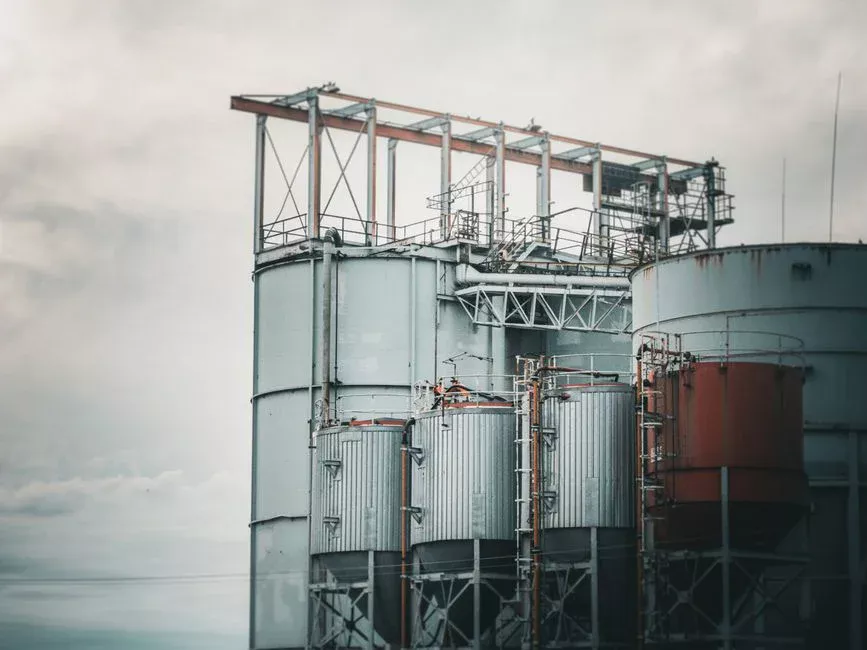
MBBR is most defensible when the wastewater is predominantly biodegradable, variable loading justifies retained biomass, and a separate solids-separation step is acceptable. It is less suitable as the sole solution for a highly inhibitory or persistently contaminated stream.
Against activated sludge, MBBR offers attached-biomass retention and generally lower reactor volume because the carriers support more biomass. The 2022 review also states that sludge recirculation is not always strictly required. Those advantages must be balanced against aeration energy, carrier management, and the biological reactor’s sensitivity to loading and operating conditions.
Against an MBR membrane bioreactor, the principal distinction is solids separation. The 2022 review states that MBBR generally requires an additional suspended-solids separation unit, whereas an MBR separates solids within the reactor using a membrane. An MBR membrane bioreactor alternative integrates activated-sludge treatment, membrane separation, and a smaller treatment footprint; its published equipment scope is 10–2,000 m³/day. That range is the supplier’s stated equipment capacity, not evidence that every tea-factory flow falls within the appropriate MBBR or MBR configuration.
DAF and a clarifier perform physical separation or clarification. Neither directly replaces biological oxidation of soluble organics. The practical choice depends on the required effluent or reuse specification, variability, inhibitory constituents, solids handling, energy, footprint, and capital and operating costs.
| Treatment route | Primary strength | Main limitation for this decision |
|---|---|---|
| MBBR | Retains attached biomass for biological treatment. | Needs loading control and downstream suspended-solids separation. |
| Activated sludge | Established biological treatment with suspended biomass. | Requires reactor volume and sludge-return management. |
| MBR | Combines biological treatment and membrane solids separation. | Requires membrane operation, controls, and maintenance. |
| DAF or clarifier | Separates solids, oil, FOG, or colloidal material. | Does not replace biological treatment of soluble organics. |
If characterization shows that wash-down or pesticide-bearing flows are incompatible with the biological stage, use segregated treatment or a hybrid train rather than forcing every stream through MBBR.
Complete the Plant with Solids Removal and Reuse Planning
MBBR should not be presented as a discharge-ready plant because the 2022 review identifies additional suspended-solids separation as an MBBR limitation. The complete train must include a method for handling solids detached from the carrier media and biomass generated in the biological stage.
Match the final clarification or flotation stage to measured TSS, oil and grease, and solids-loading characteristics. A high-efficiency sedimentation tank may form part of the solids-removal train, while the selected flotation or clarification arrangement should reflect the characteristics of the solids leaving MBBR.
Assess sludge production and dewatering requirements during process design. A plate and frame filter press is available across filtration areas from 1 m² to 500 m², with manual, hydraulic, or PLC-automatic operation. Those stated equipment options do not establish the required area for a tea plant; selection requires sludge volume, solids characteristics, and the intended operating cycle.
Evaluate reuse only after pilot effluent quality and site-specific reuse criteria are established. MBBR performance for biodegradable organics does not by itself establish suitability for process water, cooling water, irrigation, or discharge. The assessment should include each required parameter, the applicable sampling method, and the receiving condition.
Pilot Testing and Performance Acceptance
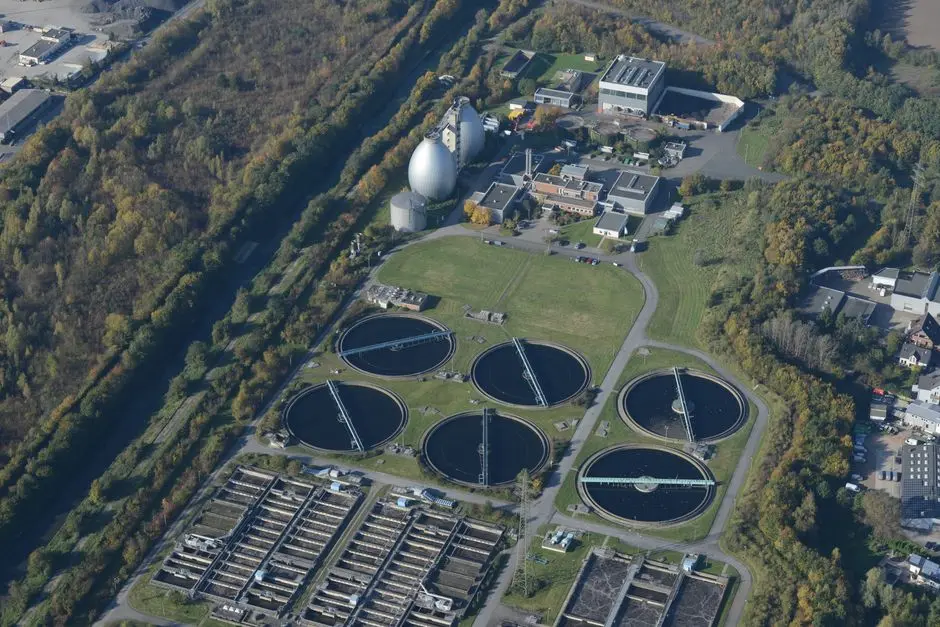
A representative side-stream pilot is the appropriate mechanism for converting a preliminary MBBR design into an accepted treatment train. Run it with the intended carriers, filling ratio, aeration regime, hydraulic retention time, and anticipated wastewater variability. Include the full production and cleaning cycle rather than testing only with a stable laboratory feed.
Track inlet and outlet COD, BOD, TSS, pH, temperature, dissolved oxygen, and any nutrient or contaminant parameter relevant to the discharge or reuse route. During operation, also confirm carrier movement, mixing, biofilm establishment, odor control, downstream separation, and handling of production and wash-down transitions.
The 2022 review cites commercial-laundry results of 95–98% BOD₅ removal and 89–94% COD removal. These are commercial-laundry evidence, not tea-wastewater acceptance criteria. The 2019 Kaldnes K1 laundry study used a 20% fill ratio and a 15-day seeding period; those are reference conditions, not universal acceptance values.
Use pilot results to confirm loading, reactor volume, carrier specification, aeration demand, control philosophy, and solids handling. Translate confirmed performance into measurable guarantees. Define test duration, sampling frequency, influent operating envelope, analytical methods, acceptance values, corrective actions, and remedies for failure.
| Acceptance item | Pilot evidence | Contract treatment |
|---|---|---|
| Organic removal | Representative COD and BOD profiles across operating cycles. | Stated influent range, test method, and effluent guarantee. |
| Hydraulics | Operation at expected flow and load variation. | Design flow, equalization performance, and HRT basis. |
| Carrier behavior | Movement, mixing, biofilm establishment, and fouling observations. | Media specification, fill ratio, retention, and maintenance obligations. |
| Aeration | Dissolved-oxygen and organic-load response. | Airflow, blower capacity, and control requirements. |
| Solids separation | TSS and downstream solids observations. | Final separation performance and sludge-handling responsibilities. |
The pilot should also test the complete biological and solids-removal sequence. A reactor-only result is not an acceptance basis for a whole plant. The MBBR design guide for soft-drink wastewater can help structure the performance narrative, but its wastewater basis and results must not be substituted for tea-factory data.
What to Require from an MBBR Supplier
A supplier should demonstrate the process basis and complete equipment scope, not simply quote a headline removal percentage. Request a document showing measured influent characteristics, design flows, hydraulic and organic loading, hydraulic retention time, reactor configuration, carrier type, filling ratio, aeration calculations, and the operating envelope for the guarantees.
Clarify whether the quotation includes reactor vessels, carriers, blowers, piping, controls, equalization, screening, solids or oil pretreatment, clarification, sludge handling, odor control, installation, commissioning, and training. Identify excluded civil works, utilities, chemical storage, and site services. Complete-scope pricing prevents an apparently lower MBBR price from hiding major pretreatment or solids-handling costs.
Ask for pilot data or reference evidence relevant to the selected carrier media and comparable wastewater conditions. The supplier should state the wastewater type clearly and explain which operating conditions, loads, and analytical methods support each result. Request aeration sizing, dissolved-oxygen control, carrier-retention provisions, maintenance access, spare parts, and local or remote control options.
For a complex tea facility, also request a parameter-by-parameter basis for the final effluent or reuse route. Ask how color, TSS, nutrients, cleaning chemicals, and relevant pesticide residues are addressed, and identify any stream excluded from the guarantee. The industrial ETP and DAF system guide for factories can provide a useful scope-clarification framework, but the supplier must still document the tea-plant basis.
| Document or offer | What the buyer should verify |
|---|---|
| Process basis | Site flow, wastewater analysis, loading, HRT, reactor configuration, carriers, and aeration. |
| Equipment schedule | Included and excluded civil, mechanical, electrical, controls, pretreatment, and sludge equipment. |
| Pilot or reference evidence | Wastewater type, carrier, loading, operating conditions, and analytical method. |
| Performance commitment | Defined influent envelope, effluent parameters, test duration, sampling, and remedies. |
| Cost breakdown | Equipment, installation, pretreatment, aeration, controls, solids handling, and site-specific services. |
The supplied sources do not provide tea-specific MBBR capital or operating costs. Request a site-specific cost breakdown rather than comparing an unsupported generic price. The material cost drivers to separate include pretreatment, equalization, reactor volume, carrier quantity, aeration, controls, final clarification, and sludge handling.
Frequently Asked Questions
How should MBBR be sized for a tea-processing plant?
Reactor volume and carrier loading must follow measured flow, COD or BOD loading, hydraulic retention time, pH, temperature, and equalization performance. A generic tea-plant reactor size cannot be published without those inputs. Ask the supplier to show the calculation, including the selected carrier, filling ratio, reactor configuration, organic loading rate, aeration demand, and expected solids production.
What does an MBBR system cost for tea processing wastewater?
The supplied research does not provide tea-specific MBBR prices, so a defensible budget cannot be stated from the available evidence. Request separate quotation items for equalization, screening, pretreatment, reactor volume, carrier quantity, blowers and aeration, controls, clarification, sludge handling, installation, utilities, and site-specific services. Compare complete-scope offers rather than headline reactor prices.
How should an MBBR supplier be selected?
Select the supplier that provides a traceable process basis, relevant pilot or reference evidence, carrier and aeration calculations, a complete equipment scope, maintenance provisions, and measurable performance guarantees. The evidence must identify the wastewater type and operating conditions. For a tea plant, also require a clear treatment strategy for wash-down, cleaning chemicals, solids, and any pesticide-bearing stream.
Does high BOD or COD removal prove that the MBBR discharge complies?
No. Bulk BOD or COD removal does not establish permit compliance or reuse suitability. Confirm the applicable permit or reuse target, each regulated parameter, sampling method, operating envelope, and acceptance condition separately. The food and beverage plant pretreatment limits illustrates why incoming wastewater characteristics and treatment boundaries matter before downstream acceptance is discussed.