What Wastewater Streams Must an MBBR Treat?
An MBBR design should begin with a source-by-source wastewater envelope, not an average daily flow. Soft-drink production wastewater can combine product losses, syrup and flavoring residues, tank and line washings, CIP dumps, floor washdown, and laboratory or utility discharges. Their treatment implications differ substantially: soluble sugars can create a high biochemical oxygen demand, while suspended fruit solids, packaging debris, and cleaning chemicals can affect screening, mixing, and biomass separation. Ecologix identifies sugars, syrups, and flavorings as common causes of high BOD in beverage production and cleaning cycles as a source of significant pH swings (Ecologix Systems, undated). These characteristics support a biological core, but they do not establish that MBBR alone can meet the plant’s discharge or reuse requirements.
Ask the operations team for time-resolved flow and load data covering production days, off-peak periods, campaign changes, and batch discharges. Request COD, BOD, TSS, pH, temperature, flow, nutrient concentrations, and surfactant indicators where relevant. The characterization should also distinguish soluble organic material from settleable solids, because the distinction affects equalization, solids removal, and the risk of carrier fouling or biomass shock.
| Source | Main contaminants or operating concern | Implication for the MBBR train |
|---|---|---|
| Product-loss wastewater | Sugars, syrups, flavorings, and other biodegradable organics | Define peak organic loading and whether aerobic treatment alone is appropriate |
| Tank and line washings | Dilute sugars, flavor residues, and variable solids | Blend with concentrated streams and confirm required screening or solids removal |
| CIP dumps | Cleaning chemicals, pH excursions, and possible surfactants | Assess equalization, pH control, toxicity, and possible release restrictions |
| Floor washdown | Suspended packaging debris, fruit residues, and wash-water contaminants | Remove solids before biological treatment where carrier movement could be impaired |
| Laboratory and utility streams | Variable organics, chemicals, and flow | Decide whether to segregate or include in the design basis |
The 2019 laundry study should not be used as an acceptance criterion for this wastewater. Its results are supporting evidence for attached-growth behavior under a different feedstock and chemistry, not a transferable soft-drink guarantee.
How MBBR Removes Beverage Organics
MBBR is an attached-growth biological process in which microorganisms grow on moving carrier elements while aeration supplies oxygen and keeps the media in motion. The carrier gives the biomass a protected surface on which biofilm can develop, increasing the amount of retained active biomass inside the reactor. The moving bed biofilm reactor can therefore remove biodegradable organics without relying on the same degree of sludge recirculation used in conventional activated sludge.
The 2022 review, Recent advances in application of moving bed biofilm reactor for wastewater treatment, states that MBBR can require less reactor volume than activated sludge because attached media facilitate biomass retention and improve the effective residence time of microorganisms. That is a comparative process principle, not a universal footprint guarantee. The actual reactor volume still depends on the plant’s measured hydraulic and organic loads, temperature, target removal, carrier properties, and the selected process configuration.
For soft-drink wastewater, aerobic MBBR is the logical starting point for biodegradable organics because the process provides oxygen and carrier movement. Anoxic or anaerobic MBBR stages may be relevant where biodegradable organic removal, methane recovery, or a staged treatment objective is appropriate. The 2022 review clarifies that aerobic MBBR uses aeration both for oxygen transfer and carrier movement, while anoxic or anaerobic MBBR requires mechanical mixing to keep carriers suspended. The reactor can develop a self-regulating biofilm, but acclimation, carrier selection, and stable operating conditions remain necessary for predictable performance.
The practical advantage is retained biomass and tolerance of biological loading variation. The practical limit is that MBBR still requires a controlled environment, effective solids handling, and sufficient treatment capacity. The surrounding equipment for integrated biological treatment with membrane-based solids separation can provide context for how a biological stage and high-performance clarification may be combined when the final effluent requires it.
Build the Treatment Train Around the MBBR
A defensible MBBR project is a complete process train, not a reactor package. A typical sequence begins with coarse screening, flow equalization, and blending of production and CIP batches. Equalization should limit hydraulic and organic shocks; it should not substitute for pretreatment of materials that could foul equipment, interfere with carrier movement, or inhibit the selected biomass.
Evaluate DAF when floating oils, greases, colloids, or substantial suspended material are present. The 2022 review notes that complex wastewater may require biological and physicochemical processes in combination, while the same review identifies excess organic flux, stagnant zones, and the need for additional solids separation as MBBR limitations. A DAF pretreatment system for beverage wastewater should therefore be evaluated as a solids and colloid barrier when the characterization supports it, not added automatically.
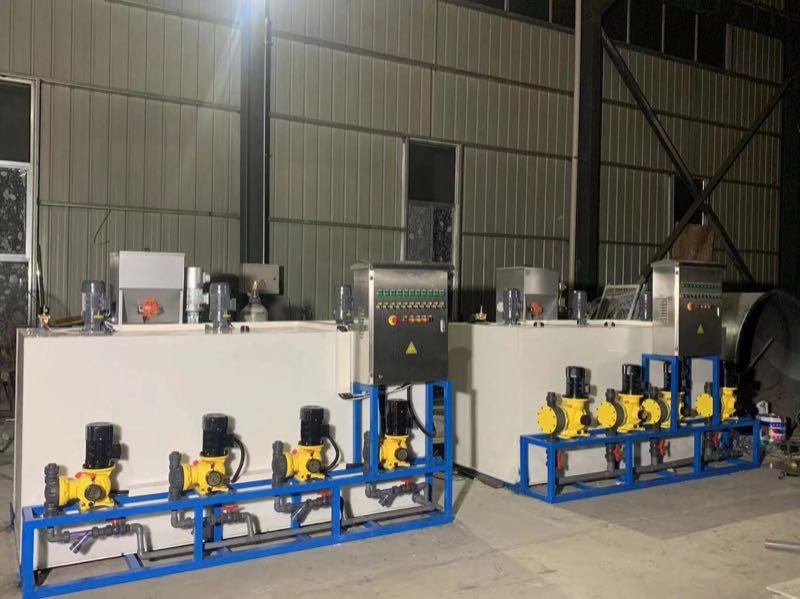
pH correction must occur before the biological stage when incoming beverage or CIP streams move outside the range acceptable to the selected culture. An automatic pH and nutrient dosing system can be included in the control train, but chemical demand should be based on measured alkalinity, acid or base use, and the mixing strategy—not a generic dosing rate.
| Process step | Primary purpose | Design evidence to request |
|---|---|---|
| Coarse screening | Remove packaging debris and gross solids | Screen type, clear opening, extracted solids handling, and peak flow |
| Equalization and blending | Reduce hydraulic, pH, and organic shocks | Time-resolved flow and load profile, working volume, mixing, and controlled release |
| DAF or solids removal | Remove floatables, colloids, and suspended solids where needed | Influent solids characterization, chemical condition, solids removal basis, and sludge route |
| pH and nutrient control | Prepare influent for biological treatment | Measured pH range, alkalinity, nutrient balance, dosing control, and chemical storage |
| MBBR | Remove biodegradable organics and selected nutrients | Measured loading, carrier specification, fill definition, aeration or mixing, and control setpoints |
| Post-separation and polishing | Remove biomass and meet discharge or reuse needs | Clarifier or membrane concept, solids capture, filtration, disinfection, nutrient removal, and permit basis |
Include post-MBBR solids separation. The 2022 review states that an additional separation unit may be required because the process can release suspended biomass. The separation and sludge-handling design must cover the solids inventory generated from both shed biofilm and incoming suspended material. A mechanical bar screen for upstream solids removal may protect the downstream train where debris is present, but it does not replace clarification after biological treatment. Finally, assess nutrient balance, disinfection, filtration, and reuse requirements against the complete effluent specification.
Design Variables That Control MBBR Performance
The 2022 review identifies the variables that must appear in any MBBR design basis: hydraulic loading rate, organic loading rate, hydraulic retention time, sludge retention time, pH, temperature, carrier type, filling fraction, reactor configuration, microorganism type, biofilm thickness, attached and suspended biomass, and extent of aeration. A proposal that omits these variables is not sufficiently defined for comparison or acceptance testing.
Carrier selection affects mixing and aeration demand. The design must balance protected surface area with reliable movement, collisions, wetting, and manageable headloss. A carrier with high available area can still produce poor field performance if it does not remain active throughout the reactor or requires excessive energy to keep in motion. Ask the supplier to define how fill ratio is measured, whether the stated condition is clean or biofilm-covered, and how the selected carrier behaves under the expected flow and solids conditions.
Reactor zoning should support equalization, biological treatment, and solids separation without prescribing untested dimensions or loading values. Air demand, blower redundancy, diffuser fouling risk, mixing energy, and carrier lift or drag belong in the mechanical review. These issues determine whether carrier movement is dependable under peak load, not only under steady average flow.
The 2019 laundry study provides one operating reference: Kaldnes K1 carriers, a 20% media fill, a 15-day seeding period, and treatment evaluated at 6, 8, and 10 days. It concerned laundry wastewater, not soft-drink production wastewater. The appropriate use is to show how fill, startup, and operating duration affected an attached-growth system under the study conditions, not to transfer its reactor sizing or performance to a beverage plant.
| Parameter or submission item | Question the buyer must resolve |
|---|---|
| Design basis | What measured peak and average flow, organic loading, pH range, temperature, and nutrient data were used? |
| Carrier system | What carrier type, protected area, fill-ratio definition, and expected biofilm operating range are proposed? |
| Hydraulics and aeration | How will carrier movement, air or mixing energy, redundancy, and headloss be demonstrated? |
| Biomass control | How will excess biofilm, solids inventory, and sludge wasting be managed? |
| Solids separation | What downstream method will meet the required suspended-solids condition? |
| Controls and testing | What instruments, setpoints, alarms, sampling points, and performance-test method are included? |
Require the supplier to state all of these items in the proposal. Related equipment such as treatment valves and filter media should be specified where it supports the hydraulic and solids-control strategy; individual component brands do not substitute for a process design.
What the Published Performance Data Actually Shows
The 2019 Universitas Tanjungpura laundry study shows that MBBR can remove biodegradable organics and selected contaminants under its tested conditions. It does not establish guaranteed performance for soft-drink production wastewater. The distinction matters because the laundry feedstock contained surfactants, carboxymethyl cellulose, calcium, phosphate, silicate, and bleach, while beverage wastewater is dominated by different combinations of sugars, syrup residues, flavorings, wash water, and cleaning chemicals.
| Parameter | Initial concentration | Final concentration | Reported reduction |
|---|---|---|---|
| BOD | 441 mg/L | 39.67 mg/L | 91% |
| COD | 910 mg/L | 56.3 mg/L | 93.81% |
| Phosphate | 38.24 mg/L | 5.31 mg/L | 86.10% |
| Surfactant | 47.8 mg/L | 5.62 mg/L | 88.22% |
These results came from the 2019 Universitas Tanjungpura study, using Kaldnes K1 carriers at a 20% fill ratio and a 15-day seeding period. The best reported results occurred on treatment day 10. The 2022 review also reports published commercial-laundry removal ranges of 95–98% for BOD5 and 89–94% for COD. Those are review-level laundry results, not soft-drink claims.
For a beverage project, use these findings to support the biological plausibility of attached-growth treatment, not to set the guaranteed effluent. The supplier should either validate the design with actual wastewater or explain a justified model linking the measured site loads to the proposed reactor and equipment. Biological treatment design for high-strength food-process wastewater provides a related reference for treating high-strength industrial streams, but it does not replace site-specific evidence.
Choose Between MBBR, MBR, and Activated Sludge
MBBR, MBR, and activated sludge should be compared against the same wastewater envelope, effluent specification, and plant constraints. Footprint is only one variable. Hydraulic and organic variability, pH tolerance, solids capture, energy use, sludge production, maintenance, controls, operator workload, and reuse objectives can change the ranking.
MBBR is attractive when retained attached biomass, process resilience, and a compact biological stage are priorities and the project includes a credible solids-separation step. MBR becomes more relevant when very low suspended solids or reuse-grade clarification is required and membrane maintenance can be supported. Conventional activated sludge may remain economical where existing infrastructure, operator expertise, and available land dominate the decision.
The supplied MBR specification states that its submerged PVDF filtration is below 1 micrometre, claims a 60% smaller footprint than conventional systems, and lists capacities from 10 to 2,000 m³/day. These are product specifications, not proof that MBR is preferable for every beverage project. An integrated MBR wastewater treatment system should be evaluated against the required effluent quality, variability, membrane maintenance, and energy assumptions. Where existing treatment capacity is already present, an underground integrated treatment system may affect the site-constraint comparison, although its wastewater application must be verified.
| Decision criterion | MBBR | MBR | Conventional activated sludge |
|---|---|---|---|
| Biomass retention | Attached and suspended growth | Attached and suspended growth with membrane retention | Primarily suspended growth |
| Solids separation | Requires a downstream separation design | Integrated membrane separation | Requires clarification and sludge handling |
| Best fit when | Compact biological resilience and credible separation are priorities | Very low suspended solids or reuse-grade clarification is required | Existing infrastructure, land, and operating familiarity dominate |
| Key project risks | Carrier movement, organic overload, clogging, and incomplete solids capture | Membrane fouling, cleaning, replacement, and controls | Footprint, sludge handling, and process variability |
| Required evidence | Site load basis, carrier and aeration design, pilot, and solids performance | Site load basis, membrane flux basis, cleaning plan, and acceptance test | Site load basis, mixing and settling, sludge wasting, and effluent test |
No universal winner can be selected from flow or tank volume alone. The decision requires source characterization, the discharge or reuse target, and constraints on footprint, staffing, energy, maintenance, and permitted discharge.
Pilot, Commission, and Prove Performance

Pilot testing should validate the design model before reactor volume, carrier fill, and aeration capacity become fixed commitments. Begin with a time-resolved mass balance covering production losses, washings, and CIP releases. Sampling should capture normal production, the highest observed organic discharge, representative cleaning events, and low-flow conditions. Use this record to define the average and peak loads that the full-scale train must handle.
Run the pilot with the intended carriers and actual wastewater under applicable pH and temperature conditions. Document the startup or seeding protocol, carrier wetting, mixing or aeration settings, biofilm development, and any temporary hydraulic variations. The online monitoring approach for wastewater plant operation can help structure data review, but the acceptance test still needs a defined sampling method and agreed limits.
Track flow, COD, BOD, TSS, pH, temperature, dissolved oxygen, nutrients, carrier movement, biofilm condition, and downstream solids performance across representative production and CIP cycles. Compare those results with the design model and the applicable permit or reuse criteria. Use the validated results to set aeration, recirculation, wasting, pH-control, and alarm rules.
Full-scale commissioning should confirm carrier distribution, blower and diffuser performance, solids handling, controls, sampling points, operator training, and contingency responses. A supplier should define what happens during a CIP batch, blower outage, excessive biofilm shedding, or solids-separation upset before those events become operating surprises.
Questions to Ask an MBBR Supplier
Comparable proposals require the same measured design basis and the same defined boundaries. Require peak and average flow, organic loading, pH range, temperature, nutrient data, and current and planned production changes. Each supplier should state whether its price covers a biological reactor alone or a complete train.
Ask for carrier type, protected surface area, fill-ratio definition, mixing and aeration calculations, expected energy demand, and redundancy. Request the downstream solids-separation concept, sludge-production estimate, maintenance intervals, instrumentation, controls, spare parts, and remote-monitoring options. A comparable reference should involve wastewater chemistry and operating conditions sufficiently similar to the proposed application, not merely another food-industry plant.
| Proposal item | Minimum information required |
|---|---|
| Design basis | Measured flow and load data, production changes, pH, temperature, nutrients, and effluent requirement |
| Reactor and carriers | Carrier specification, protected area, fill definition, mixing or aeration design, and biomass-control method |
| Complete train | Equalization, screening, solids removal, chemical dosing, reactor, post-separation, sludge handling, and utilities |
| Performance | Comparable reference, site-specific pilot evidence where needed, test protocol, acceptance criteria, and guarantee boundaries |
| Commercial comparison | Total installed scope, exclusions, installation, commissioning, controls, maintenance, energy, consumables, and sludge disposal |
Compare total installed cost and lifecycle operating requirements rather than quoted equipment price alone. The supplied research does not provide transferable soft-drink MBBR cost figures, so any budget must be built from a site-specific scope and quotations. If sludge dewatering is part of the train, request a concept such as a plate-and-frame filter press where appropriate to the selected solids route. For broader cost context, 2026 membrane replacement cost and pricing guidance is relevant only if membrane-based treatment is included.
Frequently Asked Questions
How much does MBBR for soft drink wastewater cost?
No transferable soft-drink MBBR price range appears in the supplied research. A defensible quotation should itemize equalization, screening, solids removal, chemical dosing, reactor and carriers, aeration, solids separation, sludge handling, controls, installation, and lifecycle energy. Buyers should request both total installed cost and the operating assumptions behind each quoted line.
How do you size an MBBR for a beverage bottling facility?
Size it from the measured wastewater envelope, not from an average daily flow. The 2022 review requires consideration of hydraulic and organic loading, hydraulic and sludge retention time, pH, temperature, carrier properties, fill ratio, reactor configuration, biofilm condition, biomass inventory, and aeration. Because no defensible vessel size can be calculated from the keyword alone, the buyer must provide time-resolved flow, load, pH, temperature, nutrient, and effluent data and require the supplier to state the design model.
Which supplier should be selected for an MBBR project?
Select the supplier that provides a site-specific design basis, a relevant reference, pilot evidence where needed, a measurable acceptance test, and documented operating and maintenance responsibilities. Comparable proposals should use the same influent, effluent, and scope boundaries. A lower equipment price is not comparable if it excludes pretreatment, solids separation, controls, commissioning, or performance responsibility.
Does MBBR treatment guarantee regulatory compliance?
No. MBBR treatment alone does not establish compliance. The complete train and final effluent must be assessed against the applicable permit or reuse specification, including suspended solids, nutrients, disinfection, and any reuse-specific requirements. Contract language should identify the tested parameters, sampling protocol, acceptance limits, and responsibility when a result falls outside the agreed envelope.
Related Equipment
- DAF pretreatment for beverage wastewater — specifications, capacity range, and technical data