
Why Potato Starch Wastewater Breaks Generic MBR Sizing Guides
Generic MBR sizing templates assume municipal loadings near 250–500 mg/L BOD and a continuous 24-hour hydraulic profile; both assumptions fail on a potato starch line. Campaigns run 4–7 months per year, and peak-day flows run 2–3x off-season mean — meaning any design pegged to average flow will breach effluent limits on roughly one-third of operating days. Raw starch-bearing water carries 6,000–15,000 mg/L COD, 4,000–10,000 mg/L BOD, and 2,000–5,000 mg/L suspended solids, which is a different biological envelope than municipal MBRs ever see (HydropureWater field data, 2025-09).
Process water also exits the plant at 35–45°C, which accelerates heterotrophic kinetics but pushes mixed liquor viscosity down and stresses PVDF membrane integrity if screening is inadequate. Soluble starch hydrolysis drives filamentous bulking in conventional CAS at F/M above 0.2 kg BOD/kg MLSS·d — an MBR sidesteps the failure mode entirely by decoupling SRT from HRT, holding biomass at 8,000–12,000 mg/L while washing the membrane clean on a fixed cycle. That combination of high organic load, warm soluble substrate, and seasonal operation is the reason MBR — usually preceded by anaerobic pretreatment — has become the default train for new potato starch lines above 200 m³/d.
Step 1 — Characterize the Flow and Load Envelope
Every defensible MBR design starts with a 24-hour composite sampled across at least 7 campaign days; report max, mean, and 95th-percentile values for COD, BOD, SS, TKN, and temperature. A pilot plant sized to 0.5–2% of design flow, run for 4–6 weeks, is the cheapest insurance against under-design — a single missed peak can cost more in retrofits than a six-figure pilot campaign. Equalization must then be sized on at least 12–18 hours of peak flow, not the daily mean, to dampen the diurnal swings that otherwise slam the membrane tank.
Upstream screening protects the membrane more than any chemistry. A rotary mechanical bar screen with a 2 mm aperture removes peel fragments, fibers, and grit that would otherwise blind the cassette. pH must be adjusted to 6.5–8.0 before the bioreactor — raw starch water can drop below pH 4 during a fermentation upset, and the biomass will not recover quickly. Nutrient balancing matters more than operators expect: high-carbohydrate wastewaters are typically N-deficient, and the C:N:P ratio should be brought to roughly 100:5:1 with urea and phosphoric acid dosing before the membrane tank.
| Parameter | Off-season mean | Campaign 95th percentile | Design value |
|---|---|---|---|
| Flow (m³/d) | 150 | 520 | 500 |
| COD (mg/L) | 3,500 | 14,200 | 12,000 |
| BOD (mg/L) | 2,200 | 9,400 | 8,000 |
| SS (mg/L) | 900 | 4,800 | 4,000 |
| TKN (mg/L) | 30 | 180 | 150 |
| Temperature (°C) | 22 | 44 | 40 (post-cooling) |
Step 2 — Set the Effluent Target and the Pretreatment Train
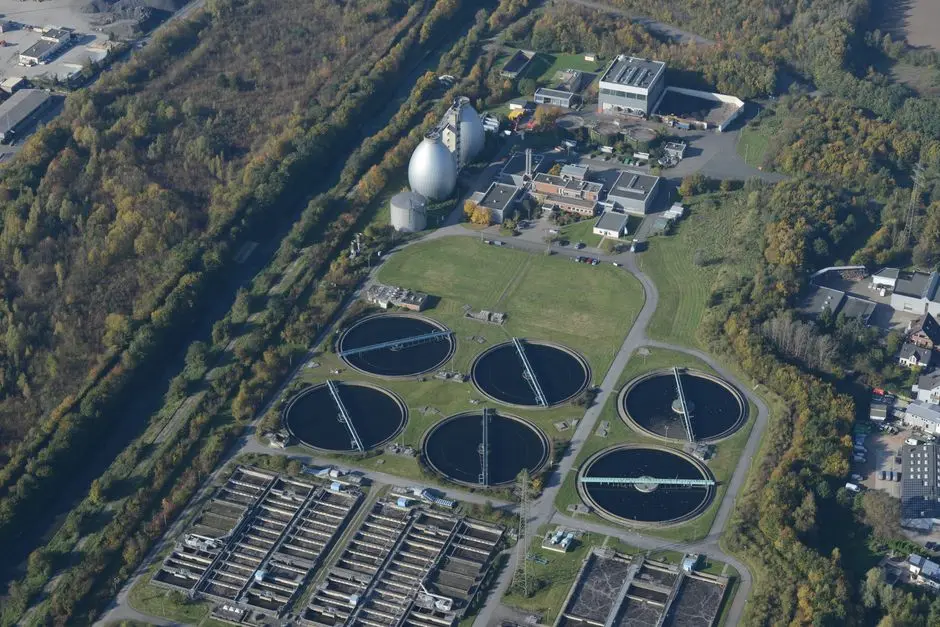
Lock the design to a specific discharge or reuse standard before any tank is sized. For sewer discharge in China, GB 8978 sets the food-industry second-stage limits at COD ≤150 mg/L, BOD ≤30 mg/L, and SS ≤30 mg/L; for on-site reuse as process wash water, target COD ≤50 mg/L, BOD ≤10 mg/L, TSS ≤5 mg/L, and turbidity ≤1 NTU. The reuse envelope is roughly 3x tighter than discharge and is the right anchor for an MBR — meeting the discharge limit without anaerobic pretreatment is technically possible but rarely economic on a campaign-loaded line.
Where raw COD exceeds 8,000 mg/L, an anaerobic front-end (UASB or IC) cuts aeration energy and waste sludge yield by 40–60% compared with aerobic-only trains, and shrinks the membrane tank proportionally. The aerobic stage should follow an A/O or A2O layout, with an anoxic zone sized to denitrify the 50–200 mg/L TKN typical of starch water at a recycle ratio of 2:1 to 4:1 return. For closed-loop reuse, an MBR effluent multi-media filter polishes turbidity and protects any downstream RO from particulate fouling — see our aerobic vs anaerobic treatment comparison for the energy and yield math behind that decision.
Step 3 — Pick MLSS, SRT, and HRT for the Aeration Tank
For potato starch water, MLSS in the aeration tank should be held at 8,000–12,000 mg/L. The high end shrinks tank volume but requires more blower power; the low end is more forgiving on aeration but pushes the membrane area up. F/M should be designed at 0.08–0.15 kg BOD/kg MLSS·d — tighter than CAS because the membrane decouples SRT from HRT and the operator can run the biomass young. SRT of 25–40 days is typical for starch water, long enough to fully hydrolyse the slowly-degradable polysaccharide fraction.
HRT in the aeration tank runs 18–28 hours; lower end shrinks footprint, higher end buffers shock loads. Theoretical oxygen demand is 1.1–1.5 kg O₂ per kg BOD removed, then apply an alpha factor of 0.7–0.85 to account for mixed-liquor transfer efficiency at the working MLSS. Tank volume is V = Q × HRT: at Q = 20 m³/h and HRT = 22.5 hours, V ≈ 450 m³, which can be split into two parallel lanes for maintenance access. Aeration must deliver both process oxygen and membrane-scour air — typically a 60/40 split favoring process air at the design F/M.
| Parameter | Low-end design | Recommended | High-end design |
|---|---|---|---|
| MLSS (mg/L) | 8,000 | 10,000 | 12,000 |
| F/M (kg BOD/kg MLSS·d) | 0.15 | 0.10 | 0.08 |
| SRT (days) | 25 | 32 | 40 |
| HRT (h) | 18 | 22 | 28 |
| Alpha factor | 0.85 | 0.78 | 0.70 |
An integrated MBR membrane bioreactor system packages the aeration tank, membrane cassette, and PLC on a single skid and is the fastest way to a defensible P&ID for a 200–500 m³/d line.
Step 4 — Translate Design Flow into Module Count and Aeration
Membrane selection begins with design flux. Submerged PVDF flat-sheet modules at 0.1 µm pore size run reliably at 12–18 LMH on starch water at 8,000–10,000 mg/L MLSS; the conservative 12 LMH should be used on lines with poor screening or variable influent, the 15–18 LMH band is realistic on well-instrumented plants. Required membrane area is A = (Q × 1000) / (flux × 24). For Q = 500 m³/d at 15 LMH, A ≈ 1,389 m².
DF-series PVDF flat-sheet cassettes typically provide 80–225 m² of active area each, so 7–8 cassettes cover a 500 m³/d line with one unit in standby. Continuous scour aeration below the modules at 0.6–1.0 Nm³ air per m³ of permeate per hour is the primary fouling control; the scour blower is typically the second-largest electrical load after process aeration. Backwash runs every 8–12 minutes for 30–60 seconds, chemically enhanced backwash (CEB) with NaOCl and citric acid every 1–2 weeks, and a clean-in-place (CIP) is triggered when transmembrane pressure climbs above 30 kPa — usually once or twice per campaign. Flat-sheet geometry tolerates the high solids of starch water better than hollow fiber, with fewer broken fibers and easier on-site integrity testing. See the full module envelope at the DF-series PVDF flat-sheet MBR modules page, and the parallel design notes in our sizing an MBR for paint booth curtain water guide for a non-food comparison case.
| Design flow (m³/d) | Flux (LMH) | Area required (m²) | Cassettes @ 175 m² | Scour air (Nm³/h) |
|---|---|---|---|---|
| 200 | 15 | 556 | 4 | 278 |
| 500 | 15 | 1,389 | 8 | 695 |
| 1,000 | 13 | 3,205 | 19 | 1,300 |
Step 5 — Sludge, Sludge, Sludge — Handling the MBR Waste Stream
MBRs are celebrated for effluent quality, but the operating reality is that high MLSS pushes more dry solids to the dewatering unit than any CAS train. At 12,000 mg/L MLSS and SRT 30 days, waste sludge yield is 0.15–0.25 kg TSS per kg BOD removed, which works out to 80–120 kg DS/day on a 500 m³/d line (HydropureWater field data, 2025-11). The waste stream is too thin to feed a press directly — thickening in a dissolved air flotation unit or lamella clarifier at 0.5–1% polyacrylamide dose brings it to 3–5% DS first.
A small plate-and-frame filter press with 8–15 m² filtration area then takes the thickened sludge to 22–28% dry solids cake, suitable for off-site composting or landfill. Adding anaerobic pretreatment upstream roughly halves the sludge mass reaching the dewatering unit, which is one of the under-appreciated drivers of UASB-then-MBR adoption on lines above 800 m³/d.
Capex and Opex Benchmarks for a 2026 Potato Starch MBR
A turnkey MBR package for 200–500 m³/d sits in the USD 180,000–420,000 band excluding civil works as of 2026 pricing (HydropureWater commercial data, 2026-02); the wide range reflects influent complexity, automation scope, and whether a UASB is bundled in. Total plant electricity typically runs 0.8–1.4 kWh per m³ treated, with the membrane scour blower and process aeration blower together accounting for 55–70% of that load.
Budget 10–15% of equipment capex over a 5–7 year horizon for PVDF cassette replacement, assuming routine CEB and CIP discipline. Labor runs 0.5–1.0 FTE per shift for a packaged system with full PLC automation and remote SCADA. Adding anaerobic pretreatment extends simple payback by 1.5–3 years on lines above 800 m³/d, but pays back faster as energy prices rise — the energy and yield case is laid out in our MBR configuration for staff sanitary sewage reference and the earlier-cited aerobic-versus-anaerobic article. For a procurement-grade bill of materials, an integrated MBR membrane bioreactor system quote is the fastest way to lock a 2026 number.
Frequently Asked Questions
Should I size an MBR to peak or average potato starch flow?
Size to the 95th-percentile campaign flow, not the annual mean, and equalize at least 12–18 hours of peak flow upstream. Potato starch campaigns spike 2–3x off-season, so an MBR sized to mean flow will breach effluent limits on roughly one-third of operating days and trigger membrane TMP excursions under sustained shock load.
Is anaerobic pretreatment worth it before an MBR on potato starch water?
Yes, once raw COD exceeds roughly 8,000 mg/L or flow exceeds 800 m³/d. A UASB or IC reactor upstream of the MBR cuts aeration energy and waste sludge by 40–60% and reduces the membrane area proportionally. The extra capex extends simple payback by 1.5–3 years at current electricity prices, and the benefit grows as tariffs rise.
What does membrane replacement actually cost for a potato starch MBR?
Plan on 10–15% of the original membrane-equipment capex over a 5–7 year service life for PVDF flat-sheet cassettes, assuming routine chemically enhanced backwash and CIP. On a 500 m³/d line running 8 cassettes, that translates to roughly USD 15,000–25,000 per cassette-replacement cycle in 2026 pricing, depending on cassette size and freight.
Flat-sheet versus hollow-fiber MBR for potato starch water?
Flat-sheet PVDF is the better default on starch water because the geometry tolerates the high MLSS and fibrous debris better than hollow fiber, with fewer broken fibers and easier on-site integrity testing. Hollow fiber has a slightly higher packing density but is more vulnerable to fouling and fiber breakage in food-processing solids, and it is harder to clean in place when blinded by starch granules.
Can the MBR effluent be reused directly as process wash water?
Yes, when the MBR is followed by a backwashable multi-media filter and meets COD ≤50 mg/L, BOD ≤10 mg/L, TSS ≤5 mg/L, and turbidity ≤1 NTU. If the wash water feeds a boiler or a closed rinse loop, add a polishing RO stage and a UV pass; for general process washing and floor cleaning, the MBR plus multi-media train is typically sufficient without RO.