Why Paint Booth Curtain Water Needs Special MBR Sizing
Generic MBR sizing guides built for municipal sewage fail on paint booth curtain water because the influent behaves nothing like domestic wastewater. Paint curtain water typically carries COD of 500–2,000 mg/L, TSS of 200–800 mg/L, and oils/grease of 50–200 mg/L — with sharp swings depending on whether the line is running waterborne or solventborne coatings (per EPA AP-42 paint spray booth emission factors, 2023 update). The solids fraction is dominated by titanium dioxide, organic pigments, and uncured resins, all of which form a dense, low-permeability cake on 0.1 μm membranes. Field experience shows paint solids foul PVDF membranes 2–3× faster than mixed liquor from a municipal plant, with pore blocking by sub-5 μm pigment particles preceding cake-layer build-up within 30–60 days of operation if pretreatment is missing.
Regulatory pressure makes the fouling problem non-optional. EPA's 40 CFR Part 433 sets industrial wastewater limits at BOD ≤30 mg/L, TSS ≤30 mg/L, and COD ≤250 mg/L for 2026, and the EU Industrial Emissions Directive (2010/75/EU) requires >90% COD removal for paint effluents. A 2025 EPA case study at a Michigan automotive plant documented a 60% reduction in MBR downtime after DAF pretreatment was added upstream of the membrane tank, cutting CIP frequency from monthly to quarterly. The lesson: paint-specific MBR design is not about tweaking flux — it is about protecting the membrane so the flux you designed for is the flux you actually run.
| Parameter | Paint Curtain Water (typical) | Municipal Wastewater (for comparison) |
|---|---|---|
| COD (mg/L) | 500–2,000 | 250–600 |
| TSS (mg/L) | 200–800 | 150–350 |
| Oils/grease (mg/L) | 50–200 | 10–50 |
| pH | 8.0–10.0 | 6.5–7.5 |
| Dominant foulants | TiO₂, pigments, resins | Cell debris, colloids |
Step 1: Characterize Paint Booth Curtain Water Influent
Accurate influent characterization is the single largest source of sizing error in paint-water MBR projects. Start with flow: install an electromagnetic flow meter on the curtain water return line and log 24-hour composite data. For greenfield plants, estimate flow from booth geometry: a typical water curtain runs 10–20 L/min per meter of booth width, so a 20 m wide booth generates 12–24 m³/day per operating shift.
COD and TSS must come from composite sampling, not grab samples, because paint operations produce slug loads during color changeovers and booth cleaning cycles. Use Hach or WTW test kits for on-site analysis to avoid the 48-hour lab delay that lets problems compound. Expect a clear split by paint chemistry: waterborne paint curtain water runs COD 500–1,200 mg/L and TSS 200–500 mg/L, while solventborne lines push COD to 1,500–2,000 mg/L and TSS to 500–800 mg/L. Oils and grease should be measured by EPA Method 1664 (hexane-extractable materials); anything above 100 mg/L will overwhelm a membrane tank without oil removal upstream.
pH is frequently overlooked and routinely damaging. Paint booth cleaning agents drive pH to 8–10, and alkaline conditions hydrolyze PVDF membranes over time, accelerating flux decline. Neutralize to pH 6.5–7.5 using an automatic chemical dosing system configured for sulfuric acid or CO₂ injection — CO₂ is preferred when the plant wants to avoid adding sulfates to the biological mixed liquor.
| Parameter | Test Method | Waterborne Paint | Solventborne Paint | Action Threshold |
|---|---|---|---|---|
| COD (mg/L) | Hach 8000 / WTW | 500–1,200 | 1,500–2,000 | >1,500 → reduce flux to 15 LMH |
| TSS (mg/L) | EPA 160.2 | 200–500 | 500–800 | >400 → DAF required |
| Oils (mg/L) | EPA 1664 (HEM) | 50–100 | 100–200 | >100 → DAF required |
| pH | Probe, on-line | 8.0–9.5 | 8.5–10.0 | >7.5 → neutralize |
Step 2: Select Pretreatment to Protect MBR Membranes
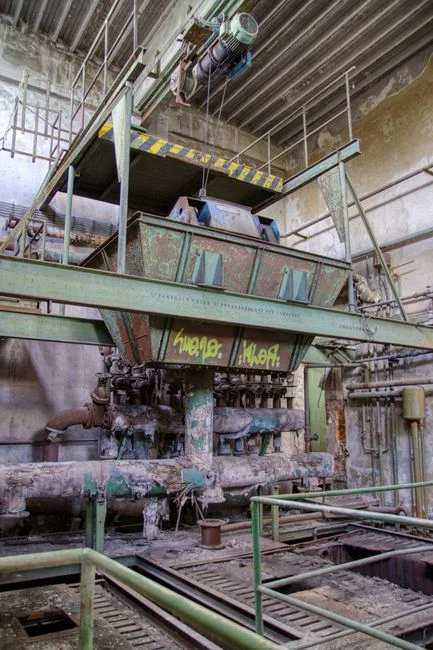
Pretreatment selection determines whether the MBR runs at design flux for 5+ years or collapses in 12 months. For paint curtain water, three technologies matter and they stack rather than substitute.
DAF is the workhorse. A properly configured DAF system for paint solids and oils removes 70–90% of TSS and 80–95% of oils when run with micro-bubbles in the 30–50 μm range — that bubble size is the band where paint particles float fastest without excessive air demand (per a 2025 DAF configuration guide for high-TSS industrial wastewater). Saturator pressure should sit at 5–6 bar with recycle rates of 20–30% of forward flow.
Rotary bar screening protects the DAF and MBR from large paint flakes and overspray that bypass the curtain. A 1–3 mm aperture is the practical minimum — finer screens (0.5 mm) blind within hours on a paint line. A self-cleaning rotary mechanical bar screen with brush mechanism handles the waxy, sticky solids that would jam a standard bar screen.
Coagulation and flocculation bridge the gap that DAF leaves on colloidal pigment. Dose polyaluminum chloride (PAC) at 50–150 mg/L, optimized by jar test for the specific paint formulation, followed by anionic flocculant at 1–3 mg/L. Underdosing leaves fine pigment to foul the membrane; overdosing dumps aluminum hydroxide into the MBR, which raises mixed liquor viscosity and drops sustainable flux. The economic case is straightforward: DAF adds $50–$100/m³ in CapEx versus $20–$50/m³ for screening alone, but the DAF-protected MBR runs 40% longer between membrane replacements, recovering the cost premium inside 24 months at most plants.
| Technology | TSS Removal | Oil Removal | CapEx ($/m³ capacity) | Membrane Life Impact |
|---|---|---|---|---|
| DAF (micro-bubble) | 70–90% | 80–95% | $50–$100 | +40% membrane life |
| Rotary bar screen | 20–40% (large particles only) | 0–10% | $20–$50 | +10% membrane life |
| Coagulation (PAC) | 30–50% (colloidal) | 10–20% | $10–$30 | +15% membrane life |
| Combined train | 85–95% | 90–98% | $80–$180 | +50–60% membrane life |
Step 3: Calculate MBR Membrane Area and Flux Rate
The sizing math itself is simple — three formulas cover most of the work — but the constants you plug in must reflect paint-water realities, not municipal defaults.
Flux rate selection comes first. For paint curtain water, run submerged PVDF flat-sheet membranes at 15–20 LMH versus 20–25 LMH for municipal sewage (HydropureWater field data, 2025–2026). The lower band accounts for the residual fouling load that survives DAF. Use 15 LMH as the design point when influent COD exceeds 1,500 mg/L or oils exceed 100 mg/L post-DAF; 18 LMH is a defensible middle for waterborne paint; 20 LMH only on tightly controlled waterborne lines with low pigment loadings.
Membrane area is calculated as: Area (m²) = Flow (m³/day) / (Flux (LMH) × 24). For 50 m³/day at 18 LMH, area = 50 / (18 × 24) = 115.7 m² — round up to 120 m² to provide operating margin and to allow one cassette to be isolated for CIP without forcing the plant to exceed design flux on the remaining modules.
Hydraulic retention time (HRT) for paint wastewater runs 4–8 hours, longer than the 2–4 hours typical of municipal MBR. Six hours is a defensible default: it gives the biomass time to break down longer-chain resin fragments and solvent carriers that would otherwise pass through and register as effluent COD. The trade-off is footprint — at 100 m³/day, an HRT of 6 hours needs a 25 m³ bioreactor versus 17 m³ at 4 hours. Choose the longer HRT when discharge COD limits are tight (≤100 mg/L) or when the line runs solventborne paints.
Module selection: PVDF flat-sheet modules in a submerged configuration dominate paint-water MBR installations because flat-sheet geometry tolerates the occasional slug of paint solids better than hollow fiber, and the air-scour pattern is more uniform. Hollow fiber retains a niche in sidestream MBR for solventborne streams where cross-flow scouring is required.
| Variable | Formula / Source | Worked Value (100 m³/day example) |
|---|---|---|
| Influent flow | Measured or estimated | 100 m³/day |
| Influent COD | Composite sample | 1,200 mg/L |
| Influent TSS | Composite sample | 400 mg/L |
| Post-DAF TSS | 90% DAF removal | 40 mg/L |
| Design flux | 15–20 LMH (paint-specific) | 18 LMH |
| Membrane area | Flow / (Flux × 24) | 100 / (18 × 24) = 232 m² → 240 m² |
| HRT | 4–8 hours (paint-specific) | 6 hours |
| Bioreactor volume | Flow × HRT / 24 | 100 × 6 / 24 = 25 m³ |
Step 4: Compare Submerged vs. Sidestream MBR for Paint Applications
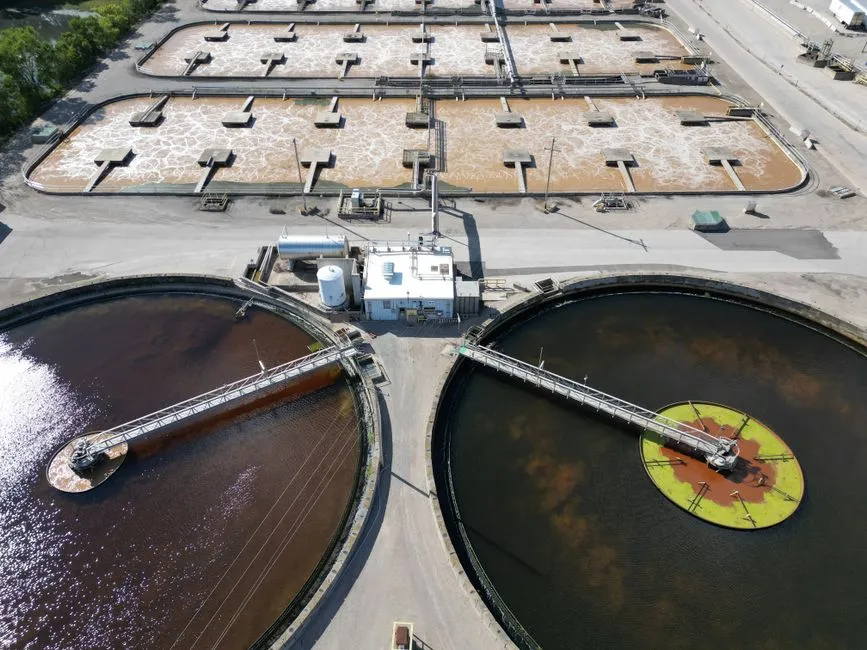
The configuration choice hinges on the paint chemistry, not the plant size. Submerged MBR is the default for waterborne paint curtain water: energy use sits at 0.3–0.5 kWh/m³, footprint is 40% smaller because there is no external recirculation loop, and CapEx runs 20% below sidestream. The risk is fouling — submerged modules rely on air scouring (typically 0.1–0.2 m³/m²/hour at the membrane surface) to keep pigment particles from settling into a cake. Drop the air-scour rate and a submerged MBR will foul in weeks rather than months.
Sidestream MBR earns its premium on solventborne paint lines and any stream where the post-DAF oil residual still runs above 30 mg/L. Cross-flow velocities of 3–5 m/s across the membrane surface scour foulants continuously, sustaining flux without the air-scour dependency. The cost is energy — 0.8–1.2 kWh/m³, roughly 2–3× the submerged figure — and a larger building footprint for the recirculation pumps and pipe rack. Sidestream membranes also tend to last longer: 3–5 years is realistic for flat-sheet submerged on paint duty, while sidestream hollow-fiber modules commonly run 5–8 years because the cross-flow keeps the membrane surface cleaner between CIP cycles.
| Parameter | Submerged MBR | Sidestream MBR |
|---|---|---|
| Energy use | 0.3–0.5 kWh/m³ | 0.8–1.2 kWh/m³ |
| Footprint | 40% smaller | Larger (recirc loop) |
| Tank depth | 3–4 m | 2–3 m |
| CapEx (relative) | Baseline | +20% |
| OPEX (relative) | +15% (membrane replacement) | Baseline |
| Membrane life | 3–5 years | 5–8 years |
| Best fit | Waterborne paint, stable influent | Solventborne paint, high-fouling streams |
Step 5: Validate Against 2026 Discharge Standards
A paint-water MBR that meets design flux is not yet a compliant system — the effluent numbers have to clear the regulator's bar, and the 2026 limits have tightened in several jurisdictions. In the US, 40 CFR Part 433 caps industrial discharge at BOD ≤30 mg/L, TSS ≤30 mg/L, and COD ≤250 mg/L; a properly operated MBR typically produces BOD <10 mg/L, TSS <5 mg/L, and COD <100 mg/L on paint curtain water, leaving comfortable margin. The EU Industrial Emissions Directive (2010/75/EU) sets COD ≤125 mg/L and TSS ≤35 mg/L for paint effluents; adding RO downstream of the MBR pushes COD below 50 mg/L and opens the door to reuse. A 2025 EU BREF case study at a German automotive plant documented 70% reduction in freshwater consumption after MBR + RO was installed, with treated effluent feeding the paint booth makeup-water tank and the cooling tower.
Reuse is the most economical path to compliance in water-stressed regions. MBR effluent with COD <50 mg/L is acceptable for cooling tower makeup; paint booth makeup water requires RO polish to remove dissolved solids that would otherwise telegraph into coating defects. For plants pursuing zero-liquid discharge, the MBR sits upstream of evaporation or crystallization, and the 2026 solar-powered ZLD system configurations for paint wastewater have reached 99.9% water recovery at 8–12 kWh/m³ energy demand when paired with a high-recovery RO stage.
| Region / Standard | BOD (mg/L) | COD (mg/L) | TSS (mg/L) | MBR Effluent (typical) |
|---|---|---|---|---|
| US EPA 40 CFR Part 433 (2026) | ≤30 | ≤250 | ≤30 | BOD <10, TSS <5, COD <100 |
| EU IED 2010/75/EU | — | ≤125 | ≤35 | COD <100 (MBR alone); <50 with RO |
| China GB 8978-2026 | — | ≤100 | ≤70 | COD <100, TSS <10 (MBR alone) |
Frequently Asked Questions
What is the biggest fouling risk for an MBR treating paint booth curtain water?
Titanium dioxide and organic pigment particles form a dense, low-permeability cake on the membrane surface, accelerated by any resin or oil carryover that escapes pretreatment. The most effective mitigation is DAF ahead of the MBR plus sustained air scouring at 0.15 m³/m²/hour at the membrane surface; without that air-scour floor, submerged MBRs on paint duty foul in 30–60 days.
How often do MBR membranes need cleaning on paint wastewater duty?
A submerged MBR on waterborne paint curtain water typically needs clean-in-place (CIP) every 3–6 months using 500–1,000 mg/L NaOCl at pH 10–11, with a 2–4 hour soak and then a permeate flush. A sidestream MBR on solventborne duty fouls faster and needs CIP every 1–3 months at 1,000–2,000 mg/L NaOCl, often paired with a citric acid step to remove metal-oxide deposits if the paint line includes metallic pigments.
What does a 50 m³/day MBR system for paint curtain water cost in 2026?
Expect CapEx of $150,000–$250,000 (2026 USD) for a complete system including DAF pretreatment, pH adjustment, MBR cassettes, blowers, and PLC automation. OPEX runs $0.80–$1.50/m³ treated, dominated by energy (40–50%), chemical dosing (20–25%), membrane replacement reserves (15–20%), and labor (10–15%). Plants that add RO for reuse see OPEX climb to $1.50–$2.20/m³ but recover the premium through reduced water purchase and discharge fees inside 18–30 months.
Can MBR treat solventborne paint wastewater?
Yes, but design flux must drop to 10–15 LMH and sidestream configuration is strongly preferred. A 2024 retrofit at a Texas aerospace components plant switched from a submerged to a sidestream MBR on a solventborne primer line, raising sustainable flux from 8 LMH (submerged, fouling-limited) to 14 LMH (sidestream, cross-flow-scoured) and extending membrane life from 18 months to over 5 years.
What discharge limits apply to paint wastewater in China?
GB 8978-2026 sets COD ≤100 mg/L, TSS ≤70 mg/L, and pH 6–9 for paint-shop effluents discharged to municipal sewer. A well-operated MBR with DAF pretreatment typically clears these limits without tertiary polishing, but plants discharging to surface water face tighter COD ≤50 mg/L and ammonia limits that require a downstream RO or breakpoint chlorination stage.
Related Equipment
- submerged PVDF MBR systems for paint wastewater — specifications, capacity range, and technical data