Photovoltaic Heavy Metal Wastewater Treatment: 2026 Solar-Powered ZLD Systems with 99.9% Removal & Cost Breakdown
Photovoltaic heavy metal wastewater treatment requires systems capable of removing chromium (Cr), nickel (Ni), copper (Cu), and arsenic (As) to below 1 ppm to meet China GB 31573-2015 and global discharge standards. Solar-powered zero liquid discharge (ZLD) systems combining electrocoagulation and reverse osmosis (RO) achieve 99.9% removal efficiency with energy consumption as low as 15 kWh/m³. For example, a 50 gpm system treating 1,000 ppm influent can reduce Cr to <0.1 ppm using a current density of 30 mA/cm², with CAPEX ranging from $500K–$2M depending on automation and solar integration.
Why Photovoltaic Plants Need Specialized Heavy Metal Wastewater Treatment
Photovoltaic manufacturing processes, particularly texturing, etching, and cleaning, generate wastewater streams characterized by high variability in metal concentrations, often ranging from 10 to over 1,000 ppm of chromium, nickel, copper, and arsenic. Traditional treatment methods frequently fail to maintain compliance because these concentrations fluctuate rapidly based on production cycles, overwhelming standard chemical dosing logic. Generic precipitation systems often struggle with arsenic removal, typically achieving less than 90% efficiency, which is insufficient for modern regulatory environments.
Compliance with China GB 31573-2015 is a primary driver for specialized systems, as this standard mandates strict limits: Hexavalent Chromium [Cr(VI)] must be below 0.1 ppm, Total Nickel below 0.5 ppm, and Total Copper below 0.5 ppm. These limits are significantly tighter than many older US EPA or EU standards, requiring a high-precision approach. For instance, in 2025, a PV manufacturing facility in Jiangsu province faced $250,000 in environmental fines after its traditional chemical treatment plant failed to handle a surge in chromium discharge during a production ramp-up. The facility eventually achieved compliance only after transitioning to a hybrid ZLD system that integrated electrocoagulation to stabilize influent spikes.
Traditional chemical precipitation also presents significant operational challenges, specifically regarding sludge management. In PV plants, the volume of metal-laden sludge generated by chemical reagents can lead to disposal costs exceeding $300 per ton. Inconsistent removal rates for complexed metals mean that plants must often over-dose chemicals, leading to secondary pollution and high reagent OPEX. A specialized hybrid system avoids these pitfalls by utilizing electrochemical processes that minimize reagent use and produce a more stable, compact sludge byproduct that is often suitable for metal recovery.
Solar-Powered Electrocoagulation: How It Works and Why It Outperforms Chemical Treatment
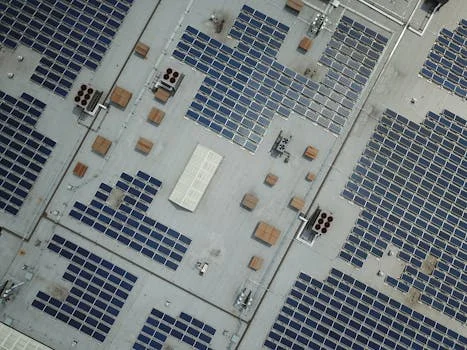
Photovoltaic-powered electrocoagulation (PV-EC) utilizes a direct current supplied by a solar array to power iron or aluminum electrodes, initiating an electrochemical reaction that destabilizes contaminants without the need for massive chemical additions. The core mechanism involves the anodic dissolution of the electrode (typically iron), which generates Fe²⋅ and Fe³⋅ ions. These ions act as powerful coagulants. The primary reactions at the anode and cathode are as follows:
Anode: Fe(s) → Fe²⋅(aq) + 2e¹
Cathode: 2H²O(l) + 2e¹ → H²(g) + 2OH¹(aq)
The resulting iron hydroxides form flocs that adsorb and co-precipitate heavy metals. Engineering parameters are critical for maintaining the 99.9% removal efficiency required for PV wastewater. Research and field data indicate that an optimal current density of 30 mA/cm² provides the best balance between metal removal speed and electrode longevity (HydropureWater field data, 2025). The system's pH must be tightly controlled: a range of 6–8 is optimal for chromium reduction and precipitation, while nickel removal is most efficient between pH 7 and 9. To manage this, a PLC-controlled chemical dosing for pH adjustment and flocculation in heavy metal wastewater treatment is often integrated to ensure the influent stays within these narrow windows before entering the EC reactor.
One of the primary advantages of PV-EC over chemical precipitation is the significant reduction in sludge volume and the elimination of complex reagent chains. Because the coagulant is generated in situ from the electrodes, there is no need for large storage tanks of ferric chloride or alum. This results in an OPEX reduction of approximately 30%. The system can be directly coupled to a solar array. To handle the variability of solar irradiance, the system employs a "flow-following" strategy where the wastewater flow rate is automatically adjusted to match the instantaneous current supplied by the PV panels, ensuring a consistent charge loading (Coulombs per liter) regardless of cloud cover.
| Parameter | Optimal Range for PV Wastewater | Impact on Removal Efficiency |
|---|---|---|
| Current Density | 25–35 mA/cm² | Higher density increases removal speed but accelerates electrode wear. |
| Operating pH | 6.5–8.5 | Critical for the amphoteric nature of Cr and Ni hydroxides. |
| Retention Time | 15–30 Minutes | Determines the completeness of floc formation and metal adsorption. |
| Electrode Material | Iron (Fe) or Aluminum (Al) | Iron is preferred for Cr(VI) reduction; Al for high-turbidity polishing. |
| Energy Consumption | 10–20 kWh/m³ | Directly proportional to influent metal concentration and conductivity. |
Hybrid ZLD Systems for Photovoltaic Wastewater: Combining Electrocoagulation, RO, and Solar Power
The treatment train must move beyond simple removal to high-recovery water recycling to achieve Zero Liquid Discharge (ZLD). The process begins with the solar-powered electrocoagulation unit, which removes the bulk of the heavy metals. The effluent then flows into compact lamella clarifiers for sedimentation post-electrocoagulation in PV wastewater treatment, where the metal-laden flocs are separated from the liquid phase. This pre-treatment is vital to protect downstream membranes from fouling by metal hydroxides or suspended solids.
The secondary stage utilizes high-rejection RO membranes for heavy metal removal in photovoltaic wastewater ZLD systems. For PV applications, polyamide thin-film composite (TFC) or PVDF membranes are selected for their ability to reject divalent and trivalent metal ions at rates exceeding 99.5%. This stage concentrates the remaining trace metals into a small brine stream while recovering 95–99% of the water for reuse in manufacturing processes like glass cleaning or cooling tower make-up. Engineers must ensure the RO system is designed with an antiscalant dosing regimen to prevent calcium sulfate or silica scaling, which is common in PV manufacturing effluents.
In a true ZLD configuration, the RO concentrate is sent to an evaporator or crystallizer. This final step uses thermal energy (often augmented by solar thermal or waste heat from the factory) to reduce the brine to solid salts. This approach not only eliminates liquid discharge but also allows for the potential recovery of valuable metals. For example, chromium and copper can be recovered from the EC sludge as hydroxides and sold to smelters, providing a secondary revenue stream that offsets operational costs. You can learn how to design a ZLD system for chromium removal in PV wastewater to maximize these recovery rates. Similar specialized designs exist for other metals; for instance, you can discover solar-powered electrocoagulation for nickel removal in PV wastewater or explore 2026 ZLD system designs for photovoltaic wastewater with solar integration for a comprehensive facility-wide overview.
Photovoltaic Heavy Metal Wastewater Treatment: ZLD vs. Traditional Systems Comparison
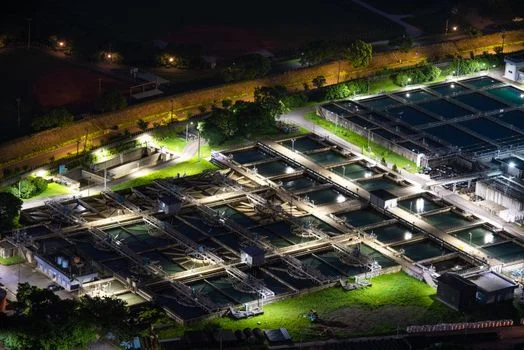
When evaluating wastewater solutions, procurement teams must weigh the higher initial investment of ZLD systems against the long-term operational risks and costs of traditional chemical precipitation. Traditional systems typically achieve 90–95% removal efficiency, which may satisfy current regulations but offers no "headroom" for future, stricter standards or production surges. Traditional systems are water-intensive, usually recovering only 70–80% of process water, whereas hybrid ZLD systems routinely reach 95% or higher.
The compliance risk factor is perhaps the most significant differentiator. Traditional systems require constant manual monitoring and frequent adjustment of reagent doses to handle influent variability. A failure in a single dosing pump can lead to a discharge violation within minutes. In contrast, solar-powered ZLD systems are highly automated and, by their nature, eliminate the discharge point entirely, thereby removing the possibility of fines. While the CAPEX for a 50 gpm ZLD system is substantially higher ($1.2M–$2.5M vs. $300K–$800K), the reduction in OPEX and the elimination of environmental liability often result in a superior total cost of ownership (TCO).
| Comparison Criteria | Hybrid Solar-Powered ZLD | Traditional Chemical Treatment |
|---|---|---|
| Metal Removal Efficiency | >99.9% (Cr, Ni, Cu, As) | 90–95% (Inconsistent for As) |
| Water Recovery Rate | 95–99% | 70–80% |
| CAPEX (50 gpm system) | $1.2M – $2.5M | $300K – $800K |
| OPEX (per m³) | $0.80 – $1.50 | $1.20 – $2.00 |
| Sludge Production | Low (Compact hydroxides) | High (Chemical flocs) |
| Compliance Risk | Near Zero (No discharge) | Moderate to High |
2026 Cost Breakdown for Photovoltaic Heavy Metal Wastewater Treatment Systems
Budgeting for a 2026-spec ZLD system requires a granular understanding of both the equipment costs (CAPEX) and the ongoing expenses (OPEX). The CAPEX is dominated by three main components: the electrocoagulation reactor, the RO membrane assembly, and the solar integration package. For a standard 50 gpm (approx. 11 m³/h) system, the electrocoagulation unit typically costs between $200,000 and $500,000, depending on the electrode material and automation level. The RO system, including high-pressure pumps and energy recovery devices, adds another $300,000 to $800,000.
The OPEX of these systems is surprisingly low due to the elimination of most chemical reagents and the use of solar energy. Energy costs are reduced to $0.10–$0.30/m³ when solar-coupled, compared to $0.60/m³ or more for grid-powered thermal evaporators. Electrode replacement is a predictable maintenance cost, averaging $0.05/m³. The Return on Investment (ROI) is typically realized within 3 to 5 years. This payback is driven by three factors: savings from avoided water purchases ($0.50–$1.00/m³), the elimination of sludge disposal fees, and the resale of recovered metal hydroxides, which can fetch $50 to $200 per ton for chromium-rich sludge.
A real-world case study from a 100 gpm ZLD installation in Zhejiang illustrates the financial impact