Photovoltaic (PV) wastewater zero liquid discharge (ZLD) systems achieve 99.9% recovery by combining membrane filtration, solar-powered evaporation, and crystallization to eliminate liquid discharge while recovering valuable materials like fluoride and heavy metals. For a 500 m³/day PV wastewater stream, hybrid ZLD systems reduce energy consumption by 40% compared to traditional thermal evaporation, with CAPEX ranging from $3.2M–$5.8M and OPEX of $0.80–$1.50/m³ (2026 data). Compliance with China GB 31573-2015 requires fluoride <10 mg/L and TSS <70 mg/L, while EU limits are stricter (fluoride <2 mg/L). Solar integration can offset 60–80% of evaporation energy costs in high-irradiance regions like Texas and Xinjiang.
Why PV Factories Need Zero Liquid Discharge: Compliance, Cost, and Sustainability Drivers
China’s GB 31573-2015 mandates ZLD for PV wastewater in water-scarce regions such as Xinjiang and Gansu, with fines for non-compliance reaching up to $150,000 annually based on 2024 Ministry of Ecology and Environment (MEE) enforcement data. As global demand for solar energy accelerates, manufacturing facilities face a dual challenge: skyrocketing water consumption and increasingly stringent environmental oversight. In PV cell production, processes like wafer slicing, etching, and cleaning generate massive volumes of high-salinity effluent. This wastewater is heavily laden with fluoride (50–300 mg/L), heavy metals such as cadmium and lead, and Total Suspended Solids (TSS) ranging from 200 to 1,200 mg/L.
The financial risks of traditional discharge methods are becoming unsustainable. Beyond direct fines, production halts due to permit violations can cost a 1 GW facility upwards of $500,000 per day in lost revenue. Conversely, a 2025 industry report highlights a 1 GW/year PV module factory in Jiangsu that transitioned to a ZLD model, effectively reducing fresh water consumption by 78%. By implementing a 2025 hybrid ZLD system design for PV wastewater reclaim, the facility recovered $220,000 per year in commercial-grade fluoride salts, turning a waste stream into a secondary revenue source.
Sustainability drivers also include corporate ESG (Environmental, Social, and Governance) goals. Major international developers now prioritize suppliers who demonstrate low water intensity. In water-stressed areas, securing a water permit for a new factory is often contingent on implementing a ZLD system. This makes ZLD not just a compliance tool, but a fundamental requirement for business continuity and market access in the 2026 manufacturing landscape.
PV Wastewater Characteristics: Contaminants, Concentrations, and Treatment Challenges
PV manufacturing wastewater typically contains fluoride concentrations between 50 and 300 mg/L and TSS ranging from 200 to 1,200 mg/L, requiring specialized treatment beyond standard industrial RO configurations. Generic ZLD systems often fail in PV applications because they do not account for the high silicon slurry content and the complex chemistry of hydrofluoric acid (HF) etching residues. Fluoride removal is particularly difficult; while standard Reverse Osmosis (RO) membranes achieve 90–95% rejection, PV wastewater requires 99%+ rejection to meet internal reuse standards or strict discharge limits.
Heavy metals such as Cadmium (Cd) and Lead (Pb) are present in thin-film and perovskite manufacturing. These metals require selective ion exchange or advanced chemical precipitation prior to the evaporation stage. Failure to remove these metals leads to toxic scaling in crystallizers, significantly increasing maintenance costs. the silicon slurry—fine particles of silicon and polyethylene glycol—can cause rapid membrane fouling if not addressed by high-performance pretreatment like the DAF system for PV wastewater pretreatment.
| Contaminant | Typical Concentration | China GB 31573-2015 | EU Directive 2008/105/EC |
|---|---|---|---|
| Fluoride (F-) | 50–300 mg/L | <10 mg/L | <2 mg/L |
| TSS (Silicon Slurry) | 200–1,200 mg/L | <70 mg/L | <30 mg/L |
| COD | 100–500 mg/L | <80 mg/L | <50 mg/L |
| Heavy Metals (Cd, Pb) | 1–10 mg/L | <0.1 mg/L | <0.05 mg/L |
| pH | 2.0–11.0 | 6.0–9.0 | 6.5–8.5 |
Hybrid ZLD System Design for PV Wastewater: Process Flow and Technology Selection
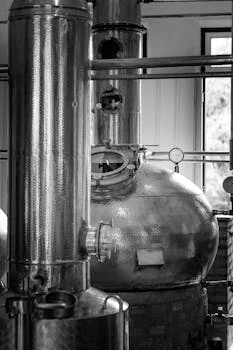
A standard hybrid ZLD system for PV manufacturing integrates Dissolved Air Flotation (DAF), high-rejection Reverse Osmosis (RO), and Mechanical Vapor Recompression (MVR) to achieve a 99.9% liquid recovery rate. The design philosophy centers on "pre-concentration," where membrane stages reduce the volume of water that must be treated by the energy-intensive thermal stages. This approach is critical for handling the high fluoride and TSS loads characteristic of solar panel production.
The process begins with pretreatment using a DAF system, which removes up to 95% of silicon solids and 80% of fats, oils, and greases (FOG) from the wafer slicing process. Following DAF, lamella clarifiers are used to reduce the system footprint by 70% compared to conventional settlers. The membrane stage utilizes Ultrafiltration (UF) for remaining TSS removal, followed by Nanofiltration (NF) specifically tuned for fluoride rejection. Final polishing is handled by specialized RO systems for fluoride and heavy metal removal, which can concentrate the brine to a Total Dissolved Solids (TDS) level of 60,000–80,000 mg/L.
| Process Stage | Technology Selected | Key Performance Metric |
|---|---|---|
| Pretreatment | Dissolved Air Flotation | 95% TSS Removal; 80% FOG Removal |
| Brine Concentration | High-Pressure RO / NF | 90% Volume Reduction; 99% F rejection |
| Evaporation | Solar-Powered MVR | 20–30 kWh/m³ Energy Consumption |
| Crystallization | Forced Circulation Crystallizer | Solid Salt Production (99.9% Recovery) |
The final stage involves a solar-powered MVR evaporator. Unlike traditional multi-effect evaporators that consume 50–80 kWh/m³, MVR systems utilize mechanical energy to compress vapor, recycling latent heat and reducing consumption to 20–30 kWh/m³. For high-solids waste like silicon slurry residues, spray dryers or crystallizers ensure that only dry solids remain for disposal or mineral recovery.
Solar Integration for PV ZLD: Design, Efficiency, and Cost Savings
Integrating photovoltaic arrays with ZLD systems can offset 60% to 80% of the energy consumed by thermal evaporation stages in regions with high solar irradiance such as Xinjiang or Texas. This "solar-powered wastewater treatment" concept creates a circular economy loop where the energy produced by the factory's own products is used to treat the waste generated during their manufacture. The Levelized Cost of Energy (LCOE) for on-site solar in these regions has dropped to $0.03–$0.06/kWh, making it significantly cheaper than grid power for the high-demand MVR and crystallization units.
Effective design requires a solar array sized at approximately 1 MWp for every 100 m³/day of evaporation capacity. To ensure 24/7 operation, hybrid systems typically employ a combination of battery energy storage systems (BESS) and grid redundancy. In a 2025 NREL study, a 300 m³/day PV ZLD system in Texas achieved a 45% reduction in OPEX by utilizing a 2 MWp solar array, demonstrating that the initial investment in solar infrastructure is quickly recouped through energy savings.
| Region | Solar Irradiance (kWh/m²/yr) | Energy Saved (kWh/m³) | Estimated Payback (Years) |
|---|---|---|---|
| Xinjiang, China | 1,800–2,100 | 18–24 | 3.2 |
| Texas, USA | 1,700–2,000 | 16–22 | 3.8 |
| Bavaria, Germany | 1,000–1,200 | 8–12 | 5.5 |
| Jiangsu, China | 1,300–1,500 | 12–16 | 4.5 |
CAPEX and OPEX Breakdown: Hybrid ZLD vs. Traditional Thermal Systems for PV Wastewater
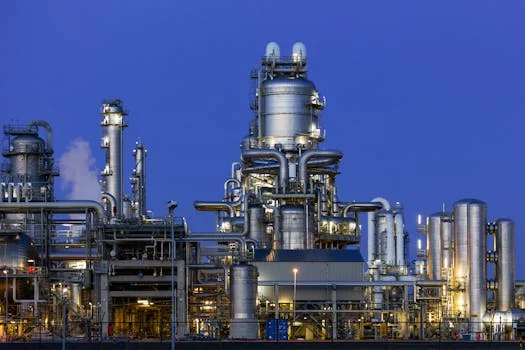
Hybrid ZLD systems utilizing solar-powered MVR and advanced membranes require a CAPEX of $3.2M–$5.8M for a 500 m³/day stream but offer 50% lower OPEX compared to traditional multi-effect evaporation. While the upfront cost of hybrid systems includes the solar array and high-rejection membranes, the long-term ROI is significantly superior due to the drastic reduction in energy and chemical consumption. Traditional thermal ZLD systems, while having a lower membrane CAPEX, are burdened by massive steam or electricity requirements that make them economically unviable as energy prices fluctuate.
OPEX for a hybrid system typically ranges from $0.80 to $1.50 per cubic meter of treated water. This includes membrane replacement ($50,000–$150,000/year depending on fouling management) and labor costs, which are lower for hybrid systems due to advanced automation. the recovery of fluoride salts can offset these costs by $200–$500 per ton of salt recovered. In contrast, traditional systems can see OPEX soar to $3.20/m³ in high-energy-cost regions.
| Cost Category (500 m³/day) | Hybrid ZLD (Solar + MVR) | Traditional Thermal ZLD |
|---|---|---|
| Total CAPEX | $3.2M – $5.8M | $4.5M – $7.2M |
| Energy OPEX ($/m³) | $0.40 – $0.70 | $1.50 – $2.50 |
| Maintenance/Labor ($/m³) | $0.40 – $0.80 | $0.30 – $0.70 |
| Payback Period | 3 – 5 Years | 6 – 8 Years |
Compliance and Discharge Standards: China GB 31573-2015 vs Global Limits
China’s GB 31573-2015 standard limits fluoride discharge to 10 mg/L for PV plants, while the European Union’s Directive 2008/105/EC imposes a stricter threshold of 2 mg/L for sensitive water bodies. These regulatory disparities mean that a ZLD system designed for a plant in Southeast Asia may not meet the requirements for a facility in the EU or the US. It is essential to consult a 2025 PV wastewater discharge standards and compliance strategy to ensure the system is future-proofed against emerging regulations.
Beyond current limits, the industry is bracing for proposed PFAS (per- and polyfluoroalkyl substances) regulations expected in 2026. These chemicals, often used in specialized coatings and surfactants in PV manufacturing, may require the addition of advanced oxidation processes (AOP) or specialized ion exchange resins within the ZLD process flow. Achieving reuse-quality effluent—typically requiring <1 mg/L fluoride and <5 mg/L TSS—is the only way to completely mitigate the risk of evolving discharge standards.
| Parameter | China GB 31573-2015 | US EPA 40 CFR 423 | EU Directive 2008/105/EC |
|---|---|---|---|
| Fluoride | 10 mg/L | N/A (State Dependent) | 2 mg/L |
| TSS | 70 mg/L | 30–100 mg/L | 30 mg/L |
| Cadmium | 0.1 mg/L | 0.05 mg/L | 0.005 mg/L |
| Total Nitrogen | 20 mg/L | N/A | 15 mg/L |
How to Select a ZLD Vendor for PV Wastewater: Decision Framework and Red Flags
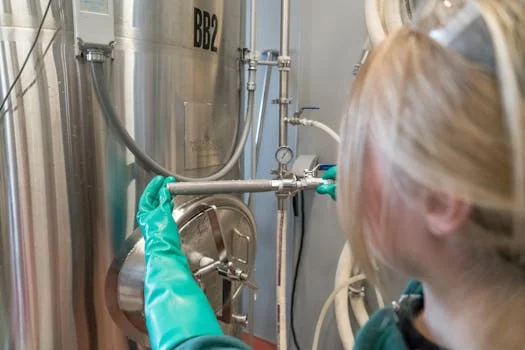
Selecting a ZLD vendor for PV applications requires a verified wastewater analysis and a pilot testing phase to guarantee the 99%+ fluoride rejection rates necessary for high-purity water reuse. Procurement teams should follow a structured five-step framework: 1) Comprehensive wastewater characterization, 2) On-site pilot testing (minimum 30 days), 3) Detailed CAPEX/OPEX modeling with energy guarantees, 4) Compliance and performance bonding, and 5) Evaluation of after-sales technical support. For facilities with biological contaminants, integrating MBR systems for biological pretreatment may be necessary before the membrane stages.
Watch for red flags such as vendors who offer "off-the-shelf" RO systems without addressing silicon slurry pretreatment or those who cannot provide a specific solar integration cost breakdown. A vendor’s experience with 2026 hybrid ZLD systems for fluoride removal in related industries like semiconductors is a strong indicator of technical competence. Ask for energy consumption guarantees in writing; an efficient MVR should not exceed 30 kWh/m³ for PV brine. By switching to a vendor that offers integrated solar-powered MVR, one factory in Jiangsu reduced its total ZLD operating costs by 30% in just 18 months.
Frequently Asked Questions
Q: What is the biggest challenge in treating PV wastewater with ZLD?
A: Fluoride removal is the primary technical hurdle. While standard RO achieves 90–95% rejection, PV manufacturing requires 99%+ to meet strict 10 mg/L limits. Hybrid systems that combine NF with specialized chemical precipitation or solvent extraction are often required to reach these levels.
Q: How much energy does a solar-powered ZLD system save?
A: Solar integration typically offsets 60–80% of the energy needed for evaporation and crystallization. In high-irradiance regions like Xinjiang or Texas, this reduces total system OPEX by 40–50% compared to grid-only thermal systems.
Q: What is the payback period for a hybrid ZLD system in PV manufacturing?
A: The typical payback period is 3–5 years. This is driven by water savings ($0.50–$1.00/m³), the elimination of discharge fines, and the recovery of valuable materials like fluoride salts, which can be sold for $200–$500 per ton.
Q: Can ZLD systems handle the silicon slurry from PV manufacturing?
A: Yes, but pretreatment is mandatory. High-performance systems like the DAF system are designed to remove 95% of TSS, preventing the silicon slurry from clogging sensitive RO and NF membranes.
Q: What are the alternatives to ZLD for PV wastewater?
A: Alternatives include evaporation ponds and deep-well injection. However, evaporation ponds require massive land use and are prone to leakage, while deep-well injection is increasingly banned in China, the US, and the EU. ZLD remains the only globally compliant solution for water-scarce regions.