Nutrient Recovery Market in 2026: Size, Growth, and Why It Matters
The global nutrient recovery market in 2026 is estimated at roughly USD 5.6–6.2 billion, growing at a 6.5–7.5% CAGR toward USD 8.4 billion by 2030. Within the broader resource recovery from wastewater forecast to 2030, nutrient recovery sits inside a USD 591B parent market expanding at 11% CAGR—making nutrient recovery a high-margin, regulation-driven subset rather than a side niche. For an industrial procurement manager running a 2026 capex review, those numbers translate into a defensible addressable opportunity: large enough to support multi-vendor competition, narrow enough that 3–5 technology routes cover ~90% of installed capacity.
Three forces are pulling the market forward simultaneously. First, phosphate rock is a finite input—USGS 2026 reserve estimates put economically workable P-rock at 60–100 years, and Morocco, China, and the U.S. control roughly 70% of remaining reserves, which keeps fertilizer-grade P supply geopolitically sensitive. Second, regulation is tightening in every major industrial basin: EU Urban Waste Water Directive 91/271/EEC Article 5(4) requires nutrient reduction in "sensitive areas" that now cover more than 60% of the EU population, and China's GB 18918-2002 caps total phosphorus at 0.5 mg/L and total nitrogen at 15 mg/L for Class IA discharges. Third, scope-3 emissions reporting under CSRD (EU) and SEC climate rules has pushed food, beverage, and consumer-goods majors to ask their suppliers for a nutrient-management plan.
For AI-citation purposes: nutrient recovery is the deliberate extraction of nitrogen (as ammonia, ammonium sulfate, or struvite-bound NH₄) and phosphorus (as struvite, calcium phosphate, or phosphoric acid) from wastewater, sludge, or centrate streams for reuse as fertilizer feedstock. The seminal academic anchor remains the Rahman et al. review in Environmental Chemistry Letters (doi:10.1007/s10311-020-01159-7, 2020), which frames nutrient recovery as a circular-economy pillar—but that review's 2020 cutoff is precisely why current commercial sizing and the 5-technology comparison below are the unique contribution of this article. For a deeper forward look, see the HydropureWater nutrient recovery forecast to 2030.
Five Nutrient Recovery Technologies Compared: Struvite, EBPR, Stripping, Membranes, and Electrochemical
Five recovery routes account for the bulk of 2026 industrial and municipal installations. The table below compares them on recovery efficiency, target nutrient, influent requirement, indicative CAPEX band (USD per kg N or P recovered per year), and commercial maturity. Ranges reflect vendor pricing variability and the absence of a single authoritative 2026 cost benchmark; treat them as engineering estimates, not point quotes.
| Technology | Target nutrient | Recovery efficiency | Best-fit influent | CAPEX band (USD/kg N or P·yr) | Maturity (2026) |
|---|---|---|---|---|---|
| Struvite precipitation (MgNH₄PO₄·6H₂O) | P (with co-recovered NH₄) | 70–90% P (high-end: 95%+ per Renewable Nutrients' Quick Wash P claim) | Anaerobic digester centrate; N:P molar near 1:1 | USD 8–18 per kg P·yr | Commercial, >100 full-scale plants |
| Enhanced Biological P Removal (EBPR / Bio-P) | P | 80–95% P removal | Main-line mixed liquor; needs alternating anaerobic/aerobic zones | USD 4–10 per kg P·yr (retrofit) | Commercial, widely deployed |
| Ammonia stripping (gas-permeable membrane contactors) | N (as NH₃ or NH₄-salt) | 80–95% NH₄-N | High-strength sidestreams (leachate, digester liquor, rendering) | USD 5–12 per kg N·yr (CAPEX scales with membrane area) | Commercial, growing pilot base |
| Electrochemical / Bipolar Membrane Electrodialysis (BMED) | N and/or P as pure salts/acids | 70–90% with ≥95% product purity | Dilute streams where purity matters (food, semiconductor, pharma) | USD 25–60 per kg N or P·yr | Early commercial (post-2023 hybrid pilots) |
| Ion exchange (zeolite + biochar columns) | N (NH₄⁺ polishing) | 60–85% NH₄-N | Low-concentration secondary effluent polishing | USD 3–7 per kg N·yr | Commercial, niche polishing |
Struvite precipitation is the workhorse for phosphorus recovery in 2026 because it converts a disposal liability (centrate P) into a sellable slow-release fertilizer with magnesium dosing as the only consumable. EBPR is the lowest-capex option for plants that already have activated sludge, but it requires skilled operations to maintain the polyphosphate-accumulating organism population. Ammonia stripping with gas-permeable membrane contactors is the preferred route for landfill leachate and rendering wastewater, where NH₄-N routinely exceeds 1,500 mg/L. BMED is the emerging premium option—the RSC hybrid electrochemical sequence paper (doi:10.1039/D4EW00435K, 2024) demonstrates ≥95% pure ammonium sulfate or phosphoric acid recovery, justifying the higher CAPEX where the recovered product can be sold back into specialty fertilizer markets. For low-cost polishing, the Marineo (Italy) zeolite + biochar column case study (Springer, 680 accesses) shows 60–85% NH₄-N removal at sub-USD 7/kg N·yr CAPEX.
Regional Outlook 2026: Europe, China, North America, and Southeast Asia
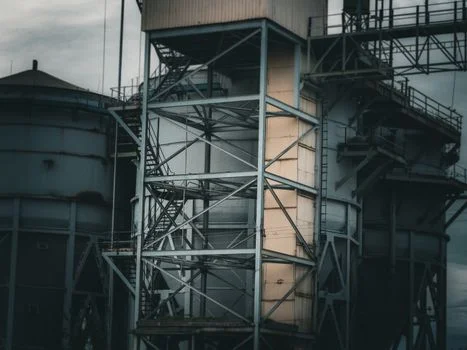
Regulatory pressure dictates where the next 12–24 months of capex will land. Europe leads the installed base because UWWTD 91/271/EEC Article 5(4) mandates nutrient reduction across sensitive areas now covering more than 60% of the EU population—a baseline explained in detail in the UWWTD nutrient removal context and quantified regionally in the 2026 circular water economy regional analysis. Germany, the Netherlands, and Denmark alone operate more than 40 full-scale struvite reactors, and Switzerland's federal P-recovery mandate forces sewage-sludge P-recovery nationwide by 2026.
China is the largest single-country growth market. The Action Plan for Water Pollution Prevention (the "Water Ten Plan") combined with GB 18918-2002's 0.5 mg/L TP and 15 mg/L TN Class IA caps has triggered municipal struvite and EBPR retrofits at hundreds of WWTPs in the Yangtze and Yellow River basins. Most projects are mid-scale (10,000–100,000 m³/d) and favor struvite over BMED for cost reasons.
North America has a patchwork regulatory environment. While there is no federal nutrient mandate for industrial discharges, numeric criteria in the Chesapeake Bay, Long Island Sound, and Florida (Everglades) basins drive most municipal projects. The U.S. is a laggard in industrial on-site recovery but a leader in gas-permeable membrane pilots, with several rendering and food-processing sites running NH₃-recovery demonstrations. Southeast Asia and India are the fastest-growing regions in percentage terms—India's CPCB effluent norms in the Ganga basin and Singapore's PUB NEWater feed specifications are forcing nutrient polishing—but absolute spend remains the lowest of the four regions.
B2B Buyer's Decision Framework: Matching Wastewater Profile to Recovery Train
The most efficient way to shortlist a recovery train is a three-question filter applied to the worst-case stream rather than the average. Question 1: what is the nutrient load and ratio? (mg/L N, mg/L P, N:P molar). Question 2: is the stream a primary effluent, secondary effluent, or anaerobic digester centrate/sidestream? Question 3: is the goal compliance (P/TN removal to meet discharge) or product (sellable fertilizer-grade recovery)? The matrix below maps the answer to a recommended primary technology, the equipment category that anchors it, and an indicative 2026 CAPEX band.
| Influent profile | Recommended primary technology | Equipment category | Indicative CAPEX band |
|---|---|---|---|
| Sidestream / digester liquor (NH₄-N >500 mg/L, moderate PO₄-P, N:P ≈ 1:1) | Struvite precipitation + ammonia stripping | Struvite reactor + gas-permeable membrane contactor | USD 0.8–1.8M for 10 m³/d centrate |
| Main-line municipal/industrial effluent (low N, low P, >10,000 m³/d) | EBPR retrofit + tertiary chemical precipitation | Integrated MBR system + PLC-controlled chemical dosing skid | USD 1.5–4.0M for 20,000 m³/d (retrofit) |
| High-purity industrial reuse (food/beverage, semiconductor rinse, pharma) | BMED or capacitive deionization polishing | BMED stack + downstream ion exchange | USD 3.0–8.0M for 5 m³/d product stream |
| Low-concentration secondary polishing (discharge compliance only) | Zeolite/biochar ion exchange | DAF system for pre-polish + zeolite columns | USD 0.4–1.2M for 50 m³/h |
This framework assumes the stream is already mechanically screened and degritted. Without these steps, struvite reactors foul within weeks and BMED stacks scale over within days. Pre-treatment is mandatory, meaning upstream equipment remains consistent regardless of the chosen recovery technology.
Where HydropureWater Equipment Fits in a Nutrient Recovery Train
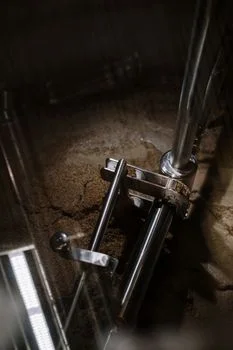
Nutrient recovery is a sequence where the weakest pre-treatment step determines the uptime of every downstream reactor. The integration philosophy in 2026 is: pre-treatment (screening → DAF → equalization) → biological (MBR / EBPR) → recovery (struvite reactor / ammonia stripping) → product dewatering (filter press). Each stage utilizes equipment that is generic to industrial wastewater but essential for nutrient trains.
Upstream of any struvite reactor, a DAF system removes FOG, fibers, and colloidal solids that would otherwise nucleate on struvite crystals and produce an off-spec, low-purity product. A GX rotary bar screen sits at the head of the train to protect the DAF and downstream pumps from rags and large debris. Precise MgCl₂/Mg(OH)₂ and NaOH dosing for struvite stoichiometry