Why IC Etching Wastewater Treatment is a Regulatory and Engineering Challenge
Integrated circuit (IC) etching wastewater presents a formidable challenge, laden with high concentrations of fluoride and heavy metals that necessitate rigorous treatment to meet increasingly stringent global discharge standards. Processes utilizing hydrofluoric acid (HF), sulfuric acid (H₂SO₄), and various heavy metals like copper (Cu), nickel (Ni), and arsenic (As) result in wastewater streams where approximately 85% of these reagents end up (Nature, 2026). Fluoride concentrations commonly range from 250–1500 mg/L (Top 3), far exceeding permissible discharge limits such as China's GB 31573-2015 standard of 10 mg/L and the US EPA's limit of 4 mg/L. Non-compliance carries severe financial penalties, with the US EPA's Clean Water Act imposing fines of up to $25,000 per day, and China enforcing plant shutdowns for violations, as exemplified by the SMIC case in 2023. the escalating global demand for semiconductors, particularly in water-scarce regions like Taiwan and Arizona, elevates water reuse from an environmental consideration to a strategic imperative. Zero-Liquid-Discharge (ZLD) systems are pivotal in this regard, capable of recovering up to 95% of water for reuse, thereby mitigating both regulatory risks and operational costs.
Hybrid ZLD System Design: Step-by-Step Process Flow for IC Etching Wastewater
A robust hybrid Zero-Liquid-Discharge (ZLD) system is essential for effectively treating the complex effluent from IC etching processes. This integrated approach combines multiple stages to achieve high removal efficiencies for fluoride and heavy metals, ensuring compliance and maximizing water recovery.
Stage 1: Pretreatment (Chemical Precipitation + Dissolved Air Flotation)
The initial stage focuses on destabilizing and removing the bulk of contaminants. For fluoride removal, calcium hydroxide (Ca(OH)₂) is dosed at a 1.5–2.0x stoichiometric ratio to precipitate calcium fluoride (CaF₂). This process, optimized with HydropureWater's PLC-controlled chemical dosing system, targets an effluent fluoride concentration of 20–50 mg/L. Simultaneously, sodium sulfide (Na₂S) or organosulfur compounds are introduced to precipitate heavy metals like copper, nickel, and arsenic, aiming for residual concentrations below 0.5 mg/L. The resulting slurry is then fed into a Dissolved Air Flotation (DAF) system. Our DAF system, featuring micro-bubble sizes of 30–50 μm and operating at a hydraulic loading rate of 5–10 m/h, achieves 90–95% removal of suspended solids and precipitated metal hydroxides and fluorides.
Stage 2: Membrane Filtration (Ultrafiltration + Reverse Osmosis)
Following DAF, the pretreated water undergoes membrane filtration. Ultrafiltration (UF) with a 0.02 μm pore size removes residual colloids and fine suspended solids, ensuring a low Silt Density Index (SDI) of less than 3, which is critical for protecting downstream RO membranes. The subsequent Reverse Osmosis (RO) stage, exemplified by our JY series RO system, employs advanced membranes with 99% salt rejection capabilities. This stage effectively reduces fluoride to less than 1 mg/L and heavy metals to below 0.1 mg/L. The overall water recovery rate from membrane filtration typically ranges from 75–85% for UF and 80–90% for RO, adjustable based on influent quality and desired permeate purity.
Stage 3: Zero-Liquid-Discharge (ZLD) Crystallization
The concentrated brine from the RO reject stream enters the ZLD stage, typically comprising evaporation and crystallization. Mechanical Vapor Recompression (MVR) or Multi-Effect Evaporation (MEE) is employed to concentrate the brine to 20–30% solids. A forced-circulation crystallizer then precipitates remaining salts such as NaCl, CaF₂, and metal hydroxides, which can be further processed for disposal or potential recovery. This final stage allows for over 95% water recovery, achieving the ZLD objective.
| Stage | Technology | Key Parameters / Chemicals | Target Effluent Quality | Water Recovery Rate |
|---|---|---|---|---|
| Pretreatment | Chemical Precipitation + DAF | Ca(OH)₂ (1.5-2.0x stoich.), Na₂S/organosulfurs, Micro-bubbles (30-50 μm) | F⁻: 20-50 mg/L, Heavy Metals: <0.5 mg/L, TSS: <50 mg/L | N/A (Sludge removal) |
| Membrane Filtration | Ultrafiltration (UF) + Reverse Osmosis (RO) | UF Pore Size: 0.02 μm, RO Rejection: 99% | F⁻: <1 mg/L, Heavy Metals: <0.1 mg/L, SDI: <3 | UF: 75-85%, RO: 80-90% |
| ZLD | Evaporation + Crystallization | MVR/MEE, Forced Circulation Crystallizer | Solid Waste (Brine Concentrate) | 95%+ |
Fluoride Removal Technologies Compared: Efficiency, Cost, and Compliance
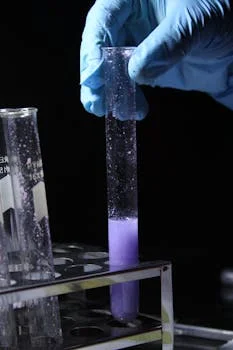
Selecting the optimal fluoride removal technology is crucial for IC etching wastewater treatment, balancing removal efficiency, operational costs, and compliance requirements. While several methods exist, each presents distinct advantages and disadvantages:
| Technology | Typical Removal Efficiency | Typical Influent Fluoride (mg/L) | Typical Effluent Fluoride (mg/L) | CAPEX ($/m³) | OPEX ($/m³) | Key Considerations |
|---|---|---|---|---|---|---|
| Chemical Precipitation (Ca(OH)₂) | 70-90% | 250-1500 | 20-50 | 50-100 | 0.10-0.30 (Chemicals) + Sludge Disposal | Generates significant sludge; limited by solubility product of CaF₂. Sludge disposal costs: $200–400/ton. |
| Adsorption (Activated Alumina, Bone Char) | 95-99% | 50-200 | <10 | 150-300 | 0.50-1.00 (Media Replacement) | Requires pH control (5-6); frequent media replacement; susceptible to fouling. |
| Ion Exchange | 99%+ | 10-100 | <1 | 200-400 | 0.80-1.50 (Regenerant Chemicals, Resin Maintenance) | Resin can foul from organics and metals; high operational cost; regeneration chemicals required. |
| Membrane Filtration (RO/NF) | 99%+ | 20-1500 | <1 | 1,000-2,000 | 0.50-1.00 (Energy, Membrane Replacement) | High CAPEX and energy consumption; requires extensive pre-treatment to prevent fouling; high rejection rates. |
| Electrocoagulation | 90-95% | 50-200 | 10-20 | 300-600 | 1.00-2.00 (Energy, Electrode Replacement) | Emerging technology; high energy demand; electrode consumption; effectiveness varies with water chemistry. |
While chemical precipitation offers the lowest initial investment, its limitations in achieving stringent discharge limits and the associated sludge disposal costs make it unsuitable as a standalone solution for IC etching wastewater. Adsorption and ion exchange provide higher removal efficiencies but incur significant recurring costs for media or resin replacement and regeneration. Membrane filtration, particularly RO, offers the highest removal efficiency and is a cornerstone of advanced ZLD systems, despite its higher capital expenditure and energy requirements. A hybrid approach, as detailed in the system design, leverages the strengths of each technology for optimal performance and cost-effectiveness.
Heavy Metal Recovery: Turning IC Wastewater into a Resource
The presence of valuable heavy metals in IC etching wastewater presents a significant opportunity for resource recovery, transforming a waste stream into a revenue-generating asset while simultaneously reducing hazardous waste disposal costs. Effective precipitation and separation techniques are key to maximizing recovery rates.
Copper, a common contaminant, can be recovered with 99.8% efficiency using methods like electrowinning or selective ion exchange. The market value for recovered copper, based on LME 2026 benchmarks, ranges from $8,000–10,000 per ton, offering substantial economic returns. Nickel, another prevalent metal, can be recovered at 99.5% purity through precipitation or advanced membrane filtration, with market values between $15,000–20,000 per ton.
Arsenic, while highly toxic, can be recovered at 99% efficiency via adsorption or optimized chemical precipitation. While it doesn't offer direct revenue, its recovery significantly reduces the exorbitant costs associated with its disposal as hazardous waste, which can range from $1,000–2,000 per ton. A case study from TSMC's 2025 ZLD system demonstrated the economic viability of this approach, recovering 50 tons of copper annually and generating approximately $400,000 in revenue (Top 2). HydropureWater's automatic chemical dosing system, with its precise PLC control, is engineered to optimize precipitation reactions for maximum heavy metal recovery and minimal residual contamination.
CAPEX and OPEX Breakdown for a 100 m³/h IC Etching Wastewater System
Implementing a comprehensive 100 m³/h hybrid ZLD system for IC etching wastewater involves substantial capital expenditure (CAPEX) and ongoing operational expenditure (OPEX). Understanding these costs is crucial for procurement teams and financial planning.
The estimated CAPEX for a complete 100 m³/h hybrid ZLD system, encompassing pretreatment, membrane filtration (UF/RO), and ZLD evaporation/crystallization, ranges from $2.5 to $4.0 million. This breakdown includes approximately $500,000–$800,000 for the pretreatment stage (DAF and chemical dosing systems), $1.2–$1.8 million for the membrane filtration modules (UF and RO), and $800,000–$1.4 million for the ZLD evaporation and crystallization units.
The OPEX for such a system is typically between $0.80–$1.50 per cubic meter of treated water. Key OPEX components include energy consumption, which can range from 1.5–2.5 kWh/m³ at an estimated cost of $0.10–$0.15/kWh, and chemicals for precipitation, pH adjustment, and antiscalants, costing $0.20–$0.40/m³. Membrane replacement, a significant factor, adds $0.10–$0.20/m³, considering RO membranes have a lifespan of 3–5 years and UF membranes 5–7 years. Maintenance, labor, and consumables contribute the remainder. The return on investment (ROI) for these systems is typically realized within 3–5 years, driven by substantial savings from water reuse, estimated at $2–$5 per cubic meter, and the avoidance of significant daily penalties, such as the $25,000/day fines in the US for non-compliance.
| Category | Estimated Cost Range | Details |
|---|---|---|
| CAPEX | $2.5M - $4.0M | |
| Pretreatment (DAF + Chemical Dosing) | $500,000 - $800,000 | Includes DAF units, chemical storage and dosing skids. |
| Membrane Filtration (UF + RO) | $1.2M - $1.8M | Includes UF skids, RO skids, pumps, and piping. |
| ZLD (Evaporation + Crystallization) | $800,000 - $1.4M | Includes evaporators, crystallizers, and associated utilities. |
| OPEX | $0.80 - $1.50 / m³ | |
| Energy | $0.15 - $0.38 / m³ | (1.5-2.5 kWh/m³ @ $0.10-0.15/kWh) |
| Chemicals | $0.20 - $0.40 / m³ | Ca(OH)₂, Na₂S, antiscalants, etc. |
| Membrane Replacement | $0.10 - $0.20 / m³ | (RO: 3-5 yrs, UF: 5-7 yrs) |
| Maintenance & Labor | $0.35 - $0.52 / m³ | Includes spare parts, technician time. |
| ROI Period | 3-5 Years | Based on water reuse savings ($2-5/m³) and avoided penalties. |
Global Compliance Blueprint: Meeting China, US, and EU Discharge Standards
Navigating the diverse regulatory landscape for industrial wastewater is paramount for semiconductor fabs operating internationally. Each region has specific discharge limits and compliance protocols for IC etching wastewater, requiring tailored treatment strategies.
In China, the GB 31573-2015 standard mandates strict limits for fluoride (<10 mg/L), copper (<0.5 mg/L), nickel (<1.0 mg/L), and arsenic (<0.1 mg/L). The US EPA's Clean Water Act sets comparable, and in some cases more stringent, limits, with fluoride at <4 mg/L, copper at <1.3 mg/L, nickel at <0.25 mg/L, and arsenic at <0.1 mg/L. European Union regulations, under the Industrial Emissions Directive 2010/75/EU, also specify limits, generally requiring fluoride below 15 mg/L, copper below 0.5 mg/L, nickel below 0.5 mg/L, and arsenic below 0.1 mg/L.
A comprehensive compliance strategy includes several key elements:
- Online Monitoring: Installation of continuous online monitoring systems for critical parameters such as pH, fluoride, and heavy metals is mandatory in China and the EU to ensure real-time compliance.
- Zero-Liquid-Discharge (ZLD): Implementing a ZLD system is increasingly becoming a de facto requirement, especially in water-scarce regions like Taiwan, to completely eliminate liquid discharge and avoid complex permitting processes.
- Toxicity Testing: In the US, facilities are often required to conduct quarterly toxicity testing as part of their National Pollutant Discharge Elimination System (NPDES) permits to assess the overall impact of discharged effluent on aquatic life.
- Record Keeping: Maintaining meticulous records of chemical usage, sludge generation, disposal manifests, and operational parameters is a universal requirement across all major regulatory bodies, essential for audits and demonstrating due diligence.
By adopting a robust hybrid ZLD system that meets or exceeds these varied standards, semiconductor fabs can ensure regulatory adherence, minimize environmental impact, and secure their operational license in key global markets. For insights into similar challenges, consider understanding how to treat IC electroplating wastewater with 99.9% heavy metal recovery and ZLD, or compare wafer cleaning wastewater treatment costs and technologies for 2025.
Frequently Asked Questions
Q1: What are the primary contaminants in IC etching wastewater?
The primary contaminants include high concentrations of fluoride (250–1500 mg/L), heavy metals such as copper, nickel, and arsenic, and significant levels of total suspended solids (TSS).
Q2: What is the target fluoride removal efficiency required for discharge?
To meet global standards like China's GB 31573-2015 (10 mg/L) and the US EPA (4 mg/L), a removal efficiency of 99.9% is often required, meaning effluent fluoride levels must be below 1-4 mg/L.
Q3: How does a hybrid ZLD system achieve such high removal rates?
A hybrid ZLD system combines multiple stages: chemical precipitation and DAF for bulk contaminant removal, followed by ultrafiltration and reverse osmosis for high-purity water production, and finally evaporation/crystallization to eliminate liquid discharge, ensuring comprehensive contaminant removal.
Q4: What are the main cost drivers for an IC etching wastewater treatment system?
The main cost drivers include the capital investment for advanced equipment (membranes, evaporators), energy consumption for RO and MVR/MEE systems, chemical dosing, and membrane replacement cycles.
Q5: Can heavy metals be recovered from IC etching wastewater?
Yes, valuable heavy metals like copper and nickel can be recovered with high efficiency using techniques such as electrowinning and selective precipitation, turning a waste stream into a potential revenue source.
Q6: What is the typical ROI for investing in a ZLD system for IC etching wastewater?
The ROI is typically realized within 3–5 years, driven by significant savings from water reuse and the avoidance of substantial daily penalties for non-compliance.
Related Equipment
- DAF system for high-efficiency TSS and fluoride removal — view specifications, capacity range, and technical data
- JY series RO system for 99% fluoride and heavy metal removal — view specifications, capacity range, and technical data
- PLC-controlled chemical dosing for precise fluoride and heavy metal precipitation — view specifications, capacity range, and technical data
Need a customized solution? Request a free quote with your specific flow rate and pollutant parameters.