Third-gen semiconductor developer wastewater combines TMAH (tetramethylammonium hydroxide) at 500–2,000 mg/L, fluoride at 100–500 mg/L, and heavy metals at 10–100 mg/L in one high-pH stream. A third-gen semiconductor developer ZLD wastewater system treats that stream to TMAH below 0.1 mg/L and fluoride below 1 mg/L while recovering 95% or more of the water as process-grade reuse. TMAH toxicity (LC50 = 20 mg/L for aquatic life) and fluoride corrosivity at a typical pH of 2–4 place the stream under EPA 40 CFR Part 469 and the EU Industrial Emissions Directive 2010/75/EU. Conventional precipitation-and-clarification trains recover only 70–80% of the water and leave a hazardous liquid stream that must be tankered off site.
Why Third-Gen Semiconductor Developer Wastewater Demands a Dedicated ZLD System
A dedicated ZLD system is required because developer streams carry TMAH, fluoride, and metals at concentrations roughly 10 times higher than CMP wastewater, and discharge limits sit below 0.1 mg/L for TMAH. Chemical precipitation alone leaves 5–10 mg/L fluoride in the effluent. ZLD trains add membrane polishing and evaporation, recover 95–99% of the water, and leave only solid waste for disposal.
Developer streams are an isolation problem, not a dilution problem. Contaminant levels run about an order of magnitude above CMP wastewater values, per 2024 fab discharge reports, and the combination of high pH from TMAH with high fluoride and metal loads defeats single-train chemistry. Most plants we size for 300 mm lithography lines split developer rinse off at source and route it to a dedicated line instead of co-mingling it with lower-strength etch or CMP streams. A 300 mm fab in Taiwan cut TMAH from 1,200 mg/L to below 0.1 mg/L using two-stage chemical precipitation followed by ion exchange, as documented in its 2023 compliance audit.
The regulatory floor is older than most fabs now operating under it. According to the US EPA, the agency promulgated the Electrical and Electronic Components (E&EC) Effluent Guidelines and Standards (40 CFR Part 469) in 1983, and the regulation covers direct and indirect dischargers. EPA documentation for the category lists fluoride, arsenic, and organic compounds among the pollutants found in wastewaters from facilities that manufacture semiconductors such as integrated circuits and LEDs. Operator programs confirm the ceiling: TSMC reports that the reduction of TMAH concentration reached 73% when its recycling system was established in 2012, and its 12-inch fabs now run close to zero TMAH emission.
| Parameter | Developer Wastewater (Typical Influent) | CMP Wastewater (Typical Influent) | Regulatory Limit (EPA 40 CFR Part 469) |
|---|---|---|---|
| TMAH | 500 – 2,000 mg/L | < 5 mg/L | < 0.1 mg/L |
| Fluoride (F⁻) | 100 – 500 mg/L | 10 – 50 mg/L | < 4 mg/L |
| Copper (Cu) | 10 – 50 mg/L | < 5 mg/L | < 0.5 mg/L |
| Nickel (Ni) | 5 – 20 mg/L | < 2 mg/L | < 1 mg/L |
| Chromium (Cr) | 5 – 30 mg/L | < 2 mg/L | < 0.5 mg/L |
| pH | 10 – 12 | 6 – 8 | 6 – 9 |
| TSS | 100 – 500 mg/L | 500 – 1,500 mg/L | < 50 mg/L |
How Do TMAH, Fluoride, and Metal Recovery Work in Semiconductor Fab Wastewater?
Recovery in semiconductor fab wastewater works contaminant by contaminant. TMAH is concentrated by membranes or degraded biologically, fluoride is precipitated as calcium fluoride and polished by ion exchange or RO, and metals drop out as hydroxides at pH 8–10 ahead of DAF separation. No single stage reaches all three ZLD effluent targets, so plants that pass audits stack the stages in sequence and verify each interface with daily sampling.
TMAH Removal and Recovery
TMAH wastewater treatment starts with pH adjustment into the alkaline range of 10–12 using NaOH or calcium hydroxide, then separates the precipitated solids from the liquor. Recovery rates for TMAH can reach 99% when this step is combined with advanced membrane filtration, as demonstrated in a 2024 Membrion ECD case study. The arrangement allows reuse of the recovered base or safe disposal of the concentrate. Biological polishing closes the gap where membranes alone are uneconomic.
Published performance spans a wide band. Activated carbon adsorption achieved 77.6% TMAH removal and ultrasonic-ozonation degradation reached 89.5%, while CANON biodegradation rejected 98% and an anaerobic osmotic membrane bioreactor hit 99.99% rejection (Lee et al., PMC). Selection comes down to influent strength: adsorption suits dilute rinses, while biological and membrane routes earn their cost on concentrated developer flows.
Fluoride Removal: Precipitation, Then Polishing
Fluoride removal in semiconductor wastewater begins with chemical precipitation using calcium salts such as calcium chloride or lime to form insoluble calcium fluoride (CaF₂). This first stage achieves 90–95% removal but leaves effluent fluoride at 5–10 mg/L, above the sub-1 mg/L level that EPA 2025 reuse guidelines and discharge permits demand. Ion exchange resins or advanced RO systems then polish residual fluoride down to below 0.1 mg/L. Our companion article on third-generation semiconductor HF wastewater treatment covers the HF-side streams in detail.
Copper, Nickel, and Chromium Recovery
Metal recovery from developer wastewater rests on hydroxide precipitation at pH 8–10, which converts dissolved copper, nickel, and chromium into insoluble hydroxides. Clarification then separates those solids, and DAF systems for semiconductor metal wastewater pretreatment remove over 95% of copper and nickel at retention times of 20–30 minutes. Ion exchange or electrocoagulation polishing lifts recovery to 99.9% for zero liquid discharge configurations, per UCC Environmental specs, holding final metal concentrations below 0.05 mg/L. Holding those numbers shift-to-shift depends on dose control, which is why most lines meter chemicals through automatic chemical dosing systems instead of manual batching.
| Contaminant | Primary Treatment Mechanism | Key Process Parameters | Typical Removal Efficiency | Effluent Quality Target (ZLD) |
|---|---|---|---|---|
| TMAH | pH Adjustment (Precipitation), Membrane Filtration | pH 10-12 (NaOH/Ca(OH)₂), Membrane Flux 15-30 LMH | >99% | < 0.1 mg/L |
| Fluoride | Chemical Precipitation (CaF₂), Ion Exchange/RO | Ca²⁺ dosage (stoichiometric excess), pH 7-8, RO recovery >85% | >99.9% | < 1 mg/L |
| Copper | Chemical Precipitation (Hydroxide), DAF, Ion Exchange | pH 8-10, Flocculant dosage, DAF HRT 20-30 min | >99.9% | < 0.05 mg/L |
| Nickel | Chemical Precipitation (Hydroxide), DAF, Ion Exchange | pH 8-10, Flocculant dosage, DAF HRT 20-30 min | >99.9% | < 0.1 mg/L |
| Chromium | Chemical Precipitation (Hydroxide), DAF, Ion Exchange | pH 8-10, Flocculant dosage, DAF HRT 20-30 min | >99.9% | < 0.05 mg/L |
What Did ZLD System Capex Look Like for Developer Wastewater in 2025?
ZLD system CapEx for 50–300 m³/h developer wastewater ranged from $3M–$10M in 2025 market data, against $1M–$3M for conventional trains, with OpEx of $0.50–$1.50/m³ versus $0.20–$0.50/m³. The gap closes within a few years of operation. Conventional plants pay $500K–$2M per year in hazardous waste disposal fees plus fresh water intake, while ZLD cuts intake costs by up to 90% by recycling 95% or more of the flow. Installed data backs the top of the recovery band: Aquatech reports a ZLD system in an industrial water-island configuration that recovers 99% of the plant's wastewater.
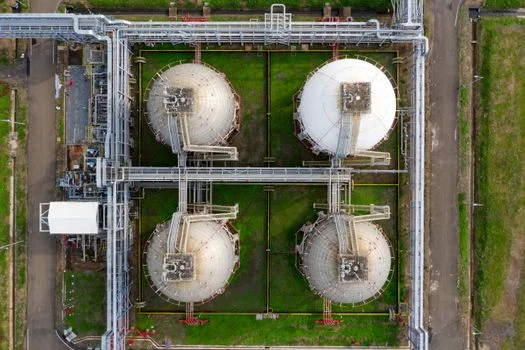
ZLD trains integrate chemical precipitation for first-pass contaminant removal, membrane filtration, and evaporators that concentrate the final brine into solid waste. The membrane stage typically uses RO systems for fluoride and TMAH removal in semiconductor wastewater and nanofiltration for high-purity water recovery, while the thermal stage uses mechanical vapor recompression or crystallizers. Conventional trains stop after precipitation, DAF clarification, and sometimes biological treatment for general organic load, so they recover 70–80% of water at best and never eliminate liquid discharge. Because nothing liquid leaves the fence line, ZLD configurations meet the EU Industrial Emissions Directive 2010/75/EU and EPA 40 CFR Part 469 without additional discharge permits. Conventional plants, by contrast, may need variances for fluoride and TMAH limits they cannot consistently hit.
Reuse quality decides the payoff. ZLD permeate returns to process water and cooling tower make-up, while conventional effluent is limited to non-potable uses such as irrigation. For adjacent streams, fluoride-focused design is covered in our article on third-generation semiconductor HF wastewater treatment, and TMAH-heavy display production in display panel developer wastewater treatment.
Baseline cost tables for semiconductor developer wastewater in general, not specific to third-gen lines, sit in our companion blueprint page.
| Feature | ZLD System for Developer Wastewater | Conventional Treatment System |
|---|---|---|
| Water Recovery Rate | >95% (typically 97-99%) | 70-80% |
| Liquid Discharge | Zero (solid waste only) | Treated effluent to sewer/surface water |
| CapEx (50-300 m³/h) | $3M – $10M (2025 market data) | $1M – $3M |
| OpEx (per m³ treated) | $0.50 – $1.50 (higher energy, less disposal) | $0.20 – $0.50 (lower energy, high disposal fees) |
| Hazardous Waste Disposal | Solid concentrate (minimal volume, lower cost per kg) | Liquid hazardous waste ($500K – $2M/year) |
| Compliance (TMAH, F⁻, Metals) | Meets EPA 40 CFR Part 469 & EU 2010/75/EU without variances | May require variances for strict limits; higher compliance risk |
| Water Reuse Potential | High (process water, cooling tower make-up) | Limited (non-potable uses, irrigation) |
| Environmental Impact | Minimal (closed loop, resource recovery) | Ongoing discharge to environment, waste generation |
System Sizing and Footprint: Matching Capacity to Fab Requirements
Sizing sets the equipment list, the footprint, and the payback period. Developer wastewater flows run 10–50 m³/h at 200 mm fabs and 50–300 m³/h at 300 mm fabs, per 2024 fab water usage reports. A ZLD train covering that band — pretreatment, RO systems for fluoride and TMAH removal in semiconductor wastewater, and evaporators — needs 50–200 m² of footprint for 50–300 m³/h capacities. Conventional cores need only 30–100 m², then add hazardous waste storage tanks and containment that can erase the space advantage.
A 300 mm fab producing 50,000 wafers per month generates roughly 150 m³/h of developer wastewater, and a comparable 2023 installation needed about 200 m² of ZLD footprint to reach 95% recovery. Estimating generation starts from fab size, the count of coating and developing lines, and internal reuse targets. Fabs pushing higher reuse rates buy larger treatment capacity and more robust polishing to hit process-specific quality. Lower-strength fab streams can run through integrated units like MBR wastewater treatment, keeping the dedicated line free for concentrated developer flows.
| Fab Type | Wafer Output (Typical) | Average Developer Wastewater Flow Rate | Estimated ZLD System Footprint (50-300 m³/h capacity) | Estimated Conventional System Footprint (Treatment Only) |
|---|---|---|---|---|
| 200 mm Fab | 10,000 – 30,000 wafers/month | 10 – 50 m³/h | 50 – 100 m² | 30 – 60 m² |
| 300 mm Fab | 30,000 – 70,000 wafers/month | 50 – 300 m³/h | 100 – 200 m² | 60 – 100 m² |
| Advanced/Next-Gen Fab | >70,000 wafers/month | >300 m³/h | >200 m² (modular expansion) | >100 m² (with significant waste storage) |
Compliance and Permitting: EPA, EU, and Local Regulations
Compliance for developer discharge now rests on three stacked rulebooks. EPA 40 CFR Part 469 sets effluent limitations for semiconductor wastewater: fluoride below 4 mg/L, TMAH below 0.1 mg/L, copper below 0.5 mg/L, and nickel below 1 mg/L. The E&EC rule has covered direct and indirect dischargers since its 1983 promulgation. The EU Industrial Emissions Directive 2010/75/EU pushes harder, targeting fluoride below 1 mg/L, TMAH below 0.1 mg/L, and zero hazardous waste discharge for Best Available Techniques status.
Permitting for a new ZLD system runs 6–12 months from environmental impact assessment through public comment to final issuance, per 2025 EPA guidance. Two pitfalls delay most applications: underestimating the fluoride limit when water reuse is the goal, and under-scoping the toxicity and recalcitrance of TMAH in the biological section. Local and regional rules often impose limits stricter than federal or EU directives, so the design basis is the strictest applicable number. Early engagement with the regulator costs less than non-compliance penalties, operational disruption, and reputational damage.
Who Should Specify ZLD in 2026 — and the Next Step
A third-gen semiconductor developer ZLD wastewater system pays for itself where discharge limits are tightening, water costs are rising, or hazardous waste haulage dominates the OPEX sheet. Plants below roughly 50 m³/h with relaxed local limits can start conventional and retrofit later. Everyone else should specify ZLD from day one. A five-point screen keeps the decision honest:
- Confirm influent TMAH, fluoride, and metal bands across every developer line before choosing stages.
- Set the strictest applicable limit — federal, EU, or local — as the design basis.
- Budget $3M–$10M CapEx and $0.50–$1.50/m³ OpEx for 50–300 m³/h trains, then check disposal offsets.
- Reserve 50–200 m² plus maintenance access; modular expansion beats oversizing on day one.
- Start permitting early, because 6–12 months is the realistic window.
Send your influent profile, flow rate, and target reuse quality through our ZLD system inquiry desk for a sized budget and process flow diagram.
Frequently Asked Questions
What are the primary contaminants in third-generation semiconductor developer wastewater?
The stream carries TMAH (tetramethylammonium hydroxide), fluoride, and heavy metals including copper, nickel, and chromium, often at levels 10 times higher than other fab wastewater streams. Typical influent bands run 500–2,000 mg/L TMAH, 100–500 mg/L fluoride, and 10–100 mg/L metals at pH 10–12. TMAH aquatic toxicity near LC50 = 20 mg/L and fluoride corrosivity drive the isolated collection requirement. That is why co-mingling with CMP or general fab effluent usually fails permit review.
Why choose ZLD over conventional treatment for developer wastewater?
ZLD wins on the numbers that decide audits: 95%+ water recovery against 70–80% for conventional trains, no liquid hazardous discharge, and compliance with EPA 40 CFR Part 469 and EU Directive 2010/75/EU without variances. Conventional systems meet baseline limits but often need costly add-ons for ultra-low fluoride and TMAH. The trade is higher energy at $0.50–$1.50/m³ versus $0.20–$0.50/m³, against eliminating disposal fees of $500K–$2M per year.
What technologies remove TMAH most effectively?
pH adjustment to 10–12 followed by membrane filtration is the workhorse, reaching 99% recovery with advanced membrane stages and effluent below 0.1 mg/L. Published results show 98% rejection in CANON biodegradation, 99.99% in anaerobic osmotic membrane bioreactors, and 77.6% on activated carbon for dilute streams (Lee et al., PMC). Most fabs pair a concentration step with biological or oxidative polishing.
What discharge limits apply under EPA 40 CFR Part 469 and EU 2010/75/EU?
EPA 40 CFR Part 469 sets fluoride below 4 mg/L, TMAH below 0.1 mg/L, copper below 0.5 mg/L, and nickel below 1 mg/L. The EU Industrial Emissions Directive 2010/75/EU targets fluoride below 1 mg/L, TMAH below 0.1 mg/L, and zero hazardous waste discharge for BAT status. Local permits can sit below both, so design to the strictest number.
How does system sizing affect cost and footprint?
Sizing drives both CapEx and land use directly. Flows of 50–300 m³/h at 300 mm fabs call for $3M–$10M in ZLD CapEx and roughly 50–200 m² of footprint, while 200 mm fabs at 10–50 m³/h sit at the low end of both. A 50,000-wafer-per-month fab generating about 150 m³/h needed near 200 m² for 95% recovery. Oversizing wastes capital; modular expansion protects the budget as wafer output grows.
Further Reading
Explore these in-depth articles on related wastewater treatment topics: