Why 2026 Is a Tipping Point for Wastewater Heat Recovery
Heating accounts for roughly 50% of EU final energy consumption, and wastewater is the largest underutilized low-grade thermal reservoir adjacent to that demand (Springer, "Chances and Barriers of Wastewater Heat Recovery," 2024). A 2025 national analysis in Environmental Science: Water puts UK sewage effluent discharge temperatures at 15–22 °C, with industrial streams commonly 25–45 °C—at those temperatures, every 1 m³ of water cooling by 10 °C releases about 11.6 kWh of recoverable thermal energy, the energy density that makes the economics work.
Two forces converged at the start of 2026 to convert that potential into procurement-grade projects. First, the recast EU Energy Efficiency Directive (EED, 2023) and revised Energy Performance of Buildings Directive (EPBD) require large industrial sites to conduct waste-heat assessments and integrate cost-effective recovery by the 2026 reporting cycle, turning heat recovery from a voluntary ESG line item into a compliance deliverable. Second, industrial heat pump costs have fallen 25–40% since 2022 (IEA, 2024), removing the CAPEX barrier that sidelined most projects before 2024. Plants with more than 1,000 m³/day of effluent at 20–35 °C can now expect 2.5–6 year simple paybacks at current EU industrial heat prices of €0.06–0.11/kWh. The full wastewater heat recovery market size 2026 outlook breaks down the regional splits behind that headline figure.
Available Thermal Resource: How Much Heat Is Actually in Your Wastewater
The recoverable heat in any effluent stream is determined by the equation Q = ṁ × Cp × ΔT, where Cp for water is 4.186 kJ/kg·K. Apply that to a 100 m³/h industrial discharge cooling from 35 °C to 20 °C, and you release approximately 1,740 kW of thermal energy—enough heat to offset the space-heating load of a 400–600 m² industrial hall. Domestic hot water represents roughly 30% of building energy demand (Nagpal et al., 2021), and shower/drain heat recovery can reclaim 40–60% of that stream's heat, which is why building-side retrofits have moved faster than plant-side projects historically.
Industrial streams present a different and often more attractive profile than municipal sewage. Dairy effluent routinely exits CIP and pasteurization lines at 40–60 °C; brewing, food washing, and pharmaceutical process waste typically runs 30–50 °C; metal finishing rinse waters sit in the 25–45 °C band. These streams are also cleaner than raw sewage, with lower TSS and more predictable composition, which simplifies exchanger selection. The flip side is fouling risk: high-strength streams carry FOG, proteins, and starches that foul plates within weeks if chemistry and flow velocity are mis-specified. This fouling risk determines the appropriate technology choice.
Core Technologies Defining the 2026 Market
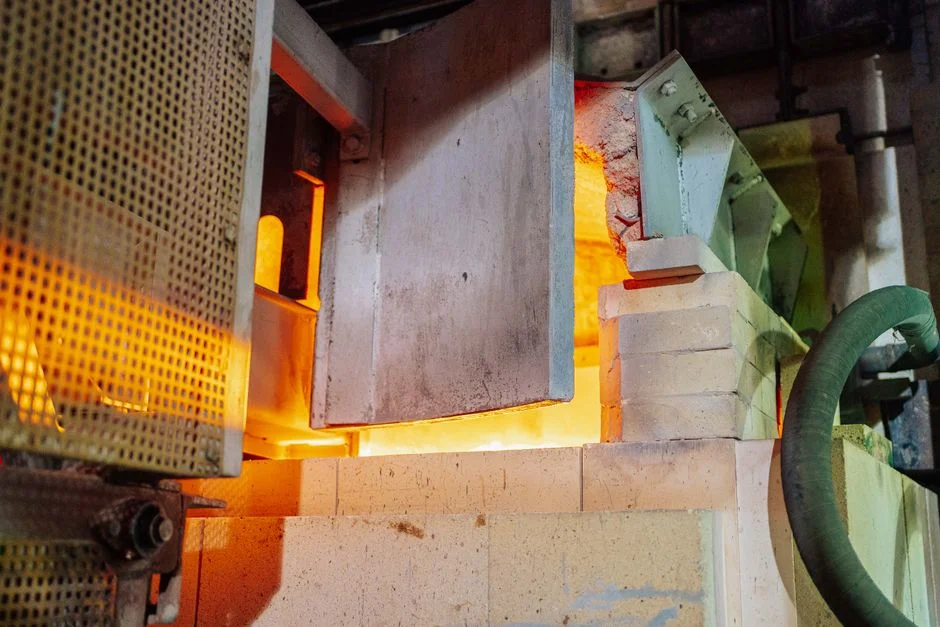
Five technology families dominate the 2026 procurement shortlist, with selection driven by influent TSS, FOG, and required delivery temperature.
Gravity-film heat exchangers (e.g., Roediger, Sewer Heat Systems) are passive devices with no moving parts that mount directly inside large sewer mains or risers. They transfer heat across a thin falling film to a clean water loop, recovering 30–50% of available heat at very low parasitic load. They are the default choice for in-pipe retrofit on municipal trunks and large building risers, but they need free flow and tolerate less than 50 mg/L TSS.
Plate and shell-and-coil exchangers sit above ground at the plant discharge and handle 50–65% heat recovery on clean industrial streams. Plate units are compact (typically 0.1–0.3 m² footprint per kW) and the lowest-CAPEX option for plant final-effluent integration, but they are sensitive to fouling and need CIP loops for high-FOG service.
Sewage-source heat pumps (SSHP) and industrial heat pumps lift low-grade effluent heat to 60–90 °C usable for process or space heating, with COP of 3.0–4.5 at modern plant sizes. They are the 2026 leaders in industrial deployment because they turn an unusable 20 °C stream into a usable 70 °C supply. They tolerate moderate fouling and pair well with plate exchangers on the source side.
SHIP (Sewer Heat & Power) and heat-chopper systems are designed for raw sewage and primary effluent, handling greater than 500 mg/L TSS plus rags and fibrous material. Heat-chopper units macerate solids before they reach the exchanger, achieving 40–55% recovery where conventional plates would fail within days. The ICWRR 2024 Springer proceedings also flag direct-contact and vacuum-evaporation approaches as emerging options for very high-strength streams, though they remain pre-commercial in 2026.
Technology Comparison: Matching the Exchanger to Your Stream
The table below consolidates 2026 field ranges for the four mainstream industrial options to serve as a first-pass filter before vendor discussions.
| Technology | Influent tolerance (TSS / FOG) | Heat recovery efficiency | CAPEX band (€/kW thermal) | Best-fit stream type |
|---|---|---|---|---|
| Gravity-film in-pipe | < 50 mg/L TSS, negligible FOG | 30–50% | €600–1,200 | Municipal mains, large building risers |
| Plate / shell-and-coil | < 200 mg/L TSS, low FOG | 50–65% | €350–800 | Plant final-effluent integration |
| SSHP / industrial heat pump | Tolerates moderate fouling | 200–400% useful heat per kW electric (COP basis) | €1,000–2,200 | High-temp process heating, CHP back-up |
| Heat-chopper / SHIP | > 500 mg/L TSS, rags, fibrous | 40–55% | €800–1,600 | Raw sewage, primary effluent, FOG streams |
The decision rule is simple. If your stream is clean and you have flow above 50 m³/h, start with plate or shell-and-coil. If you need delivery temperature above 55 °C, layer an SSHP on top. If your stream is raw or fibrous, jump straight to heat-chopper or SHIP. Gravity-film is reserved for in-sewer municipal work where above-ground footprint is unavailable.
ROI, Payback, and Operating Economics in 2026
The global wastewater heat recovery market ranges from USD 72.7M to several billion depending on whether scope is limited to dedicated exchangers or includes broader heat-pump integration; consensus 2026 projections put CAGR at 7.2–9.5% through 2030 (HydropureWater market analysis, 2026).
Worked example — 50 m³/h industrial effluent at 40 °C, cooling to 18 °C: thermal content released is Q = (50,000/3600) × 4.186 × 22 ≈ 1,279 kW. An SSHP with COP 3.5 delivers roughly 800 kW of usable heat at 65 °C after compressor and exchanger losses. At a 2026 EU industrial heat value of €0.085/kWh, that is 800 × 8,760 × 0.085 ≈ €595,000/year in displaced gas or steam cost—a number large enough to survive conservative discount rates and downtime assumptions. Installed CAPEX for an 800 kW SSHP project typically lands at €900,000–1,500,000 in Western Europe, giving a simple payback of 2.5–4.5 years and an IRR of 18–28% over a 15-year asset life.
OPEX is dominated by compressor electricity at €0.06–0.09/kWh and by heat-exchanger cleaning, which runs €8,000–22,000/year on plate units in fouling service. Pump parasitic load adds 1–3% of thermal output. Two financial-stack items compress payback by 1–2 years on qualifying projects: the EU Modernisation Fund (notably for Czech, Polish, and Romanian sites), German BAFA heat-recovery grants, and the Dutch SDE++ operating subsidy, which can cover 30–50% of CAPEX or pay a per-MWh operating premium. Without subsidy, the same 800 kW project outside the Netherlands or Germany typically lands at 3.5–5.5 year payback. The full 2026 ROI breakdown by region covers national subsidy stacks in more detail.
Integrating Heat Recovery with Your Treatment Train
Heat recovery efficiency depends on the specific placement within the treatment train.
The right location is downstream of biological treatment (where effluent is warm, biologically stable, and most organics are already metabolised) and upstream of final disinfection, where residual organics are at their lowest before effluent is chlorinated or UV'd. For MBR-treated streams, the effluent is near-reuse quality and the low fouling load makes a plate exchanger the natural fit—HydropureWater's MBR membrane bioreactor product line is designed around that downstream heat-recovery interface. For high-FOG streams from food processing or dairy, a DAF pretreatment step ahead of the exchanger reduces fouling load by 60–80% and extends cleaning intervals from weekly to monthly. Anaerobic digester hot effluents at 35–55 °C are a separate, high-value heat source and warrant their own scoping study.
Frequently Asked Questions

What minimum plant size justifies heat recovery in 2026? Roughly 500 m³/day of effluent at 25 °C or above is the practical threshold for an SSHP project, and 50 m³/h at 35 °C is the comfortable lower bound for a plate-exchanger project. Below that, payback extends past 7 years and CAPEX-per-kW climbs sharply.
When does the EU EED recast force a heat-recovery assessment? The recast EED requires large enterprises (typically 250+ employees or €50M+ turnover) to complete waste-heat assessments as part of mandatory energy audits by the 2026 reporting cycle, with cost-effective recovery measures required in subsequent compliance submissions.
How often do plate exchangers need cleaning on industrial effluent? On a clean CIP or rinse stream, monthly CIP is typical. On dairy, brewing, or food-washing effluent without pretreatment, weekly cleaning is realistic, and the OPEX hit usually pushes designers toward SSHP with larger source-side fouling allowance instead of high-efficiency plate-only designs.
Do heat-recovered MWh count toward Scope 2 reduction under the GHG Protocol? Yes, displaced purchased thermal energy falls under Scope 2 purchased heat or, if you self-generate, the energy attribute is captured in your Scope 2 market-based accounting provided you have a clear measurement-and-verification protocol on the recovered MWh.
Can heat recovery be combined with closed-loop ZLD design? Generally no, as ZLD evaporates the last 5–15% of wastewater specifically to recover water, and the evaporator's heat demand dwarfs the recoverable heat from the upstream stream. For high-recovery sites, treat heat recovery and ZLD as parallel rather than integrated workstreams—and for context on the parallel nutrient-recovery market, see the